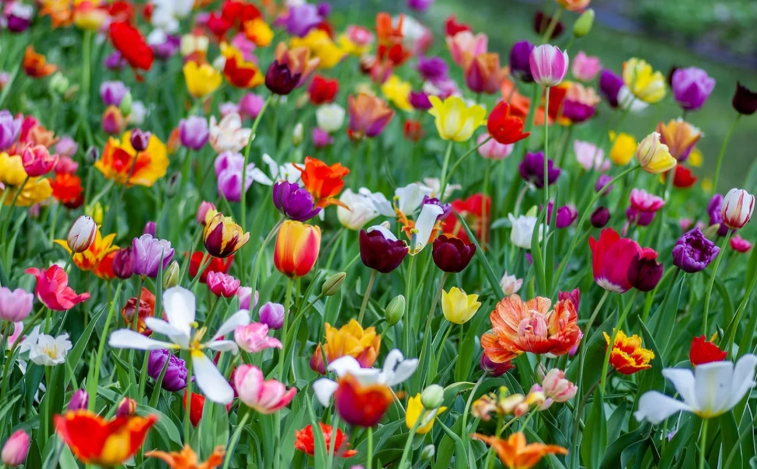
Flowers are among the most diverse and recognizable plants on Earth. They can be found growing in gardens, forests, grasslands, wetlands, deserts, mountains, and even along roadsides. Some flowers are cultivated for their beauty, while others are grown for fragrance, cut flowers, pollinators, food, medicine, or their ability to thrive in particular climates. With so many choices available, identifying the different types of flowers can be surprisingly interesting.
The word “flower” covers an enormous range of plants. Roses, tulips, lilies, orchids, sunflowers, daisies, marigolds, lavender, and chrysanthemums may look completely different, yet all are flowering plants. Flowers also vary dramatically in size, color, shape, blooming season, growth habit, and lifespan. Some are annuals that complete their life cycle in one growing season, while others are perennials that return year after year.
Gardeners can choose flowers according to growing conditions, including sunlight, soil type, moisture, temperature, and available space. Some flowers are ideal for containers and balconies, while others are better suited to borders, meadows, woodland gardens, rock gardens, or large landscapes. There are also flowers that tolerate drought, shade, heat, cold, poor soil, or coastal conditions better than others.
This comprehensive list of flower types includes more than 200 popular and interesting flowers from around the world. It includes annuals, perennials, bulbs, flowering shrubs, vines, wildflowers, tropical flowers, fragrant flowers, and popular garden favorites. Each entry includes a brief description to help you recognize the flower and understand why gardeners grow it. Whether you are looking for flower names, ideas for a garden, or help identifying different kinds of flowers, this guide provides a useful starting point.
List of All Types Flowers
1. Rose
Scientific name: Rosa spp.
Roses are among the world’s most recognizable flowers. They are grown as shrubs, climbers, ground covers, and container plants. Roses come in many colors and are valued for their attractive blooms and fragrance.
2. Tulip
Scientific name: Tulipa spp.
Tulips are spring-blooming bulb plants known for their cup-shaped flowers. They come in almost every color and are particularly associated with formal spring gardens.
3. Sunflower
Scientific name: Helianthus annuus
Sunflowers are famous for their large yellow flower heads and tall stems. They thrive in sunny locations and are attractive to bees and other pollinators.
4. Daisy
Scientific name: Bellis perennis and related species
Daisies are recognized by their flower heads with central disks surrounded by petal-like rays. Many different plants are commonly called daisies.
5. Lily
Scientific name: Lilium spp.
True lilies are bulbous perennials producing large, often fragrant flowers. They are available in numerous colors and forms.
6. Daffodil
Scientific name: Narcissus spp.
Daffodils are spring-blooming bulbs with distinctive trumpet-shaped central structures. Yellow is the most familiar color, although white and bicolored varieties are also common.
7. Marigold
Scientific name: Tagetes spp.
Marigolds produce cheerful yellow, orange, gold, or reddish flowers. They are popular annuals for beds, borders, containers, and vegetable gardens.
8. Lavender
Scientific name: Lavandula spp.
Lavender is grown for its purple flower spikes, aromatic foliage, and fragrance. It is especially popular in sunny, well-drained gardens.
9. Orchid
Family: Orchidaceae
Orchids represent one of the largest flowering plant families. Their flowers have remarkable shapes and colors, and many species are grown as ornamental plants.
10. Chrysanthemum
Scientific name: Chrysanthemum spp.
Chrysanthemums produce flowers in numerous colors and forms. They are popular garden and florist plants and are particularly associated with autumn displays.
11. Carnation
Scientific name: Dianthus caryophyllus
Carnations have ruffled flowers and narrow foliage. They are widely grown as cut flowers and garden ornamentals.
12. Peony
Scientific name: Paeonia spp.
Peonies are long-lived perennial plants known for their large, often fragrant flowers. Depending on the variety, flowers may be single, semi-double, or double.
13. Dahlia
Scientific name: Dahlia spp.
Dahlias produce spectacular flowers in a wide range of colors, sizes, and forms. They grow from underground tubers and are popular summer-blooming garden plants.
14. Zinnia
Scientific name: Zinnia spp.
Zinnias are colorful annual flowers that bloom heavily during warm weather. They are easy to grow from seed and attract butterflies and other pollinators.
15. Geranium
Common name: Geranium
Garden geraniums commonly refer to plants in the genus Pelargonium, which are popular bedding and container flowers.
16. Petunia
Scientific name: Petunia spp.
Petunias produce abundant trumpet-shaped flowers and are popular in containers, hanging baskets, and flower beds.
17. Begonia
Scientific name: Begonia spp.
Begonias are diverse ornamental plants grown for attractive flowers and, in some species, decorative foliage.
18. Hydrangea
Scientific name: Hydrangea spp.
Hydrangeas are flowering shrubs known for large flower clusters. Depending on the species and cultivar, flowers may be white, pink, blue, purple, or greenish.
19. Hibiscus
Scientific name: Hibiscus spp.
Hibiscus plants produce large, colorful flowers with prominent stamens. They are especially popular in warm climates.
20. Morning Glory
Scientific name: Ipomoea spp.
Morning glories are climbing vines with trumpet-shaped flowers that typically open in the morning.
21. Poppy
Scientific name: Papaver spp. and related genera
Poppies are recognized for their delicate, often brightly colored flowers. Different species are grown as ornamentals and wildflowers.
22. Cosmos
Scientific name: Cosmos spp.
Cosmos produce daisy-like flowers on slender stems. They are easy-care annuals that perform well in sunny gardens.
23. Coneflower
Scientific name: Echinacea spp.
Coneflowers are hardy perennials with prominent central cones and drooping petals. They are popular pollinator plants.
24. Black-Eyed Susan
Scientific name: Rudbeckia spp.
Black-eyed Susans produce yellow or golden rays surrounding a dark central cone. They are dependable summer-blooming perennials or annuals depending on species.
25. Aster
Scientific name: Aster spp. and related genera
Asters produce star-shaped flower heads and are especially valuable for late-season color.
26. Foxglove
Scientific name: Digitalis spp.
Foxgloves form tall flower spikes covered with tubular, bell-shaped blooms. They are popular in cottage gardens.
27. Delphinium
Scientific name: Delphinium spp.
Delphiniums produce tall spikes of blue, purple, pink, or white flowers and are striking additions to perennial borders.
28. Lupine
Scientific name: Lupinus spp.
Lupines produce upright spikes covered with pea-like flowers. They are available in many colors.
29. Hollyhock
Scientific name: Alcea spp.
Hollyhocks are tall plants with large flowers arranged along upright stems. They are traditional cottage-garden flowers.
30. Snapdragon
Scientific name: Antirrhinum majus
Snapdragons have unusual flowers that resemble open mouths. They are popular cool-season bedding plants.
31. Sweet Pea
Scientific name: Lathyrus odoratus
Sweet peas are climbing annuals grown for colorful, fragrant flowers. They are popular as cut flowers.
32. Impatiens
Scientific name: Impatiens spp.
Impatiens are popular flowering plants for shady gardens and containers. They produce abundant colorful flowers.
33. Pansy
Scientific name: Viola × wittrockiana
Pansies have distinctive face-like flower markings and are available in numerous colors. They are popular for cool-season displays.
34. Violet
Scientific name: Viola spp.
Violets are small flowering plants commonly producing purple, blue, white, or yellow flowers.
35. Primrose
Scientific name: Primula spp.
Primroses are cool-season flowering plants valued for colorful flowers and compact growth.
36. Petunia
Petunias are prolific flowering plants with trumpet-shaped blooms available in many colors and patterns.
37. Nasturtium
Scientific name: Tropaeolum majus
Nasturtiums produce colorful flowers and rounded foliage. Some types are grown both as ornamentals and edible plants.
38. Calendula
Scientific name: Calendula officinalis
Calendula produces bright yellow or orange flowers and is commonly grown in cottage gardens and containers.
39. Sweet Alyssum
Scientific name: Lobularia maritima
Sweet alyssum forms low-growing mounds covered in tiny fragrant flowers. It is useful as a border plant and ground cover.
40. Bachelor’s Button
Scientific name: Centaurea cyanus
Bachelor’s button is an annual wildflower producing blue, pink, white, or purple flowers.
41. Gerbera Daisy
Scientific name: Gerbera spp.
Gerbera daisies produce large, colorful flower heads on long stems and are widely used in floral arrangements.
42. African Violet
Scientific name: Streptocarpus ionanthus
African violets are compact indoor flowering plants with soft foliage and colorful flowers.
43. Bougainvillea
Scientific name: Bougainvillea spp.
Bougainvillea is a tropical and subtropical climbing plant known for colorful papery bracts surrounding its small true flowers.
44. Gardenia
Scientific name: Gardenia spp.
Gardenias are evergreen shrubs famous for intensely fragrant white flowers.
45. Jasmine
Scientific name: Jasminum spp.
Jasmine includes fragrant flowering vines and shrubs. Its flowers are often white or yellow.
46. Magnolia
Scientific name: Magnolia spp.
Magnolias are trees and shrubs with large, striking flowers. Depending on species, they may bloom in spring or summer.
47. Camellia
Scientific name: Camellia spp.
Camellias are evergreen shrubs producing elegant flowers in shades of white, pink, and red.
48. Azalea
Scientific name: Rhododendron spp.
Azaleas are flowering shrubs that can produce masses of blooms in spring.
49. Rhododendron
Scientific name: Rhododendron spp.
Rhododendrons are woody flowering plants with large clusters of colorful flowers.
50. Wisteria
Scientific name: Wisteria spp.
Wisteria is a vigorous climbing vine known for long hanging clusters of fragrant flowers.
51. Honeysuckle
Scientific name: Lonicera spp.
Honeysuckle includes flowering vines and shrubs valued for tubular flowers and fragrance.
52. Clematis
Scientific name: Clematis spp.
Clematis includes numerous climbing plants with flowers ranging from small and delicate to very large and showy.
53. Passion Flower
Scientific name: Passiflora spp.
Passion flowers have extraordinarily complex blooms with distinctive filaments and structures.
54. Plumeria
Scientific name: Plumeria spp.
Plumeria is a tropical plant known for strongly fragrant, waxy flowers in colors such as white, pink, yellow, and red.
55. Bird of Paradise
Scientific name: Strelitzia spp.
Bird of paradise produces dramatic flowers resembling the shape of a colorful tropical bird.
56. Anthurium
Scientific name: Anthurium spp.
Anthuriums are tropical plants known for glossy foliage and colorful heart-shaped spathes.
57. Peace Lily
Scientific name: Spathiphyllum spp.
Peace lilies are popular indoor plants with white spathes surrounding a central flower spike.
58. Calla Lily
Scientific name: Zantedeschia spp.
Calla lilies have elegant funnel-shaped flowers and are widely used in gardens and floral arrangements.
59. Canna Lily
Scientific name: Canna spp.
Cannas are tropical-looking perennials with large leaves and bright flowers.
60. Daylily
Scientific name: Hemerocallis spp.
Daylilies produce colorful flowers, with each individual bloom generally lasting only one day.
61. Agapanthus
Scientific name: Agapanthus spp.
Agapanthus produces rounded clusters of blue, purple, or white trumpet-shaped flowers.
62. Amaryllis
Scientific name: Hippeastrum hybrids
Amaryllis is a popular bulb grown indoors and outdoors for its large trumpet-shaped flowers.
63. Crocus
Scientific name: Crocus spp.
Crocuses are small bulbous plants that provide some of the earliest flowers of spring.
64. Hyacinth
Scientific name: Hyacinthus orientalis
Hyacinths produce dense spikes of strongly fragrant flowers.
65. Iris
Scientific name: Iris spp.
Irises are recognized by their distinctive flower structures and sword-shaped leaves. They occur in numerous colors.
66. Gladiolus
Scientific name: Gladiolus spp.
Gladiolus produces tall spikes lined with funnel-shaped flowers.
67. Freesia
Scientific name: Freesia spp.
Freesias are valued for colorful, fragrant flowers and are commonly grown as cut flowers.
68. Ranunculus
Scientific name: Ranunculus spp.
Ranunculus flowers have many layers of delicate petals and resemble small roses.
69. Anemone
Scientific name: Anemone spp.
Anemones produce simple, attractive flowers in numerous colors.
70. Allium
Scientific name: Allium spp.
Ornamental alliums produce spherical clusters of small flowers on tall stems.
71. Snowdrop
Scientific name: Galanthus spp.
Snowdrops are small bulbs with delicate white flowers that can appear in late winter or early spring.
72. Bleeding Heart
Scientific name: Lamprocapnos spectabilis
Bleeding heart produces arching stems lined with heart-shaped pink and white flowers.
73. Columbine
Scientific name: Aquilegia spp.
Columbines have distinctive nodding flowers with backward-pointing spurs.
74. Bee Balm
Scientific name: Monarda spp.
Bee balm produces colorful, tubular flowers that are highly attractive to bees, butterflies, and hummingbirds.
75. Yarrow
Scientific name: Achillea spp.
Yarrow produces flat-topped clusters of small flowers and finely divided foliage.
76. Coreopsis
Scientific name: Coreopsis spp.
Coreopsis is known for bright yellow, orange, or red daisy-like flowers and long blooming periods.
77. Gaillardia
Scientific name: Gaillardia spp.
Gaillardia, also called blanket flower, produces brightly colored red, orange, and yellow flowers.
78. Salvia
Scientific name: Salvia spp.
Salvias include annuals, perennials, and shrubs with tubular flowers attractive to pollinators.
79. Verbena
Scientific name: Verbena spp.
Verbenas produce clusters of small flowers and are popular in containers, borders, and pollinator gardens.
80. Phlox
Scientific name: Phlox spp.
Phlox includes annuals and perennials with clusters of colorful flowers.
81. Dianthus
Scientific name: Dianthus spp.
Dianthus includes carnations, pinks, and related flowers known for colorful blooms and, in some varieties, spicy fragrance.
82. Coreopsis
Coreopsis is a long-blooming garden favorite that produces cheerful daisy-like flowers.
83. Rudbeckia
Rudbeckia includes several species commonly known as coneflowers or black-eyed Susans.
84. Shasta Daisy
Scientific name: Leucanthemum × superbum
Shasta daisies produce large white flowers with yellow centers.
85. African Daisy
Scientific name: Osteospermum spp.
African daisies produce brightly colored flowers and are popular in sunny containers and borders.
86. Gazania
Scientific name: Gazania spp.
Gazania produces brightly colored daisy-like flowers that open in strong sunlight.
87. Geranium
Geranium-type garden plants are popular for their colorful blooms and versatility in containers and beds.
88. Fuchsia
Scientific name: Fuchsia spp.
Fuchsias produce pendulous flowers with colorful sepals and petals. They are especially popular in hanging baskets.
89. Torenia
Scientific name: Torenia spp.
Torenia, or wishbone flower, is a compact flowering plant suitable for containers and partial shade.
90. Calibrachoa
Scientific name: Calibrachoa hybrids
Calibrachoa produces masses of small petunia-like flowers and is especially popular in hanging baskets.
91. Scabiosa
Scientific name: Scabiosa spp.
Scabiosa, commonly called pincushion flower, produces rounded flower heads on slender stems.
92. Lantana
Scientific name: Lantana spp.
Lantana produces clusters of small flowers that can change color as they mature. It is popular in warm climates.
93. Celosia
Scientific name: Celosia spp.
Celosia produces unusual flowers that may resemble flames, plumes, or crests.
94. Gomphrena
Scientific name: Gomphrena globosa
Gomphrena produces small globe-shaped flowers that retain their color well when dried.
95. Nicotiana
Scientific name: Nicotiana spp.
Flowering tobacco produces tubular flowers that can be highly fragrant, especially in the evening.
96. Four O’Clock Flower
Scientific name: Mirabilis jalapa
Four o’clocks are bushy flowering plants whose colorful flowers commonly open later in the day.
97. Moonflower
Scientific name: Ipomoea alba
Moonflower is a climbing vine with large white flowers that open in the evening.
98. Morning Glory
Morning glory vines are vigorous climbers with trumpet-shaped flowers that generally open in the morning.
99. Nasturtium
Nasturtiums are colorful flowering plants with round leaves and edible flowers.
100. Borage
Scientific name: Borago officinalis
Borage produces star-shaped blue flowers and is attractive to bees.
101. Foxglove
Foxgloves form tall spikes of tubular flowers and are classic cottage-garden plants.
102. Lupine
Lupines have upright flower spikes and are available in many colors.
103. Queen Anne’s Lace
Scientific name: Daucus carota
Queen Anne’s lace produces flat clusters of tiny white flowers resembling delicate lace.
104. Cornflower
Cornflower is another common name for bachelor’s button, particularly the familiar blue-flowered form.
105. Cosmos
Cosmos are airy annuals with delicate foliage and daisy-like flowers.
106. California Poppy
Scientific name: Eschscholzia californica
California poppy is a drought-tolerant wildflower producing brilliant orange flowers.
107. Mexican Sunflower
Scientific name: Tithonia rotundifolia
Mexican sunflower produces tall plants with vivid orange flowers.
108. Blanket Flower
Scientific name: Gaillardia spp.
Blanket flowers have warm red, orange, and yellow coloring and are valued for drought tolerance.
109. Indian Blanket
Indian blanket is another common name for certain Gaillardia species.
110. Coneflower
Coneflowers are hardy perennials with prominent central cones.
111. Joe-Pye Weed
Scientific name: Eutrochium spp.
Joe-Pye weed produces large clusters of pink or purple flowers and is valuable in pollinator gardens.
112. Goldenrod
Scientific name: Solidago spp.
Goldenrods produce masses of small yellow flowers in late summer and fall.
113. Milkweed
Scientific name: Asclepias spp.
Milkweeds produce clusters of small flowers and are important host plants for monarch butterfly caterpillars.
114. Ageratum
Scientific name: Ageratum houstonianum
Ageratum produces fluffy clusters of blue, purple, pink, or white flowers.
115. Impatiens
Impatiens are shade-tolerant flowering plants frequently grown in containers and garden beds.
116. Coleus Flower
Scientific name: Coleus hybrids
Coleus is primarily grown for foliage, but mature plants can produce spikes of small flowers.
117. Heliotrope
Scientific name: Heliotropium arborescens
Heliotrope produces clusters of small, fragrant purple flowers.
118. Mandevilla
Scientific name: Mandevilla spp.
Mandevilla is a tropical climbing plant producing large trumpet-shaped flowers.
119. Dipladenia
Scientific name: Mandevilla hybrids
Dipladenia types are compact relatives of mandevilla commonly grown in containers.
120. Bougainvillea
Bougainvillea is a colorful tropical vine or shrub grown for its brilliant bracts.
121. Oleander
Scientific name: Nerium oleander
Oleander is an evergreen flowering shrub producing clusters of pink, white, red, or other colored flowers.
122. Gardenia
Gardenias are evergreen shrubs with intensely fragrant white flowers.
123. Hibiscus
Hibiscus includes tropical and hardy species with large, showy flowers.
124. Rose of Sharon
Scientific name: Hibiscus syriacus
Rose of Sharon is a deciduous flowering shrub producing numerous summer flowers.
125. Crape Myrtle
Scientific name: Lagerstroemia spp.
Crape myrtles are flowering shrubs or small trees producing abundant flowers during warm weather.
126. Lilac
Scientific name: Syringa spp.
Lilacs are woody plants famous for fragrant clusters of flowers, particularly in spring.
127. Forsythia
Scientific name: Forsythia spp.
Forsythia produces masses of bright yellow flowers on bare branches in early spring.
128. Weigela
Scientific name: Weigela spp.
Weigela is a flowering shrub with tubular flowers attractive to hummingbirds.
129. Spirea
Scientific name: Spiraea spp.
Spirea includes flowering shrubs with clusters of white, pink, or red flowers.
130. Viburnum
Scientific name: Viburnum spp.
Viburnums are diverse shrubs producing clusters of white or pinkish flowers.
131. Mock Orange
Scientific name: Philadelphus spp.
Mock orange is a shrub known for white flowers with a fragrance resembling orange blossoms.
132. Beautyberry Flower
Scientific name: Callicarpa spp.
Beautyberry is primarily known for its colorful berries, but it also produces small clusters of flowers.
133. Butterfly Bush
Scientific name: Buddleja spp.
Butterfly bush produces elongated clusters of fragrant flowers that attract butterflies and other pollinators.
134. Bottlebrush
Scientific name: Callistemon spp.
Bottlebrush plants produce distinctive cylindrical flower clusters made up of numerous stamens.
135. Abutilon
Scientific name: Abutilon spp.
Abutilon, sometimes called flowering maple, produces hanging bell-shaped flowers.
136. Angelonia
Scientific name: Angelonia spp.
Angelonia produces upright spikes of small snapdragon-like flowers and performs well in warm weather.
137. Angel’s Trumpet
Scientific name: Brugmansia spp.
Angel’s trumpet produces very large hanging trumpet-shaped flowers.
138. Crown Imperial
Scientific name: Fritillaria imperialis
Crown imperial is a bulbous plant with unusual pendant flowers arranged near the top of a tall stem.
139. Fritillaria
Scientific name: Fritillaria spp.
Fritillarias are bulbous plants with distinctive bell-shaped or nodding flowers.
140. Muscari
Scientific name: Muscari spp.
Muscari, commonly called grape hyacinth, produces dense clusters of small blue or purple flowers.
141. Snowflake
Scientific name: Leucojum spp.
Snowflakes are bulbous plants with white, bell-shaped flowers.
142. Lily of the Valley
Scientific name: Convallaria majalis
Lily of the valley is a woodland perennial producing small, strongly fragrant white flowers.
143. Solomon’s Seal
Scientific name: Polygonatum spp.
Solomon’s seal produces small hanging flowers beneath arching stems.
144. Hellebore
Scientific name: Helleborus spp.
Hellebores are hardy perennials that often bloom during winter or early spring.
145. Monkshood
Scientific name: Aconitum spp.
Monkshood produces distinctive hood-shaped flowers, commonly blue or purple.
146. Jacob’s Ladder
Scientific name: Polemonium spp.
Jacob’s ladder produces clusters of bell-shaped flowers and attractive divided foliage.
147. Sea Holly
Scientific name: Eryngium spp.
Sea holly has unusual blue or metallic-looking flower heads surrounded by spiny bracts.
148. Yarrow
Yarrow produces clusters of small flowers and fern-like foliage.
149. Tansy
Scientific name: Tanacetum vulgare
Tansy produces button-like yellow flower heads.
150. Feverfew
Scientific name: Tanacetum parthenium
Feverfew produces small white daisy-like flowers with yellow centers.
151. Calendula
Calendula produces cheerful orange or yellow flowers and is commonly grown in ornamental and herb gardens.
152. Strawflower
Scientific name: Xerochrysum bracteatum
Strawflowers have papery flower heads that retain their shape and color when dried.
153. Statice
Scientific name: Limonium spp.
Statice produces clusters of small flowers surrounded by papery structures, making it useful as a fresh and dried cut flower.
154. Amaranth
Scientific name: Amaranthus spp.
Certain ornamental amaranths produce colorful drooping or upright flower clusters.
155. Celosia
Celosia includes varieties with crested, plume-like, and unusual flower structures.
156. Globe Amaranth
Globe amaranth produces small rounded flower heads in purple, pink, white, or red.
157. Tuberose
Scientific name: Agave amica
Tuberose produces tall spikes of intensely fragrant white flowers.
158. Mexican Heather
Scientific name: Cuphea hyssopifolia
Mexican heather is a compact flowering plant producing numerous small purple, pink, or white flowers.
159. Pentas
Scientific name: Pentas lanceolata
Pentas produces clusters of star-shaped flowers that attract butterflies and other pollinators.
160. Larkspur
Scientific name: Delphinium and Consolida species
Larkspur includes plants with tall flower spikes and colorful blooms.
161. Canterbury Bells
Scientific name: Campanula medium
Canterbury bells produce large bell-shaped flowers in shades of blue, purple, pink, and white.
162. Bellflower
Scientific name: Campanula spp.
Bellflowers are named for their bell-shaped blooms and include many perennial and annual species.
163. Harebell
Scientific name: Campanula rotundifolia
Harebell is a delicate perennial with small blue bell-shaped flowers.
164. Forget-Me-Not
Scientific name: Myosotis spp.
Forget-me-nots produce small blue flowers, often with yellow or white centers.
165. Baby’s Breath
Scientific name: Gypsophila spp.
Baby’s breath produces clouds of tiny white or pink flowers and is widely used in floral arrangements.
166. Stock
Scientific name: Matthiola incana
Stock produces upright flower spikes and is valued for its strong fragrance.
167. Wallflower
Scientific name: Erysimum spp.
Wallflowers produce colorful flowers and are popular in cottage gardens and cool-season landscapes.
168. Sweet William
Scientific name: Dianthus barbatus
Sweet William is a biennial or short-lived perennial producing clusters of colorful flowers.
169. Pink
Scientific name: Dianthus spp.
“Pink” is a common name used for several Dianthus species, many of which have fringed petals and fragrant flowers.
170. Candytuft
Scientific name: Iberis spp.
Candytuft produces clusters of white or colored flowers and is useful as a low border plant.
171. Rock Cress
Scientific name: Aubrieta spp.
Rock cress forms low mats covered with small flowers, making it useful in rock gardens.
172. Sweet William Catchfly
Scientific name: Silene spp.
Silene includes numerous flowering plants with distinctive flowers and varied growth habits.
173. Campion
Scientific name: Silene spp.
Campions produce colorful flowers and are often found in wildflower gardens.
174. Evening Primrose
Scientific name: Oenothera spp.
Evening primroses produce flowers that open in the evening in many species.
175. Gaura
Scientific name: Oenothera lindheimeri
Gaura produces delicate flowers on tall, slender stems that appear to float above the foliage.
176. Balloon Flower
Scientific name: Platycodon grandiflorus
Balloon flower gets its name from the inflated flower buds that open into star-shaped blooms.
177. Japanese Anemone
Scientific name: Anemone hupehensis and hybrids
Japanese anemones bloom in late summer and fall, producing elegant flowers on tall stems.
178. Spider Flower
Scientific name: Cleome spp.
Spider flowers have long stamens that give their blooms a distinctive spider-like appearance.
179. Flax Flower
Scientific name: Linum spp.
Flax species produce delicate flowers, commonly blue or yellow depending on the species.
180. Morning Bride
Morning bride is a common name used for some ornamental flowering plants and may refer to different species depending on region.
181. Corn Marigold
Scientific name: Glebionis segetum
Corn marigold produces yellow daisy-like flowers and is commonly associated with European fields and wildflower habitats.
182. Love-in-a-Mist
Scientific name: Nigella damascena
Love-in-a-mist has delicate blue or white flowers surrounded by finely divided foliage.
183. Love-Lies-Bleeding
Scientific name: Amaranthus caudatus
Love-lies-bleeding is known for long, drooping flower clusters.
184. Larkspur
Larkspur produces tall spikes of colorful flowers and is popular in cottage-style gardens.
185. Snapdragon
Snapdragons are named for the way their flowers can appear to “snap” open.
186. Moonflower
Moonflowers produce large white flowers that open during the evening.
187. Sweet Rocket
Scientific name: Hesperis matronalis
Sweet rocket produces clusters of fragrant flowers, particularly in the evening.
188. Dame’s Rocket
Dame’s rocket is a flowering biennial producing clusters of purple, pink, or white flowers.
189. Toad Lily
Scientific name: Tricyrtis spp.
Toad lilies are shade-loving perennials with unusual spotted flowers.
190. Japanese Primrose
Scientific name: Primula japonica
Japanese primrose produces whorls of flowers along tall stems and prefers moist conditions.
191. Cockscomb
Cockscomb is a form of celosia with crested, brain-like flower heads.
192. Plume Celosia
Plume celosia produces upright feathery flower clusters.
193. Dusty Miller Flower
Dusty miller is mainly grown for its silver foliage, although mature plants can produce small yellow flowers.
194. Snapdragon Vine
Snapdragon vine refers to climbing plants with flowers resembling snapdragons, depending on the species.
195. Cup-and-Saucer Vine
Scientific name: Cobaea scandens
Cup-and-saucer vine is a vigorous climber with large bell-shaped flowers.
196. Cypress Vine
Scientific name: Ipomoea quamoclit
Cypress vine produces small star-shaped red, pink, or white flowers and finely divided foliage.
197. Black-Eyed Susan Vine
Scientific name: Thunbergia alata
Black-eyed Susan vine is a climbing plant with orange, yellow, white, or other colored flowers surrounding dark centers.
198. Coral Vine
Scientific name: Antigonon leptopus
Coral vine is a vigorous climber producing clusters of pink flowers.
199. Firecracker Plant
Scientific name: Russelia equisetiformis
Firecracker plant produces long, tubular red flowers that are particularly attractive to hummingbirds.
200. Mexican Hat
Scientific name: Ratibida columnifera
Mexican hat is a prairie wildflower with drooping yellow or reddish rays surrounding a tall central cone.
201. Blanket Flower
Blanket flower is a colorful, heat-tolerant perennial or annual with red, orange, and yellow blooms.
202. Prairie Coneflower
Scientific name: Ratibida pinnata
Prairie coneflower produces yellow drooping petals around a tall central cone.
203. Blazing Star
Scientific name: Liatris spp.
Blazing star produces tall spikes of purple or pink flowers and is a valuable pollinator plant.
204. Cardinal Flower
Scientific name: Lobelia cardinalis
Cardinal flower produces intense red flowers on upright stems and often grows naturally in moist habitats.
205. Great Blue Lobelia
Scientific name: Lobelia siphilitica
Great blue lobelia produces spikes of blue flowers and thrives in moist conditions.
206. Lobelia
Scientific name: Lobelia spp.
Lobelias include compact flowering plants suitable for borders, containers, and hanging baskets.
207. Mexican Sage
Scientific name: Salvia leucantha
Mexican sage produces velvety purple and white flower spikes.
208. Russian Sage
Scientific name: Salvia yangii
Russian sage is a perennial with silvery foliage and airy spikes of lavender-blue flowers.
209. Catmint
Scientific name: Nepeta spp.
Catmint produces spikes of small blue, purple, or pink flowers and is popular in sunny borders.
210. Catnip Flower
Scientific name: Nepeta cataria
Catnip produces small pale flowers and aromatic foliage.
211. Bee Balm
Bee balm is a pollinator-friendly perennial with tubular flowers arranged around the stems.
212. Lamb’s Ear Flower
Scientific name: Stachys byzantina
Lamb’s ear is primarily grown for its soft silver foliage but produces spikes of small purple flowers.
213. Obedient Plant
Scientific name: Physostegia virginiana
Obedient plant produces spikes of tubular flowers and gets its common name from the unusual ability of individual blooms to remain temporarily in different positions.
214. Blazing Star
Blazing star produces tall spikes covered with fluffy purple flowers.
215. Sea Lavender
Scientific name: Limonium spp.
Sea lavender produces clusters of small flowers and is commonly grown as a cut and dried flower.
216. Sea Thrift
Scientific name: Armeria maritima
Sea thrift forms compact clumps with rounded clusters of pink flowers.
217. Heather
Scientific name: Calluna vulgaris
Heather is a low-growing plant that produces masses of small flowers and is associated with heathland landscapes.
218. Erica
Scientific name: Erica spp.
Erica includes numerous heaths with small bell-shaped flowers.
219. Heather Bell
Heather bell is a common name used for several small-flowered heath plants.
220. Torch Lily
Scientific name: Kniphofia spp.
Torch lilies produce tall spikes of tubular flowers arranged in fiery shades of red, orange, and yellow.
221. Red Hot Poker
Red hot poker is another common name for Kniphofia, referring to its distinctive upright flower spikes.
222. Crocosmia
Scientific name: Crocosmia spp.
Crocosmia produces arching sprays of brightly colored tubular flowers.
223. Tigridia
Scientific name: Tigridia pavonia
Tigridia, or tiger flower, produces large flowers with striking patterns. Individual blooms are often short-lived.
224. Nerine
Scientific name: Nerine spp.
Nerines produce elegant lily-like flowers, often in shades of pink and white.
225. Dutch Iris
Scientific name: Iris × hollandica
Dutch iris is grown from bulbs and produces elegant flowers in blue, purple, yellow, and white.
226. Siberian Iris
Scientific name: Iris sibirica
Siberian iris is a hardy perennial with slender foliage and colorful flowers.
227. Japanese Iris
Scientific name: Iris ensata
Japanese iris produces large, elegant flowers and generally prefers moist soil.
228. Bearded Iris
Scientific name: Iris hybrids
Bearded irises are recognized by the fuzzy structures on their petals and come in an enormous range of colors.
229. Siberian Squill
Scientific name: Scilla siberica
Siberian squill is a small spring bulb producing nodding blue flowers.
230. Star of Bethlehem
Scientific name: Ornithogalum spp.
Star of Bethlehem plants produce clusters of star-shaped white flowers.
231. Dutchman’s Breeches
Scientific name: Dicentra cucullaria
Dutchman’s breeches is a woodland perennial with unusual white flowers resembling tiny pairs of trousers.
232. Trillium
Scientific name: Trillium spp.
Trilliums are woodland wildflowers with three-part flowers and foliage.
233. Bloodroot
Scientific name: Sanguinaria canadensis
Bloodroot is an early spring woodland wildflower with white flowers.
234. Hepatica
Scientific name: Hepatica spp.
Hepatica produces small spring flowers in blue, purple, pink, or white.
235. Pasque Flower
Scientific name: Pulsatilla vulgaris
Pasque flower blooms in spring and produces attractive purple flowers and silky seed heads.
236. Primula
Primulas are a diverse group of flowering plants that include many colorful spring-blooming species.
237. Cowslip
Scientific name: Primula veris
Cowslip produces clusters of yellow flowers and is associated with meadows and grasslands.
238. Lungwort
Scientific name: Pulmonaria spp.
Lungwort produces small tubular flowers that can change color as they mature.
239. Brunnera
Scientific name: Brunnera macrophylla
Brunnera is a shade-loving perennial producing small blue flowers resembling forget-me-nots.
240. Bergenia
Scientific name: Bergenia spp.
Bergenia produces clusters of pink flowers above large evergreen leaves.
241. Astilbe
Scientific name: Astilbe spp.
Astilbes produce feathery flower plumes and perform especially well in moist, partly shaded gardens.
242. Goat’s Beard
Scientific name: Aruncus dioicus
Goat’s beard is a large perennial producing airy sprays of white flowers.
243. False Indigo
Scientific name: Baptisia spp.
False indigo produces upright clusters of pea-like flowers and is valued for its long-lived nature.
244. Lupinus
Lupinus includes numerous lupine species with colorful upright flower spikes.
245. Baptisia
Baptisia is a perennial genus known for pea-shaped flowers and attractive foliage.
246. Penstemon
Scientific name: Penstemon spp.
Penstemons produce tubular flowers and are particularly valuable to bees and hummingbirds.
247. Foxglove Beardtongue
Scientific name: Penstemon digitalis
This perennial produces clusters of white tubular flowers.
248. Turtlehead
Scientific name: Chelone spp.
Turtlehead produces unusual flowers resembling the head of a turtle.
249. Sea Holly
Sea holly has distinctive spiny foliage and metallic-looking flower heads.
250. Globe Thistle
Scientific name: Echinops spp.
Globe thistles produce spherical blue or purple flower heads above spiny foliage.
251. Sneezeweed
Scientific name: Helenium spp.
Sneezeweed produces daisy-like flowers in warm yellow, orange, and red shades.
252. Golden Marguerite
Scientific name: Anthemis tinctoria
Golden marguerite produces yellow daisy-like flowers throughout much of summer.
253. Feverfew
Feverfew produces small white flowers resembling miniature daisies.
254. Oxeye Daisy
Scientific name: Leucanthemum vulgare
Oxeye daisy is a familiar wildflower with white petals and yellow centers.
255. Shasta Daisy
Shasta daisies are cultivated forms of white-flowered daisies valued for large blooms.
256. Blanket Flower
Blanket flower produces brightly colored blooms that perform well in sunny locations.
257. Sunflower
Sunflowers range from small branching garden varieties to very tall plants with enormous flower heads.
258. Teddy Bear Sunflower
Teddy Bear is a dwarf sunflower cultivar with fluffy double yellow blooms.
259. Mexican Sunflower
Mexican sunflower is a tall annual producing orange-red flowers.
260. Maximilian Sunflower
Scientific name: Helianthus maximiliani
Maximilian sunflower is a perennial sunflower with numerous yellow flower heads.
261. Jerusalem Artichoke Flower
Scientific name: Helianthus tuberosus
Jerusalem artichoke produces yellow sunflower-like flowers in late summer and fall.
262. Chocolate Daisy
Scientific name: Berlandiera lyrata
Chocolate daisy produces yellow flowers with a chocolate-like fragrance, especially in warm conditions.
263. Four-Nerve Daisy
Scientific name: Tetraneuris scaposa
This drought-tolerant perennial produces yellow daisy-like flowers.
264. Blanket Flower
Blanket flowers are especially useful in sunny, dry gardens because many tolerate heat and drought.
265. Black-Eyed Susan
Black-eyed Susans are classic summer flowers with yellow petals surrounding dark centers.
266. Sweet William
Sweet William produces dense clusters of small flowers in many colors.
267. Bachelor’s Button
Bachelor’s button is especially recognized for its vivid blue flowers.
268. Queen Anne’s Lace
Queen Anne’s lace produces delicate white flower clusters and is common in wildflower settings.
269. Scarlet Sage
Scientific name: Salvia splendens
Scarlet sage is commonly grown as a bedding annual and produces vivid red flower spikes.
270. Mealycup Sage
Scientific name: Salvia farinacea
Mealycup sage produces blue or purple flower spikes and performs well in warm, sunny gardens.
271. Autumn Sage
Scientific name: Salvia greggii
Autumn sage is a shrubby perennial producing tubular flowers in several colors.
272. Pineapple Sage
Scientific name: Salvia elegans
Pineapple sage has fragrant foliage and bright red flowers.
273. Russian Sage
Russian sage has silvery stems and masses of small lavender-blue flowers.
274. Catmint
Catmint is a long-blooming perennial with aromatic foliage and lavender-blue flowers.
275. Lavender Cotton
Scientific name: Santolina spp.
Lavender cotton is grown mainly for aromatic foliage but also produces small yellow flower heads.
276. Yarrow
Yarrow produces flat flower clusters and finely divided leaves.
277. Chamomile
Scientific name: Matricaria chamomilla and related species
Chamomile produces small daisy-like flowers with white rays and yellow centers.
278. Calendula
Calendula produces orange and yellow blooms and is a common cool-season garden flower.
279. Marigold
Marigolds are dependable warm-season flowers that come in many sizes and colors.
280. African Marigold
Scientific name: Tagetes erecta
African marigolds produce relatively large yellow, orange, or gold flower heads.
281. French Marigold
Scientific name: Tagetes patula
French marigolds are generally smaller than African marigolds and are available in many color combinations.
282. Signet Marigold
Scientific name: Tagetes tenuifolia
Signet marigolds have finely divided foliage and small edible flowers.
283. Cosmos
Cosmos produce airy flowers and foliage and are excellent additions to informal gardens.
284. Cleome
Cleome produces tall plants with unusual spider-like flowers.
285. Zinnia
Zinnias are prolific summer annuals available in many flower forms and colors.
286. Profusion Zinnia
Profusion zinnias are compact, highly floriferous hybrids useful for containers and borders.
287. California Poppy
California poppies produce bright orange flowers and thrive in sunny, relatively dry conditions.
288. Shirley Poppy
Scientific name: Papaver rhoeas cultivars
Shirley poppies are delicate annuals with soft-colored flowers.
289. Oriental Poppy
Scientific name: Papaver orientale
Oriental poppies produce very large flowers, often in red, pink, orange, or white.
290. Iceland Poppy
Scientific name: Papaver nudicaule
Iceland poppies produce delicate flowers on slender stems and are commonly grown as cool-season flowers.
291. Mexican Hat
Mexican hat is a North American wildflower with distinctive drooping rays.
292. Prairie Rose
Prairie rose refers to native rose species associated with grassland and prairie habitats.
293. Moss Rose
Scientific name: Portulaca grandiflora
Moss rose is a low-growing annual with brightly colored flowers that open in strong sunlight.
294. Purslane Flower
Ornamental purslane produces colorful flowers and succulent foliage.
295. Vinca Flower
Scientific name: Catharanthus roseus
Vinca, or Madagascar periwinkle, is a heat-tolerant flowering plant with five-petaled flowers.
296. Periwinkle
Scientific name: Vinca spp.
Periwinkles are low-growing plants with small blue, purple, pink, or white flowers.
297. Impatiens
Impatiens are among the most popular flowering plants for shady gardens.
298. New Guinea Impatiens
Scientific name: Impatiens hawkeri hybrids
New Guinea impatiens have larger flowers and foliage than many traditional bedding impatiens.
299. Wax Begonia
Scientific name: Begonia × semperflorens-cultorum
Wax begonias are compact bedding plants producing abundant flowers.
300. Tuberous Begonia
Scientific name: Begonia tuberous hybrids
Tuberous begonias produce large, showy flowers and are popular in containers and shaded gardens.
301. Angelonia
Angelonia is a warm-season flowering plant with upright spikes of colorful blooms.
302. Pentas
Pentas produces star-shaped flowers in clusters and is especially attractive to butterflies.
303. Lantana
Lantana produces colorful flower clusters and is popular in warm climates.
304. Verbena
Verbena includes spreading and upright flowering plants suitable for containers and borders.
305. Vervain
Vervain refers to various Verbena and related species, many of which produce small clustered flowers.
306. Phlox
Phlox includes creeping ground covers and tall garden perennials.
307. Creeping Phlox
Scientific name: Phlox subulata
Creeping phlox forms low mats covered in flowers during spring.
308. Garden Phlox
Scientific name: Phlox paniculata
Garden phlox produces tall clusters of fragrant flowers during summer.
309. Candytuft
Candytuft forms low evergreen or semi-evergreen mounds covered with flowers.
310. Sweet Woodruff Flower
Scientific name: Galium odoratum
Sweet woodruff is a shade-loving ground cover producing small white flowers.
311. Wood Anemone
Scientific name: Anemonoides nemorosa
Wood anemone is a spring woodland flower producing delicate white blooms.
312. Trillium
Trilliums are woodland perennials characterized by three leaves and three-petaled flowers.
313. Jack-in-the-Pulpit
Scientific name: Arisaema triphyllum
Jack-in-the-pulpit is a woodland plant with an unusual hooded flower structure.
314. Dutchman’s Pipe
Scientific name: Aristolochia spp.
Dutchman’s pipe vines produce unusual curved flowers.
315. Dutchman’s Breeches
Dutchman’s breeches produces unusual white flowers in early spring.
316. Virginia Bluebells
Scientific name: Mertensia virginica
Virginia bluebells produce clusters of pink buds that open into blue flowers.
317. Shooting Star
Scientific name: Dodecatheon spp.
Shooting star plants produce flowers with petals that curve backward, creating a distinctive appearance.
318. Columbine
Columbines are woodland and garden perennials with distinctive spurred flowers.
319. Bleeding Heart
Bleeding hearts produce rows of heart-shaped flowers along arching stems.
320. Foamflower
Scientific name: Tiarella spp.
Foamflowers produce airy spikes of tiny flowers and are useful in shade gardens.
321. Coral Bells
Scientific name: Heuchera spp.
Coral bells are primarily grown for their colorful foliage but also produce delicate flower spikes.
322. Heuchera
Heuchera is a diverse perennial genus with many colorful-leaved cultivars.
323. Astilbe
Astilbe produces feathery flower plumes in shades of white, pink, red, and purple.
324. Hosta Flower
Scientific name: Hosta spp.
Hostas are primarily foliage plants, but they produce attractive bell-shaped flowers in summer.
325. Daylily
Daylilies produce colorful trumpet-shaped flowers above clumps of arching foliage.
326. Hosta
Hostas are popular shade-garden plants with broad leaves and seasonal flowers.
327. Foxglove
Foxgloves produce tall spikes of bell-shaped flowers.
328. Monkshood
Monkshood produces hooded flowers and is valued as an ornamental perennial.
329. Hellebore
Hellebores are among the most useful flowers for winter and early-spring gardens.
330. Christmas Rose
Scientific name: Helleborus niger
Christmas rose produces white flowers during winter or early spring in suitable climates.
331. Lenten Rose
Scientific name: Helleborus × hybridus
Lenten roses produce nodding flowers in many colors during late winter and spring.
332. Columbine
Columbine flowers have distinctive backward-pointing spurs that give them an unusual appearance.
333. Pasque Flower
Pasque flower is an early-season perennial with purple flowers and attractive seed heads.
334. Globe Thistle
Globe thistle produces spherical blue flower heads and silvery foliage.
335. Sea Holly
Sea holly has spiny blue-green foliage and unusual flower heads.
336. Echinacea
Echinacea produces prominent cone-shaped centers surrounded by colorful petals.
337. Rudbeckia
Rudbeckia includes several popular yellow-flowered perennials and annuals.
338. Coreopsis
Coreopsis produces abundant daisy-like flowers and is often grown for long-season color.
339. Helenium
Helenium produces warm-colored flowers in late summer and fall.
340. Aster
Asters provide some of the most useful late-season flowers for pollinator gardens.
341. Chrysanthemum
Chrysanthemums are available in numerous flower forms, from simple daisies to densely packed blooms.
342. Sedum Flower
Scientific name: Hylotelephium spp.
Sedums produce clusters of small flowers and are popular in drought-tolerant gardens.
343. Stonecrop
Stonecrop refers to various succulent Sedum species that produce small star-shaped flowers.
344. Ice Plant Flower
Scientific name: Delosperma spp.
Ice plants produce brightly colored flowers and are useful for sunny, dry gardens.
345. Blanket Flower
Blanket flowers tolerate heat and dry conditions and provide long-lasting summer color.
346. Gaura
Gaura produces delicate pink or white flowers on slender stems.
347. Yarrow
Yarrow is a hardy perennial with flat clusters of flowers.
348. Goldenrod
Goldenrod produces masses of small yellow flowers in late summer and fall.
349. Joe-Pye Weed
Joe-Pye weed produces large clusters of pinkish-purple flowers and attracts pollinators.
350. Ironweed
Scientific name: Vernonia spp.
Ironweed produces clusters of purple flowers and is an important late-season pollinator plant.
351. New England Aster
Scientific name: Symphyotrichum novae-angliae
New England aster produces abundant purple, pink, or blue flowers late in the growing season.
352. Blanket Flower
Blanket flower is particularly suited to sunny borders and drought-tolerant landscapes.
353. Prairie Clover
Scientific name: Dalea spp.
Prairie clovers produce cylindrical clusters of tiny flowers.
354. Purple Prairie Clover
Scientific name: Dalea purpurea
Purple prairie clover produces narrow cylindrical purple flower heads.
355. Black-Eyed Susan
Black-eyed Susan is one of the most recognizable North American wildflowers.
356. Blue-Eyed Grass
Scientific name: Sisyrinchium spp.
Blue-eyed grass produces small blue or purple flowers above narrow grass-like foliage.
357. Indian Paintbrush
Scientific name: Castilleja spp.
Indian paintbrush is known for colorful bracts surrounding small flowers.
358. Lupine
Lupines are valuable wildflowers and garden plants with tall flower spikes.
359. Fireweed
Scientific name: Chamerion angustifolium
Fireweed produces tall spikes of pink flowers and is often among the first plants to colonize disturbed landscapes.
360. Wild Bergamot
Scientific name: Monarda fistulosa
Wild bergamot is a native bee balm with lavender-pink flowers.
361. Prairie Smoke
Scientific name: Geum triflorum
Prairie smoke produces nodding pink flowers followed by distinctive feathery seed heads.
362. Shooting Star
Shooting star produces unusual nodding flowers with strongly reflexed petals.
363. Blue Flag Iris
Scientific name: Iris versicolor
Blue flag produces attractive blue-violet flowers and commonly grows in moist habitats.
364. Cardinal Flower
Cardinal flower is known for brilliant red blooms and its preference for moist soil.
365. Great Blue Lobelia
Great blue lobelia produces spikes of blue flowers and works well in moist gardens.
366. Swamp Milkweed
Scientific name: Asclepias incarnata
Swamp milkweed produces clusters of pink flowers and supports pollinators.
367. Butterfly Weed
Scientific name: Asclepias tuberosa
Butterfly weed produces vivid orange flowers and is an important native pollinator plant.
368. Common Milkweed
Scientific name: Asclepias syriaca
Common milkweed produces fragrant clusters of pinkish flowers.
369. Bee Plant
Bee plant is a common name used for several flowering plants that attract bees.
370. Blanket Flower
Blanket flower is a warm-colored, long-blooming plant suited to sunny locations.
371. Prairie Aster
Prairie asters include native North American species that produce daisy-like flowers.
372. Wild Indigo
Wild indigo is another common name for Baptisia species.
373. Golden Alexanders
Scientific name: Zizia aurea
Golden Alexanders produces flat clusters of small yellow flowers.
374. Wild Columbine
Scientific name: Aquilegia canadensis
Wild columbine produces red and yellow flowers and is native to parts of North America.
375. Wild Rose
Wild roses are native or naturalized rose species found in various regions.
376. Prairie Rose
Prairie roses are hardy native roses adapted to grassland environments.
377. Sweetbriar Rose
Scientific name: Rosa rubiginosa
Sweetbriar rose is known for fragrant foliage and pink flowers.
378. Dog Rose
Scientific name: Rosa canina
Dog rose is a European wild rose producing simple pink flowers.
379. Rugosa Rose
Scientific name: Rosa rugosa
Rugosa rose is a hardy shrub with fragrant flowers and wrinkled foliage.
380. Tea Rose
Tea roses are traditional cultivated roses known for elegant flowers and fragrance.
381. Floribunda Rose
Floribunda roses produce clusters of flowers and are popular landscape roses.
382. Grandiflora Rose
Grandiflora roses generally produce large flowers on tall plants.
383. Hybrid Tea Rose
Hybrid tea roses are known for large, elegant blooms on long stems.
384. Climbing Rose
Climbing roses have long canes that can be trained against supports.
385. Groundcover Rose
Groundcover roses spread horizontally and can provide extensive floral coverage.
386. English Rose
English roses are cultivated roses selected for combinations of old-fashioned flower forms and modern garden characteristics.
387. Miniature Rose
Miniature roses are compact roses with smaller flowers and foliage.
388. Tree Rose
Tree roses are roses trained onto a tall stem or rootstock.
389. Polyantha Rose
Polyantha roses produce clusters of relatively small flowers.
390. Shrub Rose
Shrub roses encompass many robust landscape roses with diverse flower forms.
How to Choose the Right Type of Flower
Choosing flowers is easier when you begin with the growing conditions rather than simply choosing the most attractive bloom. Check how much sunlight the planting area receives, whether the soil drains well, how frequently the garden can be watered, and which USDA hardiness zone applies to the location.
For sunny gardens, flowers such as sunflowers, zinnias, marigolds, lavender, coneflowers, salvias, coreopsis, cosmos, and many roses can be excellent choices.
For shade gardens, consider plants such as impatiens, begonias, hostas, hellebores, foxgloves, astilbes, coral bells, and certain woodland flowers.
For containers, compact flowers such as petunias, calibrachoa, geraniums, begonias, marigolds, zinnias, pansies, and nasturtiums are popular options.
For pollinator gardens, bee balm, coneflowers, asters, milkweed, salvia, lavender, goldenrod, yarrow, sunflowers, and zinnias can provide valuable floral resources.
Annual vs. Perennial Flowers
One of the most important distinctions when selecting flowers is whether a plant is annual or perennial.
Annual flowers generally complete their life cycle within one growing season. They are often planted for quick, abundant color. Marigolds, zinnias, cosmos, sunflowers, and many petunias are commonly grown as annuals.
Perennial flowers live for several years and can return season after season when grown in suitable conditions. Examples include coneflowers, peonies, daylilies, irises, asters, bee balm, and many varieties of lavender.
Some flowers can behave differently depending on climate. A plant grown as an annual in a cold region may survive as a perennial in a warmer climate.
Bulb Flowers
Bulb and bulb-like flowering plants are particularly popular because many provide spectacular seasonal displays.
Popular bulb flowers include:
- Tulips
- Daffodils
- Crocuses
- Hyacinths
- Alliums
- Lilies
- Gladiolus
- Freesias
- Snowdrops
- Snowflakes
- Amaryllis
- Nerines
- Dutch iris
Fragrant Flowers
If fragrance is important, consider flowers such as:
- Roses
- Gardenias
- Jasmine
- Lavender
- Lilacs
- Sweet peas
- Sweet alyssum
- Stock
- Hyacinths
- Tuberose
- Plumeria
- Honeysuckle
- Mock orange
- Garden phlox
Flowers That Attract Pollinators
Many flowers provide nectar, pollen, or host-plant resources for insects and other pollinators.
Popular choices include:
- Bee balm
- Coneflower
- Black-eyed Susan
- Sunflower
- Milkweed
- Lavender
- Salvia
- Aster
- Goldenrod
- Coreopsis
- Yarrow
- Zinnia
- Butterfly bush
- Lantana
- Penstemon
Using a mixture of flowers that bloom at different times can help provide floral resources throughout the growing season.
Popular Flower Colors
Flowers can be grouped by color when planning a garden.
Red Flowers
- Roses
- Tulips
- Poppies
- Geraniums
- Hibiscus
- Cardinal flower
- Scarlet sage
- Bee balm
- Canna
Pink Flowers
- Peonies
- Roses
- Cherry blossoms
- Camellias
- Dianthus
- Phlox
- Cosmos
- Azaleas
- Hydrangeas
Yellow Flowers
- Sunflowers
- Daffodils
- Marigolds
- Coreopsis
- Black-eyed Susans
- Goldenrod
- Forsythia
- Yarrow
Blue Flowers
- Delphinium
- Cornflower
- Hydrangea
- Forget-me-not
- Bluebells
- Iris
- Salvia
- Lobelia
Purple Flowers
- Lavender
- Lilac
- Asters
- Alliums
- Petunias
- Verbena
- Wisteria
- Clematis
White Flowers
- Gardenia
- Jasmine
- Lily
- Shasta daisy
- Baby’s breath
- Moonflower
- Lily of the valley
- Magnolia
Frequently Asked Questions About Flowers
How many types of flowers are there?
There are hundreds of thousands of known flowering plant species, along with a vast number of cultivars and hybrids. The exact number changes as scientists describe new species and taxonomic classifications are revised.
What are the most popular flowers?
Roses, tulips, lilies, daisies, sunflowers, orchids, chrysanthemums, carnations, peonies, hydrangeas, marigolds, and dahlias are among the most widely grown and recognized ornamental flowers.
What flowers are easiest to grow?
Many gardeners find marigolds, zinnias, sunflowers, cosmos, nasturtiums, calendula, coneflowers, black-eyed Susans, and certain salvias relatively easy to grow when planted under suitable conditions.
What flowers bloom all summer?
Depending on climate and cultivar, zinnias, marigolds, petunias, coneflowers, black-eyed Susans, coreopsis, salvias, lantana, verbena, and many dahlias can provide long-lasting summer color.
Which flowers are best for beginners?
Zinnias, marigolds, sunflowers, cosmos, nasturtiums, calendula, petunias, and coneflowers are popular beginner-friendly choices.
What flowers grow well in shade?
Impatiens, begonias, hostas, astilbes, hellebores, coral bells, foxgloves, brunnera, and certain woodland flowers can perform well in shade or partial shade.
What flowers attract butterflies?
Butterflies are commonly attracted to nectar-rich flowers such as coneflowers, zinnias, milkweed, butterfly bush, lantana, bee balm, asters, salvia, and verbena.
What flowers attract bees?
Bees commonly visit flowers such as lavender, bee balm, sunflowers, coneflowers, asters, goldenrod, salvia, borage, and many flowering herbs.
What is the difference between annual and perennial flowers?
Annual flowers generally complete their life cycle in one growing season, while perennial flowers can survive for several years and return under suitable growing conditions.
Which flowers are best for containers?
Petunias, calibrachoa, geraniums, begonias, marigolds, pansies, zinnias, nasturtiums, lobelia, and compact roses are popular container choices.
What are the most fragrant flowers?
Gardenia, jasmine, roses, lavender, lilac, honeysuckle, garden phlox, stock, sweet pea, hyacinth, plumeria, and tuberose are among the flowers known for strong fragrance.
Quick List of Popular Flower Names
Here is a condensed list of some of the most recognizable flower names:
- Rose
- Tulip
- Sunflower
- Lily
- Daffodil
- Daisy
- Marigold
- Lavender
- Orchid
- Chrysanthemum
- Carnation
- Peony
- Dahlia
- Zinnia
- Petunia
- Begonia
- Hydrangea
- Hibiscus
- Poppy
- Cosmos
- Coneflower
- Black-eyed Susan
- Aster
- Foxglove
- Delphinium
- Lupine
- Hollyhock
- Snapdragon
- Sweet pea
- Impatiens
- Pansy
- Violet
- Primrose
- Nasturtium
- Calendula
- Sweet alyssum
- Cornflower
- Gerbera
- Gardenia
- Jasmine
- Magnolia
- Camellia
- Azalea
- Rhododendron
- Wisteria
- Honeysuckle
- Clematis
- Passion flower
- Plumeria
- Bird of paradise
- Anthurium
- Peace lily
- Calla lily
- Canna lily
- Daylily
- Agapanthus
- Amaryllis
- Crocus
- Hyacinth
- Iris
- Gladiolus
- Freesia
- Ranunculus
- Anemone
- Allium
- Snowdrop
- Bleeding heart
- Columbine
- Bee balm
- Yarrow
- Coreopsis
- Gaillardia
- Salvia
- Verbena
- Phlox
- Dianthus
- Shasta daisy
- African daisy
- Gazania
- Fuchsia
- Calibrachoa
- Scabiosa
- Lantana
- Celosia
- Gomphrena
- Nicotiana
- Four o’clock
- Moonflower
- Borage
- Queen Anne’s lace
- California poppy
- Mexican sunflower
- Joe-Pye weed
- Goldenrod
- Milkweed
- Ageratum
- Heliotrope
- Mandevilla
- Oleander
- Lilac
- Forsythia
- Weigela
- Spirea
- Viburnum
- Mock orange
- Butterfly bush
- Bottlebrush
- Angelonia
- Angel’s trumpet
- Muscari
- Lily of the valley
- Hellebore
- Monkshood
- Sea holly
- Globe thistle
- Blazing star
- Cardinal flower
- Lobelia
- Catmint
- Penstemon
- Turtlehead
- Balloon flower
- Spider flower
- Love-in-a-mist
- Strawflower
- Statice
- Tuberose
- Mexican heather
- Pentas
- Toad lily
- Coral bells
- Astilbe
- Bergenia
- Brunnera
- Trillium
- Bloodroot
- Hepatica
- Pasque flower
- Virginia bluebells
- Shooting star
- Foamflower
- Jack-in-the-pulpit
- Dutchman’s breeches
- Wood anemone
- Sweet woodruff
- Blanket flower
- Sneezeweed
- Ironweed
- Wild indigo
- Indian paintbrush
Choosing Flowers for Your Garden
The enormous variety of flowers means there is usually a suitable plant for almost every garden situation. Before buying seeds or plants, consider sunlight, soil drainage, temperature, available space, water requirements, flowering season, and the mature size of the plant.
For a low-maintenance sunny garden, drought-tolerant flowers such as lavender, coneflower, yarrow, coreopsis, blanket flower, salvia, and California poppy can be useful choices.
For a cottage garden, roses, foxgloves, hollyhocks, delphiniums, lupines, sweet peas, peonies, daisies, and lavender create a traditional informal appearance.
For a pollinator garden, combine plants such as milkweed, bee balm, coneflower, salvia, asters, goldenrod, zinnias, sunflowers, and coreopsis.
For small spaces, choose compact flowers that perform well in containers, hanging baskets, or raised beds. Petunias, calibrachoa, geraniums, marigolds, pansies, begonias, lobelia, and compact zinnias are useful options.
For shade, look at impatiens, begonias, astilbe, hellebores, coral bells, hostas, brunnera, foxgloves, and woodland perennials.
The best flower garden is not necessarily the one containing the greatest number of species. A thoughtfully selected combination of plants with different colors, heights, textures, bloom periods, and growing requirements can create a garden that remains attractive throughout the season.