Water is one of the most important factors in growing a healthy, productive strawberry patch, yet it’s also one of the easiest things to get wrong. Strawberries have shallow root systems that dry out quickly, but they’re also highly sensitive to soggy, waterlogged soil that can lead to root rot. Add in the fact that their water needs shift depending on the stage of growth, whether they’re establishing new roots, flowering, or actively ripening fruit, and it’s easy to see why irrigation deserves real attention rather than a casual once-a-week hose down. The good news is that once you understand the basic principles behind watering strawberries, along with the different irrigation methods available, keeping a patch properly watered becomes a manageable, routine part of garden care. This guide covers everything from how much water strawberries need to the best irrigation systems and techniques for keeping plants consistently and appropriately hydrated.
Why Irrigation Matters So Much for Strawberries
Strawberries have a compact, shallow root system, typically extending only a few inches into the soil. This means they can’t reach deep reserves of moisture the way many other garden plants can, making them far more dependent on consistent surface-level watering. At the same time, this shallow root system is highly vulnerable to rot if the soil stays wet for too long, since there’s less margin for error compared to deeper-rooted plants that can tolerate occasional waterlogging near the surface.
This combination of shallow roots and sensitivity to both drought and excess moisture is what makes strawberry irrigation a bit more nuanced than simply watering on a fixed schedule. The goal is to maintain evenly moist, never soggy, soil, adjusting as needed based on weather, growth stage, and soil type.
Also Read: Simple Guide to Best Conditions for Growing Strawberries
How Much Water Strawberries Actually Need
As a general guideline, strawberries need about one to one and a half inches of water per week, whether from rainfall, irrigation, or a combination of both. This translates to roughly the equivalent of a thorough, deep watering once or twice a week under normal conditions, rather than light daily sprinkling, which tends to only wet the surface of the soil without reaching the root zone effectively.
That said, this figure isn’t fixed across the whole season. Water needs increase during hot, dry stretches, particularly in the height of summer, and also rise during flowering and fruit development, when the plant is putting significant energy and resources into producing a crop. Conversely, water needs drop somewhat during cooler weather or once plants have entered dormancy in late fall and winter.
Watering at Different Growth Stages
At planting, new strawberry plants need consistent moisture to help roots establish in their new location. A thorough watering immediately after planting, followed by regular monitoring over the following two to three weeks, helps ensure the root system doesn’t dry out during this critical establishment period.
During vegetative growth, as plants develop leaves and runners in spring, moderate and consistent watering supports healthy foliage development without pushing the plant toward excess, disease-prone growth.
During flowering, adequate moisture is important for successful pollination and fruit set, though this is also a stage where overwatering can become a problem, since wet conditions during bloom can increase the risk of fungal issues affecting the flowers themselves.
During fruit development and ripening, consistent moisture becomes especially critical. Uneven watering at this stage, particularly a dry spell followed by a heavy soak, is one of the most common causes of cracked or split fruit, as the rapid uptake of water after a dry period can cause the fruit to expand faster than its skin can accommodate.
After harvest, watering needs typically ease somewhat, though consistent moisture still supports the plant’s recovery and, for June-bearing varieties, the renovation process that takes place after the main harvest.
Going into dormancy, watering can be reduced as growth slows, though the soil shouldn’t be allowed to dry out completely, since roots remain alive underground even though the plant isn’t actively growing above ground.
Also Read: Simple Guide to Fertilizing Strawberries: When to Apply and How
Choosing the Right Irrigation Method
Drip Irrigation
Drip irrigation is widely considered the best overall watering method for strawberries, and for good reason. A drip system delivers water slowly and directly to the soil at the base of each plant, minimizing water waste through evaporation or runoff and, importantly, keeping the foliage and fruit dry. Since strawberries are prone to a number of fungal diseases that thrive in damp, humid conditions, keeping water off the leaves is a significant advantage. Drip irrigation also allows for more precise control over how much water each section of a bed receives, which is useful in beds where soil conditions or sun exposure vary slightly from one end to the other.
Soaker Hoses
Soaker hoses work on a similar principle to drip irrigation, releasing water slowly along their length directly into the soil. These are a more affordable and simpler option for smaller home gardens, though they offer somewhat less precise control over water distribution compared to a dedicated drip system with individual emitters.
Overhead Watering
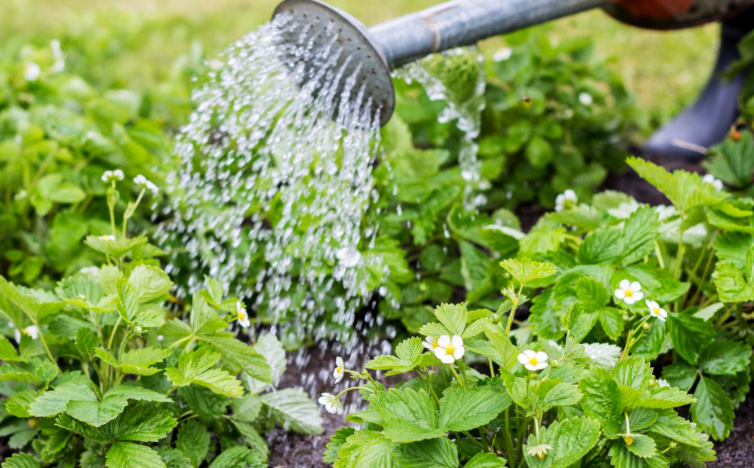
Watering with a standard hose, watering can, or overhead sprinkler is the simplest method and requires no special equipment, but it comes with real downsides for strawberries specifically. Overhead watering wets the foliage and fruit, which increases the risk of fungal diseases like gray mold and leaf spot, particularly if watering happens in the evening and leaves stay damp overnight. If overhead watering is the only practical option, doing it in the morning allows the foliage time to dry out during the day, which helps reduce, though not eliminate, the increased disease risk associated with this method.
Hand Watering
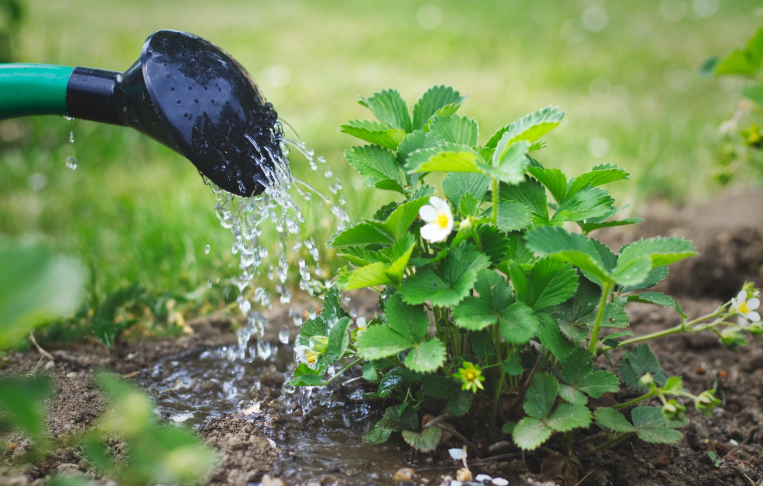
For very small patches or container plantings, hand watering with a watering can or hose nozzle can work well, provided it’s done at the soil level rather than over the top of the plant, and with enough thoroughness to actually reach the root zone rather than just dampening the surface.
Setting Up a Drip System for a Strawberry Bed
For gardeners interested in installing drip irrigation, a basic setup typically involves running a main supply line along each row of strawberry plants, with individual emitters or drip line placed at intervals matching the plant spacing, generally every twelve to eighteen inches. Many systems can be connected to a simple timer, which automates watering and removes the guesswork of remembering to water manually, particularly useful during busy stretches of the growing season or when you’re away from the garden for a few days.
Mulching over the drip line, once it’s in place, offers an added benefit: it helps retain the moisture delivered by the system, further reducing water loss to evaporation and helping maintain that steady, even soil moisture that strawberries respond to best.
Watering Strawberries in Containers
Container-grown strawberries have a different irrigation reality than those grown in the ground. The limited soil volume in a pot dries out considerably faster, especially during hot weather, sometimes requiring daily watering rather than the once or twice weekly schedule that works for an in-ground bed. Checking the soil moisture by feel, inserting a finger an inch or two into the potting mix, is a reliable way to judge whether a container needs water, since containers can dry out unevenly depending on their material, size, and sun exposure.
Self-watering containers or those with a built-in reservoir can help reduce the frequency of manual watering and buffer against the fast drying that’s typical of small containers, though even these systems benefit from periodic manual checks to make sure the reservoir isn’t running dry unnoticed.
Also Read: Simple Guide to Grow And Care For Strawberries
Signs of Overwatering and Underwatering
Recognizing the visible signs of both overwatering and underwatering helps you adjust irrigation before a minor issue turns into a bigger problem.
Overwatered strawberry plants often show yellowing leaves, particularly older leaves lower on the plant, along with a general wilted or droopy appearance despite wet soil, since waterlogged roots struggle to take up oxygen and nutrients properly. In more severe cases, the crown or roots may show soft, dark, rotting tissue, a sign that root rot has already set in.
Underwatered plants typically show wilting leaves that droop noticeably during the heat of the day, along with dry, crumbly soil and, in prolonged drought conditions, browning or crisping at the edges of the leaves. Fruit on underwatered plants also tends to be smaller and less juicy than fruit from consistently watered plants.
Mulch and Its Role in Irrigation
While not an irrigation method itself, mulch plays a significant supporting role in how effectively water is used in a strawberry bed. A layer of straw, pine needles, or shredded leaves around the base of plants helps slow evaporation from the soil surface, meaning the moisture delivered through irrigation lasts longer and the soil stays more evenly hydrated between waterings. This is particularly valuable during hot summer stretches, when evaporation rates are at their highest and consistent moisture matters most for fruit quality.
Adjusting Irrigation for Weather and Rainfall
Irrigation shouldn’t run on autopilot regardless of the weather. During rainy stretches, supplemental watering should be reduced or paused entirely, since strawberries are just as vulnerable to overwatering from a combination of rain and irrigation as they are from irrigation alone. Checking soil moisture directly, rather than watering strictly on a fixed schedule, is the most reliable way to avoid both over- and under-watering as conditions shift throughout the season. A simple habit of checking the soil an inch or two below the surface before watering, whether by hand or with a moisture meter, helps keep irrigation responsive to actual conditions rather than a rigid calendar.
Final Thoughts
Strawberry irrigation comes down to providing consistent, even moisture, roughly one to one and a half inches of water per week, delivered in a way that keeps the shallow root zone hydrated without leaving the soil waterlogged or wetting the foliage unnecessarily. Drip irrigation and soaker hoses stand out as the best methods for most home gardeners, since they deliver water efficiently while minimizing disease risk, though careful hand watering or well-managed overhead watering can also work with a bit more attention. Adjusting for growth stage, weather, and container versus in-ground growing conditions rounds out a solid irrigation approach. With the right watering habits in place, a strawberry patch is far more likely to reward you with healthy plants and a strong, sweet harvest throughout the growing season.