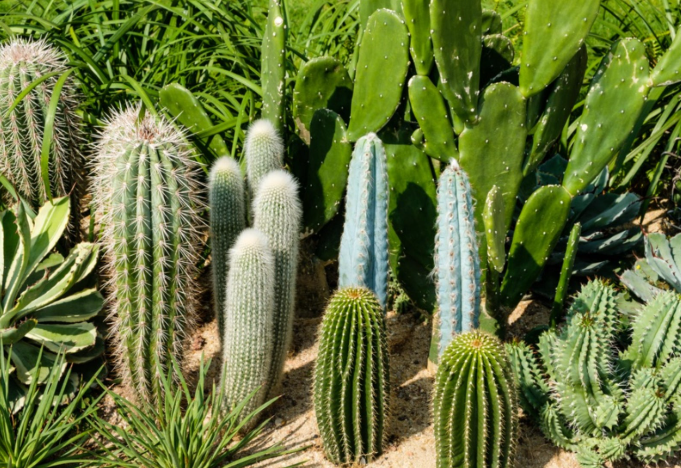
Cacti are among the most remarkable and resilient plants on Earth, belonging to the family Cactaceae, which contains over 1,750 recognized species distributed across more than 130 genera. Native primarily to the Americas — from Patagonia in the south to British Columbia in the north — they have evolved over millions of years to thrive in some of the planet’s most inhospitable environments. A handful of species, such as the mistletoe cactus (Rhipsalis baccifera), are also found naturally in Africa, Madagascar, and Sri Lanka, making them the only cacti native to the Old World.
What sets cacti apart from virtually all other plants is their extraordinary adaptation to arid and semi-arid climates. Instead of leaves, most species bear spines, which are modified leaves that reduce water loss, deter herbivores, and even channel morning dew toward the roots. Their thick, waxy, photosynthetic stems store vast reserves of water — a single large saguaro can hold up to 200 gallons after a heavy rain. These structural innovations allow cacti to survive months or even years without rainfall, making them the gold standard of drought-tolerant plants.
Cacti vary enormously in size, form, and habitat. They range from the towering saguaro (Carnegiea gigantea), which can reach heights of 40 to 60 feet and live for over 150 years, to the tiny living rock cactus (Ariocarpus fissuratus), which barely peeks above the soil surface. Some species sprawl as flat pads, others climb as vines, and many form dense, globular cushions. They grow from sea level to altitudes exceeding 16,000 feet in the Andes, demonstrating a breadth of ecological tolerance unmatched by most plant families.
Economically and ecologically, cacti are enormously significant. In Mexico alone, cacti are involved in industries worth hundreds of millions of dollars annually, supplying food (notably prickly pear fruit and nopal pads), fodder, dyes, and cosmetic ingredients. Ecologically, they serve as keystone species in desert ecosystems, providing food and shelter for hundreds of animal species including bats, birds, insects, and reptiles. Despite their toughness, nearly 35% of cactus species are threatened with extinction due to illegal collection, habitat destruction, and climate change, according to assessments by the IUCN Red List.
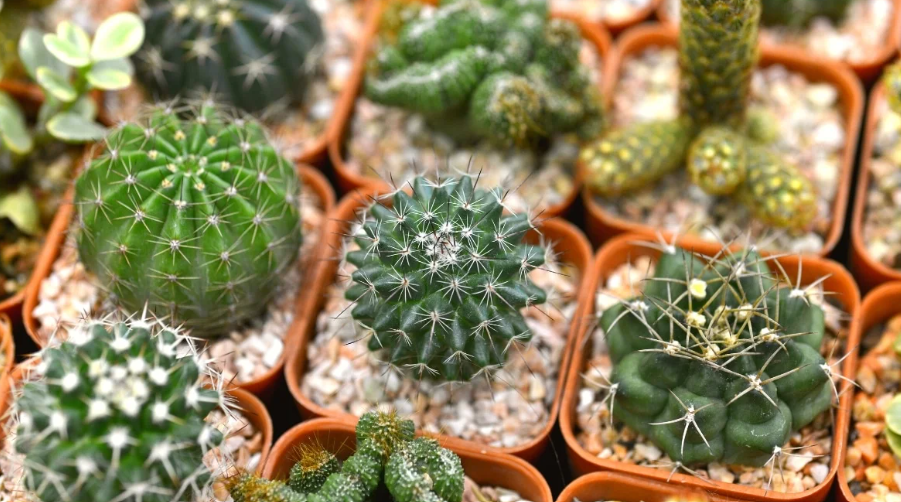
Species of cactus
Saguaro (Carnegiea gigantea)
The saguaro is the undisputed icon of the American Southwest, its tall, multi-armed silhouette synonymous with desert landscapes. Native to the Sonoran Desert of Arizona, California, and northwest Mexico, this giant can live for over 150 years and reach heights of 40 to 60 feet. Its creamy white flowers are Arizona’s state flower, blooming at night and pollinated by bats and doves.
Prickly Pear (Opuntia ficus-indica)
One of the most widely cultivated and recognized cacti in the world, the prickly pear is distinguished by its flat, paddle-shaped pads stacked in segments. It produces bright yellow, orange, or red fruits called tunas, which are eaten fresh, juiced, and made into candies and syrups across Mexico and the Mediterranean. The plant has naturalized on six continents and is considered both a food crop and an invasive weed in some regions.
Also Read: Cactus For Outdoor Planting
Barrel Cactus (Ferocactus wislizeni)
Named for its stout, cylindrical shape, the barrel cactus is a familiar sight in the deserts of the American Southwest and northern Mexico. It typically leans toward the south or southwest as it grows, earning it the nickname “compass cactus.” Its dense, hooked spines were historically used by Indigenous peoples as fishhooks and needles, and the pulp was consumed as an emergency water source.
Golden Barrel (Echinocactus grusonii)
The golden barrel is one of the most popular ornamental cacti in the world, prized for its perfectly spherical form and dense covering of golden-yellow spines. Native to a small region of central Mexico, it is critically endangered in the wild but thrives in cultivation globally. It grows slowly, taking up to 20 years to reach a foot in diameter, and produces small yellow flowers along the crown when mature.
Christmas Cactus (Schlumbergera bridgesii)
Unlike most of its desert-dwelling relatives, the Christmas cactus is an epiphytic species from the cloud forests of southeastern Brazil, where it grows on trees and rocks in humid, shaded conditions. It is beloved as a houseplant for its spectacular display of tubular pink, red, white, or purple flowers that appear in late autumn or winter, coinciding with the holiday season. It thrives in well-draining soil, indirect light, and moderate humidity.
Organ Pipe Cactus (Stenocereus thurberi)
The organ pipe cactus takes its name from its many upright, parallel stems rising from a common base, resembling the pipes of a cathedral organ. Found in the Sonoran Desert of southern Arizona and Mexico, it is the namesake of Organ Pipe Cactus National Monument. Unlike the saguaro, it lacks a central trunk and branches from ground level, producing sweet, red fruit that was a prized food of the Tohono O’odham people.
Blue Myrtle Cactus (Myrtillocactus geometrizans)
This striking columnar cactus from Mexico is beloved for its silvery-blue to grey-green coloration, which gives it a cool, dramatic appearance in the landscape. It grows in candelabra-like branching columns and can reach heights of up to 15 feet. The plant produces small, edible berries called garambullos, which taste similar to blueberries and are eaten fresh or dried in Mexican cuisine.
Peyote (Lophophora williamsii)
Peyote is a small, spineless, button-shaped cactus native to the Chihuahuan Desert of Texas and Mexico, where it grows slowly in limestone soils beneath shrubs. It is one of the most culturally and spiritually significant plants in North America, used ceremonially by Indigenous peoples for thousands of years. The plant contains mescaline and other alkaloids and is listed as a controlled substance in many countries, though its use in Native American religious ceremonies is legally protected in the United States.
Also Read: Flowering Succulent Plants
Cholla (Cylindropuntia fulgida)
The jumping cholla — also called the chain-fruit cholla — is a tree-like cactus of the Sonoran Desert, notorious for its barbed, detachable spine clusters that cling to passing animals and people with astonishing ease. It reproduces primarily vegetatively, with detached segments rooting wherever they fall. Despite its fearsome reputation, it provides critical nesting habitat for cactus wrens and other desert birds.
Night-Blooming Cereus (Selenicereus grandiflorus)
Often called the “queen of the night,” this sprawling, vine-like cactus produces some of the most spectacular flowers in the plant kingdom — enormous, fragrant white blooms up to 12 inches across that open only after dark and wilt before dawn. Native to the Caribbean and Central America, it has been celebrated in literature and art for centuries. In cultivation, a single bloom event can draw crowds of admirers who gather to witness its fleeting nocturnal display.
Bunny Ears Cactus (Opuntia microdasys)
The bunny ears cactus is a charming, compact species from northern Mexico, instantly recognizable by its paired oval pads covered in dense clusters of tiny golden or white glochids. It reaches only 2 to 3 feet in height, making it ideal for containers and indoor growing. Despite its soft, fuzzy appearance, the glochids are extremely irritating to skin and eyes and should never be touched with bare hands.
Totem Pole Cactus (Pachycereus schottii monstrosus)
This unusual cactus is a monstrous form of the senita cactus, characterized by its smooth, spineless, lumpy surface that gives it the appearance of a carved totem pole. A purely cultivated form, it does not occur naturally in the wild and is propagated entirely through cuttings. Its eerie, sculptural appearance makes it a conversation piece in desert gardens and succulent collections worldwide.
Easter Cactus (Hatiora gaertneri)
The Easter cactus is a forest-dwelling epiphyte from the Atlantic Forest of Brazil, closely related to the Christmas cactus but distinguished by its star-shaped flowers and spring blooming season. Its flat, segmented stems are glossy green and form cascading mounds that make it particularly suited to hanging baskets. The flowers range from bright scarlet to salmon, coral, and white, appearing in time for the Easter holiday in the Northern Hemisphere.
Fishhook Cactus (Mammillaria grahamii)
The fishhook cactus is a small, globular species of the Sonoran Desert named for its distinctive central spines, which are hooked at the tip like a fishhook. It is most conspicuous in midsummer, when rings of vivid magenta-pink flowers encircle the upper portion of the stem, followed by bright red, club-shaped fruits that persist into winter. It typically grows in rocky slopes and canyon walls at elevations between 1,000 and 5,000 feet.
Hedgehog Cactus (Echinocereus triglochidiatus)
The hedgehog cactus is a low-growing, clumping species native to the deserts and grasslands of the southwestern United States and northern Mexico. In spring, it puts on one of the most vivid floral displays of any cactus, producing brilliant scarlet to orange-red blooms that are magnets for hummingbirds. Its clustered stems can spread into large mounds over time, making it an excellent ornamental plant for xeriscape gardens.
Also Read: Types of Flowering Cactus With White Flowers
Rat Tail Cactus (Aporocactus flagelliformis)
The rat tail cactus is an epiphytic species from Mexico and Central America, producing long, slender, trailing stems that can reach 3 to 6 feet in length and are densely covered in short, bristly spines. It is a popular hanging basket plant, especially during its spring blooming period when it produces vivid crimson to purple tubular flowers along the length of its stems. In its native habitat, it drapes from rock faces and tree branches in dry tropical forests.
Lace Cactus (Echinocereus reichenbachii)
The lace cactus is a slender, cylindrical species native to the southern Great Plains and Chihuahuan Desert, adorned with tightly overlapping rings of white to pink spines that give its surface a delicate, lacework appearance. It produces large, showy, magenta-pink flowers in late spring that can span 3 to 4 inches across — impressively large relative to the plant’s modest size. It is the state cactus of Oklahoma and is well adapted to clay and rocky soils.
Claret Cup (Echinocereus triglochidiatus var. mojavensis)
The Mojave claret cup is a low-growing, mounding cactus of the Mojave and Great Basin Deserts, celebrated for its vivid, cup-shaped scarlet flowers that blaze across rocky hillsides in spring. It is one of the hardiest cacti in North America, tolerating temperatures well below freezing and even surviving under snow. The claret cup is an important early-season nectar source for hummingbirds migrating through the desert Southwest.
Mexican Fence Post (Pachycereus marginatus)
Named for its traditional use as a living fence in rural Mexico, this tall, columnar cactus grows in tight, upright clusters and is defined by the neat rows of white felt and short spines running along each rib, giving the stems a pinstriped appearance. It grows quickly by cactus standards, reaching heights of 15 feet or more, and produces small, pink to red flowers along its upper ribs. It is widely grown as an ornamental hedge plant in warm climates.
Crown Cactus (Rebutia minuscula)
The crown cactus is a tiny, globular species from the highlands of Argentina and Bolivia, among the easiest and most floriferous cacti in cultivation. Despite its diminutive size — rarely exceeding 2 inches in diameter — it produces a profusion of tubular orange-red flowers that nearly engulf the entire plant in spring. It is a favorite among collectors for its compact habit, easy care, and spectacular flowering relative to its small stature.
Peruvian Apple Cactus (Cereus repandus)
The Peruvian apple cactus is a large, columnar species that can grow to 30 feet tall in ideal conditions, forming tree-like structures with multiple blue-grey to green branches. Its name comes from its large, round, red or yellow fruits, which have crisp white flesh and a mildly sweet flavor reminiscent of a watermelon. It is one of the most cultivated columnar cacti in the world and is grown commercially for its fruit in tropical and subtropical regions.
Pincushion Cactus (Mammillaria crinita)
This cheerful, globe-shaped cactus from central Mexico is covered in dense, white, hair-like spines that give it a soft, cushiony appearance. In spring, it produces rings of small but brilliant magenta or pink flowers near the top of the plant, often followed by elongated red fruits. One of the easiest cacti to grow indoors, it tolerates a range of conditions and is widely recommended for beginners.
Old Man Cactus (Cephalocereus senilis)
The old man cactus is a tall, columnar species from the dry valleys of Hidalgo, Mexico, instantly recognizable by the long, shaggy white hairs that clothe its surface and give it the appearance of an elderly man. These hairs protect the plant from temperature extremes and reflected solar radiation in its harsh native habitat. Though it grows slowly — taking decades to reach maturity — it can eventually top 15 to 40 feet and produces small rose-colored flowers from its woolly crown.
Cow’s Tongue Cactus (Opuntia engelmannii var. linguiformis)
The cow’s tongue cactus is a variety of Engelmann’s prickly pear notable for its unusually long, tongue-shaped pads that can reach up to 18 inches in length. Native to Texas and northern Mexico, it is a robust, drought-tolerant landscape plant with large yellow flowers in spring and deep red-purple fruits in late summer. Both the pads and fruits are edible and have been used as food sources by Indigenous peoples of the region for centuries.
Strawberry Cactus (Echinocereus enneacanthus)
The strawberry cactus is a clumping, ribbed species of the Chihuahuan Desert, named for its round, spiny, strawberry-colored fruits, which are sweet, juicy, and edible. It grows in sprawling mounds of cylindrical stems and produces large, funnel-shaped, purple-pink flowers in spring. The fruits, which ripen in summer, are eagerly eaten by wildlife and have long been gathered by people throughout the borderlands of Texas and Mexico.
Compass Barrel (Ferocactus cylindraceus)
The compass barrel cactus is a stout, cylindrical species of the Mojave and Sonoran Deserts, reaching 4 to 8 feet in height and up to 18 inches in diameter. Like its close relative, it tilts toward the sun as it ages, which has made it a navigational landmark for desert travelers. Its red and yellow hooked spines are ornamentally striking, and in spring and summer it produces a crown of small yellow to orange flowers at its apex.
Fairy Castle Cactus (Acanthocereus tetragonus)
The fairy castle cactus earns its name from its clustered, irregular columns of varying heights, which resemble the turrets and towers of a miniature castle. It is a slow-growing columnar species native to Florida, the Caribbean, and Central and South America, and is extremely popular as a houseplant for its sculptural, architectural appearance. True flowers are rare in cultivation, making the plant purely ornamental in most indoor settings.
Also Read: Cactus Plants With Orange Flowers
Dragon Fruit Cactus (Hylocereus undatus)
The dragon fruit cactus is a climbing, epiphytic species native to southern Mexico and Central America, now cultivated across tropical and subtropical regions worldwide for its spectacular, large white nocturnal flowers and colorful fruit. The fruit — dragon fruit or pitahaya — has striking pink or yellow skin and speckled white or red flesh packed with tiny black seeds. Global dragon fruit production has grown into a multi-billion-dollar industry, driven by booming demand in Asia and the health food market.
Toothpick Cactus (Stetsonia coryne)
The toothpick cactus is a large, tree-like cactus native to the Gran Chaco region of Argentina and Bolivia, forming impressive multi-branched specimens up to 25 feet tall. Its common name comes from the long, sharp, ivory-colored spines that radiate from each areole like oversized toothpicks. It produces white, nocturnal flowers and small, edible fruits, and provides critical nesting and roosting habitat for birds and other wildlife in its native dry forest ecosystems.
Thanksgiving Cactus (Schlumbergera truncata)
Often confused with the Christmas cactus, the Thanksgiving cactus is distinguished by its sharply toothed, claw-like stem segments and its slightly earlier blooming period, typically in November. Native to the rainforests of southeastern Brazil, it is one of the most commonly sold houseplants in the United States during the autumn holiday season. Its flowers come in a broad range of colors including red, orange, salmon, pink, white, and bicolors, blooming profusely under cool nighttime temperatures.
Silver Dollar Cactus (Astrophytum asterias)
The silver dollar — or sand dollar — cactus is a flat, disc-shaped species native to a small region of the Texas-Mexico border, where it is critically endangered in the wild due to illegal collection and habitat loss. Its smooth, spineless surface is divided into eight ribs adorned with white, woolly areoles that create a polka-dot pattern across the plant’s surface. It produces bright yellow flowers with red centers and is considered one of the most beautiful and sought-after cacti among collectors worldwide.
Ocotillo (Fouquieria splendens)
While not a true cactus — it belongs to the family Fouquieriaceae — ocotillo is so often associated with cactus landscapes that it deserves inclusion in any survey of desert succulents. Its long, whip-like spiny stems rise dramatically from a central base and remain leafless for most of the year, bursting into leaf after rainfall and tipping with brilliant scarlet flower clusters in spring. It is a keystone plant of the Chihuahuan and Sonoran Deserts and an important nectar source for hummingbirds and native bees.
Candelabra Cactus (Euphorbia ingens)
Like the ocotillo, the candelabra cactus is a cactus look-alike rather than a true member of Cactaceae — it belongs to the genus Euphorbia — but is widely known and grown as a cactus. Native to southern Africa, it forms towering, multi-branched, tree-like structures up to 40 feet tall that dominate the dry bushveld landscape. Its milky white latex sap is highly toxic and irritating to skin and eyes, a chemical defense against browsing animals.
Bishop’s Cap (Astrophytum myriostigma)
The bishop’s cap cactus is a spineless, star-shaped species from the Chihuahuan Desert of Mexico, whose deeply ribbed body — typically with four or five ribs — forms a perfect geometric star when viewed from above, resembling a bishop’s mitre. Its grey-green surface is dusted with tiny white scales that give it a silvery, frosted appearance. It produces pale yellow flowers with red or orange centers and is a prized specimen in cactus collections worldwide.
Woolly Torch (Cleistocactus strausii)
The woolly torch is a slender, columnar cactus from the high-altitude valleys of Bolivia and Argentina, densely clothed in fine white spines and bristles that give the stems a shaggy, silvery appearance. It is one of the hardier high-altitude cacti in cultivation, tolerating mild frosts with ease. Its unique, narrow crimson flowers barely open at the tip and are perfectly adapted for pollination by hummingbirds, which hover alongside the column to access the nectar within.
Dwarf Turk’s Cap (Melocactus matanzanus)
The Turk’s cap cactus is a remarkable globular species notable for the distinctive structure that forms at its apex as the plant matures — a cylindrical, woolly, reddish cap called a cephalium, from which the tiny pink flowers emerge. Native to Cuba, it is adapted to coastal limestone outcrops and is one of the more cold-sensitive species in cultivation, requiring warm, bright conditions year-round. Once the cephalium begins to form, the main body of the plant stops growing, making this structure a sign of true maturity.
Jumping Jack Cactus (Cylindropuntia leptocaulis)
Also known as desert Christmas cactus or pencil cactus, this slender-stemmed cholla of the Chihuahuan and Sonoran Deserts is recognizable by its pencil-thin branches and strikingly red fruits that persist through winter, resembling holiday ornaments on a leafless shrub. Like other chollas, its detachable spine clusters cling painfully to passersby. The red fruits are consumed by many bird species, which play an important role in dispersing the plant’s seeds.
Golden Torch (Trichocereus spachianus)
The golden torch is a vigorous, columnar cactus from Argentina, widely grown both as an ornamental specimen and as a rootstock for grafting more difficult, slow-growing cactus species. It forms clumping columns of bright green, deeply ribbed stems lined with golden-yellow spines, eventually reaching 6 to 7 feet tall. Its large, white, nocturnal flowers are beautifully fragrant and can span 6 to 8 inches across, though they last only a single night.
Tephrocactus (Tephrocactus articulatus)
The paper spine cactus, as it is often called, is a charming, low-growing Argentinian species producing small, globular to egg-shaped segments that stack loosely atop each other in short columns. Its common name refers to the flat, papery, almost translucent white spines that emerge from each areole, which are unlike the rigid spines of most cacti. The segments detach very easily, spreading the plant around its rocky, high-altitude habitats in the Andes.
Blue Columnar Cactus (Pilosocereus pachycladus)
Few cacti match the visual impact of the blue columnar cactus, whose striking steel-blue to powder-blue columns can reach 30 feet in height in its native Brazilian caatinga. The blue coloration comes from a waxy coating on the stems that reflects ultraviolet light and reduces water loss in the intense sun. It is capped at the apex with dense, woolly, golden-orange to white hair that contrasts strikingly with the blue stem, making it one of the most architecturally dramatic cacti in existence.
Totem Cactus (Lophocereus schottii)
The senita cactus — native to the Sonoran Desert of Mexico and Arizona — forms dense, multi-stemmed colonies with grey-green ribbed columns topped with a shaggy crown of bristly grey spines on mature stems. It has a remarkably intimate relationship with the senita moth (Upiga virescens), which is its primary pollinator and also lays eggs in its flowers, in a mutualism that mirrors the famous yucca-moth relationship. The plant is restricted to a small area of the United States, where it is protected.
San Pedro Cactus (Echinopsis pachanoi)
The San Pedro cactus is a fast-growing columnar species native to the Andean slopes of Peru, Ecuador, Bolivia, and Argentina, where it has been used in traditional spiritual and healing ceremonies for at least 3,000 years. It grows to 20 feet tall in the wild and is one of the fastest-growing cacti known, capable of adding a foot or more of growth per year under ideal conditions. Its large, white, night-blooming flowers are fragrant and spectacular, and the plant is widely cultivated as an ornamental worldwide.
Strawberry Hedgehog (Echinocereus stramineus)
The strawberry hedgehog is a large, clump-forming cactus of the Chihuahuan Desert that can develop into massive mounds containing dozens to hundreds of stems, sometimes spanning several feet across. In spring, the mounds explode into color with large, vivid magenta flowers that are among the showiest produced by any North American cactus. The round, spiny, edible fruits ripen to red and have a pleasant, sweet flavor reminiscent of strawberries.
Rathbunia (Stenocereus alamosensis)
This tall, columnar cactus from the thorny scrub forests of Sonora and Sinaloa, Mexico, is notable for its vivid red, tubular flowers, which are adapted for hummingbird pollination rather than the bat or moth pollination typical of many columnar cacti. It forms multi-stemmed clusters that can reach 12 feet tall, and produces small, spiny, red fruits that are relished by birds and wildlife. It remains relatively rare in cultivation despite its ornamental potential.
Snowball Cactus (Mammillaria candida)
The snowball cactus is a dome-shaped Mexican species completely clothed in dense, interlocking white spines that give the plant a pristine, cottony appearance, as though dusted with fresh snow. It produces rings of small, pale pink flowers around the crown in spring, which stand out beautifully against the white spines. Slow-growing and compact, it rarely exceeds 6 inches in height and is an excellent candidate for windowsill growing and cactus dish gardens.
Cardón (Pachycereus pringlei)
The cardón is the largest cactus species in the world by mass and volume, native to the Baja California Peninsula and Sonora, Mexico. Mature specimens can reach 60 feet in height and weigh several tons, with a lifespan exceeding 300 years, making the saguaro look modest by comparison. Despite this immense size, cardóns are slow to reach maturity, and their remote, rugged habitats have largely protected them from the pressures faced by more accessible cactus species.
Clumping Gold Torch (Echinopsis chamaecereus)
The peanut cactus, as it is commonly known, is a clustering, ground-hugging species from the highlands of Argentina, producing masses of small, finger-like, bright green stems that sprawl and tumble across the soil surface. In spring it produces brilliant, large, orange-red flowers that are disproportionately large and vivid relative to the plant’s tiny stems, creating a stunning contrast. It is one of the most popular and widely grown small cacti in collections worldwide due to its easy care and spectacular flowering.
Mojave Mound (Echinocereus mojavensis)
The Mojave mound cactus is a cold-hardy, low-growing species of the high Mojave and Colorado Plateau, forming dense, spreading cushions of cylindrical stems that can eventually reach several feet in diameter. It is one of the most cold-tolerant cacti in North America, surviving temperatures far below zero degrees Fahrenheit under the insulation of its own dense spination. In late spring, the mounds are studded with large, waxy, scarlet to orange-red flowers that attract hummingbirds and native bees.
Notocactus (Parodia magnifica)
The balloon cactus or magnificent parodia is a globular to short-cylindrical species from southern Brazil, admired for its perfectly ribbed, blue-green body and dense covering of golden-yellow spines arranged in precise, geometric spirals. It produces clusters of bright yellow, silky flowers at its crown and is one of the showiest parodias in cultivation. Unlike many desert cacti, it prefers moderate watering and partial shade, reflecting its origins in the relatively humid subtropical highlands.
Also Read: Cactus Plants With Red Flowers
Hedgehog Aloe (Echinopsis oxygona)
This vigorous, free-flowering species from Argentina and Brazil forms large mounds of globular to ovoid, dark green stems with prominent ribs and stout brown spines. It is one of the most floriferous large echinopsis in cultivation, producing enormous, funnel-shaped flowers in shades of pink, lavender, white, or red that can span 6 to 8 inches across. The flowers open in the evening and last through the following day, and a mature, established clump in full bloom is a breathtaking sight.
Moon Cactus (Gymnocalycium mihanovichii)
The moon cactus is a small, globular South American species with a fascinating story — the brightly colored plants commonly sold in garden centers are albino or chlorophyll-deficient mutants in shades of red, orange, yellow, and pink that cannot photosynthesize. To survive, they are grafted onto green, vigorous rootstocks, creating the distinctive two-tone plants ubiquitous in the houseplant trade. In its natural green form, it is a subtly attractive species from the dry scrublands of Paraguay and Argentina.
Queen of the Andes (Echinopsis atacamensis)
This towering columnar cactus from the high Andes of Bolivia and Argentina grows at altitudes between 6,500 and 11,000 feet, making it one of the highest-elevation cacti in the world. It can reach heights of 30 to 40 feet and lives for hundreds of years, developing massive trunks and candelabra-like branching structures that dominate the altiplano landscape. Its large, white, nocturnal flowers are pollinated by bats, and it provides critical food and shelter for Andean wildlife including viscachas and condors.
Pencil Cactus (Euphorbia tirucalli)
Though botanically a spurge rather than a true cactus, the pencil cactus is one of the most widely grown succulent shrubs in the world, valued for its masses of smooth, cylindrical green stems that photosynthesize in place of leaves. Native to tropical Africa, it can reach tree-like proportions of 30 feet in warm climates, and its cultivar ‘Sticks on Fire’ produces brilliant orange and red coloration that makes it one of the most vivid plants in any landscape. Its milky latex sap is caustic and toxic and must be handled with great care.
Turbinicarpus (Turbinicarpus schmiedickeanus)
This tiny, unassuming cactus from the Chihuahuan Desert of Mexico barely rises above the gravelly soil surface, its small, tuberculate body perfectly camouflaged among rocks and pebbles. Despite its diminutive stature, it is a specialist among cactus collectors, representing a genus of remarkable miniature diversity. Many species in this genus are critically endangered in the wild due to their extremely restricted ranges and relentless collection pressure.
Beavertail Cactus (Opuntia basilaris)
The beavertail cactus is a low-growing prickly pear of the Mojave and Sonoran Deserts, named for the broad, flat, blue-grey to lavender-grey pads that resemble a beaver’s tail. Unlike most opuntias, it lacks large spines, bearing instead clusters of small, barbed glochids that are deceptively difficult to see and remove. In early spring it produces large, vivid rose-pink to magenta flowers that rank among the most beautiful of all desert wildflower displays.
Coral Cactus (Rhipsalis cereuscula)
The coral cactus is a delicate, freely branching epiphytic species from the tropical forests of South America, producing masses of thin, jointed stems that resemble coral branches. It is one of the most ornamental of the many rhipsalis species in cultivation, forming dense, cascading mounds well suited to hanging baskets in bright indoor spaces. Its tiny, cream-white flowers are subtly fragrant and appear in profusion along the stem tips in winter and spring.
Chin Cactus (Gymnocalycium damsii)
The chin cactus takes its common name from the distinctive chin-like projections, or tubercles, that bulge below each areole on the ribs of most species in the genus. This compact, globular species from Paraguay and Bolivia is one of the most popular gymnocalyciums in cultivation, producing large, silky, pale pink to white flowers even as a young plant. It tolerates lower light levels better than most cacti, making it particularly well suited to indoor growing.
Spider Cactus (Gymnocalycium denudatum)
The spider cactus is a flattened, globular species from the river flood plains of Argentina, Uruguay, Brazil, and Paraguay, remarkable for the way its low, flat spines press closely against the stem surface in star-shaped clusters, resembling spiders clinging to the ribs. It produces large, white to pale pink flowers with a silky sheen and is one of the easier gymnocalyciums to bring into bloom, even under modest indoor light conditions.
Powder Puff Cactus (Mammillaria bocasana)
The powder puff cactus is a clustering Mexican species producing globular heads densely covered in soft, white, silky hair-like spines that give it an irresistibly fluffy appearance. Hidden among this white fluff are longer, hooked central spines capable of catching on fabric and skin. In spring, it produces rings of small, cream to pale pink flowers with a darker midstripe, followed by slender, elongated red fruits that persist on the plant for months.
Tiger Jaw Cactus (Faucaria tigrina)
Though technically a succulent in the family Aizoaceae rather than a true cactus, the tiger jaw is so widely included in cactus collections that it merits recognition here. Its thick, triangular leaves are fused in pairs at the base, creating a jaw-like form with soft, tooth-like serrations along the edges. Native to the Eastern Cape of South Africa, it produces bright yellow, daisy-like flowers in autumn that open only in sunlight.
Notch-Leaf Cereus (Monvillea spegazzinii)
This nocturnal-flowering, climbing or sprawling cereus from South America is prized in collections for its unusually marbled or variegated stem — mottled green, grey, and white in a camouflage pattern unique among columnar cacti. It produces large, white, fragrant flowers at night and is frequently used as a grafting stock for delicate or colorful cactus species. Its unusual coloring makes it immediately recognizable and sought after even without its flowers.
Also Read: Cactus Plants With Yellow Flowers
Arizona Rainbow Cactus (Echinocereus pectinatus)
The rainbow cactus earns its evocative name from the alternating bands of white, pink, tan, and yellow spines that encircle its cylindrical stems in precise, comb-like rows, creating a multi-colored striped appearance unlike any other cactus. It is native to the desert mountains of Arizona, New Mexico, and northern Mexico and produces some of the largest and most spectacular flowers in the genus — vivid magenta-pink blooms that can span 4 to 5 inches across.
Old Lady Cactus (Mammillaria hahniana)
The old lady cactus is a beloved Mexican species clothed in a dense web of soft, white, hair-like spines and bristles that give the entire plant a white, powdery, grandmotherly appearance. In spring, it produces a crown of small but vivid ruby-pink to deep magenta flowers that form a wreath around the top of the plant, creating a stunning floral halo against the white spines. It is among the most popular mammillaria species in cultivation and is reliably easy to grow and flower.
Sword Cactus (Stenocereus gummosus)
The pitaya agria, or sour pitaya, is a sprawling, multi-stemmed cereus from the Baja California Peninsula, notable for producing large, white, night-blooming flowers followed by spiny red fruits that are among the most important wild food sources for both wildlife and human communities in the region. The Seri people of Sonora historically consumed the fruits in large quantities and derived a significant portion of their caloric intake from the cactus during fruiting season.
Candelabrum Tree Cactus (Browningia candelaris)
This extraordinary columnar cactus from the Pacific slopes of the Chilean and Peruvian Andes develops into a magnificent candelabrum-shaped tree with a thick, spiny trunk that gives rise to multiple smooth, nearly spineless upper branches. The transition between the spiny trunk and the smooth upper branches is one of the most dramatic morphological changes seen in any cactus species. It grows at high elevation in the Atacama Desert region — one of the driest places on Earth — and can live for several centuries.
Ladyfinger Cactus (Mammillaria elongata)
The ladyfinger cactus is a prolific clustering species from central Mexico that produces numerous slender, finger-like stems densely covered in star-shaped clusters of soft, yellow to brown or white spines. It forms cushioning mounds of these elegant little columns over time and produces rings of pale yellow to pink flowers in spring. Among the easiest cacti to grow and propagate, it is widely recommended for beginners and makes an excellent low-maintenance succulent display piece.
Prickly Pear Cactus — Texas (Opuntia engelmannii)
Engelmann’s prickly pear is a robust, wide-spreading shrub of the Chihuahuan Desert and adjacent grasslands, one of the most ecologically important and widely distributed cacti in the American Southwest and northern Mexico. Its broad, circular pads support large, bright yellow flowers in spring and produce abundant purple-red fruits called tunas that sustain a wide range of wildlife throughout the year. The plant is also an important economic species, with its pads harvested commercially as nopal and its fruits processed into juice, candy, and preserves.
Candelabra Spurge (Euphorbia candelabrum)
Another euphorbia widely confused with a true cactus, the candelabra spurge is one of the most imposing succulent trees in Africa, forming massive, candelabra-shaped structures up to 40 feet tall in the dry bushland of Ethiopia, Kenya, and Tanzania. It is a keystone species in East African savannas, providing habitat and food for a variety of birds and mammals. Like all euphorbias, it produces a caustic milky latex that is toxic to humans and livestock.
Red Cap Cactus (Melocactus azureus)
The blue melocactus is a stunning globular cactus from the dry rock outcrops of Bahia, Brazil, distinguished by its extraordinary powder-blue to silvery-grey body color and the vivid red-orange cephalium — the woolly flowering cap — that develops at its apex as the plant matures. The contrast between the blue body and the red cap is among the most striking color combinations in the plant kingdom. Like all melocactus, it is sensitive to cold and requires warm, bright conditions to thrive.
Grusonia (Grusonia marenae)
This rare, ground-hugging cholla from a small area of coastal Sonora, Mexico, is one of the most endangered cacti in North America, restricted to a tiny range that is threatened by coastal development and agricultural expansion. It forms low, spreading mats of short, spiny segments and produces yellow flowers in spring. Conservation organizations have flagged it as a priority species, but it remains poorly known outside specialist cactus circles.
Fishhook Barrel (Ferocactus wislizeni)
The fishhook barrel — also known as the Arizona barrel — is one of the most striking of the barrel cacti, distinguished by its fierce, red-and-yellow hooked central spines that curve dramatically backward like fishhooks. It is a common and charismatic resident of the Sonoran Desert and lower desert mountain slopes in Arizona and northern Mexico. Its crown of yellow to orange-red flowers appears in summer, and the yellow, pineapple-shaped fruits persist through winter, providing food for deer, javelinas, and small rodents.
Creeping Devil (Stenocereus eruca)
The creeping devil is arguably the most unusual cactus in North America, producing long, prostrate stems that grow along the ground rather than upright — a growth habit unique among columnar cacti. Native to a small area of the Magdalena Plain in Baja California, Mexico, the stems can reach 10 to 15 feet in length and move across the landscape as the rear of each stem dies while the tip continues growing, slowly advancing like a slow-motion snake. It is considered one of the rarest cacti in the world.
Candelilla (Euphorbia antisyphilitica)
Candelilla is a small, shrubby euphorbia of the Chihuahuan Desert, covered in upright, grey-green, wax-coated stems that are nearly leafless. It is one of the most economically important desert plants of Mexico — the waxy coating on its stems, known as candelilla wax, is harvested commercially and used in cosmetics, pharmaceuticals, food products, and industrial applications. Despite its appearance, it is not a cactus but is closely associated with cactus desert communities throughout its range.
Lobivia (Echinopsis aurea)
The golden Easter lily cactus is a clumping, globular to short-cylindrical species from the Andes of Argentina and Bolivia, producing brilliant golden-yellow flowers of exceptional size and beauty in spring. The flowers are produced in great numbers from the sides of the stems rather than the apex, and each bloom opens fully to display a silky, luminous, cup-shaped flower that can reach 4 inches across. It is cold-hardy for a South American Echinopsis and is prized by collectors for its combination of attractive spination and superb flowering.
Also Read: Difference Between Thanksgiving And Christmas Cactus
Opuntia — Blind Pear (Opuntia rufida)
The blind pear, or cinnamon cactus, is a prickly pear native to the Big Bend region of Texas and adjacent Mexico, notable for its rusty-red to cinnamon-brown glochids and the complete absence of large spines. The fine glochids are almost invisible and detach at the slightest touch, making the plant deceptively dangerous — hence the name “blind pear,” since they can easily enter the eyes of animals and people. Its yellow flowers and red fruits are attractive, and the plant makes a striking, if hazardous, ornamental.
Chin Cactus — Large (Gymnocalycium baldianum)
This robust gymnocalycium from the highlands of Argentina is celebrated for producing some of the richest, deepest flower colors in the genus — brilliant crimson, magenta-red, or violet-purple blooms that contrast dramatically with its grey-green, flattened body. It is one of the most floriferous gymnocalyciums, blooming reliably even under modest light conditions, and is recommended as an ideal starting cactus for anyone interested in the group. Its compact size and easy temperament have made it widely popular in collections.
Eve’s Pin Cactus (Austrocylindropuntia subulata)
Eve’s pin is a large, tree-like opuntia from the Andes of Peru, producing a thick, cylindrical trunk with distinct, elongated, subulate (awl-shaped) leaves that persist on the stems longer than in most opuntias — a primitive trait that links modern cacti to their leafy ancestors. Reaching up to 13 feet in height, it is one of the most visually distinctive of all the opuntias, with its unusual leafy appearance and imposing stature. It produces orange-red flowers and is widely planted as a living fence in highland South America.
Pereskia (Pereskia aculeata)
Pereskia is often described as one of the most primitive cacti, retaining the broad, flat, persistent leaves that cactus ancestors possessed before the family evolved its characteristic succulent, leafless adaptations. A sprawling shrub or liana from the Caribbean and tropical America, it produces fragrant white, yellow, or pinkish flowers and small, edible, berry-like fruits. Its stem-mounted spines confirm its cactus identity, and it serves as an important rootstock for grafting and as a nutritious leafy vegetable in parts of Brazil.
Christmas Cholla (Cylindropuntia leptocaulis)
This is a second profile of this Chihuahuan and Sonoran Desert cholla, worth highlighting for its ecological role as a winter berry producer. The slender, almost leafless stems and their persistent bright red fruits in winter earned it the Christmas association, and the plant’s dense, thorny structure provides critical nesting cover for cactus wrens, curve-billed thrashers, and other desert songbirds. Its role as both a structural habitat plant and a winter food source makes it ecologically significant well beyond its modest stature.
Woolly Nipple Cactus (Mammillaria lanata)
This densely spined Mexican mammillaria is almost entirely obscured by its covering of long, white, wool-like spines and bristles, giving it an exceptionally soft and fluffy appearance that belies the sharp central spines hidden within. It forms clustering mounds over time and produces rings of small cream to pale pink flowers in spring. Like many mammillarias, it is reliable and easy to cultivate, rewarding minimal care with annual floral displays and a year-round ornamental presence.
Feather Cactus (Mammillaria plumosa)
The feather cactus is one of the most extraordinary-looking plants in the entire cactus family — a clustering, globe-shaped species completely covered in soft, white, feather-like or plume-like spines that are so dense and overlapping the green stem beneath is entirely invisible. Native to the limestone cliffs of northeastern Mexico, it looks more like a decorative snowball than a cactus. Fragrant, small white flowers emerge from the wool at the apex in winter.
Chin Cactus — Plain (Gymnocalycium ochoterenae)
This plain-looking but dependably floriferous gymnocalycium from Mexico produces pale pink to white flowers with great regularity from spring through summer, even as a young, small plant. Its flattened, grey-green body with prominent chins below each areole is typical of the genus, and its modest size makes it ideal for collections with limited space. It is one of the most cold-tolerant gymnocalyciums, surviving light frost under dry conditions.
Also Read: Cactus With Purple Flowers And Flesh
Powder Blue Cereus (Pilosocereus azureus)
Close in appearance to P. pachycladus but native to slightly different regions of Brazil, the powder blue cereus shares the same arresting steel-blue to turquoise coloration that makes this genus so spectacular. Its apex is ringed with a dense mass of woolly, golden-tan hair from which the flowers emerge at night. It is increasingly popular in warm-climate gardens as an architectural focal point, where its color provides a cool counterpoint to the warm tones of typical desert plants.
Scarlet Ball (Parodia haselbergii)
The scarlet ball cactus, or scarlet crown, is a globular species from southern Brazil and Uruguay, covered in fine, white, comb-like spines that give it a silvery, almost luminous appearance. In late winter or early spring — earlier than most cacti — it produces a dense cluster of brilliant scarlet-orange flowers at its crown, making it one of the earliest and showiest of all flowering cacti. It is widely grown in collections and particularly valued as a winter-to-spring colour source when other plants are dormant.
Blind Barrel (Ferocactus emoryi)
Also known as Coville’s barrel or Emory’s barrel, this large, imposing barrel cactus of the Sonoran Desert in Arizona and Sonora, Mexico, is distinguished by its single, stout, bright red central spine and its deeply ribbed, dark green body. It produces a crown of deep red to orange-yellow flowers in summer and yellow fruits that are consumed by wildlife and were traditionally roasted and eaten by Indigenous communities. It grows to 10 feet tall and lives for a century or more, making it one of the most long-lived of the barrel cacti.
Barbados Gooseberry (Pereskia bleo)
This woody, leafy cactus from Panama and Colombia grows as a large shrub or scrambling vine and produces striking, bright orange to coral-red flowers with numerous stamens, resembling tropical hibiscus blooms. Its broad green leaves are entirely unlike the typical cactus image, and the plant is sometimes cultivated as a leafy vegetable or medicinal herb in Central America. It provides a vivid illustration of how far cactus morphology has diversified from the family’s leafy, ancestral origins.
Aztekium (Aztekium ritteri)
This extraordinary miniature cactus from the gypsum cliff faces of Nuevo León, Mexico, is one of the slowest-growing plants in the world, sometimes adding only millimeters of growth per year. Its heavily ridged, wrinkled surface bears a remarkable resemblance to Aztec stone carvings, giving rise to both its scientific and common names. It is a collector’s obsession, commanding high prices in the trade, and is critically endangered in the wild due to illegal collection and its extremely restricted habitat.
Rose Cactus (Pereskia grandifolia)
The rose cactus is a shrubby, leafy cactus from Brazil that produces clusters of bright rose-pink flowers closely resembling those of a single rose, complete with a central boss of yellow stamens. Like other pereskias, it carries broad, flat leaves and makes the cactus family’s evolutionary history visible in plant form. It is grown as an ornamental in tropical and subtropical gardens and is also used as a grafting rootstock for epiphytic cacti in Brazil.
Cardón Pelón (Pachycereus pecten-aboriginum)
The hairbrush cactus — or Indian comb cactus — is a tall, candelabra-forming columnar species from western Mexico, named for the comb-like arrangement of robust, outward-spreading spines on its fruits. It is one of the most important plants in the traditional culture of the indigenous Seri and Mayo peoples, who used the spiny fruits as combs, the wood for building, and the fruits as food. It forms impressive multi-branched colonies along the Pacific coastal foothills of Mexico.
Tree Cholla (Cylindropuntia imbricata)
The tree cholla — or cane cholla — is the most common and widely distributed cholla in North America, ranging from Kansas south through Texas and New Mexico into central Mexico. Its woody, persistent segments create an intricate lattice pattern visible after the spines fall, and the skeleton has traditionally been used in craft work and furniture making in the Southwest. Large, magenta-pink flowers in late spring and persistent, yellow, waxy fruits that last through winter make it ornamentally attractive as well as ecologically important.
Stenocactus (Stenocactus multicostatus)
The brain cactus or many-ribbed cactus is an extraordinary small Mexican species with up to 120 thin, wavy, undulating ribs packed tightly onto a globe rarely exceeding 6 inches in diameter, giving the plant an appearance uncannily similar to a folded brain or a rippled shell. The very high rib count is a record for the cactus family, and each rib bears small areoles with white and brown spines. It produces small, pale lavender or white flowers with a darker midstripe in spring.
Tuna Cactus (Opuntia streptacantha)
The tuna cactus — or cardón blanco — is one of the most important prickly pear species in Mexico, cultivated and harvested for its large, sweet, red to purple fruits, which are among the most prized tunas consumed in Mexican culture. Growing as a large, upright shrub to small tree, it dominates large swaths of the central Mexican plateau and is deeply woven into the food traditions of the region. Its pads are also harvested as nopal for culinary use, and it is an important livestock fodder plant in arid areas.