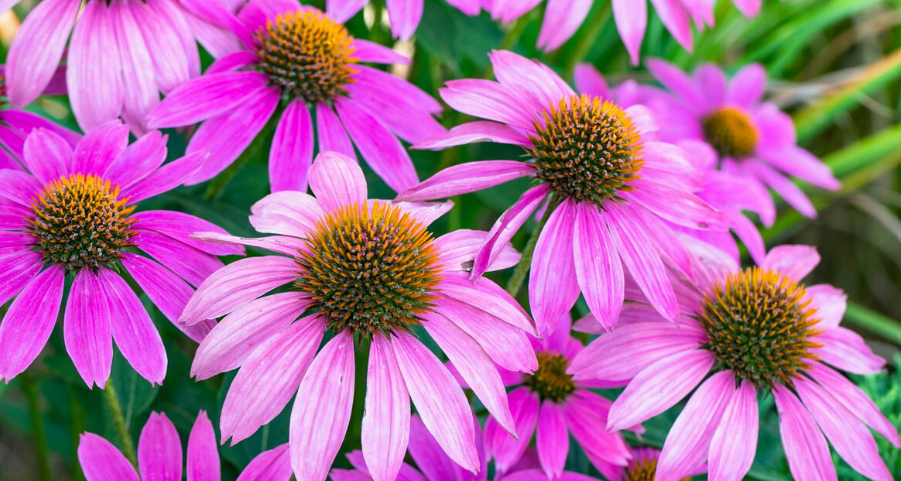
Coneflower, known botanically as Echinacea, is a genus of nine species of herbaceous perennial plants belonging to the daisy family Asteraceae, native to eastern and central North America. These plants are among the most popular garden perennials in the world, with global sales of Echinacea products, including both ornamental plants and herbal supplements, exceeding 100 million dollars annually. Their widespread appeal spans both the horticultural and natural health industries, making them one of the most commercially significant native North American plants.
As a plant, coneflower produces rough, lance-shaped to ovate leaves covered in coarse hairs, giving the foliage a slightly bristly texture. The stems are sturdy and upright, typically reaching 2 to 5 feet (60 to 150 centimeters) in height depending on the species and cultivar. Both leaves and stems have a somewhat coarse appearance that contrasts beautifully with the showy flowers produced above.
The flowers are coneflower’s most distinctive feature, consisting of drooping ray petals surrounding a prominent, spiny, cone-shaped central disc that gives the plant its common name. Wild species typically produce flowers in shades of purple and pink, while modern cultivars offer an expanded palette including white, yellow, orange, red, and bicolored forms. This central cone darkens as it matures, providing visual interest and serving as an important food source for birds well into winter.
Coneflower thrives in USDA zones 3 through 9, making it one of the most cold-hardy and widely adaptable flowering perennials available. This broad hardiness range means coneflowers can be successfully grown across most of North America, Europe, and similar temperate climates worldwide. Their adaptability to both cold winters and hot summers gives them outstanding versatility in the garden.
Echinacea has a well-documented history of medicinal use, having been one of the most important healing plants of Native American tribes for centuries. Today it remains one of the best-selling herbal supplements globally, widely used to support immune function and reduce the duration of colds. The herbal supplement industry generates hundreds of millions of dollars annually from Echinacea products alone.
In the garden, coneflowers are celebrated for their long blooming season, typically flowering from midsummer through early autumn. They are exceptionally attractive to pollinators, supporting bees, butterflies, and hummingbirds throughout their extended bloom period. The seed-filled cones that follow flowering provide a critical late-season food source for goldfinches and other seed-eating birds.
With their bold flowers, pollinator appeal, wildlife value, and exceptional toughness, coneflowers are a cornerstone plant in prairie-style, cottage, and wildlife gardens alike. Their ability to thrive in poor soils with minimal care once established makes them a practical and beautiful choice for low-maintenance landscapes. Few perennials deliver such sustained ornamental and ecological value across such a wide range of growing conditions.
Also Read: Different Types of Coneflowers
How to Grow and Care for Coneflower
- Select a Sunny Planting Site: Coneflowers thrive in full sun and require at least six hours of direct sunlight daily for strong stems and abundant flowering. While they tolerate light shade, too little sun results in weak, floppy growth and reduced bloom production. An open border or meadow planting in full sun is the ideal setting.
- Choose Well-Draining Soil: Coneflowers are highly adaptable to a range of soil types, including clay, loam, and sandy soils, as long as drainage is adequate. They actually perform well in average to poor soils, where excessive fertility can lead to floppy stems. Avoid waterlogged or consistently wet planting sites.
- Plant in Spring or Fall: Young coneflower plants or divisions can be planted in either spring or early autumn. Spring planting allows the longest possible establishment period before summer flowering. Fall planting gives roots time to settle before winter dormancy and often results in strong first-year flowering the following season.
- Space Plants Adequately: Most coneflower varieties should be spaced 18 to 24 inches apart to allow room for mature growth and good air circulation. Proper spacing reduces competition for nutrients and moisture and helps prevent fungal diseases. As clumps mature and spread, some thinning may be necessary.
- Water During Establishment: Newly planted coneflowers need consistent watering for the first growing season to develop a strong root system. Once established, they are highly drought-tolerant and rarely need supplemental watering in most climates. Overwatering established plants can actually weaken them and promote root disease.
- Avoid Heavy Fertilization: Coneflowers thrive in average to poor soil and rarely benefit from heavy fertilization. Excessive feeding, particularly with nitrogen-rich products, produces lush foliage at the expense of flowers and causes weak, floppy stems. A light topdressing of compost in spring is usually all the nutrition these plants need.
- Deadhead for Extended Blooming: Removing spent flower heads promptly encourages the plant to redirect energy toward producing new blooms. This can significantly extend the flowering season from midsummer well into autumn. However, leaving some seed heads in place toward the end of the season provides valuable food for birds.
- Leave Seed Heads for Wildlife: Once the main flowering period has passed, allowing seed heads to remain on the plant provides an important food source for goldfinches and other seed-eating birds through autumn and winter. The architectural quality of the dried cones also adds visual interest to the winter garden. Final cleanup can wait until late winter or early spring.
- Cut Back in Late Winter or Early Spring: Cutting plants back to ground level in late winter clears away old growth and encourages fresh new shoots to emerge. Leaving stems standing through winter provides both wildlife habitat and visual structure. Early spring is generally the best time to tidy up without compromising winter benefits.
- Divide Clumps Every Three to Four Years: Coneflowers spread gradually through self-seeding and rhizome division, and established clumps benefit from division to maintain vigor. Dividing in spring or early autumn every few years prevents overcrowding and rejuvenates flowering performance. Outer sections of the clump are most vigorous and should be replanted while the older center is discarded.
- Watch for Aster Yellows Disease: This disease, spread by leafhoppers, causes distorted, yellowed growth and deformed flowers with no known cure. Infected plants should be removed and destroyed immediately to prevent the disease from spreading to neighboring plants. Controlling leafhopper populations through netting or insecticide reduces transmission risk.
- Monitor for Powdery Mildew: Powdery mildew can appear on coneflower foliage during humid conditions, particularly in late summer. Proper plant spacing and avoiding overhead watering significantly reduces the risk of infection. Selecting mildew-resistant cultivars is the most reliable preventive measure for gardens in humid climates.
- Control Self-Seeding: Coneflowers self-seed prolifically, which can be desirable in naturalized or meadow settings but may require management in formal borders. Deadheading before seeds fully mature prevents excessive spreading. Unwanted seedlings are easy to remove or transplant while still small.
- Propagate by Division or Seed: Coneflowers can be propagated by dividing established clumps in spring or autumn, or by sowing seeds directly in the garden. Seeds sown in autumn often germinate more reliably, as cold winter temperatures provide natural stratification. Division produces flowering plants more quickly than growing from seed.
- Use in Mixed Borders and Meadow Plantings: Coneflowers combine beautifully with other summer perennials such as black-eyed Susans, ornamental grasses, salvias, and rudbeckias. Their upright form and bold flower heads provide strong vertical and focal points in mixed plantings. In meadow settings, they naturalize readily and create stunning drifts of color.
- Grow Native Species for Maximum Wildlife Value: While modern hybrid cultivars offer expanded color choices, the straight species Echinacea purpurea and Echinacea angustifolia provide the greatest benefit to native pollinators and wildlife. Native species are also generally more vigorous and longer-lived than highly bred hybrids. Incorporating at least some native species into plantings maximizes both ecological and ornamental value.
Also Read: How To Grow Coneflowers From Seeds