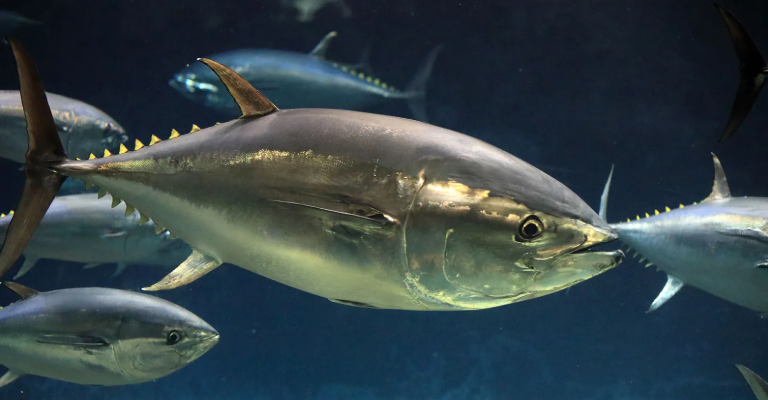
Tuna are among the world’s most remarkable and economically important marine fish, belonging to the tribe Thunnini within the mackerel family (Scombridae). Renowned for their speed, endurance, and powerful swimming ability, tuna inhabit tropical, subtropical, and temperate oceans across the globe. Their streamlined, torpedo-shaped bodies, retractable fins, and strong crescent-shaped tails enable them to travel thousands of miles during seasonal migrations. These highly adapted predators occupy a vital role in marine ecosystems, helping regulate populations of smaller fish, squid, and crustaceans.
Unlike most fish, several tuna species possess specialized circulatory systems that allow them to maintain body temperatures higher than the surrounding water. This partial warm-bloodedness enables them to swim efficiently in cooler waters and sustain high speeds for extended periods. Tuna are constantly on the move, often forming large schools that migrate between feeding and spawning grounds. Their exceptional vision, speed, and stamina make them some of the ocean’s most effective hunters.
Tuna are among the most valuable commercial fish in the world and support multi-billion-dollar fishing industries. They are harvested for fresh seafood, frozen products, and canned tuna, providing an important source of protein for millions of people. Species such as bluefin, yellowfin, albacore, and skipjack dominate global seafood markets. At the same time, recreational anglers highly prize large tuna for their incredible fighting ability, making them iconic targets in offshore sport fishing tournaments.
The term “tuna” commonly refers to several species, but the group also includes close relatives that share many similar characteristics. These fish vary considerably in size, ranging from relatively small species measuring less than 2 feet (60 cm) to giant bluefin tuna exceeding 10 feet (3 meters) and weighing over 1,500 pounds (680 kg). Their diversity highlights the remarkable adaptability of this group across different ocean environments, from shallow coastal waters to the open ocean.
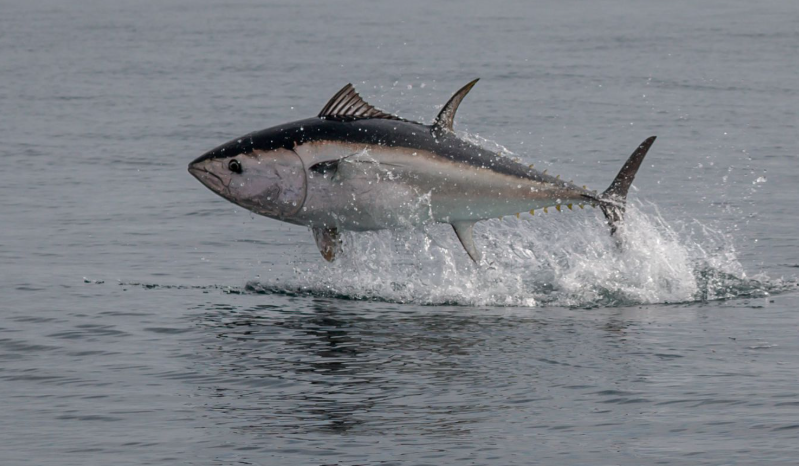
Types of Tuna
1. Atlantic Bluefin Tuna
The Atlantic bluefin tuna (Thunnus thynnus) is the largest and most famous tuna species in the world. Native to the Atlantic Ocean and Mediterranean Sea, it can exceed 10 feet (3 meters) in length and weigh more than 1,500 pounds (680 kg). Atlantic bluefin are powerful long-distance migrants capable of crossing the Atlantic Ocean multiple times during their lives. They feed primarily on herring, mackerel, squid, and other schooling fish. Highly prized for premium sushi and sashimi, this species commands some of the highest prices ever recorded in seafood markets.
2. Pacific Bluefin Tuna
Pacific bluefin tuna (Thunnus orientalis) inhabits the North Pacific Ocean, ranging from Japan and Korea to the west coast of North America. It closely resembles the Atlantic bluefin but is generally slightly smaller. Juveniles often migrate thousands of miles across the Pacific before returning to western Pacific spawning grounds as adults. Pacific bluefin feed on sardines, anchovies, squid, and crustaceans. Their exceptional meat quality makes them one of the world’s most valuable commercial fish.
3. Southern Bluefin Tuna
Southern bluefin tuna (Thunnus maccoyii) is found throughout the temperate waters of the Southern Hemisphere, particularly around Australia, New Zealand, South Africa, and South America. This species undertakes extensive migrations between feeding grounds in cold southern oceans and spawning areas in the Indian Ocean. Southern bluefin possess dense, fatty flesh highly prized for sushi. Due to historical overfishing, international conservation efforts now carefully regulate commercial harvests.
4. Yellowfin Tuna
Yellowfin tuna (Thunnus albacares) is one of the most widespread and commercially important tuna species. Easily recognized by its bright yellow dorsal and anal fins, it inhabits tropical and subtropical oceans worldwide. Yellowfin are fast-growing predators that feed on fish, squid, and crustaceans while forming large schools near floating objects and dolphins. Their firm, flavorful meat is sold fresh, frozen, and canned, making them one of the most consumed tuna species globally.
5. Albacore Tuna
Albacore tuna (Thunnus alalunga) is distinguished by its exceptionally long pectoral fins, which may extend beyond half the length of its body. Found in temperate and tropical oceans around the world, albacore undertake long seasonal migrations following schools of baitfish. They primarily consume squid, anchovies, sardines, and small mackerel. Albacore is especially valued for canned “white tuna,” prized for its mild flavor, light-colored flesh, and tender texture.
6. Bigeye Tuna
Bigeye tuna (Thunnus obesus) is named for its unusually large eyes, an adaptation that improves vision in deep, dimly lit waters. It inhabits tropical and subtropical oceans worldwide and frequently dives hundreds of meters below the surface while hunting. Bigeye feed on squid, fish, and crustaceans before returning to shallower waters at night. Their rich, fatty meat is highly sought after for sashimi and premium seafood markets.
7. Skipjack Tuna
Skipjack tuna (Katsuwonus pelamis) is the most abundant tuna species in the world and accounts for the majority of global canned tuna production. It has a streamlined body marked by four to six dark horizontal stripes along its lower sides. Skipjack inhabit warm tropical and subtropical oceans where they form enormous schools numbering thousands of fish. Feeding mainly on small fish, squid, and crustaceans, they grow rapidly and reproduce early, supporting sustainable commercial fisheries in many regions.
8. Blackfin Tuna
Blackfin tuna (Thunnus atlanticus) is the smallest member of the true tuna genus. Native to the western Atlantic Ocean, it occurs from Massachusetts to Brazil, including the Gulf of Mexico and Caribbean Sea. Blackfin tuna usually weigh between 10 and 40 pounds (4.5–18 kg) and feed on sardines, anchovies, squid, and shrimp. Their excellent fighting ability makes them popular among recreational anglers despite their relatively modest size.
9. Longtail Tuna
Longtail tuna (Thunnus tonggol) inhabits the coastal waters of the Indo-Pacific region from the Persian Gulf to Australia. It has an elongated body with a relatively long tail region and prefers shallow continental shelf waters rather than the open ocean. Longtail tuna feed primarily on sardines, anchovies, squid, and crustaceans. They support important commercial and artisanal fisheries throughout Southeast Asia and northern Australia.
10. Bullet Tuna
Bullet tuna (Auxis rochei) is a small, fast-swimming species found in tropical and warm temperate oceans worldwide. It has a streamlined body with dark wavy markings across its back and resembles a miniature tuna. Bullet tuna feed on plankton, small fish, squid, and crustaceans while forming dense schools near the ocean surface. Although not as commercially valuable as larger tuna species, they are harvested for local consumption and bait fisheries.
11. Frigate Tuna
Frigate tuna (Auxis thazard) is closely related to the bullet tuna but grows slightly larger and has a broader global distribution throughout tropical oceans. It forms large schools near the surface where it feeds aggressively on anchovies, sardines, squid, and crustaceans. Frigate tuna are important prey for larger predators such as marlin, sharks, and dolphins. They also support small-scale commercial fisheries in many coastal regions.
12. Kawakawa
Kawakawa (Euthynnus affinis), also called mackerel tuna, is widely distributed across the Indo-Pacific region. It has a robust body marked with irregular dark stripes and distinctive black spots between the pectoral and pelvic fins. Kawakawa inhabit coastal waters and coral reef environments where they feed on anchovies, sardines, squid, and shrimp. Their firm flesh is widely consumed fresh, smoked, dried, and canned throughout Asia and the Pacific Islands.
13. Little Tunny
Little tunny (Euthynnus alletteratus), also known as false albacore or bonito tuna, occurs throughout the Atlantic Ocean and Mediterranean Sea. It has a muscular body decorated with dark wavy markings and scattered black spots near the pectoral fins. Little tunny are extremely fast swimmers that hunt schools of baitfish near the surface. Although rarely canned commercially, they are highly respected among sport anglers for their speed and powerful fighting ability.
14. Slender Tuna
The slender tuna (Allothunnus fallai) is a relatively uncommon species inhabiting the cool waters of the Southern Hemisphere. It has a slender, streamlined body adapted for life in open oceans surrounding New Zealand, Australia, South Africa, and southern South America. Slender tuna feed on small fish, squid, and crustaceans while undertaking seasonal movements through temperate waters. Although occasionally caught commercially, they are less common than most other tuna species.
15. Dogtooth Tuna
The dogtooth tuna (Gymnosarda unicolor) is a powerful reef-associated predator found throughout the Indo-Pacific region. Named for its large, sharp canine-like teeth, it inhabits steep reef drop-offs and offshore seamounts rather than open pelagic waters. Dogtooth tuna are solitary hunters that prey on reef fish, squid, and small pelagic species. Their incredible strength, speed, and explosive runs make them one of the most challenging game fish pursued by offshore anglers.
16. Eastern Little Tuna
The eastern little tuna (Euthynnus affinis affinis) is a regional population of kawakawa found throughout the eastern Indian Ocean and parts of Southeast Asia. It is a fast-swimming pelagic fish that forms large schools in coastal waters, estuaries, and offshore reefs. Feeding primarily on anchovies, sardines, squid, and small crustaceans, it plays an important role in regional fisheries. Its firm, flavorful flesh is commonly grilled, smoked, dried, or used in curries and fish cakes across Asia.
17. Western Little Tuna
The western little tuna (Euthynnus affinis lineolatus) occurs mainly in the western Pacific Ocean around Indonesia, Papua New Guinea, northern Australia, and nearby island nations. It closely resembles other kawakawa populations but occupies a slightly different geographic range. This active predator hunts schools of baitfish near the surface and often associates with seabirds and dolphins. It supports both commercial and artisanal fisheries throughout the western Pacific.
18. Northern Bluefin Tuna
The northern bluefin tuna refers to Atlantic bluefin populations that inhabit the cooler waters of the North Atlantic Ocean. These massive fish undertake seasonal migrations between productive feeding grounds near Canada, Iceland, and Norway and spawning areas in warmer seas. Their rich, fatty flesh makes them highly prized for premium sushi and sashimi. Strict international quotas now regulate harvests to support long-term population recovery.
19. Mediterranean Bluefin Tuna
Mediterranean bluefin tuna are Atlantic bluefin that spend much of their lives within the Mediterranean Sea, one of the species’ primary spawning areas. Every spring and summer, mature adults gather in warm Mediterranean waters to reproduce before dispersing into the Atlantic to feed. These fish are among the most valuable seafood species in Europe and Asia, and many are raised in offshore tuna ranches before being exported to international markets.
20. Giant Bluefin Tuna
The giant bluefin tuna refers to exceptionally large individuals of Atlantic or Pacific bluefin that exceed 1,000 pounds (450 kg). These giants are among the ocean’s most powerful predators, capable of swimming at speeds exceeding 40 miles per hour (64 km/h). Their enormous size, strength, and market value have made them legendary among commercial fishermen and sport anglers alike. Some individuals are estimated to live for more than 40 years.
21. Juvenile Bluefin Tuna
Juvenile bluefin tuna are young Atlantic, Pacific, or Southern bluefin that spend their early years feeding in nutrient-rich coastal and offshore waters before reaching sexual maturity. During this stage they grow rapidly by consuming sardines, anchovies, squid, and crustaceans. Juveniles undertake impressive migrations that prepare them for adult life in the open ocean. Their survival is critical for maintaining healthy future populations.
22. School Tuna
School tuna is a common fisheries term used to describe smaller, schooling tuna that are harvested before reaching large adult size. These fish often include young yellowfin, skipjack, longtail, or little tunny depending on the region. They travel in dense schools that may contain thousands of individuals, allowing commercial purse seine fisheries to harvest them efficiently. School tuna are widely processed for fresh markets and canned seafood.
23. Oceanic Tuna
Oceanic tuna refers collectively to tuna species that spend nearly their entire lives in the open ocean rather than remaining close to coastlines. Species such as yellowfin, bigeye, bluefin, and albacore are classic oceanic tuna, undertaking migrations that span entire ocean basins. They rely on exceptional swimming ability and advanced sensory systems to locate prey across vast distances. Their movements are strongly influenced by ocean currents, water temperature, and food availability.
24. Coastal Tuna
Coastal tuna describes species that spend much of their lives near continental shelves, islands, reefs, and coastal waters. Longtail tuna, kawakawa, bullet tuna, and frigate tuna are among the best-known coastal species. These fish often feed on dense schools of sardines, anchovies, and shrimp near shore, making them important resources for small-scale fisheries. Coastal tuna generally complete shorter migrations than their oceanic relatives.
25. False Albacore
False albacore is another common name for the little tunny (Euthynnus alletteratus). It resembles true albacore but belongs to a different genus and has darker flesh with stronger flavor. False albacore are famous among anglers for their extraordinary speed, explosive strikes, and long, powerful runs. Large schools frequently chase baitfish to the surface, creating spectacular feeding frenzies that attract seabirds and fishermen alike.
26. Mackerel Tuna
Mackerel tuna is the widely used common name for kawakawa (Euthynnus affinis). This medium-sized tuna combines characteristics of both mackerels and true tuna, possessing a streamlined body, rapid growth, and excellent swimming ability. It is abundant throughout the Indo-Pacific region and is harvested using purse seines, handlines, and gill nets. Mackerel tuna is commonly sold fresh, smoked, salted, canned, or dried.
27. Bonito Tuna
Bonito tuna is a marketplace term sometimes applied to species such as little tunny and kawakawa because of their close resemblance to true bonitos. These fish are streamlined predators that feed aggressively on anchovies, sardines, squid, and shrimp. Although generally smaller than bluefin or yellowfin tuna, bonito tuna remain highly valued in many regional fisheries and are widely consumed fresh or preserved.
28. Tropical Tuna
Tropical tuna collectively refers to species that thrive in warm equatorial oceans. Yellowfin, skipjack, bigeye, kawakawa, frigate tuna, and bullet tuna are among the most important tropical members of the tuna family. These fish often associate with floating debris, drifting seaweed, and underwater structures where prey congregate. Tropical tuna account for a significant portion of the world’s commercial tuna harvest.
29. Temperate Tuna
Temperate tuna inhabit cooler ocean waters outside the tropics. Atlantic bluefin, Pacific bluefin, Southern bluefin, and albacore are the principal temperate species. Their specialized circulatory systems allow them to maintain elevated body temperatures, enabling efficient hunting in cold water where many tropical tuna cannot survive. These species undertake some of the longest migrations of any marine fish.
30. Black Skipjack
The black skipjack (Euthynnus lineatus) is found in the eastern Pacific Ocean from California to Peru. Despite its common name, it belongs to the same genus as little tunny rather than the true skipjack tuna. It has a dark, streamlined body with distinctive wavy markings across its back and feeds on anchovies, sardines, squid, and crustaceans. Black skipjack support local commercial fisheries and are popular among recreational anglers because of their speed, strength, and excellent fighting ability.