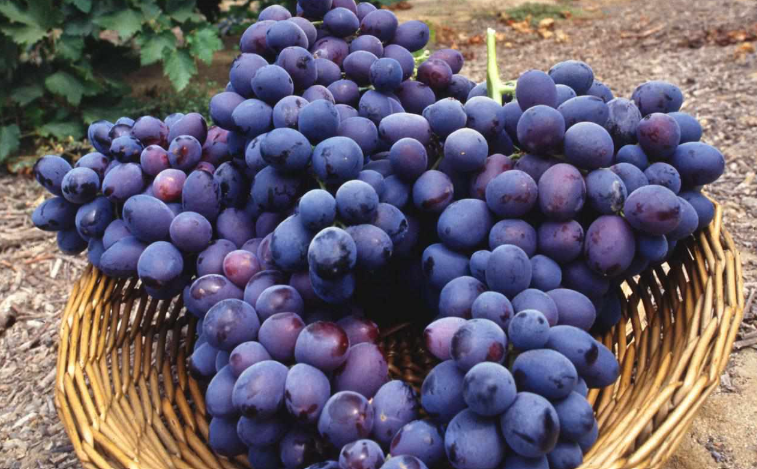
Types of purple grapes get their color from anthocyanin, a genuine pigment compound concentrated in the skin, and the deepest purple-to-black grapes on this list actually contain some of the highest anthocyanin levels of any fruit commonly eaten, a real trait behind much of the antioxidant research surrounding dark grapes and red wine specifically. Green and white grapes aren’t simply “missing” that color by chance either, they carry a genuine genetic mutation that effectively switches anthocyanin production off entirely, meaning purple grapes represent the plant’s more ancestral, unaltered coloring rather than the other way around.
It’s worth knowing a genuinely surprising fact about grape anatomy here too: even the darkest purple grape skin usually surrounds pale, clear flesh and juice, since the pigment stays concentrated in the skin alone rather than spreading through the whole berry. A small handful of unusual varieties called teinturier grapes break that rule entirely, carrying genuine color pigment in the flesh itself, historically valued by winemakers specifically for blending extra color into a wine that would otherwise turn out too pale.
The specific shade of purple varies considerably across this list too, from Concord’s classic, almost blue-black skin to Malbec’s inky depth, historically nicknamed “black wine” in its native Cahors for exactly that reason. Table grapes and wine grapes both make an appearance here, since the same anthocyanin-driven coloring applies regardless of whether the fruit ends up eaten fresh or fermented.
The University of California Davis’s Foundation Plant Services grape program maintains detailed genetic records on skin color traits across the vast majority of varieties covered here. What follows covers 15 types of purple grapes.
Concord
Concord is genuinely the most iconic purple grape in American culture, its deep blue-black skin and distinctive “foxy” musky flavor forming the flavor most Americans associate with grape juice and jelly. Developed in Massachusetts in the 19th century specifically for cold-climate hardiness, it remains one of the most widely recognized purple grape varieties by sight alone.
It tolerates genuine cold considerably better than most other purple grapes on this list, its native American heritage giving it real hardiness for a harsher climate than many classic wine regions experience. The Cornell University Cooperative Extension’s grape breeding program documents Concord’s continued importance to American cold-climate viticulture.
Cabernet Sauvignon
Cabernet Sauvignon produces genuinely thick-skinned, deeply purple-black berries, its intense pigmentation contributing directly to the dark color and considerable tannin structure found in the wine it produces. Its status as the most widely planted wine grape in the world means its distinctive dark purple clusters are a familiar sight across nearly every wine-producing region.
It thrives in a warm, well-drained vineyard site, its considerable skin thickness and pigment concentration making it genuinely well suited to extended aging.
Merlot
Merlot produces a slightly softer, though still genuinely deep purple-blue berry compared to its half-sibling Cabernet Sauvignon, its somewhat thinner skin contributing to the softer tannin structure the finished wine is known for. Its considerable global popularity has made it one of the most widely recognized purple wine grapes grown anywhere.
It thrives in a range of soil types, tolerating cooler conditions somewhat better than Cabernet Sauvignon while retaining a genuinely deep purple color.
Also Read: Different Types of Grapes From Around the World
Syrah
Syrah produces genuinely some of the darkest, most intensely pigmented berries of any classic wine grape, its thick skin and considerable anthocyanin concentration producing deeply colored, full-bodied red wine. Its French Rhône Valley origin and considerable global popularity under the Shiraz name in Australia have made it a genuinely significant purple wine grape worldwide.
It thrives in a warm climate, its thick skin and considerable tannin structure producing genuinely intensely colored red wine.
Malbec
Malbec produces genuinely inky, deeply pigmented berries, historically earning its French homeland of Cahors the nickname “black wine” for the remarkably dark, opaque color the grape’s skin produces. Its considerable adaptation to Argentina’s high-altitude vineyards has made it one of the most recognizable deep purple wine grapes globally.
It thrives at genuine high altitude, its considerable sun exposure at elevation contributing to the deep color and ripe fruit character Argentine Malbec is known for.
Petite Sirah
Petite Sirah produces genuinely among the darkest, most intensely colored berries of any wine grape grown anywhere, its remarkably thick skin and considerable pigment concentration producing wine so deeply colored it can appear nearly opaque in the glass. Its considerable tannin structure alongside that intense color has made it a genuinely robust, full-bodied red wine style.
It tolerates a warm climate well, its considerably thick skin producing some of the deepest, most saturated purple color of any grape on this list. The University of California Agriculture and Natural Resources program documents anthocyanin concentration differences across wine grape varieties.
Zinfandel
Zinfandel produces genuinely deep purple-black berries when fully ripe, its considerable sugar accumulation capacity supporting both the classic dry red wine style and the lighter, pink-tinted White Zinfandel made by limiting skin contact during fermentation. Its confirmed genetic identity as a Croatian variety adds a genuinely fascinating origin story to its deep purple American reputation.
It tolerates a warm climate well, its considerable pigment concentration producing genuinely deep color when the skin is given full contact time during fermentation.
Kyoho
Kyoho produces genuinely large, deep purple-black berries, among the most visually striking table grapes grown commercially, its rich, sweet flavor and substantial size making it a premium fresh-eating grape throughout East Asia. Developed in Japan through a deliberate cross of American hybrid varieties, it’s become one of the most popular purple table grapes across the region.
It thrives in a temperate climate, its considerable size and deep color reflecting decades of dedicated breeding since its mid-20th-century development.
Isabella
Isabella produces genuinely deep purple, almost black-skinned berries with the same distinctive “foxy” musky character found in several other native American hybrid grape varieties. Its considerable historical significance as one of the first American grapes widely exported for winemaking gives it a genuinely international reputation despite its humble native origin.
It tolerates a range of climates, its considerable historical export significance reflecting genuine 19th-century international interest in American purple grape varieties.
Purple Muscadine
Purple muscadine varieties produce genuinely thick-skinned, deep purple-to-bronze berries belonging to an entirely distinct native species found throughout the southeastern United States, considerably more disease-resistant than European grapes. Its large, distinctive seeds and musky sweetness set it apart structurally from nearly every other grape on this list.
It tolerates heat and humidity considerably better than any European wine grape, thriving in exactly the climate that would cause serious disease pressure for a more traditional variety.
Ribier
Ribier produces genuinely large, deep purple-black berries with a crisp, mildly sweet flavor, historically one of the most popular fresh table grapes sold in North American grocery stores before newer seedless varieties gained wider market share. Its considerable size and striking dark color still make it a recognizable specialty item where it’s available today.
It thrives in a warm, dry climate, its considerable berry size and deep pigmentation making it a genuinely eye-catching addition to a fresh fruit display.
Autumn Royal
Autumn Royal was developed in California specifically for its genuinely large, deep purple-black seedless berries and notably late harvest window extending well past when many other table grapes have finished. Its considerable size and crisp texture have made it a popular late-season fresh-eating grape in American grocery stores.
It thrives in a warm, dry climate, its late ripening window reflecting deliberate breeding selection aimed specifically at extending the purple table grape season.
Alicante Bouschet
Alicante Bouschet is a genuine and unusual teinturier grape, meaning its flesh and juice carry real color pigment rather than the pale, clear interior found in almost every other grape regardless of skin color. Its considerable historical value for blending extra color into a pale wine made it especially important during difficult vintages and periods of grape shortage.
It thrives in a warm climate, its genuinely pigmented flesh setting it apart structurally from the vast majority of other purple grapes on this list. The UC Davis Department of Viticulture and Enology documents the genuine rarity of teinturier grapes among global wine grape varieties.
Witch Finger Grape
Witch Finger grape produces genuinely elongated, deep purple, finger-like berries developed through modern California breeding, its unusual shape and crisp, sweet flavor making it a distinctive specialty item in produce sections. Its considerable visual novelty has made it a popular choice for anyone looking for a genuinely eye-catching purple table grape.
It thrives in a warm, dry climate, its unusual elongated shape and deep color reflecting a genuinely modern approach to table grape breeding.
Black Beauty Grape
Black Beauty grape produces genuinely deep, glossy purple-black seedless berries developed through modern commercial breeding specifically for consistent size, sweetness, and eye-catching dark color. Its considerable crunch and reliable sweetness have made it a popular modern addition to the fresh table grape market.
It thrives in a warm, dry climate, its considerable consistency in size and color reflecting the same deliberate modern breeding approach responsible for several other newer purple table grape varieties.
Key Takeaways
Types of purple grapes include table and wine varieties that differ in fruit size, skin color, flavor, seed characteristics, texture, and ripening time. Their color can range from reddish-purple to deep violet or almost black, depending on the variety and stage of ripeness.
Choosing a purple grape variety depends on its intended use and growing conditions. Some are better suited for fresh eating, while others are commonly grown for juice, raisins, or winemaking. Climate, soil, sunlight, and the length of the growing season can also influence which varieties perform well.
Purple grapevines generally need plenty of sunlight and adequate support because their shoots can spread as they develop. Well-drained soil, consistent moisture, appropriate pruning, and sufficient airflow can help vines maintain healthy growth and produce better-quality fruit.
Understanding the characteristics of different purple grapes makes it easier to select varieties for a garden or vineyard. Considering fruit flavor, seedlessness, mature vine size, harvest period, disease resistance, and local climate can help match a grape variety to its intended purpose and growing environment.