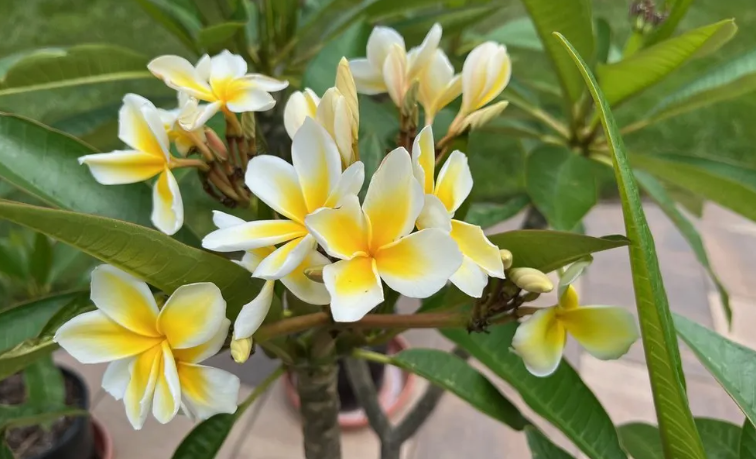
Plumeria is one of the most fragrant flowering trees grown in tropical and subtropical gardens, best known for producing the blooms traditionally used in Hawaiian leis. A single plumeria cultivar can produce anywhere from 50 to 200 flowers per cluster over the course of several months, with the exact count varying significantly depending on the specific variety and growing conditions. Only about 10 to 60 percent of a plant’s branch tips will actually set flowers in a given season, with more compact cultivars generally blooming far more heavily than taller, leggier types.
Plumeria trees are prized for their fragrance as much as their appearance, releasing scents that commonly include notes of jasmine, citrus, peach, coconut, and gardenia depending on the cultivar. Because the flowers are pollinated by night-flying moths in their native range, plumeria blooms tend to release their strongest fragrance in the evening hours, though they remain noticeably scented throughout the day as well. In warm climates, plumeria trees can grow as landscape specimens reaching more than 30 feet tall, while in cooler regions they are typically grown in containers and brought indoors once nighttime temperatures drop into the 40s Fahrenheit.
Color range across plumeria varieties is remarkably broad, spanning white, yellow, pink, red, and a wide array of pastel bicolor and multicolor combinations. Each flower typically has 5 petals arranged in a twisted, pinwheel-like pattern, a structural trait shared across nearly every plumeria type regardless of color. With hundreds of named cultivars now in circulation among collectors and growers, plumeria breeding has produced flowers ranging from soft, single-toned pastels to dramatic combinations of 3 or more colors within a single bloom.
Propagation is almost always done through stem cuttings rather than seed, since seed-grown plumeria will not reliably reproduce the exact color and fragrance of a named cultivar. Cuttings are typically taken as 12 to 18 inch leafless stem tips in spring and allowed to dry before planting in well-drained soil. Plumeria trees generally require little routine care, tolerating drought well once established, though they benefit from a high-phosphorus fertilizer during the growing season to encourage heavier flowering. Below are 40 different types of plumeria, each known for a distinct color, fragrance, or growth habit.
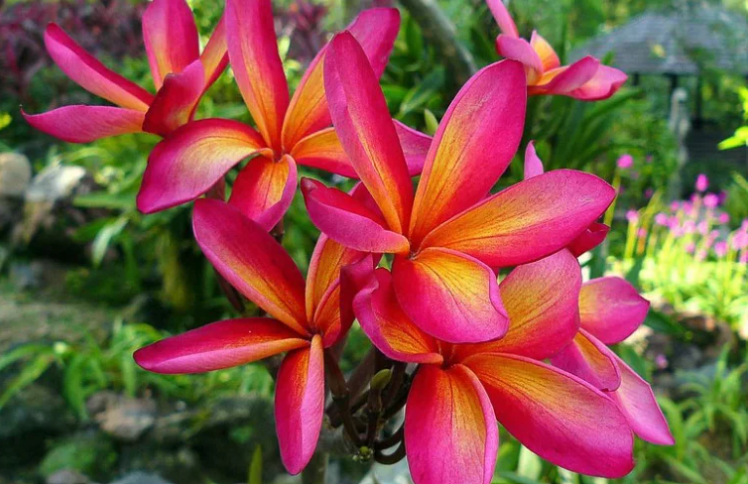
Types of Plumeria
Aztec Gold
Aztec Gold is considered the most common and popular yellow plumeria variety, producing deep golden-yellow blooms with rounded white edges. The buds and petal backs are often tinged with a soft pink hue, adding subtle depth to the overall coloring. Aztec Gold is known for a distinctive peaches-and-cream fragrance and can reach up to 15 feet tall in the ground, though it typically stays smaller when grown in containers.
Thailand Red
Thailand Red is a compact-growing variety originating from Thailand, known for blooming profusely despite its smaller overall size. This cultivar produces rich red flowers on a tidy, manageable plant that fits well into smaller garden spaces. Thailand Red is frequently recommended for gardeners who want a strong floral display without needing a large amount of growing space.
Toba’s Fire
Toba’s Fire, also sold under the name Embers, produces warm, fiery-toned blooms that have made it a popular variety among collectors. This cultivar has circulated under multiple trade names over the years, which occasionally leads to confusion when sourcing plants. Toba’s Fire remains a sought-after choice for gardeners wanting a bold, warm-colored flowering tree.
Lucky Star
Lucky Star is a Hawaiian-origin variety valued for its reliable blooming and classic tropical appearance. This cultivar has become a staple among plumeria collectors specifically interested in Hawaiian breeding lines. Lucky Star performs well both in the ground in warm climates and in containers further north.
Riviera Rainbow
Riviera Rainbow is an officially registered cultivar known for long blooming, sturdy growth, and strong resistance to rust fungus compared to many other plumeria types. This variety tends to hold onto its leaves through most of the winter season, only shedding them briefly before producing a fresh new set. Riviera Rainbow is especially generous with its multicolored, rainbow-toned blooms throughout the flowering season.
Confetti
Confetti, also registered under the name Barbados Showgirl, produces a dazzling combination of colors within a single bloom, making it one of the more visually complex plumeria varieties available. This cultivar has been sold under several different names over the years as it moved between growers and regions. Confetti remains popular for its vibrant, multicolored petal pattern.
Kaneohe Sunburst
Kaneohe Sunburst is notable for its very slender branches, a distinguishing physical trait compared to many thicker-branched plumeria varieties. This cultivar produces bright, sunburst-patterned blooms consistent with its name. Kaneohe Sunburst requires careful handling during propagation due to its more delicate branch structure.
Duvauchelle Special
Duvauchelle Special is a registered cultivar named in honor of a Hawaiian plumeria enthusiast from Kauai. This variety is valued among collectors for its connection to Hawaiian plumeria breeding history as much as for its floral display. Duvauchelle Special remains a respected name within dedicated plumeria collector circles.
Celadine
Celadine produces large clusters of rich yellow flowers bordered with broad white edges, creating strong visual contrast within each bloom. This registered cultivar is known for long-lasting, sweetly scented flowers that hold up well both on the tree and as cut blooms. Celadine remains a popular choice for gardeners seeking a reliably fragrant yellow-flowered variety.
Candy Stripe
Candy Stripe is a registered cultivar named for the distinctive striped pattern running across its petals. This variety adds textural visual interest compared to solid-colored plumeria types, with the striping creating a candy-like appearance. Candy Stripe is a favorite among collectors looking for patterned rather than solid-toned blooms.
Bridal Bouquet
Bridal Bouquet is a fast-growing, nearly evergreen variety with a shrub-like growth habit that makes it well suited for hedges or accent plantings. This type blooms profusely throughout much of the year but produces flowers with little to no noticeable fragrance, unlike most other plumeria varieties. Bridal Bouquet has become an increasingly popular landscape plant thanks to its vigorous, low-maintenance growth.
Singapore White
Singapore White is one of the most widely grown varieties within its particular species group, producing clean white flowers that stand out sharply against dark green foliage. This variety typically grows 5 to 8 feet tall, making it a manageable size for most home landscapes. Singapore White is often chosen specifically for its clean, uncomplicated coloring.
Black Tiger
Black Tiger produces distinctive dark burgundy petals streaked with contrasting white markings, giving the bloom a bold, almost animal-print appearance that inspired its name. This variety stands out dramatically compared to the pastel tones common in many other plumeria cultivars. Black Tiger is frequently sought after by collectors looking to diversify their collection with darker tones.
Rainbow Delight
Rainbow Delight showcases an array of colors and fragrances within its blooms, adding both visual and olfactory variety to any garden planting. This cultivar is often grown alongside other multicolored varieties to create a diverse, ever-changing display throughout the flowering season. Rainbow Delight adds elegance to mixed plumeria collections.
Elizabeth Thornton
Elizabeth Thornton is named after the individual credited with developing or popularizing the cultivar, producing flowers that range from deep pink to mauve with fine maroon streaks and rich orange centers. This variety carries a sweet fragrance typical of many pink-toned plumeria cultivars. Elizabeth Thornton remains a well-regarded choice among collectors for its detailed, multi-toned coloring.
Polynesian Sunset
Polynesian Sunset displays outer petals ranging from mauve to pink, with interiors showing vibrant orange hues occasionally accented by touches of white. This variety’s gradient coloring evokes the tropical sunset imagery referenced in its name. Polynesian Sunset is a popular choice for gardeners wanting a warm, multi-toned bloom.
Sundance
Sundance is notable for its unusual fragrance, often described as reminiscent of cinnamon chewing gum rather than the more typical floral or fruity scents found in other plumeria types. This variety’s exceptional blooms make it a standout even among a genus known for fragrance diversity. Sundance is frequently sought after specifically for its unique scent profile.
Lilliana
Lilliana, also known by an alternate trade name, showcases impressive flowers in a pale canary yellow with white borders. This variety’s soft coloring makes it a versatile choice for mixed plantings alongside both brighter and more muted plumeria types. Lilliana remains a recognizable cultivar among yellow-flowered plumeria varieties.
Hot Pink
Hot Pink is a commonly seen cultivar producing pink flowers of varying intensity with a tangerine-yellow center, representing one of the classic color forms found throughout plumeria breeding. This variety tends to have a longer flowering period and grows taller than some of the earlier-blooming yellow and white types. Hot Pink remains one of the most recognizable and widely available plumeria color forms.
Vera Cruz Rose
Vera Cruz Rose is a highly sought-after variety among collectors, producing large flowers in a dreamy blend of yellow, peach, and pale pink arranged in an ombre pattern along the petal edge. This cultivar’s true selling point is its fragrance, which carries a rich, old garden rose scent with a hint of spice rather than the more common tropical notes. Vera Cruz Rose is considered one of the more romantic and refined plumeria cultivars available.
Bannagkan
Bannagkan, also known by several alternate names depending on the region, is a medium-growing cultivar originating from Thailand. This variety has accumulated multiple trade names over the years as it spread through different growing regions. Bannagkan remains a recognized name among Thai-origin plumeria cultivars.
Aimhorn
Aimhorn is an elegant and compact variety from Thailand, celebrated for its delicate beauty and enchanting fragrance. This cultivar was named in honor of a family member of a renowned Thai plumeria grower. Aimhorn’s compact size makes it a practical choice for smaller gardens and container growing.
Akha
Akha is a vibrant and captivating variety known for its striking 3-inch flowers displaying a rainbow of colors within each bloom. This cultivar’s multicolored petals make it a standout among collectors seeking bold visual variety. Akha’s delicate fragrance complements its vivid coloring.
Almaviva
Almaviva is a seedling cultivar celebrated for its vibrant pink blooms, intoxicating fragrance, and abundant flowering habit. This variety was developed as an offshoot of an existing well-known cultivar, carrying forward many of its parent’s desirable traits. Almaviva’s elegant flowers make it a popular choice among dedicated collectors.
Amazing
Amazing is a unique cultivar that shares similarities with several other well-known varieties while maintaining its own distinct characteristics. This variety was developed specifically to stand apart from its closely related counterparts despite sharing some visual traits. Amazing has earned its name through its striking and memorable floral display.
Apricot Locks
Apricot Locks, also known by an alternate trade name, is celebrated for its peachy-pink blooms, golden centers, and delightful fragrance. This variety grows tall and upright, bringing an elegant vertical presence to garden plantings. Apricot Locks adds both color and structure to a mixed plumeria collection.
Apricot
Apricot, also sold under a couple of alternate trade names, is recognized for its vibrant blooms and exceptional fragrance. This cultivar remains a favorite among enthusiasts for its reliable performance and consistent flowering. Apricot is frequently recommended to gardeners just beginning to build a plumeria collection.
Artistry
Artistry is known for its vibrant flowers, prolific blooming habit, and delightful fragrance, producing large clusters of vivid orange blooms. This cultivar’s dense flower clusters create a particularly full, showy display compared to more sparsely blooming types. Artistry is a strong choice for gardeners wanting maximum visual impact from a single plant.
Aurelia
Aurelia is a compact cultivar celebrated for its vibrant red blooms, deep yellow center, and sweet, spicy fragrance. This variety was developed as a seedling of another well-established pink-flowering cultivar. Aurelia’s compact growth habit makes it well suited for container gardening in cooler climates.
Barbados Apricot Brandy
Barbados Apricot Brandy is a registered variety celebrated for its vibrant orange-yellow blooms and fruity fragrance. This cultivar was formally registered in the late 1980s and has remained popular among collectors since. Barbados Apricot Brandy’s lush growth habit adds fullness to any collection.
Barbara Hoak
Barbara Hoak is a unique seedling cultivar developed from a fast-growing, evergreen parent species known for its profuse, nearly year-round blooming. This variety carries forward some of its parent’s vigorous growth habits while offering its own distinct floral characteristics. Barbara Hoak is a relatively newer addition to the world of named plumeria cultivars.
Isabella
Isabella is a distinct species-level plumeria type recognized for its own unique growth habits and floral characteristics separate from the more commonly hybridized varieties. This type is valued by collectors specifically interested in species-level diversity rather than only hybrid cultivars. Isabella remains a notable name among dedicated plumeria enthusiasts.
Grove Farm
Grove Farm is a large-bloomed, profusely flowering variety historically significant as the seed parent behind an entire line of well-known cultivars developed by a prominent Hawaiian breeder. This variety’s genetic influence extends across numerous other named plumeria types in cultivation today. Grove Farm remains an important historical reference point in plumeria breeding.
Mele Chantilly
Mele Chantilly is a Hawaiian-bred cultivar valued for its delicate, richly fragrant blooms and reliable flowering habit. This variety carries a Hawaiian name reflecting its origins within the islands’ long tradition of plumeria cultivation for lei-making. Mele Chantilly remains a respected name among collectors focused on Hawaiian breeding lines.
Singapore Pink
Singapore Pink is a soft pink-flowered variety closely related to its white-flowered counterpart, sharing a similar compact growth habit reaching 5 to 8 feet tall. This variety offers a gentler, more pastel alternative for gardeners who prefer the classic form but want a touch of color. Singapore Pink pairs well with its white counterpart in mixed plantings.
Samoan Fluff
Samoan Fluff is known for its unusually thick, ruffled petals and leaves, easily distinguishable from the thinner, flatter petals found on most other plumeria types. This variety’s distinctive texture makes it stand out even in a large mixed collection. Samoan Fluff is frequently sought after by collectors specifically for its unusual petal structure.
White Frangipani
White Frangipani refers to the classic white-flowered form found at the root of many modern hybrid plumeria cultivars, typically featuring white petals surrounding a bright yellow center. This type tends to be one of the earlier bloomers in the flowering season compared to some pink-toned forms. White Frangipani remains the most historically significant color form in the development of the species.
Golden Frangipani
Golden Frangipani describes the yellow-flowered form that serves as the genetic basis for varieties like Aztec Gold, typically showing blooms that fade toward white at the outer petal edge as they mature. This form tends to bloom earlier in the season with a somewhat shorter individual flowering period compared to pink-toned types. Golden Frangipani remains a foundational color form within plumeria breeding.
Pink Frangipani
Pink Frangipani describes the pink-flowered form featuring a tangerine-yellow center, one of the longest-blooming and often tallest-growing color forms within the species. This form tends to flower later in the season but for a more extended period than the white or yellow forms. Pink Frangipani has served as a genetic foundation for many popular named cultivars.
Tricolor Frangipani
Tricolor Frangipani describes the pale yellow-white flowered form featuring yellow centers with a red or pink rim along the outer petal edge, combining traits from multiple other color forms into a single bloom. This form’s layered coloring makes it especially popular among breeders working to develop new multicolor cultivars. Tricolor Frangipani represents one of the more visually complex naturally occurring color patterns within the species.