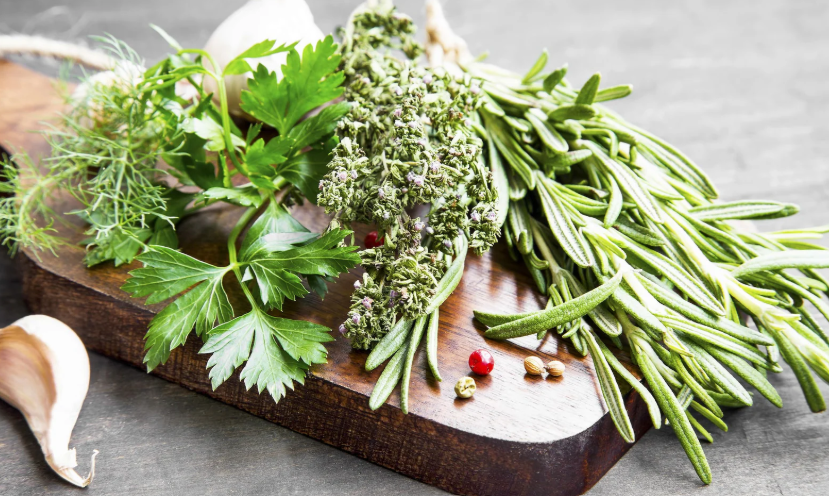
Herbs and spices are among the most ancient and most culturally significant plant products in human history, used for at least 50,000 years for flavoring food, preserving it, healing the body, and in religious and ceremonial practices across virtually every civilization that has ever existed. The distinction between herbs and spices is largely practical rather than botanical — herbs are generally the fresh or dried leaves of aromatic plants grown in temperate climates, while spices are typically the seeds, bark, roots, fruits, or flowers of plants grown primarily in tropical regions. The global herbs and spices market was valued at over 18 billion dollars in 2022 and is projected to exceed 30 billion dollars by 2030, reflecting extraordinary and growing global demand.
The spice trade has shaped human history more profoundly than almost any other commercial activity, driving the age of exploration, establishing global trade routes, funding empires, and triggering wars over control of production and distribution. Pepper alone was once so valuable it was used as currency and as ransom payment, and the desire to find direct sea routes to the spice-producing regions of South and Southeast Asia led directly to the European discovery of the Americas. Today spices are produced across tropical regions worldwide with India dominating global production — accounting for approximately 75 percent of world spice production and 50 percent of global spice exports — followed by China, Bangladesh, Pakistan, Turkey, and Indonesia.
The world’s most consumed herbs and spices by volume include pepper, chili, ginger, garlic, onion, cumin, turmeric, coriander, cinnamon, and cardamom, collectively forming the flavor foundation of the world’s most widely practiced culinary traditions. Beyond flavor, herbs and spices are extraordinary sources of bioactive compounds — antioxidants, antimicrobials, anti-inflammatory agents, and numerous other pharmacologically active molecules — that are the subject of thousands of published scientific studies exploring their potential health benefits. Many of the most commonly used culinary herbs and spices have documented medicinal properties that have been exploited in traditional medicine systems for thousands of years before being investigated by modern pharmacological research.
Herbs and spices are consumed in an extraordinary diversity of forms including fresh leaves, dried leaves, whole seeds, ground powders, essential oils, oleoresins, extracts, tinctures, and numerous traditional prepared forms specific to different culinary and medicinal traditions. The fresh herb market alone — driven by the global expansion of fresh basil, cilantro, parsley, mint, and other herbs in supermarket produce sections — has grown dramatically over the past two decades as consumers demand fresher, more aromatic culinary herbs for home cooking. The growing global interest in authentic ethnic cuisines, functional foods with health benefits, organic and natural products, and plant-based diets is driving sustained expansion of the herbs and spices market across every major consumer market worldwide.
Types of Herbs and Spices
1. Black Pepper
Black Pepper is the most widely traded and most universally used spice in the world, accounting for approximately 20 percent of the entire global spice trade by value and present in virtually every cuisine on earth. Produced from the dried, unripe berries of a tropical climbing vine native to the Malabar Coast of India, it contains the alkaloid piperine responsible for its characteristic pungent heat and has been traded internationally for over 4,000 years. India, Vietnam, Indonesia, and Brazil are the world’s leading producers, with Vietnam alone accounting for approximately 34 percent of global production.
2. Chili Pepper
Chili Pepper in its dried and powdered forms is the second most important spice globally by consumption volume, fundamental to the cuisines of India, Mexico, China, Southeast Asia, West Africa, and the Caribbean. The heat-producing compound capsaicin ranges from zero in sweet varieties to over 2 million Scoville units in the hottest superhot varieties, and global dried chili production exceeds 4 million metric tons annually with India as the dominant producer and exporter. Chili is the defining flavor of hundreds of regional spice blends, chili pastes, and hot sauces that collectively represent one of the most diverse categories in global food manufacturing.
3. Garlic
Garlic is one of the most universally used flavoring ingredients in the world, consumed fresh, dried, powdered, and processed into pastes and oils across virtually every food culture on earth — from Italian soffritto and French aioli to Chinese stir-fries, Indian curries, Middle Eastern hummus, and Korean kimchi. Global garlic production exceeds 30 million metric tons annually, with China producing approximately 80 percent of the world’s supply. Beyond its culinary importance, garlic is one of the most extensively studied medicinal plants in the world, with documented cardiovascular, antimicrobial, and immune-modulating properties supported by hundreds of clinical studies.
4. Ginger
Ginger is the fourth most consumed spice in the world, used across Asian, African, Caribbean, and Western cuisines in fresh, dried, pickled, crystallized, and powdered forms and valued equally for its warm, pungent, complex flavor and its well-documented medicinal properties. Global ginger production exceeds 4 million metric tons annually with India, China, Nigeria, and Indonesia as the leading producers. Gingerols and shogaols — the primary bioactive compounds in fresh and dried ginger respectively — are among the most extensively studied natural anti-inflammatory and antiemetic compounds in pharmacological research.
5. Turmeric
Turmeric is one of the fastest-growing spices in the global market, driven by extraordinary consumer interest in its primary bioactive compound curcumin and its documented anti-inflammatory, antioxidant, and potential anticancer properties that have made it a cornerstone of the global health food and nutraceutical industry. Produced from the dried, ground rhizomes of a tropical plant related to ginger, turmeric is the essential coloring and flavoring agent of Indian curry and is used across South Asian, Southeast Asian, and Middle Eastern cuisines. India produces approximately 80 percent of the world’s turmeric supply and consumes approximately 80 percent of its own production domestically.
6. Cumin
Cumin is one of the most important and widely used spices in global cooking, the defining flavor of Indian curry blends, Mexican chili and taco seasonings, North African ras el hanout, and Middle Eastern spice preparations — making it simultaneously essential to four of the world’s most distinct and widely practiced culinary traditions. It is produced from the dried seeds of a small flowering plant related to parsley, with a warm, earthy, slightly bitter, complex aromatic character produced by the volatile compound cuminaldehyde. India is the world’s largest cumin producer and exporter, with Syria, Iran, and Turkey also important producers.
7. Coriander
Coriander is unique among commonly used herbs and spices in that every part of the plant is edible and commercially valuable — the fresh leaves are the herb commonly called cilantro in North America, one of the most widely used fresh herbs globally, while the dried seeds are the spice coriander, fundamental to Indian, Middle Eastern, Latin American, and Southeast Asian cooking. The fresh herb is the most widely consumed fresh herb in the world by volume, essential in Mexican, Thai, Indian, Vietnamese, and Middle Eastern cooking. The seeds have a warm, citrusy, slightly sweet flavor quite distinct from the fresh leaf.
8. Cinnamon
Cinnamon is one of the oldest and most historically important spices in the world, documented in ancient Egyptian and Chinese texts over 4,000 years ago and one of the most prized spices of the ancient and medieval spice trade. Produced from the inner bark of tropical evergreen trees that is peeled, dried, and rolled into the familiar quill form or ground into powder, cinnamon has a warm, sweet, complex, slightly spicy character that makes it fundamental to baking, confectionery, chai tea, mulled wine, and numerous sweet and savory cooking traditions worldwide. Sri Lanka produces the finest quality Ceylon cinnamon while China, Vietnam, and Indonesia produce the more widely traded cassia cinnamon.
9. Basil
Basil is the most widely grown and commercially important culinary herb in the Western world, the defining flavor of Italian pesto and Mediterranean cooking and an essential fresh herb in Thai, Vietnamese, and broader Southeast Asian cuisine. Sweet Italian basil — with its complex, aromatic, slightly clove-like, sweet, fresh character — is the most widely grown variety, while Thai basil, lemon basil, and holy basil serve distinct culinary roles in Asian cooking traditions. Global fresh basil production is enormous, with Italy, the United States, Egypt, and France among the largest producers.
10. Parsley
Parsley is the most widely consumed fresh herb in Europe and North America, used as a flavoring ingredient, garnish, and ingredient in its own right across French, Italian, Middle Eastern, and broader Mediterranean cuisines. Flat-leaf Italian parsley, with its cleaner, more robust, complex flavor, is preferred by professional chefs while curly parsley has traditionally dominated fresh retail markets. It is an essential ingredient in French bouquet garni and fines herbes blends, Italian gremolata and salsa verde, and the Middle Eastern tabbouleh salad where it is the primary ingredient rather than a garnish.
11. Paprika
Paprika is the ground, dried powder of sweet to mildly hot red pepper varieties that is the defining spice of Hungarian, Spanish, and Turkish cuisines and one of the most widely used red food colorings and flavorings in global food manufacturing. Hungarian paprika — available in sweet, hot, and smoked forms — is considered the finest quality paprika in the world and is the essential ingredient in Hungarian goulash and chicken paprikash, while Spanish pimentón — particularly the smoked varieties — provides the characteristic smokiness of Spanish chorizo and paella. Global paprika production is dominated by Hungary, Spain, China, and the United States.
12. Oregano
Oregano is one of the most widely used dried herbs in the world, fundamental to Italian and broader Mediterranean cooking in its mild Italian form and to Greek and Middle Eastern cooking in the more intensely aromatic Greek variety, with a third, distinctively different, more pungent and citrusy Mexican oregano used in Mexican and broader Latin American cooking. The pizza and pasta sauce industries of Europe and North America are among the largest consumers of dried oregano globally, and the herb’s popularity has grown dramatically alongside the worldwide expansion of Italian and Mediterranean food culture. Turkey, Greece, Morocco, and Mexico are among the largest producers.
13. Thyme
Thyme is one of the most important and versatile culinary herbs in European cooking, a cornerstone of French cuisine — an essential component of bouquet garni and herbes de Provence blends — and widely used across Mediterranean, British, Middle Eastern, and Caribbean cooking traditions. The primary flavor compounds thymol and carvacrol give it a distinctively warm, earthy, slightly medicinal, complex aromatic character that intensifies with drying. Fresh thyme is used in stocks, braises, and roasted meat preparations while dried thyme is one of the most widely used dried herbs in the global food manufacturing industry for seasoning processed meat, soup, and sauce products.
14. Rosemary
Rosemary is one of the most recognizable and widely grown culinary herbs in the world, a distinctively piney, resinous, intensely aromatic evergreen herb fundamental to Italian, French, Spanish, and Greek cooking and increasingly important in British and American culinary traditions. The characteristic camphor-pine-eucalyptus aromatic profile of rosemary — produced by camphor, borneol, and pinene volatile compounds — makes it particularly suited to lamb, pork, and potato preparations and to bread and focaccia baking. Rosemary is also one of the most extensively studied medicinal herbs, with documented antioxidant and antimicrobial properties.
15. Mint
Mint is one of the most widely grown and consumed aromatic herbs in the world, used across Middle Eastern, South Asian, Mediterranean, British, and American culinary traditions and the primary flavoring of mint tea — the national beverage of Morocco and the most widely consumed herbal tea in North Africa and the Middle East. The global mint oil market — primarily peppermint and spearmint — was valued at over 600 million dollars in 2022, with the menthol derived from peppermint being one of the most widely used flavor compounds in confectionery, oral care products, and pharmaceuticals globally.
16. Cardamom
Cardamom is the third most expensive spice in the world after saffron and vanilla, producing intensely fragrant, complex, sweet-spicy, floral, slightly eucalyptus-tinged green seed pods fundamental to Indian chai, Scandinavian baked goods, Middle Eastern coffee, and Ethiopian spice preparations. Guatemala is the world’s largest cardamom producer and exporter, accounting for approximately 50 percent of global production, followed by India and Tanzania. The essential oil of cardamom is widely used in perfumery, aromatherapy, and food flavoring industries.
17. Cloves
Cloves are the dried, unopened flower buds of a tropical evergreen tree native to the Maluku Islands of Indonesia — historically known as the Spice Islands — one of the most prized and historically significant spices in the world that motivated much of the European colonial spice trade. They produce exceptionally high concentrations of eugenol — approximately 80 to 90 percent of clove essential oil — one of the most potent natural antimicrobial and analgesic compounds known, widely used in traditional dentistry for toothache relief. Indonesia, Madagascar, Tanzania, and Sri Lanka are the major clove producers.
18. Nutmeg
Nutmeg and its sibling spice mace — both produced from the same tropical tree native to the Banda Islands of Indonesia — were among the most valuable and fiercely competed-over spices of the colonial era, triggering military conflicts and atrocities among European colonial powers seeking to monopolize their production. Nutmeg produces a warm, sweet, slightly spicy, complex flavor from myristicin and other aromatic compounds and is used in European baking, Indian spice blends, Caribbean cooking, and numerous traditional medicine preparations. Indonesia and Grenada — which calls itself the Spice Isle — are the primary producers.
19. Vanilla
Vanilla is the second most expensive spice in the world after saffron, produced from the cured seed pods of a tropical orchid vine and requiring labor-intensive hand pollination in most production regions outside Mexico where the native bee pollinators occur naturally. Madagascar produces approximately 80 percent of the world’s vanilla supply and the global vanilla market is notoriously volatile, with prices fluctuating dramatically in response to weather events affecting the crop. The complex, sweet, floral, warm flavor of natural vanilla contains over 200 volatile aromatic compounds including vanillin, the primary flavor compound that is also widely synthesized as artificial vanilla flavoring.
20. Saffron
Saffron is the most expensive spice in the world by weight, requiring the hand-harvesting of approximately 150,000 to 200,000 crocus flowers to produce just one kilogram of dried saffron threads, explaining retail prices that regularly exceed 5,000 dollars per kilogram for premium quality product. Produced from the dried stigmas of a specific crocus species, it imparts an extraordinary golden color and a complex, floral, slightly metallic, honey-like flavor to rice dishes, paellas, risottos, and traditional breads. Iran produces approximately 90 percent of the world’s saffron supply, followed by Afghanistan, Spain, and India.
21. Bay Leaf
Bay Leaf is one of the most universally used culinary herbs in European and Mediterranean cooking, the essential flavoring of stocks, soups, braises, and stews across French, Italian, Greek, and Spanish cuisines where it provides a subtle, complex, eucalyptus-camphor-slightly-clove background aromatic that deepens and rounds the overall flavor of long-cooked preparations. Fresh bay leaves have a more complex, brighter, slightly more bitter flavor than dried, and both forms are used extensively in professional and home cooking. Bay trees grow to 20 to 50 feet in mild climates and are among the most multi-functional culinary herb plants for the garden.
22. Sage
Sage is a fundamental culinary herb of Italian, British, and Central European cooking, producing broad, soft, silver-grey-green, distinctively aromatic leaves with a complex, warm, slightly camphor, slightly bitter, earthy flavor from thujone and camphor volatile compounds that suits fatty meats, brown butters, stuffings, and bean dishes particularly well. Burnt butter with fried sage leaves — one of the simplest and most classic Italian pasta sauces — demonstrates the extraordinary flavor transformation that sage undergoes when cooked in fat. Dried sage is one of the most important herbs in the global poultry seasoning and stuffing mix industry.
23. Lavender
Lavender is an increasingly important culinary herb in contemporary cooking, used in the French herbes de Provence blend, in lavender-honey preparations, lavender shortbread, lavender lemonade, and numerous artisan baked goods and beverages where its floral, slightly sweet, camphor-tinged aromatic character adds a distinctive, sophisticated flavor element. Culinary lavender requires careful dosing as the potent aromatic compounds can quickly overwhelm a dish, earning lavender the reputation of being a challenging culinary ingredient that rewards precision. Beyond culinary use, lavender essential oil is one of the most commercially important aromatherapy oils globally.
24. Dill
Dill is a distinctive, widely used herb producing feathery, blue-green, anise-flavored leaves and strongly aromatic seeds that are fundamental to Scandinavian, Eastern European, Russian, and Middle Eastern culinary traditions. Fresh dill is the essential herb of Scandinavian gravlax salmon, Russian and Polish sour cream sauces, and the pickling industry where dill seeds flavor the vast majority of commercially produced dill pickles — the most consumed pickle product in the United States. The fresh, bright, anise-like, slightly citrusy flavor of dill deteriorates rapidly and it is best used fresh for most applications.
25. Chives
Chives are the most delicate and mildest-flavored member of the allium family — closely related to onions and garlic — producing thin, hollow, bright green stems with a gentle, fresh, onion-like flavor widely used as a garnish and fresh flavoring across European and North American cooking. They are among the easiest herbs to grow, performing as a reliable perennial in virtually every temperate climate, and are valued for providing fresh, mild allium flavor from a compact, attractive garden plant that produces edible purple flowers alongside the culinary leaves. Garlic chives — with broader, flat leaves and a distinctively garlic-like flavor — are equally important in Chinese and Japanese cooking.
26. Tarragon
Tarragon is one of the four fines herbes of classical French cuisine alongside chervil, chives, and parsley, producing smooth, narrow, dark green leaves with a distinctive, complex, anise-licorice, slightly sweet flavor from estragole and other volatile compounds that is unmistakably its own and cannot be effectively replicated by any other herb. French tarragon — the culinary form, which must be propagated vegetatively as it sets no viable seed — is considered one of the finest and most sophisticated culinary herbs in the European tradition, essential to béarnaise sauce, tarragon chicken, and numerous classic French preparations. Russian tarragon, grown from seed, has a much inferior flavor.
27. Chervil
Chervil is a delicate, lacy-leafed herb producing a gentle, refined, slightly anise-like flavor reminiscent of parsley combined with tarragon that is one of the most subtle and sophisticated herb flavors in the European culinary tradition. It is a cornerstone of classic French cooking as one of the fines herbes quartet and is used extensively in French salads, egg dishes, and cream sauces where its delicate flavor would be overwhelmed by stronger herbs. Chervil is heat-sensitive and loses its flavor rapidly when cooked, making it primarily a fresh finishing herb added at the very last moment before serving.
28. Fennel
Fennel is a dual-purpose plant producing both an important culinary herb — the feathery, bright green, anise-flavored fronds — and a widely consumed vegetable from the swollen, bulbous stem base, alongside strongly aromatic seeds used as a spice across Italian, Indian, Chinese, and Middle Eastern cooking traditions. The whole plant has a sweet, fresh, anise-like flavor from anethole, the same volatile compound responsible for the flavor of anise and star anise. Fennel seeds are an important component of Italian sausage seasoning, Indian panch phoron spice blends, and Chinese five spice powder.
29. Star Anise
Star Anise is a distinctively beautiful, eight-pointed star-shaped spice produced from the seed pods of a small evergreen tree native to southern China, producing the most intense anise-like flavor of any spice from anethole — the same primary volatile compound as in anise, fennel, and licorice. It is one of the essential components of Chinese five spice powder and is fundamental to Vietnamese pho broth, Chinese red-braised pork, and numerous other slow-cooked preparations where its deep, sweet, anise-licorice flavor develops complexity during long cooking. China and Vietnam are the primary producers.
30. Lemongrass
Lemongrass is a tall tropical grass producing intensely lemon-fragrant stems and leaves from high concentrations of citral — the primary lemon volatile compound — that make it an indispensable flavoring ingredient in Thai, Vietnamese, Indonesian, Malaysian, Cambodian, and Lao cuisines where it is one of the most fundamentally important aromatics. The tough, woody stalks are used whole in soups and curries to infuse their citrusy, floral, slightly gingery flavor into cooking liquids, while the tender inner portion can be finely chopped and incorporated directly into curry pastes and spice preparations. It is grown in USDA zones 9 to 12 as a perennial grass.
31. Galangal
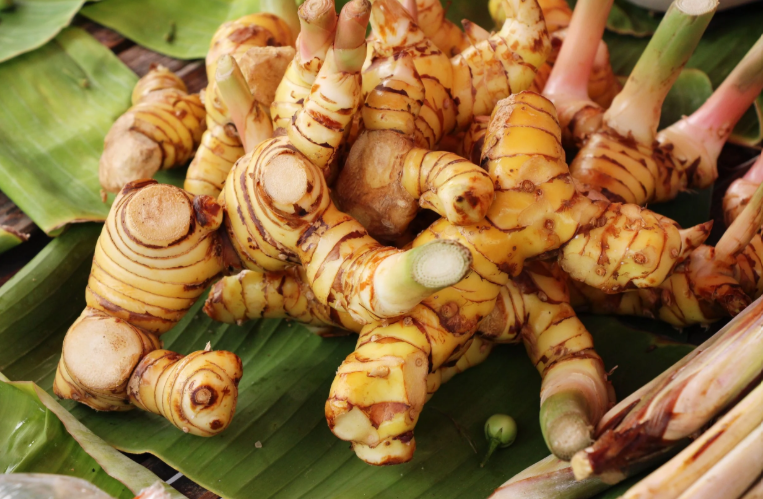
Galangal is a ginger family rhizome producing a sharper, more piney, more citrusy, and slightly more medicinal flavor than common ginger that makes it a distinctly different and non-substitutable ingredient in the Southeast Asian cuisines — particularly Thai, Indonesian, and Malay cooking — where it is fundamental. It is one of the three essential aromatics of Thai cooking alongside lemongrass and kaffir lime leaf, and its absence or substitution with common ginger produces a noticeably inauthentic flavor in traditional Thai preparations. It grows in USDA zones 8 to 11 as a tropical perennial.
32. Kaffir Lime Leaf
Kaffir Lime Leaf — increasingly referred to simply as makrut lime leaf in culinary contexts — is a distinctively flavored citrus leaf with a double-leaf structure unique among citrus species, producing an intensely aromatic, citrusy, floral, slightly bitter flavor essential to Thai curry pastes, Tom yum soup, and numerous Southeast Asian preparations. The leaf cannot be effectively substituted by regular lime zest or lime juice in authentic Thai cooking and its aromatic profile — from limonene, citronellal, and other volatile compounds — is one of the most characteristic flavors of Southeast Asian cuisine. It is grown in USDA zones 9 to 12.
33. Fenugreek
Fenugreek is a dual-purpose plant producing both aromatic seeds used as a spice and fresh or dried leaves used as an herb, both forms being important in Indian, Ethiopian, and Middle Eastern cooking traditions. The seeds have a distinctive, bitter, slightly maple syrup-like flavor from the compound sotolon and are fundamental to Indian curry powders, Ethiopian berbere spice blend, and numerous South Asian condiment preparations. The dried leaves — called kasuri methi in Indian cooking — are a uniquely flavored herb essential in many North Indian dishes and the flavor is quite different from the seed, being more herbal, slightly bitter, and aromatic.
34. Caraway
Caraway produces curved, crescent-shaped seeds with a distinctive, warm, slightly anise-like, earthy, complex aromatic flavor from carvone and limonene volatile compounds that is the defining flavor of traditional Northern and Central European breads, particularly German rye bread and Austrian and Hungarian cooking. Caraway seeds are fundamental to sauerkraut, Hungarian goulash, and numerous traditional schnapps and liqueur preparations including the German Kümmel liqueur. They are also the primary flavoring of the Scandinavian spirit aquavit, which is one of the most widely consumed spirits across Scandinavia.
35. Coriander Seed
Coriander Seed — the dried fruit of the cilantro plant — has a warm, citrusy, slightly sweet, complex flavor from linalool and other volatile compounds that is quite distinct from the fresh herb and fundamental to Indian curry powder, garam masala, North African ras el hanout, Middle Eastern dukkah, and Belgian wheat beer flavoring. India produces approximately 70 percent of the world’s coriander seed supply and consumes the majority domestically in the enormous domestic spice trade. The combination of coriander and cumin is one of the most universally used spice pairings in global cooking, appearing together in spice blends across dozens of national culinary traditions.
36. Mustard Seed
Mustard Seeds — produced in yellow, brown, and black varieties with progressively increasing pungency — are among the most widely produced and consumed spice seeds globally, fundamental to American and European prepared mustard condiments, Indian tempering preparations, Bangladeshi panch phoron, and the global condiment industry. Canada, Nepal, Russia, and Ukraine are the major mustard seed producers with global production exceeding 700,000 metric tons annually. The pungency of mustard develops only when the seeds are cracked or ground and mixed with water — initiating enzymatic reactions that produce the volatile isothiocyanate compounds responsible for mustard’s characteristic heat.
37. Celery Seed
Celery Seed is the tiny dried fruit of the wild celery plant, producing an intensely concentrated celery flavor from phthalides and other volatile compounds that is the primary flavoring in commercial celery salt, numerous pickling spice blends, Bloody Mary cocktail seasoning, and coleslaw dressings in American and British food manufacturing. The flavor is more concentrated, more aromatic, and somewhat more bitter than fresh celery and a very small quantity provides significant flavoring impact. India and China are the primary commercial producers.
38. Poppy Seed
Poppy Seeds are the tiny, kidney-shaped, blue-grey to white seeds of the opium poppy plant that contain none of the opiate alkaloids found in the seed pod sap, producing a mild, slightly nutty, pleasant flavor used in European baking — particularly in German, Austrian, Polish, and Jewish bread and pastry traditions — as a topping for breads and rolls and as a filling for pastries. The Netherlands, Czech Republic, Spain, and Turkey are major producers and poppy seed consumption in Central and Eastern European baking traditions is among the highest in the world. Poppy seed also produces an excellent edible oil widely used in European cooking.
39. Anise
Anise is an ancient Mediterranean spice producing small, grey-green seeds with an intensely sweet, licorice-like flavor from anethole — the same primary volatile compound found in star anise, fennel, and tarragon — that is the defining flavor of numerous traditional European and Middle Eastern alcoholic beverages including Greek ouzo, Turkish raki, French pastis, Italian sambuca, and Middle Eastern arak. Beyond beverages, anise seeds are used in traditional European bread and cookie baking and in some traditional Indian and Middle Eastern spice preparations. Egypt and Turkey are among the primary producing nations.
40. Allspice
Allspice is a uniquely New World spice produced from the dried, unripe berries of a tropical evergreen tree native to the Caribbean and Central America, producing a complex, warm, spicy flavor that genuinely combines notes of cinnamon, cloves, nutmeg, and pepper simultaneously — which explains its common name. Jamaica produces the finest quality allspice and is the world’s leading exporter, and allspice is fundamental to Jamaican jerk seasoning — one of the most internationally recognized Caribbean spice preparations — as well as to numerous traditional Caribbean, Central American, and British baking recipes.
41. Juniper Berry
Juniper Berries are the primary botanical flavoring of gin — the most widely consumed spirit in the United Kingdom and one of the most important globally — alongside their traditional use as a game meat flavoring, sauerkraut seasoning, and digestive herb across Northern and Central European cooking traditions. The sharp, piney, resinous, slightly citrusy flavor of juniper berries comes from alpha-pinene and other terpene volatile compounds that are the defining character of traditional London dry gin. Eastern Europe and the Balkans produce significant quantities of wild-harvested juniper berries for the spirits and food industries.
42. Mace
Mace is the lacy, red-orange, net-like covering — called an aril — that surrounds the nutmeg seed within the nutmeg fruit, producing a flavor similar to nutmeg but more delicate, more floral, and more refined that is used in some traditional European baking, meat seasoning, and spice blend applications where a subtler nutmeg-like flavor is preferred. Mace was historically more valuable than nutmeg and was particularly prized in seventeenth and eighteenth century European cuisine where it appeared in numerous classical recipes. Indonesia and Grenada are the primary producers alongside nutmeg, as both spices come from the same tree.
43. Sumac
Sumac is a tangy, fruity, deeply crimson spice ground from the dried berries of a Middle Eastern shrub, producing an intensely sour, bright, fruity, slightly astringent flavor from malic acid and other organic acids that functions as a souring and flavoring agent in Iranian, Turkish, Lebanese, and broader Middle Eastern cooking. It is sprinkled over hummus, fattoush salad, grilled meats, and rice dishes as a finishing seasoning and is the primary souring agent in the traditional Levantine spice blend za’atar. Turkey and Iran are the primary commercial producers.
44. Za’atar
Za’atar is a Middle Eastern herb and spice blend combining dried thyme or oregano, sumac, toasted sesame seeds, and salt in a preparation that is both a specific herb — wild thyme or oregano used in Lebanese and broader Levantine cooking — and the most widely used spice blend in Lebanon, Syria, Palestine, Jordan, and Israel. Mixed with olive oil and spread on flatbread, sprinkled over eggs, or used as a dipping blend for bread and olive oil, za’atar is one of the most versatile and widely consumed condiment herb blends in the Middle East. The commercial za’atar market has grown substantially as Middle Eastern cuisine gains international popularity.
45. Annatto
Annatto is a natural food coloring and mild flavoring spice produced from the seeds of a tropical tree native to the Americas, providing the characteristic bright orange-red color of numerous Latin American, Caribbean, and Filipino dishes — particularly the Yucatecan Mexican spice paste achiote and the Filipino rice and meat preparations colored with atsuete. The primary coloring compound bixin is one of the most widely used natural food colorings in the global food manufacturing industry, used in butter, cheese, margarine, and processed food products where an orange-yellow color is desired without synthetic dyes. Brazil and Peru are major producers.
46. Asafoetida
Asafoetida is one of the most pungently aromatic spices in the world, produced from the dried latex of a giant fennel relative native to Iran and Afghanistan and producing an extraordinarily strong, sulfurous, onion-garlic-like smell in its raw form that transforms dramatically during cooking into a mellow, complex, garlic-onion umami flavor that is irreplaceable in Indian Brahmin vegetarian cooking and in the cuisines of communities that avoid onion and garlic for religious reasons. Used in tiny quantities, it is fundamental to the Indian spice preparation known as tadka or chhaunk — the tempering of spices in hot oil — and to many Indian lentil and vegetable dishes.
47. Mahlab
Mahlab is an unusual aromatic spice produced from the kernels inside the seeds of a species of wild cherry native to the Mediterranean and Middle East, producing a sweet, slightly bitter, almond-cherry flavor from benzaldehyde and other aromatic compounds that is used in traditional Greek, Turkish, Lebanese, and broader Eastern Mediterranean sweet breads, Easter breads, and pastries. It is primarily known outside its native culinary context among food enthusiasts and professional bakers specializing in traditional Middle Eastern and Eastern Mediterranean pastry and bread production. Turkey and Syria are primary producers.
48. Grains of Paradise
Grains of Paradise are the peppery, aromatic seeds of a West African ginger family plant that were an important medieval European spice — sometimes called African pepper or Guinea pepper — producing a complex, warm, peppery, slightly cardamom-like, citrusy flavor that is experiencing significant revival among contemporary chefs, craft brewers, and artisan spirits producers who use it as an interesting alternative to black pepper. They were more commonly used in European cooking than black pepper during parts of the medieval period before falling out of fashion, and their flavor is more complex and interesting than standard black pepper with distinctly herbal and citrus notes.
49. Long Pepper
Long Pepper is an ancient spice that predates black pepper in European trade, producing elongated, catkin-like, dark grey-brown fruits with a complex, peppery, warm, slightly sweet, more aromatic flavor than standard black pepper from a combination of piperine and unique additional volatile aromatic compounds. It was the dominant pepper in ancient Rome and medieval Europe before being supplanted by the increasing availability of round black pepper, and it is still used in Ethiopian berbere spice blend, Moroccan ras el hanout, and traditional Indian and Indonesian spice preparations. It is experiencing growing interest among chefs and food enthusiasts as an alternative to standard black pepper.
50. Szechuan Pepper
Szechuan Pepper is one of the most distinctive and pharmacologically unusual spices in the world, producing not ordinary peppery heat but a unique, tingling, numbing, electric sensation on the lips and tongue from hydroxy-alpha-sanshool — a compound that activates touch receptors to produce the characteristic mouthfeel that is the defining sensory experience of Sichuan Chinese cuisine. Szechuan pepper is an essential component of Chinese five spice powder and is the signature ingredient of Sichuan mala hot pot and numerous other Sichuan dishes where the combination of Szechuan pepper numbing and chili heat creates the characteristic mala — numbingly hot — flavor profile. China is the primary producer.
51. Turmeric Leaf
Turmeric Leaf is a fresh aromatic leaf from the turmeric plant that is used as a cooking wrapper and flavoring ingredient across Goa, Kerala, and parts of Southeast Asian cooking, imparting a delicate, slightly musky, aromatic flavor quite distinct from the pungent intensity of turmeric rhizome. In Goan cooking, turmeric leaves are used to wrap fresh fish or sweet rice preparations before steaming, infusing the food with their distinctive aromatic character. The leaf is primarily available fresh in regions where turmeric is locally grown and is less widely known internationally than the rhizome.
52. Curry Leaf
Curry Leaf is a fresh herb of fundamental importance in South Indian, Sri Lankan, and Malaysian cooking, producing a distinctive, complex, slightly citrusy, nutty, aromatic flavor from carbazole alkaloids and volatile compounds that is completely irreplaceable in authentic South Indian tadka preparations and has no effective substitute in the dishes where it is used. The leaves are used fresh or dried in hot oil to infuse their distinctive flavor into the cooking medium at the start of preparation in countless South Indian curries, chutneys, and rice dishes. Curry leaf plants grow to 6 to 15 feet in USDA zones 9 to 12.
53. Nigella Seed (Black Seed)
Nigella Seeds, also called black seed, black cumin, or kalonji, are small, angular, intensely aromatic black seeds with a complex, slightly bitter, onion-like, slightly oregano-tinged flavor that is fundamental to the Indian naan bread topping, Bengali panch phoron blend, Middle Eastern za’atar variations, and the traditional Egyptian spice bread aish baladi. The essential oil of nigella seed contains thymoquinone — a compound that has been among the most intensely studied in natural medicine research for a remarkable range of potential biological activities. India and Egypt are primary producers.
54. Ajwain (Carom Seed)
Ajwain, also called carom seed or bishop’s weed, produces tiny, pale green-grey seeds with an extremely pungent, concentrated, thyme-like flavor from the compound thymol — the same compound that gives thyme much of its characteristic flavor — but in concentrations many times higher than in thyme itself, making ajwain one of the most intensely flavored spices used in any cuisine. It is fundamental to Indian flatbread (paratha), pakora batter, and numerous North Indian spice preparations where its distinctive, powerfully aromatic flavor is used in small quantities for maximum impact. India is virtually the sole major commercial producer.
55. Dried Mango Powder (Amchur)
Amchur is a souring spice produced from dried, ground, unripe green mangoes that provides a fruity, tangy, acidic flavor component to North Indian cooking where it is used in chutneys, spice rubs, and vegetable preparations as an alternative souring agent to fresh lemon or tamarind. The fruity, tangy, slightly sweet-sour flavor of amchur adds complexity to Indian dry spice rubs for grilled meats and to the beloved North Indian street food chaat spice blend. India is the sole major commercial producer and the spice is primarily used in Indian and Pakistani cooking with limited uptake elsewhere.
56. Tamarind
Tamarind is a tropical fruit whose intensely sour, fruity, complex pulp is one of the most important souring and flavoring ingredients in Indian, Thai, Mexican, Caribbean, and West African cooking, providing a deep, fruity, tangy, slightly sweet sourness quite different from the sharp acidity of lemon or vinegar. It is fundamental to Indian tamarind chutney, South Indian sambar, Thai Pad Thai noodles, Mexican agua fresca, Worcestershire sauce production, and numerous other preparations across multiple continents. India, Thailand, and Mexico are among the major producers.
57. Vanilla Bourbon
Bourbon Vanilla refers to vanilla produced in Madagascar and other Indian Ocean islands — historically called Bourbon for the island of Réunion’s former name — that is considered the standard of reference quality for fine vanilla, producing the rich, complex, creamy, sweet, full-bodied vanilla flavor most widely recognized in Western dessert culture. Madagascar produces approximately 80 percent of the world’s Bourbon vanilla and the industry is critically important to the Madagascan economy. The complex, deep, multi-layered flavor of genuine Bourbon vanilla is considered by pastry chefs and food manufacturers to be superior to all other vanilla origins for most applications.
58. Mexican Vanilla
Mexican Vanilla is produced from the original home of the vanilla orchid and the birthplace of vanilla cultivation, where the native Melipona bees that naturally pollinate the vanilla flowers still exist alongside the hand-pollination practiced elsewhere. Mexican vanilla has a slightly different, spicier, more complex, slightly woody character than Bourbon Madagascar vanilla that reflects the original terroir of vanilla cultivation and is preferred by some pastry chefs and flavor specialists for certain applications. Production volumes are much smaller than Madagascar and the finest hand-pollinated Mexican vanilla commands premium prices.
59. Smoked Paprika
Smoked Paprika — particularly the Spanish pimentón de la Vera — is produced by slowly drying and smoking pepper pods over oak fires in the La Vera valley of Extremadura, Spain, creating a deeply complex, richly smoky, sweet to moderately hot, intensely flavored spice that is the defining flavor ingredient of Spanish chorizo, the Catalan sauce romesco, and the broader smokiness that characterizes many traditional Spanish dishes. The Protected Designation of Origin pimentón de la Vera is considered the finest smoked paprika in the world and commands significant premium prices over mass-produced smoked paprika from other origins.
60. Horseradish
Horseradish is a pungent root vegetable and spice that produces an extremely sharp, sinus-clearing, tear-inducing heat from volatile allyl isothiocyanate compounds released when the root is grated or processed — the same type of compound responsible for the pungency of mustard and wasabi. Prepared horseradish sauce is a fundamental condiment of British and Central European cuisine — the traditional accompaniment to roast beef in British cooking and an essential component of traditional Ashkenazi Jewish Passover preparations. Poland, Germany, and the United States are major producers of commercial prepared horseradish.
61. Wasabi
Wasabi is one of the most expensive and prized condiment spices in the world, producing the characteristic sharp, sinus-clearing, non-burning pungency of Japanese cuisine from allyl isothiocyanate — the same compound type as horseradish but with a somewhat different, slightly greener, more complex aromatic profile. Genuine fresh wasabi — grated from the fresh rhizome of a semi-aquatic Japanese plant — is extraordinarily expensive and rare, with most wasabi sold outside Japan being a colored mixture of horseradish, mustard, and green food coloring. Japan is virtually the only significant producer of genuine wasabi and domestic production struggles to meet even Japanese domestic demand.
62. Lemon Verbena
Lemon Verbena is a strongly lemon-fragrant herb producing some of the most intensely citrusy volatile compounds of any non-citrus plant, with a perfumed, clean, bright, true lemon fragrance from citral that makes it exceptional for herbal teas, lemon-flavored desserts, cocktails, and fragrance preparations. Unlike lemon zest which also contains bitter pith flavors, lemon verbena provides pure, clean lemon aromatic character without bitterness, and it is widely considered the finest lemon-flavored herb available for culinary and tea applications. It grows to 3 to 6 feet as a shrubby perennial in USDA zones 8 to 11.
63. Marjoram
Marjoram is a closely related but distinctly gentler, sweeter, and more delicate herb than oregano — with which it is frequently confused or used interchangeably — producing warm, slightly sweet, floral, pine-like aromatics from terpinen-4-ol and other volatile compounds that suit more delicate preparations than the robust, assertive character of oregano. It is fundamental to German sausage seasoning and traditional stuffing preparations, widely used in French cooking, and an essential component of the classic herbes de Provence blend. Dried marjoram is one of the most widely used dried herbs in the European food manufacturing industry for processed meat and soup products.
64. Savory
Savory encompasses both Summer Savory — a mild, thyme-like annual herb widely used in European cooking — and Winter Savory — a more intensely flavored, peppery perennial version — both producing aromatic, slightly peppery, thyme-reminiscent flavors from carvacrol and thymol compounds that suit bean dishes, sausage preparations, and poultry seasoning. Summer Savory is the traditional herb pairing for green beans in French and German cooking — the French call savory haricot herb — and it is fundamental to the Bulgarian and Romanian spice and herb tradition where chubritza (dried summer savory) is the most universally used seasoning.
65. Borage
Borage is a charming, bristly annual herb producing distinctly cucumber-flavored fresh leaves and striking, vivid, star-shaped bright blue edible flowers that are used as a garnish in salads, cocktails, and desserts. The fresh leaves are used in German green herb sauce (Frankfurter Grüne Soße), traditional British Pimm’s cocktail preparation, and as a cucumber-flavored addition to summer salads and drinks. The bright blue flowers are among the most striking edible flower garnishes available in the garden and the plant self-seeds freely to provide new plants each season. It is grown as a hardy annual across most temperate climate zones.
66. Lovage
Lovage is a large, vigorous, intensely celery-flavored herb producing enormous, deeply cut, glossy, dark green leaves and strongly aromatic seeds that provide a concentrated, rich, complex, slightly yeasty celery-like flavor superior to celery in many cooked applications. It was widely used in medieval European cooking before the development of cultivated celery and remains an important herb in German, Eastern European, and Balkan cooking traditions where lovage tea and lovage-seasoned soups and meat preparations are traditional. The plants grow to 6 feet or more as vigorous, long-lived perennials, hardy in USDA zones 3 to 8.
67. Epazote
Epazote is a pungent, distinctive, strongly aromatic herb native to Central America and Mexico that is essential in traditional Mexican and Guatemalan black bean cooking, providing a complex, slightly medicinal, petroleum-like, citrusy, herbal flavor that is completely characteristic of authentic Mexican bean preparations and refried beans. It is also traditionally used to reduce the gas-producing properties of beans due to compounds that inhibit the digestive activity of complex sugars. Outside Mexican and Central American cooking communities it remains relatively unknown internationally despite being one of the most important and distinctive herbs in the Mexican culinary tradition.
68. Shiso (Perilla)
Shiso is a Japanese herb producing large, distinctive, deeply serrated, vivid green or vivid red-purple leaves with a complex, unusual, anise-like, slightly minty, slightly cinnamon-like, fresh aromatic flavor that is unique among culinary herbs and completely irreplaceable in Japanese cooking. Green shiso leaves are used as a sushi and sashimi garnish, in Japanese salads, as a tempura ingredient, and in pickled preparations while red shiso is essential in traditional Japanese umeboshi plum pickling. Shiso is one of the most important herbs in Japanese cooking and is increasingly available in Asian specialty markets worldwide.
69. Kaffir Lime
Kaffir Lime produces both leaves and a distinctive, intensely aromatic, thick-skinned, wrinkled fruit — primarily used for the extraordinarily fragrant zest rather than the minimal juice — that together form one of the most important aromatic flavoring combinations in Southeast Asian cooking. The zest provides an intense, floral, citrusy, complex lime aroma from limonene and other volatile compounds that is more complex and intense than regular lime and is used in Thai curry pastes, Indonesian spice preparations, and Cambodian amok fish curry. The double-leafed foliage and fruit are available fresh from specialty Asian grocers globally.
70. Dried Lime (Loomi)
Dried Lime, called loomi in Arabic and Persian, is produced by boiling fresh limes in salt water and sun-drying them to produce rock-hard, black to tan, whole dried limes with a unique, intensely sour, slightly fermented, complex, earthy citrus flavor quite unlike fresh lime that is irreplaceable in Persian, Iraqi, Kuwaiti, and Gulf Arab cooking. Dried limes are used whole in slow-cooked stews and soups, ground as a souring spice powder, or dissolved in cooking liquids to provide the distinctive, complex, acidic flavor that characterizes numerous traditional Gulf and Persian dishes. Oman is one of the primary producers.
71. Dried Thyme
Dried Thyme is one of the most widely used dried herbs in the global food manufacturing industry, a cornerstone of Italian seasoning, poultry seasoning, herbes de Provence, and Bouquet Garni blends that collectively season billions of portions of commercially prepared food annually worldwide. The drying process actually concentrates and somewhat changes the volatile compounds of fresh thyme, producing a slightly different but equally useful dried herb flavor that suits long-cooked preparations, marinades, and spice rubs particularly well. Morocco, Spain, and Poland are among the major commercial dried thyme producing nations.
72. White Pepper
White Pepper is produced from fully ripe black pepper berries from which the outer black skin has been removed by soaking and rubbing, producing a smoother, slightly different, somewhat more fermented, less complex but more immediately pungent flavor than black pepper that is preferred in French, Chinese, and Scandinavian cooking traditions where specks of black pepper in pale-colored sauces, soups, and preparations are considered visually unacceptable. White pepper is also commonly used in Chinese cooking where its sharp, clean pungency suits the flavor balance of many Chinese preparations better than the more complex aromatics of black pepper. Vietnam and Indonesia are primary producers.
73. Green Pepper
Green Peppercorns are unripe black pepper berries preserved while still green — either freeze-dried, pickled in brine, or preserved in vinegar — producing a fresher, more herbal, less pungent flavor than both black and white pepper that is used in certain classic French sauces — particularly steak au poivre with green peppercorn sauce — and in Thai and other Southeast Asian cooking where fresh green peppercorns still on the stem are used as a fresh spice ingredient in stir-fries and curry preparations. The fresh, bright, herbal, moderately peppery flavor of green peppercorns is quite distinct from dried black pepper.
74. Pink Pepper
Pink Peppercorns are not true peppers but the dried berries of a South American tree that produce a sweet, mild, slightly fruity, slightly resinous, delicately peppery flavor with none of the harsh pungency of black pepper. They are used primarily as a visual and mild flavor garnish on savory dishes, in spice blends, and in combination with black, white, and green peppers in mixed peppercorn preparations. Their mild, slightly sweet, fruity, aromatic character suits fish, poultry, and cream sauce preparations where the robust pungency of black pepper would be overpowering. Brazil, Madagascar, and Réunion are primary sources.
75. Dried Rose Petals
Dried Rose Petals are an important flavoring ingredient in Persian, Moroccan, Indian, and Turkish cooking traditions, contributing a delicate, sweet, floral, complex aromatic character to spice blends, rice preparations, desserts, and beverages. They are an important component of Persian advieh spice blend, Moroccan ras el hanout, and Indian biryani preparations and are used to make rose water — the most widely used floral flavoring in Middle Eastern, South Asian, and North African sweet preparations. Morocco, Bulgaria, Turkey, and Iran are the primary producers of culinary-grade dried roses and rose products.
76. Dried Hibiscus
Dried Hibiscus is a tart, deeply crimson, fruity, cranberry-like flavoring and coloring ingredient used in Mexican agua de Jamaica — one of the most widely consumed beverages in Mexico — Senegalese bissap, Egyptian karkade herbal tea, and numerous other traditional beverages and culinary preparations across Latin America, West Africa, and the Middle East. It is increasingly popular globally as a caffeine-free herbal tea and functional beverage ingredient for its pleasant tartness, vivid color, and documented antioxidant and blood pressure-modulating properties. Egypt, Mexico, and Senegal are major producers.
77. Dried Chamomile
Dried Chamomile is one of the most widely consumed herbal teas in the world, producing a gentle, apple-like, slightly honey-sweet, calming flavor from bisabolol and other volatile compounds that have made it the most popular bedtime and relaxation tea globally. The global chamomile market is valued at hundreds of millions of dollars annually and chamomile is one of the most extensively studied medicinal herbs with documented anti-anxiety, anti-inflammatory, and sleep-promoting effects supported by numerous clinical studies. Germany, Egypt, and Argentina are major commercial producers.
78. Saffron Threads
Saffron Threads — the premium form of the world’s most expensive spice — are the complete, unbroken stigma threads of the saffron crocus, superior in quality to broken threads or powder due to easier quality assessment and greater integrity of the coloring and flavoring compounds. The primary coloring compound crocin produces the extraordinary, deep golden color that saffron imparts to rice, paella, and risotto, while safranal is the primary volatile compound producing the characteristic, complex, slightly metallic, honey-floral saffron aroma. Persian saffron from Iran’s Khorasan province is consistently rated the finest quality in international trade.
79. Pandan Leaf
Pandan Leaf is a tropical plant producing long, green, fragrant leaves with a distinctive, sweet, vanilla-like, slightly nutty, slightly grassy aromatic flavor from 2-acetyl-1-pyrroline — the same compound responsible for the aroma of jasmine rice and basmati rice — that is one of the most widely used flavorings in Southeast Asian and South Asian cooking. It is essential in Malaysian and Indonesian rice and dessert preparations, in Thai pandan-wrapped chicken, and in numerous Sri Lankan cooking applications and is sometimes called the vanilla of Southeast Asia for the sweet, fragrant, universally appealing character of its aromatic profile. It grows in USDA zones 9 to 12.
80. Tasmanian Pepper
Tasmanian Pepper is an Australian native spice produced from the berries and leaves of a shrubby plant native to the cool, wet forests of Tasmania and southeastern Australia, producing a complex, intensely hot, slightly fruity, earthy, slightly eucalyptus-tinged flavor from polygodial — a compound that produces a burning sensation through a different mechanism than capsaicin — that makes it one of the most unusual and distinctive native Australian spice ingredients. It is increasingly used by Australian chefs working with native ingredients and is available from specialty Australian bushfood suppliers globally as interest in indigenous Australian ingredients grows.
81. Wattleseed
Wattleseed is an Australian native spice produced from the roasted, ground seeds of various Acacia species that produces a distinctively complex, rich, roasted, coffee-chocolate-hazelnut-like flavoring used in Australian native cuisine in desserts, ice cream, bread, and hot beverages. The roasting process is critical to developing the complex flavor and the resulting powder can be used as a coffee substitute or flavor additive in baked goods. Wattleseed has become one of the most widely recognized and commercially successful Australian native food ingredients, appearing in specialty food shops and restaurants internationally as interest in Australian indigenous ingredients grows.
82. Lemon Myrtle
Lemon Myrtle is an Australian native herb and spice producing the highest known concentration of citral — the primary lemon volatile compound — of any plant source, approximately 90 to 98 percent citral in the essential oil compared to approximately 3 to 5 percent in lemon zest, making it the most intensely lemon-flavored natural ingredient available to food manufacturers and cooks. The dried and ground leaves are used in Australian native cuisine in baked goods, seafood preparations, beverages, and spice blends and lemon myrtle essential oil and oleoresin are exported globally as premium natural lemon flavoring ingredients for the food industry. It grows to 6 to 10 feet in USDA zones 9 to 11.
83. Dried Lavender
Dried Lavender is an increasingly important culinary spice in contemporary cooking and baking, used in herbes de Provence spice blend, lavender shortbread and biscuits, lavender-honey preparations, artisan chocolate, and craft gin botanicals where its floral, slightly sweet, camphor-tinged aromatic character adds a distinctive, sophisticated, contemporary flavor element. The French culinary tradition of using lavender in savory and sweet preparations has spread internationally as interest in Provençal cooking has grown, and dried culinary lavender is increasingly available from specialty food shops and artisan spice suppliers globally. France and Bulgaria are the primary suppliers of culinary-grade dried lavender.
84. Barberry
Barberry is a tart, bright red dried berry that is one of the most important ingredients in Persian and Central Asian cooking — essential in Iranian zereshk polo (barberry rice) and in numerous other Persian rice preparations where its intensely sour, slightly fruity flavor and vivid red color provide a beautiful and distinctive flavor contrast to the rich, fragrant rice and chicken dishes of traditional Persian cuisine. Iran is the world’s primary commercial producer and the domestic consumption in Persian cooking is enormous. Barberry is increasingly available in Middle Eastern specialty food shops and online spice retailers serving the growing global interest in Persian cuisine.
85. Dried Mint
Dried Mint is one of the most widely used dried herbs across Middle Eastern, Mediterranean, and Turkish cooking traditions, producing a concentrated mint flavor quite different from fresh mint that is preferred for certain applications — particularly the Turkish and Lebanese dried mint-olive oil-lemon dressing that accompanies lentil soup and numerous other traditional preparations. Dried mint is mixed with yogurt and cucumber for cacik and tzatziki, sprinkled over hummus and lentil dishes, used in Turkish and Persian spice blends, and is one of the most important dried herbs in the Middle Eastern and broader Muslim world culinary tradition where mint tea is a fundamental social beverage.
86. Freeze-Dried Herbs
Freeze-Dried Herbs represent the most technologically advanced form of dried herb preservation, using vacuum freeze-drying technology to remove moisture from fresh herbs at very low temperatures, preserving the volatile aromatic compounds, the vivid fresh color, and the cellular structure of the herbs far more effectively than conventional hot-air drying. Freeze-dried basil, chives, parsley, tarragon, and other delicate herbs that lose most of their characteristic flavor in conventional drying retain remarkably fresh-like flavor and appearance in freeze-dried form, and the global freeze-dried herb market has grown substantially as food manufacturers seek higher-quality dried herb ingredients for premium food products.
87. Herbes de Provence
Herbes de Provence is a classic French dried herb blend originating in the Provence region of southern France, traditionally combining dried thyme, rosemary, oregano, savory, and marjoram with lavender flowers added in the commercial versions marketed internationally — though lavender is a relatively recent commercial addition not found in traditional farmhouse blends. The blend is used to season grilled meats, roasted vegetables, Mediterranean fish preparations, and pizza in the southern French and broader Mediterranean culinary tradition. It is one of the most widely exported French specialty food products and is available globally in mainstream supermarkets and specialty food shops.
88. Garam Masala
Garam Masala is the most important and most widely used spice blend in Indian cooking, a warming, complex, deeply aromatic mixture of whole and ground spices whose composition varies considerably between regions, families, and individual cooks but typically includes some combination of cardamom, cinnamon, cloves, black pepper, cumin, coriander, and nutmeg. The name means warming spice blend in Hindi — garam meaning hot and masala meaning spice blend — referring to the warming effect the spices were believed to have on the body in Ayurvedic medicine. Garam masala is added at the end of cooking rather than at the beginning to preserve the delicate aromatic compounds.
89. Chinese Five Spice
Chinese Five Spice is the most important and most widely used spice blend in Chinese cooking, a complex, warming, aromatic mixture typically combining star anise, cloves, Chinese cinnamon, Szechuan pepper, and fennel seeds in precise proportions that create a balanced, complex flavor profile simultaneously sweet, spicy, sour, bitter, and salty — representing the five fundamental taste principles of traditional Chinese culinary philosophy. It is fundamental to Chinese red-braised pork belly, Peking duck, and numerous other iconic Chinese meat preparations, and the distinctive, complex aroma of Chinese five spice has become one of the most recognizable signatures of Chinese cooking globally.
90. Ras el Hanout
Ras el Hanout is the most complex and prestigious spice blend of North African — particularly Moroccan — cooking, with the name translating literally as head of the shop in Arabic, implying that it represents the finest and most complex blend of spices that a spice merchant can offer. Traditional ras el hanout blends can contain anywhere from 10 to over 30 different spices including rose petals, dried rosebuds, lavender, cardamom, cinnamon, cumin, coriander, ginger, turmeric, cloves, nutmeg, allspice, and numerous other ingredients in proportions that vary between individual spice merchants and regions. It is used in Moroccan tagines, couscous, bastilla, and numerous other traditional preparations.