A Practical Guide to Bigger Blooms and Repeat Flowering
Amaryllis is often treated as a disposable holiday plant.
You buy a bulb, place it in a decorative pot, watch a tall flower stalk emerge, enjoy the spectacular blooms, and then—once the flowers fade—the plant is forgotten.
That is a shame.
A healthy amaryllis bulb can flower repeatedly for many years. In fact, the most important part of growing amaryllis isn’t necessarily getting the first flower. It is keeping the bulb healthy after flowering so it has enough stored energy to produce another impressive display.
This changes how you should care for the plant.
Instead of treating amaryllis like a typical houseplant that needs constant feeding and watering, think of it as a bulb with a seasonal energy budget. The leaves collect sunlight and convert it into stored energy inside the bulb. That stored energy is eventually used to produce flowers.
Once you understand this cycle, amaryllis becomes much easier to grow.
This guide explains how to plant, water, fertilize, rebloom, propagate, and care for amaryllis while avoiding some of the most common mistakes.
First, What Is an Amaryllis?
The plants commonly sold as “amaryllis” are usually hybrids of Hippeastrum, a group of bulbous plants native primarily to tropical and subtropical regions of the Americas.
True Amaryllis is a different genus, although the common name has become firmly associated with Hippeastrum in horticulture.
This distinction is useful when researching care because information about the two groups can sometimes become mixed together.
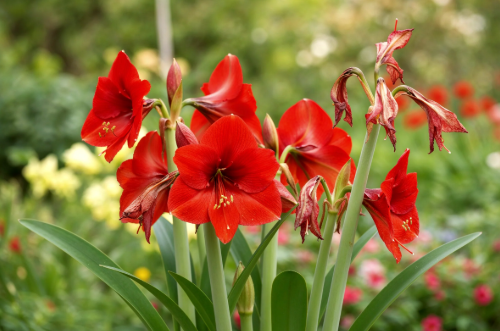
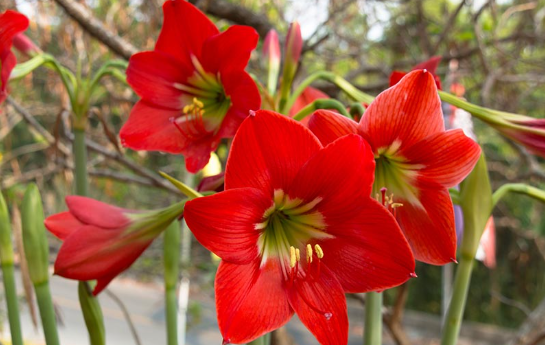
Commercial amaryllis hybrids are popular because they produce large, trumpet-shaped flowers on tall, mostly leafless stalks.
Flower colors include:
- Red
- White
- Pink
- Orange
- Salmon
- Burgundy
- Green
- Bicolored combinations
Some varieties produce single flowers while others have double blooms.
The bulbs themselves are substantial, often producing one or more flower stalks before or alongside their leaves.
Also Read: Types of Amaryllis Flowers And Their Origin
Choose a Healthy Bulb
The quality of the bulb has a major influence on the eventual display.
When buying an amaryllis bulb, look for one that feels firm and heavy for its size.
Avoid bulbs that are:
- Soft
- Rotten
- Severely bruised
- Covered with extensive mold
- Collapsing at the base
A large, healthy bulb generally has more stored resources available for producing flowers.
Some bulbs are sold already planted in decorative containers, while others are sold bare.
If you’re buying a bare bulb, inspect the roots and basal plate where possible.
Healthy roots are usually firm rather than slimy or badly dried.
Pick the Right Container
Amaryllis doesn’t require a huge pot.
In fact, a container that is excessively large can make watering more difficult because a large volume of soil can remain wet around a relatively small root system.
Choose a pot only slightly wider than the bulb.
The container should be heavy enough to prevent the tall flower stalk from tipping the plant over.
This is an important practical detail.
Amaryllis flowers can become surprisingly top-heavy, particularly when several blooms open at once.
A lightweight decorative pot may look attractive initially but become unstable once the flower stalk develops.
Always make sure the container has drainage holes.
Plant the Bulb Correctly
Amaryllis bulbs should not normally be buried completely.
Place the bulb in well-drained potting mix with approximately the upper third of the bulb exposed above the soil surface.
The roots should be covered while the neck and upper portion remain visible.
Planting the entire bulb beneath the soil can increase the risk of rot.
After planting, gently firm the soil around the roots without compacting it excessively.
Then water lightly.
Don’t immediately soak the entire pot.
The bulb doesn’t have an extensive root system at this stage, and excessively wet soil can create problems before active growth begins.
The First Watering Is Different
One of the easiest ways to damage a newly planted amaryllis is to water it as though it were an established leafy houseplant.
After planting, give the soil enough water to settle it around the roots.
Then wait.
Until growth begins, the bulb has relatively limited water requirements.
Once the flower stalk or leaves begin emerging, gradually increase watering.
This is an important principle:
Water according to the plant’s stage of growth rather than according to a fixed calendar.
Give Amaryllis Bright Light
During active growth, amaryllis benefits from bright light.
A sunny window can work well indoors.
Strong light helps the plant produce energy through photosynthesis, which becomes particularly important after flowering.
However, plants moved suddenly from a low-light store environment into intense direct sunlight can sometimes experience leaf stress.
Gradually increasing exposure can be useful.
Once established in a bright location, rotate the pot periodically so the flower stalk and leaves grow more evenly.
Amaryllis naturally tends to grow toward light.
Without rotation, a tall flower stalk may lean dramatically toward the window.
What to Do When the Flower Stalk Appears
The emergence of a flower stalk is one of the most exciting stages.
Growth can seem surprisingly fast.
As the stalk rises, provide bright light and maintain moderate moisture.
Do not overwater simply because the plant is flowering.
Too much water can damage the roots and bulb without improving flower quality.
If the stalk becomes unstable, provide a discreet support stake.
This is particularly useful for varieties with large double flowers.
Amaryllis Does Not Need Constant Watering
During active growth, water when the upper portion of the potting mix begins to dry.
Water thoroughly enough to moisten the root zone, then allow excess water to drain away.
Never allow the container to sit in a saucer filled with water.
Excess moisture around the bulb is much more dangerous than occasional slight dryness.
The ideal rhythm is:
Water → drain → allow partial drying → water again.
The exact interval depends on temperature, light, pot size, soil, and humidity.
This is why watering every “X” days is less reliable than checking the actual soil.
Fertilizing Amaryllis
Fertilizer becomes particularly important after flowering.
During the flowering stage, the plant is largely using energy already stored in the bulb.
After the flowers fade, however, the leaves become the plant’s energy-producing machinery.
A balanced fertilizer applied according to the product instructions can support continued leaf growth.
Avoid excessive nitrogen.
The goal is not to create enormous leaves for their own sake.
You want healthy foliage capable of capturing sunlight and replenishing the bulb.
Regular, moderate nutrition during active leaf growth is more useful than occasional heavy applications.
The Most Important Stage Happens After Flowering
This is where many amaryllis owners go wrong.
Once the flowers fade, they cut the plant back to the bulb and stop watering.
That removes the plant’s ability to produce energy for next year’s flowers.
The leaves are not useless leftovers.
They are the reason the bulb can flower again.
After flowering, remove the spent flowers and seed pods if you don’t intend to collect seed, but leave the green flower stalk and leaves until they naturally begin to yellow.
Some gardeners remove the spent flower stalk once flowering is finished, which helps redirect the plant’s resources away from seed production.
But the leaves should remain.
Continue providing:
- Bright light
- Water when needed
- Moderate fertilizer
- Good drainage
This is the period when you are effectively preparing next year’s flower show.
Think of the Leaves as Solar Panels
A useful way to understand amaryllis care is to imagine the bulb as a battery.
Flowering consumes stored energy.
Leaves recharge the battery.
If you remove healthy leaves immediately after flowering, you’re reducing the plant’s ability to replenish that energy.
The longer the plant can maintain healthy foliage under good light, the more energy it can potentially store for future growth.
This is why post-flowering care is arguably more important than the flowering period itself.
The flowers are the visible reward.
The leaves are what make future rewards possible.
When Should You Stop Watering?
Amaryllis varieties and growing conditions differ, and not every indoor-grown plant requires a strict dormant period.
However, many gardeners deliberately provide a rest period to encourage flowering.
As the growing season ends, gradually reduce watering.
When the leaves naturally yellow and die back, allow the plant to enter dormancy.
At this stage, the bulb needs considerably less water.
Keeping a dormant bulb in constantly wet soil is one of the easiest ways to encourage rot.
The exact timing of dormancy depends on your climate, whether the plant is grown indoors or outdoors, and the flowering schedule you want to encourage.
Creating a Rest Period
If you want to encourage reblooming, place the dormant bulb somewhere cool and relatively dry for several weeks.
The bulb should remain protected from freezing temperatures.
A cool, dark or dim location can work during dormancy.
Do not continue treating the bulb as though it were actively growing.
The purpose of dormancy is to allow the plant to reset its growth cycle.
After the rest period, return the bulb to a warmer, bright location and resume watering cautiously.
New growth should eventually appear.
Don’t Water Heavily When Growth First Returns
When the bulb begins producing a new flower stalk or leaves, resist the urge to flood the pot with water.
The root system may still be relatively inactive.
Begin with modest watering and increase it as active growth develops.
Once the plant is clearly growing, resume the normal pattern of watering whenever the upper soil begins to dry.
This gradual transition reduces the risk of keeping the bulb excessively wet during the early stages of growth.
Getting Amaryllis to Rebloom
There is no single trick that guarantees reblooming.
Instead, several conditions have to work together.
A bulb needs enough stored energy.
That depends heavily on what happened after the previous flowering cycle.
For reliable reblooming:
- Keep healthy leaves after flowering.
- Provide bright light.
- Maintain reasonable moisture.
- Fertilize during active leaf growth.
- Allow an appropriate rest period when needed.
- Avoid damaging or rotting the bulb.
- Resume growth under suitable conditions.
If an amaryllis produces leaves but refuses to flower, don’t automatically assume the bulb is defective.
It may simply not have accumulated enough stored energy.
Poor light, premature leaf removal, insufficient nutrition, or an unsuitable dormancy period can all contribute.
Why Amaryllis Produces Leaves but No Flowers
This is one of the most common complaints.
The plant looks healthy, yet only leaves appear.
Several explanations are possible.
The bulb is too small
Young or undersized bulbs may need additional time to reach flowering size.
The bulb wasn’t adequately recharged
If leaves were removed too early after the previous flowering cycle, the bulb may have stored insufficient energy.
Insufficient light
Weak light reduces photosynthesis.
No suitable rest period
Some amaryllis respond better when given an appropriate dormant period.
Excessive nitrogen
Heavy feeding can encourage foliage rather than the balanced growth required for flowering.
The solution is usually to improve the overall growing cycle rather than trying to force flowers immediately.
Supporting the Flower Stalk
Amaryllis flower stalks can become tall and top-heavy.
If the stalk begins leaning, use a thin stake and soft plant tie.
Don’t tie the stalk tightly.
The support should stabilize it without restricting growth.
Rotating the pot can also reduce one-sided leaning caused by the plant growing toward a window.
If several flower stalks emerge, the plant may become particularly top-heavy.
A heavier container can make a noticeable difference.
Growing Amaryllis Outdoors
In warm climates where freezing temperatures are not a concern, amaryllis can sometimes be grown outdoors in the landscape.
Choose a location with bright light and well-drained soil.
In extremely hot regions, protection from intense afternoon sun may be beneficial.
Outdoor plants can become larger and may eventually form impressive clumps.
However, drainage remains critical.
Do not plant bulbs in areas that regularly collect standing water.
In colder climates, bulbs grown outdoors may need protection or should be grown in containers that can be moved indoors before freezing conditions arrive.
Growing Amaryllis in Water
Some amaryllis bulbs are marketed for growing in decorative glass containers without soil.
This can create a spectacular display, but it is important to understand the limitation.
The bulb should generally not sit directly in water.
Only the roots should have access to water while the bulb itself remains above the waterline.
Constantly wetting the bulb can cause rot.
Once the bulb has been forced in water, its ability to rebloom successfully may be reduced compared with a bulb grown in soil and properly maintained afterward.
For long-term cultivation, soil culture is generally the more sustainable approach.
Propagating Amaryllis
There are several ways to propagate amaryllis, including offsets and seed.
Offsets
Mature bulbs may produce smaller daughter bulbs around their base.
These can eventually be separated and planted individually.
Offsets take time to reach flowering size, so patience is required.
Seeds
Amaryllis can also be grown from seed, but this is a long-term project.
Seed-grown plants may take several years before flowering.
The advantage is genetic variation.
If you grow several varieties and allow them to cross-pollinate, the resulting seedlings may produce unexpected flower colors and forms.
For gardeners interested in breeding, this can be fascinating.
For someone who simply wants another flowering plant quickly, offsets or purchased bulbs are more practical.
Common Amaryllis Problems
Bulb rot
Softness, unpleasant odor, discoloration, or collapsing tissue can indicate rot.
The most common contributing factor is excessive moisture combined with poor drainage.
Yellow leaves
Yellowing can be completely normal when the plant is entering dormancy.
However, yellowing during active growth can also indicate overwatering, poor roots, inadequate light, or another environmental problem.
Always consider the plant’s growth stage before assuming that yellow leaves indicate disease.
Pests
Amaryllis can occasionally be affected by pests such as scale insects, mealybugs, or bulb-related pests.
Inspect leaves and bulbs regularly.
Early detection is considerably easier to manage than a severe infestation.
Flower stalks collapse
This is often mechanical rather than a disease problem.
Large flowers make the stalk top-heavy.
Provide support and use a stable container.
A Simple Annual Amaryllis Cycle
The easiest way to manage amaryllis is to think about it as a repeating cycle.
Flowering
The bulb uses stored energy to produce flowers.
Leaf growth
The leaves capture sunlight and replenish the bulb.
Maturation
The plant continues building energy reserves.
Dormancy
Growth slows and the bulb rests.
Reawakening
Water, warmth, and light trigger the next growth cycle.
Then the process begins again.
This perspective makes amaryllis care much less confusing.
You aren’t simply “taking care of a plant.”
You are managing a cycle between flowering, energy storage, dormancy, and regrowth.
The Best Way to Care for Amaryllis
If you remember only a few principles, make them these:
Don’t bury the bulb completely.
Keep the upper portion exposed.
Use a pot with good drainage.
Wet roots and bulbs are more dangerous than occasional dryness.
Provide bright light.
Light is essential for maintaining healthy leaves and rebuilding energy reserves.
Don’t remove green leaves after flowering.
They are the plant’s energy-producing system.
Fertilize during active growth rather than constantly.
Moderate nutrition is more useful than heavy feeding.
Give the bulb an appropriate rest period when needed.
Dormancy can help synchronize the next flowering cycle.
Be patient with reblooming.
A bulb that doesn’t flower immediately may simply need another season to rebuild its reserves.
Amaryllis Is a Long-Term Plant, Not a One-Season Decoration
The most interesting thing about amaryllis is that its spectacular flowers can distract you from what actually matters.
The flowers are only one stage of the plant’s life.
When they fade, the real work begins.
The green leaves capture sunlight. The bulb stores energy. The roots maintain the plant. Eventually, growth slows and the bulb enters a resting period. Then, under the right conditions, the cycle begins again and another flower stalk emerges.
Once you understand that process, caring for amaryllis becomes much more intuitive.
You stop worrying about making the plant flower immediately and start concentrating on keeping the bulb healthy.
That shift in thinking can transform amaryllis from a temporary holiday decoration into a permanent part of your indoor or outdoor garden.
With good drainage, bright light, appropriate watering, moderate feeding, and proper attention after flowering, a healthy bulb can reward you repeatedly.
And perhaps that’s the best thing about amaryllis.
The spectacular flowers are not the end of the story.
They are simply the most visible part of a cycle that continues underground.