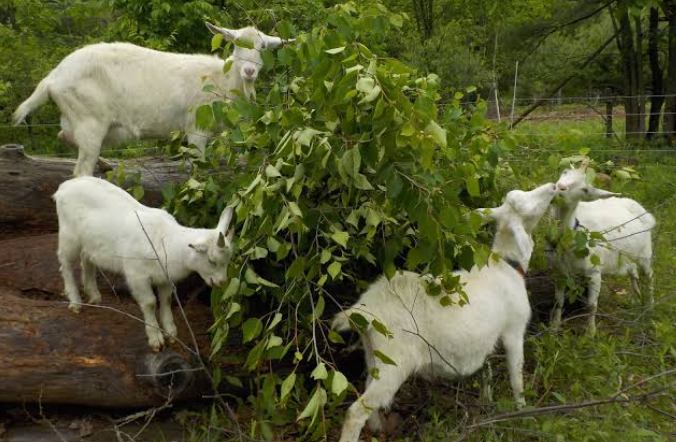
Fodder trees are woody perennial plants whose leaves, pods, bark, seeds, or stems serve as a nutritional feed resource for livestock and wildlife. Unlike annual fodder crops that must be replanted each season, fodder trees are long-lived, deeply rooted, and capable of producing biomass even during prolonged dry spells — qualities that make them indispensable in smallholder farming systems, silvopastoral landscapes, and dryland agroforestry across the tropics and subtropics.
The Food and Agriculture Organization of the United Nations (FAO) estimates that trees and shrubs contribute between 15 and 30 percent of the total dry matter consumed by livestock in sub-Saharan Africa, a figure that rises dramatically during the dry season when grasses dry out and lose most of their nutritional value.
The nutritional profile of fodder trees is often surprisingly competitive with conventional feed resources. Many species in the legume family (Fabaceae) fix atmospheric nitrogen through root nodule symbiosis, enriching the soils in which they grow while simultaneously producing leaf protein levels of 15–30% crude protein on a dry matter basis — comparable to high-quality legume hay and far exceeding the 6–8% protein content of mature tropical grasses.
Species such as Leucaena leucocephala and Moringa oleifera have been documented to contain essential amino acids, minerals, and vitamins that directly improve animal weight gain, milk production, and reproductive performance when incorporated into livestock diets. This dual role as soil improver and feed resource makes fodder trees central to sustainable intensification strategies in low-input farming systems.
Globally, fodder trees play a critical role in food security and livestock productivity in regions where conventional feed inputs are expensive, scarce, or seasonally unavailable. In the Sahel region of West Africa, for example, the neem tree and various Acacia species provide the primary dry-season browse for cattle, goats, and camels, with some estimates suggesting that browse from trees accounts for up to 80% of livestock feed intake during the dry season in the most arid zones.
In South and Southeast Asia, Gliricidia sepium and Leucaena leucocephala are planted at a scale of millions of hectares as live fences, shade trees, and cut-and-carry fodder banks. The economic value of fodder trees to smallholder farmers is substantial, reducing purchased feed costs and providing a buffer against the annual lean season.
Beyond their role as livestock feed, fodder trees provide a remarkable range of co-benefits that make their integration into farming systems particularly attractive. Many species also produce timber, fuelwood, charcoal, medicinal compounds, human food, shade, and windbreak functions simultaneously — making them among the most multi-functional plants in agroecological systems.
Their deep root systems stabilize soils, reduce erosion, intercept deep drainage, and cycle subsoil nutrients back to the surface, improving conditions for associated crops. Research by the World Agroforestry Centre (ICRAF) has consistently shown that farms integrating fodder trees into their management produce more reliably and recover more quickly from drought than those relying on annual crops and grasses alone, underlining the central importance of these trees to resilient food systems globally.
Leucaena (Leucaena leucocephala)
Leucaena is one of the most widely cultivated and extensively researched fodder trees in the world, planted across an estimated 5 million hectares in tropical and subtropical regions of Asia, Africa, Latin America, and the Pacific. It is a fast-growing, nitrogen-fixing legume that can produce 20–40 tonnes of fresh biomass per hectare per year under good management, with leaf protein content ranging from 20–30% on a dry matter basis.
Cattle, goats, sheep, and rabbits consume the leaves, young stems, and pods eagerly. However, its leaves contain the anti-nutritional compound mimosine, which can cause hair loss and thyroid disruption in non-ruminants and ruminants lacking the Synergistes jonesii gut bacteria; careful management and mixing with other feeds mitigates this issue effectively. It also fixes up to 500 kg of nitrogen per hectare per year.
Gliricidia (Gliricidia sepium)
Gliricidia, also called madre de cacao or quick stick, is a Central American legume tree now cultivated across tropical Africa, Asia, and the Pacific as one of the most versatile multipurpose fodder trees available to smallholder farmers. It establishes extremely rapidly from large stem cuttings — often rooting within days — making it among the easiest fodder trees to propagate and establish as a live fence, boundary marker, or cut-and-carry fodder bank.
Its leaves contain approximately 20–25% crude protein and are readily consumed by cattle, goats, sheep, and rabbits, though its bitter flavor means it is often best mixed with other forages to improve palatability. It fixes nitrogen actively and produces abundant fuelwood.
Moringa (Moringa oleifera)
Moringa, the miracle tree or drumstick tree, is native to the sub-Himalayan foothills of South Asia and is now grown across the tropics as a nutritional powerhouse for both humans and livestock. Its leaves contain up to 27% crude protein on a dry matter basis, alongside exceptional concentrations of calcium, iron, vitamins A, C, and E, and a well-balanced essential amino acid profile — making it one of the most nutritionally dense fodder resources known.
Research from several African countries has documented significant improvements in dairy cow milk production and goat weight gain when moringa leaf meal is incorporated into livestock rations at 10–30% inclusion rates. It grows extremely fast — up to 3 metres in its first year — and can be harvested multiple times per year by cutting the stems back to near ground level.
Calliandra (Calliandra calothyrsus)
Calliandra, the red calliandra or calliandra, is a Central American legume shrub-tree grown extensively as a fodder plant across East Africa, South and Southeast Asia, where it has become an important component of smallholder dairy and goat production systems. Its leaves contain approximately 15–24% crude protein, and while they contain condensed tannins that can reduce protein digestibility if fed in large quantities, research has shown that moderate tannin levels in ruminant diets can actually reduce methane emissions and provide an anti-parasitic effect against intestinal worms.
It produces abundant biomass on relatively poor, acid soils where many other legumes struggle, and it is particularly valued in highland East Africa — especially in Rwanda, Uganda, and Kenya — where it supports intensifying smallholder dairy systems.
Sesbania (Sesbania sesban)
Sesbania is a fast-growing, short-lived legume tree native to tropical Africa and Asia, capable of growing 3–6 metres in a single year and producing substantial quantities of high-protein browse (18–25% crude protein) very quickly after planting. It is widely used in improved fallow systems, where it is grown for 1–2 years on degraded cropland to restore soil fertility while simultaneously providing dry-season fodder for livestock.
Cattle, goats, and camels consume the leaves, pods, and young stems readily. It is particularly important in the semi-arid regions of East Africa and the Sahel, where rapid-establishing trees with high biomass potential are critical for bridging the annual feed gap. It also fixes nitrogen effectively and tolerates waterlogging better than most legume trees.
Neem (Azadirachta indica)
Neem is a large, evergreen tree from South Asia now naturalized and cultivated across tropical Africa, the Caribbean, and South and Central America, prized for its drought tolerance and the range of products it provides including timber, biopesticide (from neem oil), medicinal compounds, and dry-season browse for livestock. Goats, camels, and cattle browse neem leaves during the dry season when other feed resources are exhausted, and while neem leaves contain bitter limonoid compounds that limit palatability, they are consumed willingly when feed scarcity is high.
Neem leaves contain approximately 14–17% crude protein on a dry matter basis. The tree’s shade value and soil improvement through leaf litter fall are as important as its direct fodder contribution in many dryland farming systems across the Sahel and Indian subcontinent.
Acacia / Vachellia (Vachellia tortilis)
The umbrella thorn acacia is one of the most ecologically and economically significant browse trees of the African dryland farming and pastoral systems, recognized instantly by its iconic flat-topped canopy and two types of spines — long, straight white spines and short, hooked ones. Its pods are an exceptionally valuable dry-season feed resource, with protein contents of 12–18% and high energy values, and they are consumed eagerly by cattle, goats, camels, donkeys, and elephants.
Pod fall during the dry season provides a critical energy supplement at precisely the time when grass quality and quantity are at their lowest. It fixes nitrogen through root nodule bacteria, stabilizes sandy soils, and provides charcoal and fuelwood — making it a cornerstone species in dryland agroforestry across the Sahel and East Africa.
Faidherbia (Faidherbia albida)
Faidherbia albida, also known as the apple-ring acacia or winter thorn, is one of the most strategically important fodder trees in African agroforestry because of its remarkable reversed phenology — it bears leaves and pods during the dry season and sheds them during the wet season when crops are growing beneath it, thus providing shade-free conditions for crops at critical growing periods while simultaneously supplying dry-season browse and pods for livestock.
Pods contain 12–20% crude protein and high metabolizable energy, making them one of the most valuable dry-season feeds available in the Sahel and East African mixed crop-livestock systems. Studies in Zambia and Mali have documented significantly higher cereal yields under Faidherbia canopies compared to open fields, demonstrating its dual role as a yield-boosting farm tree and fodder resource.
Mulberry (Morus alba)
White mulberry is an Asian tree now cultivated globally, most famous as the sole food plant of the silkworm but increasingly recognized as one of the most productive and nutritious fodder trees available for intensive livestock systems. Its leaves contain 15–28% crude protein on a dry matter basis, a well-balanced mineral profile, and high palatability for cattle, goats, sheep, rabbits, and poultry.
In tropical and subtropical smallholder systems — particularly across Central America, East Africa, and South and Southeast Asia — mulberry is grown as an intensive cut-and-carry fodder crop, with some systems producing 40–70 tonnes of fresh leaf material per hectare per year under intensive management with irrigation and fertilization. Research has consistently shown improved milk production and animal weight gains when mulberry leaf is incorporated into dairy rations.
Pigeon Pea (Cajanus cajan)
Pigeon pea occupies a unique position among fodder trees as it is equally valued as a human food crop, an animal feed resource, and a soil-improving nitrogen fixer — sometimes described as the most important multipurpose shrub-tree in tropical smallholder agriculture. The leaves contain 18–22% crude protein, and the pods, seeds, and crop residues after human food harvest are all consumed by goats, cattle, and poultry.
It establishes rapidly from seed, begins producing within a few months, and can be maintained as a perennial shrub for 3–5 years with periodic cutting before replanting is needed. Annual nitrogen fixation can reach 40–200 kg per hectare, and its root systems break up hardpan soils and improve water infiltration in degraded cropland.
Silverleaf Desmodium (Desmodium uncinatum)
Silverleaf desmodium is a perennial, climbing legume sub-shrub from Central America now grown extensively across tropical Africa and Asia as a component of the famous push-pull pest management system developed for maize farming, as well as a high-value fodder for dairy cattle and goats. Its leaves contain 20–25% crude protein and are highly digestible compared to many tree legumes.
Under the push-pull system, desmodium planted between maize rows suppresses the parasitic weed Striga, repels stem borers, and attracts beneficial insects — while simultaneously providing high-quality green fodder that can be cut and fed to stall-fed livestock. Research from the International Centre of Insect Physiology and Ecology (ICIPE) has documented milk production increases of up to 50% on smallholder dairy farms that adopted push-pull combined with desmodium feeding.
Tagasaste (Chamaecytisus proliferus)
Tagasaste, or tree lucerne, is a fast-growing, deep-rooted legume tree native to the Canary Islands, now grown as a high-value fodder tree in Australia, New Zealand, South Africa, Chile, and parts of East Africa, particularly for sheep, cattle, and deer systems in areas with Mediterranean-type or subtropical climates. It produces leaves with 20–28% crude protein and exceptionally high digestibility — some research ranks it among the highest-quality tree forages available for ruminants. It is evergreen and drought-tolerant, providing green feed during summer dry periods when pastures are burnt off — a particularly valuable quality in Australian and South African dryland farming. It begins producing fodder within 12–18 months of planting and can be managed by grazing, browsing, or mechanical cutting.
Tithonia (Tithonia diversifolia)
Tithonia, the Mexican sunflower or tree marigold, is a large, fast-growing shrub-herb native to Central America and now widespread across tropical Africa and Asia, where it has been adopted both as a green manure-cum-fodder resource. Its leaves and young stems contain 14–22% crude protein and are readily consumed by cattle, goats, sheep, and rabbits.
Research from Kenya and Uganda has documented significant improvements in soil fertility when tithonia biomass is incorporated as a green manure, with the plant accumulating high levels of phosphorus, potassium, and nitrogen from degraded soils. It grows exceptionally fast — up to 2–3 metres per season — and can be cut multiple times per year, making it one of the most productive biomass producers available to smallholder farmers in the humid and sub-humid tropics.
Prosopis (Prosopis juliflora)
Prosopis, the mesquite or mathenge, is a thorny, nitrogen-fixing legume tree from the Americas that has been deliberately introduced to arid regions of Africa, South Asia, and the Middle East for fuelwood, fodder, and land rehabilitation — but has also become one of the world’s most aggressive and ecologically damaging invasive trees in countries including Kenya, Ethiopia, India, and Sudan.
Its pods are a valuable, high-energy, high-protein (12–18% crude protein) livestock feed consumed by cattle, camels, goats, donkeys, and pigs, and commercial pod-based livestock supplements are produced in several countries. However, excessive consumption of pods has been documented to cause dental and digestive disorders in cattle and can be toxic to other animals at high rates, requiring careful management of feeding quantities. The tension between its fodder value and invasive potential makes it one of the most controversial trees in dryland agroforestry.
Erythrina (Erythrina variegata)
Erythrina, commonly called the Indian coral tree or tiger’s claw, is a widely planted multipurpose tree across tropical Asia, the Pacific, and parts of Africa, used as a shade tree, a living fence post, an ornamental, and a fodder resource for livestock. Its leaves contain 20–30% crude protein but also contain alkaloids and lectins that can be toxic to livestock if fed in large quantities as the sole diet — meaning it is best used as a supplement rather than a primary forage.
It is established most commonly from large stem cuttings that root readily without nursery propagation, which greatly simplifies its adoption by smallholder farmers. Research from Sri Lanka and Indonesia has documented its use as a shade tree in coconut, coffee, and cacao plantations where simultaneously it contributes leaf fall for nitrogen input and provides browsed fodder.
Baobab (Adansonia digitata)
The baobab is one of Africa’s most iconic trees, capable of living for over 1,000 years and storing up to 120,000 litres of water in its massive trunk — a vital resource in the driest landscapes of sub-Saharan Africa. Its leaves are an important dry-season fodder for goats, cattle, and elephants, containing approximately 15–17% crude protein and high calcium levels, and are consumed both through direct browsing and as harvested dried leaf meal.
In parts of the Sahel and East Africa, baobab leaves are one of the few green feed resources available to livestock during the height of the dry season. The tree’s seeds, fruit pulp, bark, and roots all have additional human food and medicinal uses, and its fruits are increasingly marketed internationally as a superfood, generating income that incentivizes tree protection on farms.
Albizia (Albizia lebbeck)
Albizia lebbeck, the siris tree or woman’s tongue, is a large, fast-growing nitrogen-fixing legume tree native to tropical Asia and northern Australia, now widely naturalized and cultivated across tropical Africa, the Caribbean, and the Pacific. Its leaves and pods contain 18–25% crude protein and are consumed by cattle, goats, camels, and elephants.
The pods persist on the tree into the dry season, rattling in the wind (giving it the common name woman’s tongue) and providing a readily browsable high-protein supplement when ground fodder is scarce. It grows rapidly, provides dense shade, and produces valuable timber and fuelwood alongside its fodder contribution. It fixes atmospheric nitrogen effectively and improves soils through abundant, nutrient-rich leaf fall.
Jackfruit (Artocarpus heterophyllus)
Jackfruit is a large, evergreen tropical tree native to South and Southeast Asia, most famous for its enormous, edible fruit but also recognized as a valuable multipurpose fodder tree whose leaves, young branches, fruit rejects, and processing by-products are fed to cattle, goats, pigs, and rabbits. Leaves contain approximately 14–18% crude protein and are consumed fresh or wilted.
In South and Southeast Asian smallholder systems, jackfruit trees planted on farm boundaries and homestead gardens provide shade, fruit for household consumption and sale, timber, and a steady stream of leaf and by-product fodder throughout the year. The fruit processing waste — peel, seeds, and core — from both commercial and household production represents a substantial feed resource for pigs and cattle in rural communities across India, Bangladesh, Sri Lanka, and Indonesia.
Bamboo (Bambusa spp. / Dendrocalamus spp.)
Bamboos are technically giant grasses rather than trees, but their woody, perennial stems and tree-like stature have led to their frequent classification alongside fodder trees in agroforestry contexts. Young bamboo shoots, leaves, and branches are consumed by cattle, goats, elephants, pandas, and numerous other animals, and dried bamboo leaf meal contains approximately 10–17% crude protein with moderate digestibility.
In highland East Africa, South Asia, and Southeast Asia, bamboo species are planted on steep slopes and stream banks — providing erosion control and watershed protection while also supplying seasonal fodder during periods of scarcity. Some studies from Ethiopia have documented communities that harvest bamboo leaves as an emergency dry-season feed supplement when other resources are exhausted, underscoring its safety-net function in fragile pastoral systems.
Casuarina (Casuarina equisetifolia)
Casuarina, or she-oak, is a fast-growing, nitrogen-fixing coastal and dryland tree from the Indo-Pacific region, widely planted for coastal protection, windbreaks, fuelwood, timber, and land reclamation on degraded, sandy, and saline soils where few other trees survive. While its foliage — branchlets resembling pine needles — is not a primary choice fodder for most livestock, camels, goats, and donkeys do browse casuarina foliage, and its fallen branchlets can supplement dry-season livestock diets in coastal and arid areas where little else is available.
Its ability to colonize severely degraded, nutrient-poor soils and begin fixing nitrogen relatively rapidly makes it an important pioneering species in land restoration programs, preparing the ground for the introduction of more productive multipurpose fodder trees over time.
Melia (Melia azedarach)
Melia azedarach, the chinaberry tree, Persian lilac, or Indian bead tree, is a fast-growing, deciduous tree from South and Southeast Asia now naturalized across the tropics and subtropics, valued for its rapid growth, timber, shade, and biopesticidal properties from fruit and bark extracts. Its leaves contain approximately 12–18% crude protein and are browsed by goats and cattle to a moderate degree.
Importantly, the fruit and seeds of melia are toxic to many animals — particularly pigs, dogs, and poultry — though ruminants are generally more tolerant. It is most reliably used as a secondary or incidental browse component in mixed agroforestry systems rather than as a primary cut-and-carry fodder. Its extremely fast growth makes it useful as a nurse tree or temporary shade provider while slower-growing, higher-value fodder trees establish alongside it.
Indian Siris (Albizia saman)
Albizia saman, the rain tree or monkey pod, is a large, wide-spreading legume tree native to Central and South America, now cultivated across tropical Africa, Asia, and the Pacific for shade, timber, and fodder. Its pods contain 13–16% crude protein and high sugar levels that make them highly palatable to cattle, goats, horses, and pigs.
The pods fall naturally during the dry season, providing a timely energy and protein supplement when pasture quality is lowest. It is widely planted along roadsides and in pastures in humid and sub-humid tropical regions, where its broad, flat canopy reduces heat stress on grazing livestock while simultaneously improving soil fertility through nitrogen fixation and leaf litter decomposition.
Flemingia (Flemingia macrophylla)
Flemingia is a robust, perennial legume shrub from South and Southeast Asia, widely used in agroforestry systems across tropical Africa and Asia as a soil-conservation hedge, a nitrogen source, and a dry-season fodder supplement for goats, sheep, and cattle. Its leaves contain 14–20% crude protein, and crucially, its relatively high condensed tannin content slows protein degradation in the rumen — a quality that can improve nitrogen utilization efficiency in ruminant livestock.
It tolerates acid, infertile soils and steep slopes exceptionally well and is often planted on contour bunds to control erosion on hillside farms while providing a harvestable fodder resource. It is one of the more shade-tolerant fodder legumes, making it useful in the understorey of multistory agroforestry systems.
Cassava (Manihot esculenta)
Cassava is universally known as a starchy root crop feeding hundreds of millions of people across the tropics, but its leaves are a highly nutritious fodder resource that is significantly underutilized in most farming systems. Cassava leaves contain 18–24% crude protein on a dry matter basis and are consumed fresh or dried and ground into leaf meal for cattle, goats, pigs, and poultry.
The leaves do contain hydrogen cyanide compounds, but sun-drying or ensiling effectively reduces these to safe levels. In East and Central Africa, cassava tops and leaves harvested at tuber collection time represent a substantial annual feed resource that farmers are increasingly learning to capture and store as silage or dried meal rather than leaving it to decompose in the field.
Siberian Pea Shrub (Caragana arborescens)
Caragana arborescens, the Siberian pea shrub, is a hardy, nitrogen-fixing legume shrub native to Siberia and central Asia, valued as a fodder plant in temperate and cold climates where most tropical fodder legumes cannot survive. It tolerates extreme cold, drought, poor soils, and strong winds, making it particularly suited to dryland agroforestry in Central Asia, Russia, Mongolia, and the northern Great Plains of North America.
Its leaves and pods contain 16–22% crude protein and are browsed by sheep, goats, and cattle. It is widely used in shelterbelt and windbreak plantings that double as browse resources for livestock in the cold, semi-arid landscapes of inner Asia, where suitable browse species are scarce.
Katuk (Sauropus androgynus)
Katuk, or sweet leaf bush, is a fast-growing shrub from Southeast Asia whose tender leaves and young shoots are eaten by both humans and livestock, making it a genuinely dual-purpose food and fodder plant. Its leaves contain an impressive 25–30% crude protein on a dry matter basis alongside high concentrations of vitamins A, B, and C and essential minerals. It is relished by goats, rabbits, poultry, and pigs and grows quickly in humid, tropical conditions with minimal inputs.
In smallholder systems across Indonesia, Malaysia, Thailand, and the Philippines it is integrated into homestead gardens and farm boundaries where it can be harvested continuously by cutting back the stems, delivering a year-round supply of high-quality fresh fodder with very little management effort.
Honey Locust (Gleditsia triacanthos)
The honey locust is a large, thorny, deciduous North American tree increasingly recognized for its potential as a temperate-climate fodder tree, particularly for its long, flat, sweet pods that contain sugars, proteins, and starches making them highly palatable to cattle, sheep, goats, horses, and pigs. Pod crude protein content ranges from 10–16%, and their high sugar content makes them a valuable energy supplement during autumn and winter when they fall naturally from the tree.
Thornless varieties have been developed for easier integration into grazing systems where animal and machinery safety is a concern. It is drought-tolerant, long-lived, and adaptable to a wide range of soils, making it a promising species for dryland agroforestry in temperate North America, southern Europe, and similar climates.
Mulga (Acacia aneura)
Mulga is a drought-adapted Australian acacia that is arguably the single most important fodder tree for the pastoral industry of inland Australia, covering an estimated 20 million hectares across Queensland, New South Wales, Western Australia, and South Australia. Its phyllodes (flattened leaf-stalks) and pods are consumed by sheep, cattle, and goats during drought, when mulga is cut or pushed over by farmers in a practice known as mulga scrub feeding.
Phyllodes contain 8–14% crude protein — modest in nutritional terms but critically valuable as a drought reserve when no other feed is available. The tree is exceptionally slow-growing and extremely long-lived, and its sustainability as a fodder resource depends on conservative management that allows the canopy to recover fully between successive drought-feeding events.