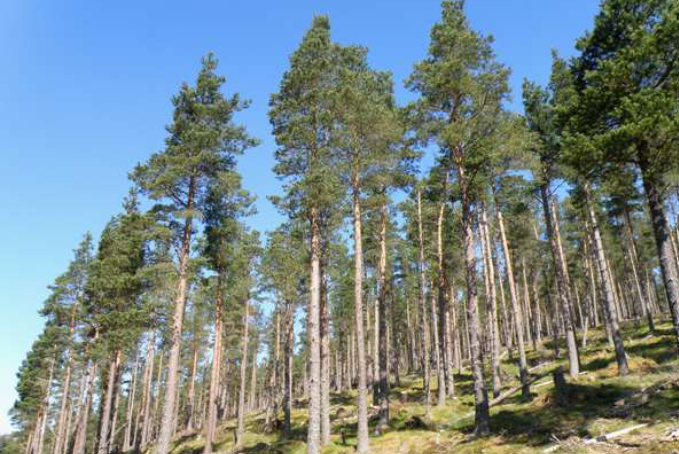
Timber trees are woody plants cultivated or harvested primarily for the structural, decorative, or industrial value of their wood, forming the biological foundation of one of the world’s oldest and most economically significant industries. Wood remains the most widely used construction material on Earth, and the global timber market was valued at approximately USD 600 billion in 2023, encompassing sawn lumber, engineered wood products, pulp and paper, furniture, and a vast range of specialty wood applications.
Forests cover roughly 4.06 billion hectares — about 31% of the Earth’s total land surface — and of this forested area, an estimated 1.15 billion hectares is managed primarily or partly for timber production, supporting livelihoods for hundreds of millions of people across the globe from industrial-scale plantation workers to remote community loggers harvesting native forests for local use.
The properties that determine a timber tree’s value are many and varied, including wood density, hardness, grain pattern, natural durability against rot and insect attack, workability, dimensional stability, and availability in useful sizes. Timbers are broadly classified into hardwoods — derived from broadleaved, mostly flowering trees (angiosperms) — and softwoods, from coniferous trees (gymnosperms).
Despite their names, these categories refer to botanical origin rather than actual wood hardness: balsa, the world’s lightest commercial timber, is technically a hardwood, while some softwoods such as yew are denser and harder than many hardwoods. Softwoods account for approximately 80% of global timber production by volume, dominated by pine, spruce, and fir from the vast boreal and temperate forests of North America, Europe, and Russia, while tropical hardwoods command the highest prices per cubic metre in premium furniture and construction markets.
Timber production is increasingly shaped by the dual pressures of rising global demand and growing awareness of the environmental consequences of deforestation. Global wood consumption is projected to triple by 2050 as population growth, urbanization, and the construction boom in developing nations drive demand, while simultaneously the substitution of timber for carbon-intensive steel and concrete in construction — a movement known as mass timber or engineered wood construction — is generating new demand in high-income markets.
Plantation forestry now supplies an estimated 35–40% of global industrial round wood from just 7% of the world’s forested area, dramatically reducing pressure on native forests while enabling the production of large volumes of consistent, fast-grown timber. Species such as Eucalyptus, Pinus, and teak are grown on rotations of 7–25 years in tropical and subtropical plantations, achieving volumes that native forest harvesting cannot replicate.
Certification schemes such as the Forest Stewardship Council (FSC) and the Programme for the Endorsement of Forest Certification (PEFC) now cover over 600 million hectares of forest globally, providing market assurance that timber has been harvested according to environmental, social, and economic standards. Consumer demand for certified timber is growing steadily in Europe, North America, and Japan, where government procurement policies and building codes increasingly require documented legal and sustainable origin for wood products.
At the same time, illegal logging remains a significant global problem, estimated to account for 15–30% of global timber trade by volume and causing annual economic losses of USD 51–152 billion. The intersection of conservation, commercial forestry, community land rights, and industrial demand makes timber tree management one of the most complex and consequential challenges in global natural resource governance.
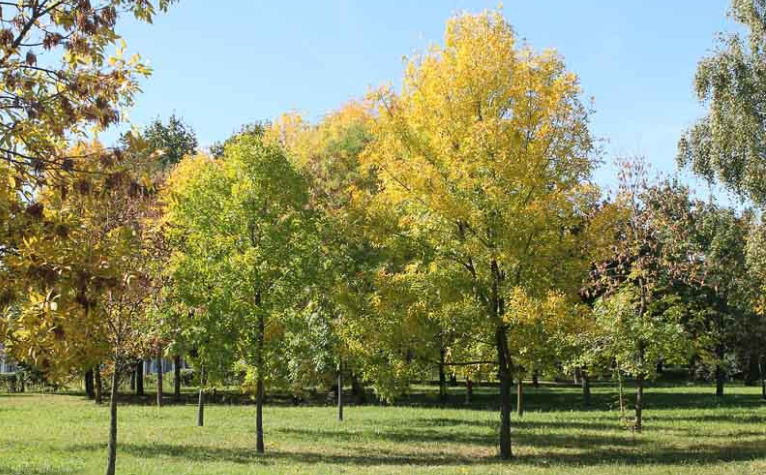
Teak (Tectona grandis)
Teak is one of the most prized and internationally traded tropical hardwoods in the world, native to the monsoon forests of South and Southeast Asia — particularly Myanmar, Thailand, India, and Laos — and now cultivated on plantations across tropical Africa, Latin America, and the Pacific. Its heartwood is exceptionally rich in natural oils that confer outstanding resistance to moisture, rot, insects, and marine borers, making it the timber of choice for boat decks, outdoor furniture, flooring, and high-end construction that must endure wet and exposed conditions.
Plantation teak grown on 20–25 year rotations in countries including Costa Rica, India, and Ghana has expanded the global supply considerably, though old-growth Myanmar teak still commands premium prices. Global teak plantation area exceeds 4.3 million hectares, making it one of the most extensively planted tropical hardwood species.
Douglas Fir (Pseudotsuga menziesii)
Douglas fir is the most commercially important timber tree in North America and one of the world’s most valuable softwoods, dominating the timber industry of the Pacific Northwest United States and British Columbia, Canada. It produces long, straight logs of extraordinary size — old-growth trees can exceed 90 metres in height and 4 metres in diameter — and its wood combines exceptional strength-to-weight ratio with good workability, making it the preferred structural timber for heavy construction, plywood, laminated beams, and engineered wood products.
The US Pacific Northwest produces tens of millions of cubic metres of Douglas fir annually, and its plywood and laminated veneer lumber are exported globally. It is also grown in plantation forestry in New Zealand, Chile, and parts of Western Europe.
Mahogany (Swietenia macrophylla)
Big-leaf mahogany is the quintessential premium tropical hardwood, valued for centuries for its rich reddish-brown color, interlocking grain, dimensional stability, and superb workability that makes it ideal for fine furniture, cabinetry, musical instruments, and interior joinery. Native to the tropical forests of Central and South America, from Mexico to Bolivia, it has been heavily logged since colonial times and is now listed on CITES Appendix II, meaning international trade requires documentation of legal and sustainable origin.
Wild stocks have been dramatically reduced across much of its natural range, and plantation cultivation — particularly in Fiji, the Solomon Islands, and parts of Africa and Asia — has taken on increasing importance for meeting market demand. Its wood has a density of approximately 590 kg/m³ and is moderately durable against rot.
Eucalyptus (Eucalyptus grandis / E. globulus)
Eucalyptus is the dominant plantation timber genus globally, grown across an estimated 22 million hectares in more than 90 countries, making it the most widely planted hardwood genus on Earth. Species such as Eucalyptus grandis, E. globulus, E. urophylla, and their hybrids are grown on rotations as short as 5–12 years in tropical and subtropical regions, producing high volumes of fast-grown wood for pulp and paper, charcoal, construction poles, and increasingly for engineered wood products.
Brazil alone cultivates over 7 million hectares of eucalyptus, supplying the country’s enormous pulp and charcoal industries. The wood is typically dense, hard, and strong, though its dimensional instability during drying has historically limited some structural applications. Genetic improvement programs have dramatically increased eucalyptus productivity over the past four decades.
Scots Pine (Pinus sylvestris)
Scots pine is the most widely distributed pine species in the world, ranging naturally from Scotland and Western Europe across Russia and Siberia to the Pacific coast of Asia, and is among the most important commercial timber trees of the northern hemisphere. Its reddish-orange heartwood is moderately resinous, durable, and easy to work, used extensively for construction timber, joinery, furniture, flooring, and utility poles across Europe and Russia.
Russia alone possesses an estimated 110 million hectares of Scots pine forest, representing a colossal timber reserve. It is also widely planted in the British Isles, Scandinavia, and parts of South Africa and Australia as a plantation species. As a pioneer tree on poor, sandy, and acidic soils, it also plays an important ecological role in forest succession across its vast natural range.
African Mahogany (Khaya senegalensis / K. ivorensis)
African mahogany encompasses several species of the genus Khaya native to the tropical forests of West and Central Africa, widely used as a substitute for true (American) mahogany in furniture, cabinetry, boat building, and interior woodwork. The wood is similar in appearance to Swietenia mahogany — reddish-brown, with an interlocking grain that produces an attractive ribbon figure when quarter-sawn — though it is somewhat coarser in texture and less stable.
West African countries including Ghana, Cameroon, and Ivory Coast have historically been major exporters, though export volumes have declined as natural forest stocks have been reduced through logging and agricultural conversion. Plantation cultivation of Khaya is expanding in Australia, Brazil, and East Africa to supplement dwindling natural forest supplies.
Sitka Spruce (Picea sitchensis)
Sitka spruce is the largest spruce species in the world and the dominant plantation conifer of the wet, temperate coastal zones of the British Isles and Ireland, where it has been planted on a massive scale since the early 20th century. It produces a light, strong, straight-grained timber with an exceptionally high strength-to-weight ratio that has made it the preferred wood for aircraft construction, guitar soundboards, and other applications demanding maximum stiffness with minimum weight.
In the UK and Ireland, it accounts for the majority of softwood timber production from state and private forests. Sitka spruce grows with remarkable speed in the wet Atlantic climate of the British Isles, reaching harvestable size in 35–50 years — faster than almost any other conifer in these climates.
Iroko (Milicia excelsa)
Iroko is a large West and Central African hardwood tree producing timber often called African teak — though it is botanically unrelated to true teak — valued for its durability, attractive golden to medium-brown color, and physical properties that make it suitable for outdoor furniture, flooring, boat building, joinery, and construction in demanding conditions.
Its natural oils confer good resistance to moisture and rot without treatment. Iroko can cause contact dermatitis in woodworkers sensitive to its dust, making respiratory and skin protection important during machining. It is a forest emergent tree that can reach 50 metres in height and is widespread from Guinea to Tanzania. Concerns about unsustainable logging have led to FSC certification programs in several range countries to ensure responsible sourcing.
Radiata Pine (Pinus radiata)
Radiata pine, native only to a small area of coastal California and Guadalupe Island in Mexico, has become one of the world’s most important plantation timber species, cultivated on approximately 4–5 million hectares in New Zealand, Australia, Chile, Spain, and South Africa. In New Zealand, it is the dominant plantation species and the foundation of the country’s timber and wood products export industry, which generates over NZD 6 billion annually. It grows extremely rapidly in cool, temperate plantation environments — reaching harvestable size in 25–35 years — producing a versatile, pale, easy-to-work softwood suitable for framing, furniture, plywood, pulp, and medium-density fibreboard (MDF). Extensive genetic improvement through selective breeding and clonal propagation has increased productivity substantially over the past half-century.
Rosewood (Dalbergia spp.)
Rosewoods are a group of tropical hardwoods from the genus Dalbergia, prized for their extraordinary beauty — dense, dark, often streaked heartwood in shades of red, purple, brown, and black with fine figuring — and for their tonal properties that have made them the foremost choice for high-end guitar backs and sides, violin bows, fine furniture, and decorative turned objects for centuries. Brazilian rosewood (D. nigra) and Indian rosewood (D. latifolia) are the most celebrated species, both now strictly protected under CITES Appendix I and II respectively.
The entire Dalbergia genus was listed under CITES in 2017, making all international trade in rosewood subject to strict export permit requirements — a regulatory response to the rampant illegal logging that had devastated rosewood populations across Asia and Africa to supply Chinese furniture markets.
Timber Bamboo (Phyllostachys edulis / Guadua angustifolia)
Timber bamboos — including the giant Moso bamboo of China and Japan and the Guadua bamboo of South America — occupy a unique position as the fastest-growing structural plant material on Earth, capable of reaching harvestable culm height in just 3–5 years compared to decades for conventional timber trees.
Guadua angustifolia, the most important structural bamboo of Latin America, has a tensile strength comparable to mild steel and compressive strength exceeding concrete, making it an outstanding low-cost, low-carbon building material in countries including Colombia, Ecuador, and Brazil. Moso bamboo is harvested across 5 million hectares in China for flooring, engineered board, textiles, and paper. Bamboo sequesters carbon at rates up to four times higher per hectare than many timber forests and can be harvested on continuous short-rotation cycles without replanting.
Black Walnut (Juglans nigra)
Black walnut is one of North America’s most valuable native hardwoods, producing a rich, chocolate-brown to purplish-grey heartwood with outstanding figure and luster that is among the most prized materials for fine furniture, gunstocks, cabinetry, veneer, and decorative turning. A single high-quality black walnut veneer log can fetch USD 10,000–20,000 or more at auction, making individual trees a significant long-term financial asset for landowners.
Beyond its timber value, black walnut produces edible nuts harvested commercially and has allelopathic properties — its roots release juglone, a chemical that suppresses the growth of many other plants nearby. It grows naturally across the eastern United States and is harvested primarily from farmland, fence lines, and riparian zones rather than managed timber forests.
Larch (Larix decidua / L. kaempferi)
Larches are unusual among conifers in being deciduous — shedding their needles each autumn — and are among the most durable and rot-resistant softwood timbers available in temperate climates, outlasting most other conifers when used in external and ground-contact applications.
European larch (Larix decidua) and Japanese larch (L. kaempferi) are both widely planted for timber in the British Isles, Scandinavia, and Central Europe, where their naturally durable heartwood is valued for outdoor cladding, fencing, decking, boat building, and structural use without chemical treatment. Larch timber has a warm, attractive reddish-brown color and a resinous quality that repels moisture. Russia has the world’s largest larch forests, dominated by Siberian larch, covering an estimated 260 million hectares in Siberia and the Russian Far East.
Meranti / Lauan (Shorea spp.)
Meranti and lauan are trade names for a complex group of timber species from the genus Shorea, native to the dipterocarp forests of Southeast Asia — particularly Malaysia, Indonesia, and the Philippines — and collectively among the most important tropical hardwood timbers in international trade by volume. Light red and dark red merantis are the most common in the trade, used for plywood, furniture components, light construction, and joinery.
The dipterocarp forests from which these timbers originate are among the most species-rich forest ecosystems on Earth, but decades of intensive logging have reduced them dramatically — the Philippines alone lost over 95% of its original old-growth dipterocarp forest in the 20th century. FSC-certified meranti is available from some Malaysian sources, though certified supply remains a small fraction of total trade.
Ash (Fraxinus excelsior / F. americana)
European and American ash are hardwoods prized for their exceptional toughness, flexibility, and shock resistance — properties that made ash the timber of choice for tool handles, sports equipment, oars, and vehicle wheel spokes for centuries and that continue to make it valuable for flooring, furniture, cabinet making, and sports goods including baseball bats, hockey sticks, and tennis racket frames. The pale cream to light brown wood has a straight, open grain and is highly responsive to steam bending.
Both species are currently under severe threat from the invasive fungal pathogen Hymenoscyphus fraxineus (ash dieback), which is devastating ash populations across Europe and has the potential to eliminate the species as a commercial and ecological presence across much of its range within decades — a forestry and conservation crisis of historic proportions.
Yellow Meranti (Shorea faguetiana)
Yellow meranti, also called yellow seraya, is among the tallest tropical hardwood trees in the world — specimens in Sabah, Malaysian Borneo have been confirmed to exceed 100 metres in height, making them the tallest known tropical trees on Earth. Its timber is lighter and less durable than red meranti but is used for light construction, plywood, and interior joinery.
As a dipterocarp it belongs to the same ecologically and commercially critical family as the red and white merantis and shares their vulnerability to the logging and land conversion that has devastated lowland dipterocarp forests across Southeast Asia. Conservation efforts in Sabah, where extraordinary stands of yellow meranti persist in protected forest reserves, are now attracting international attention as the ecological and carbon storage value of these giant tree forests becomes more widely recognized.
Cherry (Prunus serotina / P. avium)
American black cherry and European wild cherry are medium-sized hardwood trees producing timber of remarkable beauty — a warm, reddish-brown wood that deepens and enriches with age and light exposure, with a fine, satiny texture and gentle figure that have made it one of the most desirable American cabinet and furniture woods for over three centuries.
American black cherry (Prunus serotina) is the more commercially important species, harvested primarily from the hardwood forests of the Appalachian region, particularly Pennsylvania, which produces the largest volumes of high-grade cherry lumber in the world. It is used in fine furniture, cabinetry, flooring, veneer, musical instruments, and decorative turning, consistently commanding premium prices in domestic and export markets.
Western Red Cedar (Thuja plicata)
Western red cedar is a large conifer native to the Pacific Northwest coast of North America, producing one of the most naturally durable timbers available in temperate regions — its heartwood contains thujaplicin compounds that provide outstanding resistance to decay, insects, and moisture without any preservative treatment.
It is the premier timber for exterior cladding, shingles, decking, fencing, and greenhouse construction, and is also used for guitar soundboards, boat planking, and log home construction. Indigenous peoples of the Pacific Northwest used western red cedar as their primary building, carving, and textile material for thousands of years, and it remains culturally central to many First Nations communities. It can live for over 1,000 years in its native range, and old-growth specimens are now strictly protected across most of their range.
Poplar (Populus spp.)
Poplars are among the fastest-growing temperate hardwood trees available, capable of producing harvestable timber on rotations of just 8–15 years in intensive plantation systems, making them important short-rotation timber crops in Europe, North America, and China. European black poplar hybrids are grown extensively in Italy, France, Spain, and Poland for match splints, veneer, plywood, and packing case timber, while eastern cottonwood and hybrid poplars are similarly cultivated in the United States.
China has the largest area of poplar plantations in the world, covering over 8 million hectares, producing timber for furniture, construction boards, and paper. The wood is light, soft, and easy to work but lacks natural durability, requiring treatment for outdoor applications. Poplars also have strong potential in phytoremediation of contaminated soils and as short-rotation biomass energy crops.
Sapele (Entandrophragma cylindricum)
Sapele is a large West and Central African hardwood tree related to African mahogany, producing a medium to dark reddish-brown timber with a characteristically pronounced interlocked grain that creates a striking ribbon or rope figure when quarter-sawn — a visual effect that has made it especially popular for decorative veneers, panelling, furniture, and high-end musical instrument bodies, particularly guitar backs.
It is one of the most widely exported African hardwood timbers and is found in international markets as both solid lumber and sliced veneer. It grows to 45 metres or more in the tall forests of the Congo Basin, West Africa, and East Africa and is subject to CITES Appendix II listing, requiring permits for international trade. FSC-certified sources exist in Cameroon and the Republic of Congo.
Hinoki Cypress (Chamaecyparis obtusa)
Hinoki cypress is the most revered timber tree in Japan, producing a fragrant, fine-grained, pale yellow to cream wood of extraordinary quality that has been used for over 1,400 years in the construction of Japan’s most important temples, shrines, and palaces — including the great shrines of Ise, which are ritually rebuilt every 20 years using hinoki. Its timber is naturally durable, dimensionally stable, and exceptionally workable, with a distinctive, pleasant lemony fragrance derived from its essential oil content.
It grows slowly in the mountain forests of Honshu, Shikoku, and Kyushu and is also cultivated in plantation forestry in Japan and increasingly in parts of New Zealand. The scarcity of large-diameter hinoki has driven considerable interest in plantation management and extended rotation forestry to grow replacement timber of adequate size.
Tallow Wood (Eucalyptus microcorys)
Tallow wood is an Australian eucalyptus native to the coastal ranges of Queensland and New South Wales, producing one of the hardest, heaviest, and most naturally durable timbers in Australia — and arguably one of the most durable of any timber commercially available globally. With a Janka hardness rating of approximately 8,600 N and Class 1 durability in ground contact, tallow wood is used for heavy construction, bridge timbers, railway sleepers, wharf decking, poles, and flooring where extreme durability is required.
Its resistance to termites and wood-boring insects without chemical treatment is exceptional. While its harvesting from native forests is now strictly regulated in New South Wales, it remains an important component of the hardwood timber industry in Queensland and is grown to a limited extent in commercial hardwood plantations.
Spruce (Picea abies)
Norway spruce is the dominant timber and pulpwood tree of Scandinavia, Germany, and Central Europe, forming the backbone of northern European forestry industries and providing the raw material for vast quantities of sawn construction timber, plywood, furniture, pulp, and paper. Its pale, straight-grained wood is light, strong, easy to nail, glue, and paint, and it works well in all standard woodworking operations.
It is also the primary species used for spruce guitar and violin tops, where its resonant acoustic properties — uniform stiffness, low density — have made it irreplaceable to instrument makers for centuries. Spruce forests across Central Europe have been severely affected by bark beetle outbreaks exacerbated by warming, drying conditions linked to climate change, causing unprecedented levels of timber salvage harvesting across Germany, Czech Republic, and Austria in the 2018–2022 period.
Okoumé (Aucoumea klaineana)
Okoumé is a West African hardwood native primarily to Gabon and adjacent countries, remarkable for being one of very few tropical hardwoods that peels easily into high-quality veneer — a property that has made it the dominant species for marine plywood and decorative plywood manufacturing globally. Gabon alone exports millions of cubic metres of okoumé logs and veneer annually, and it forms the basis of that country’s entire timber export economy.
Its wood is light, pink to salmon in color, easy to work, and bonds well with adhesives, making it excellent for plywood cores and faces. Gabon has implemented log export bans in recent decades to promote domestic processing and add value before export, with mixed results in terms of industrial development and governance outcomes.
Koa (Acacia koa)
Koa is a large Hawaiian acacia tree producing one of the world’s most beautiful and sought-after figured hardwoods, characterized by dramatic, wavy, curly, or fiddleback grain patterns in warm golden to reddish-brown heartwood with exceptional luster. It is used almost exclusively for premium furniture, ukuleles, guitars, bowls, and decorative objects, and high-grade figured koa commands among the highest prices of any timber species globally — premium logs can fetch several thousand dollars per board foot.
Koa is endemic to Hawai’i and its natural forest has been drastically reduced by historical land clearing and invasive species, making sustainably harvested koa from private lands and restoration forestry projects critically important to supply the market. Cultural significance to Native Hawaiian people adds another dimension to the complexity of koa forest management.
Silver Fir (Abies alba)
European silver fir is a large, long-lived conifer of the mountain forests of Central and Southern Europe, producing a pale, straight-grained, resonant timber used in construction, flooring, interior joinery, furniture, and paper production. Its wood is similar to Norway spruce in appearance and properties but is generally considered somewhat more durable and dimensionally stable.
Silver fir has suffered significant decline across parts of its range due to acid deposition, deer browsing of regeneration, and climate stress, raising concerns about its future contribution to timber supply in Central European forests. It is valued not only for its timber but as a structurally important component of mixed mountain forests that regulate water flow, protect against avalanches, and support high levels of biodiversity in the Alps, Carpathians, and Balkans.
Irvingia / Bush Mango (Irvingia gabonensis)
Irvingia gabonensis, the bush mango or wild mango, is a large West and Central African hardwood tree best known in food contexts for its nutritious seeds (ogbono), but producing a very hard, heavy, pale yellowish-brown timber used locally for heavy construction, tool handles, mortars, and mine timber.
With a density exceeding 900 kg/m³, it ranks among the heaviest and hardest of African commercial timbers. It grows in the humid forest zone from Senegal to Uganda and is under increasing pressure from both logging and agricultural conversion. Its multiple uses — food, medicine, timber — make it an excellent candidate for domestication and integration into agroforestry systems, and considerable research by the World Agroforestry Centre has focused on improving its cultivation and management.
Parana Pine (Araucaria angustifolia)
Parana pine — technically not a true pine but a member of the ancient Araucariaceae family — is the most important native timber tree of southern Brazil, producing a straight-grained, pale to light brown wood of moderate density used in construction, furniture, plywood, matchsticks, and paper.
It was the dominant timber of the southern Brazilian states of Paraná, Santa Catarina, and Rio Grande do Sul for most of the 20th century, but decades of uncontrolled logging have reduced its natural forest cover by over 97%, and it is now listed as critically endangered on the IUCN Red List. Plantation cultivation exists but on a relatively small scale. Its demise represents one of the most dramatic losses of a commercially important timber species in South American forest history and is a cautionary example of unsustainable timber exploitation.
Rimu (Dacrydium cupressinum)
Rimu is one of New Zealand’s most iconic native timber trees, a podocarp conifer of the temperate rainforests of both main islands producing a rich, warm reddish-brown to golden-brown timber with fine, straight grain and subtle figure that was the dominant building and furniture timber of New Zealand for over a century. Rimu timber features prominently in historic New Zealand buildings, furniture, and woodwork, and is still highly prized for joinery, flooring, and decorative applications.
Harvesting from native forests has been almost entirely prohibited since the 1980s and 1990s, and supply now comes from salvaged timber, recycled building material, and small quantities from sustainably managed private forest. Rimu forest also supports the kōkako, kererū, and other threatened native birds that depend on its fruit-bearing seasons.
Paulownia (Paulownia tomentosa / P. fortunei)
Paulownia is the fastest-growing hardwood tree in the world, capable of reaching 10–15 metres in height within a single year under optimal conditions and producing harvestable timber on rotations as short as 5–10 years — a growth rate that has generated enormous interest in paulownia as a sustainable, rapid-cycle timber crop.
Native to China, it produces an exceptionally light, straight-grained, pale wood with good dimensional stability and natural fire resistance, used traditionally in Japan and China for musical instruments, furniture, storage chests, and lightweight structural applications. Its very low density — among the lowest of any hardwood — makes it valuable where weight reduction is critical. Interest in paulownia as a carbon-sequestering, rapidly renewable timber is growing globally, with plantations being established in Europe, the Americas, and Australia.
Balsa (Ochroma pyramidale)
Balsa is the lightest commercial timber in the world, with a dry density of just 100–200 kg/m³ — approximately five times lighter than water — and is native to the tropical forests of Central and South America, with Ecuador the world’s dominant producer.
Despite its extraordinary lightness, balsa has a high strength-to-weight ratio that made it the preferred material for model aircraft, lifesaving equipment, and floatation devices for generations, and it is now one of the most important core materials in the wind turbine blade manufacturing industry, where its low weight and good compression and shear properties make it ideal for sandwich composite structures.
Global demand for balsa has surged with the rapid expansion of wind energy, with Ecuador’s balsa plantations struggling to keep pace with orders from wind turbine manufacturers in China, Europe, and the Americas.
Merbau (Intsia bijuga / I. palembanica)
Merbau is a highly durable tropical hardwood from Southeast Asia and the Pacific — native to Malaysia, Indonesia, Papua New Guinea, and Pacific island nations — producing a coarse-grained, dark reddish-brown to orange-brown timber that is exceptionally hard, heavy, and naturally resistant to termites and decay. It is one of the most widely used tropical hardwoods for decking, flooring, outdoor furniture, heavy construction, and boat building in Asia-Pacific markets, where its combination of visual appeal and natural durability makes it popular despite its high density.
Significant concerns exist about the sustainability of merbau harvesting — illegal logging from Papua New Guinea’s forests for the Chinese flooring market was one of the most extensively documented cases of illegal tropical timber trade in the early 2000s, prompting increased regulatory scrutiny and calls for certification.
Wenge (Millettia laurentii)
Wenge is a Central African hardwood from the Congo Basin, producing one of the most visually striking timbers in the world — very dark, almost black-brown heartwood with pale yellowish sapwood and a coarse, open grain with fine, dark veining that creates a bold, dramatic figure highly prized in high-end furniture, flooring, musical instrument fretboards, and decorative architectural features. It is listed as endangered on the IUCN Red List due to extensive logging of natural forest populations.
Wenge is heavy — with a density of around 870 kg/m³ — and exceptionally hard and stiff, but its coarse grain and tendency to splinter makes it challenging to work. It is a staple of premium guitar building, used for fretboards and neck laminates, and is sought after in the luxury furniture markets of Europe, the Middle East, and Asia.
Black Locust (Robinia pseudoacacia)
Black locust is a North American hardwood now naturalized across large parts of Europe, Asia, and South Africa, producing one of the most naturally durable timbers of any temperate hardwood — its heartwood has Class 1 durability in ground contact, outlasting oak in exposed conditions. It is widely used in Hungary, Germany, and France for vineyard stakes, fence posts, outdoor furniture, flooring, and decking without any preservative treatment.
Black locust is a nitrogen-fixing legume that improves soil fertility on the often-poor, disturbed soils it colonizes, though it can become invasive outside its native range. It also produces abundant, fragrant blossom that makes it one of the most important honey plants in Europe. Its wood is dense, hard, and ring-porous, with an attractive greenish-yellow color that matures to golden-brown.
Obeche (Triplochiton scleroxylon)
Obeche is a large West African hardwood from the forests of Nigeria, Ghana, Cameroon, and Ivory Coast, producing one of the lightest and most easily worked African commercial timbers — its pale, creamy-white to straw-colored wood has a density of only 350–400 kg/m³ and an interlocking grain that can cause tearing during machining but produces an attractive figure.
It is used extensively for plywood core and face veneers, lightweight furniture, interior joinery, pattern making, and model construction. As one of West Africa’s most abundant large forest trees, it has historically been heavily logged and is a major component of the West African plywood industry. Sustainable management concerns exist across much of its range, though some FSC-certified obeche plywood is available from responsibly managed sources.
Zebrawood (Microberlinia brazzavillensis)
Zebrawood is a large Central African hardwood from Gabon and Cameroon producing one of the most visually dramatic timbers in the world — pale golden-yellow to cream background streaked with dark brown, almost black stripes running along the length of the log, creating a bold zebra-like pattern that is exceptionally striking in furniture, veneer panels, marquetry, and decorative flooring. The striped pattern is most pronounced in quarter-sawn material.
Its density and hardness make it suitable for tool handles and turned objects as well as decorative furniture. Like many of Gabon’s distinctive hardwoods, zebrawood has been subject to intensive logging, and its populations in accessible forest areas have been considerably reduced. It is found primarily as sliced decorative veneer in international markets rather than as bulk sawn lumber.
English Oak (Quercus robur)
English oak is one of the most historically, culturally, and ecologically significant timber trees of Europe, forming the dominant woodland type across lowland Britain and much of Western and Central Europe for millennia. Its timber is hard, durable, ring-porous, and exceptionally strong — used for centuries in ship building, wine and whisky barrels, cathedral and barn frames, flooring, and fine furniture — and its heartwood has natural durability in ground contact that allows unpreserved external use in fencing, gates, and cladding.
English oak supports more species of wildlife than any other native British tree, hosting over 2,300 associated invertebrate, lichen, and fungal species. Modern demand for oak timber for whisky barrel staves, engineered flooring, and high-end furniture construction remains strong, and oak commands among the highest prices of any European-grown hardwood.
Kauri (Agathis australis)
Kauri is an ancient, massive conifer native to the northern North Island of New Zealand and one of the largest trees in the world by volume — the famous Tāne Mahuta specimen in Northland has a trunk girth of over 13 metres and is estimated to be 1,500–2,500 years old. Its timber, now protected from harvesting in living trees, was formerly one of New Zealand’s most important timber exports, used for ship masts, building timber, and furniture due to its straight grain, great length, and workability.
Today, subfossil kauri logs preserved for thousands of years in swamp peat — known as swamp kauri — are legally excavated for high-value furniture and decorative timber, with some specimens dating back 50,000 years. Kauri dieback disease, caused by the water mould Phytophthora agathidicida, now poses a catastrophic threat to surviving native kauri forests.
Chestnut (Castanea sativa)
Sweet chestnut is a large deciduous hardwood tree of Southern Europe, the Caucasus, and Western Asia producing a ring-porous, light brown timber with an attractive grain and exceptional natural durability — the result of high tannin content that makes it resistant to rot and insect attack without chemical treatment.
In southern England and northern France, coppiced sweet chestnut is the traditional fencing and hop-pole crop, managed on rotations of 12–20 years to produce split chestnut paling fence material. Larger-diameter chestnut timber is used for outdoor furniture, decking, structural beams, barrel staves, and tannin extraction.
Italy, France, Portugal, and Turkey are the principal producers of commercial chestnut timber. The species was devastated by chestnut blight (Cryphonectria parasitica) in North America in the early 20th century, virtually eliminating the closely related American chestnut as a commercial timber species within decades.