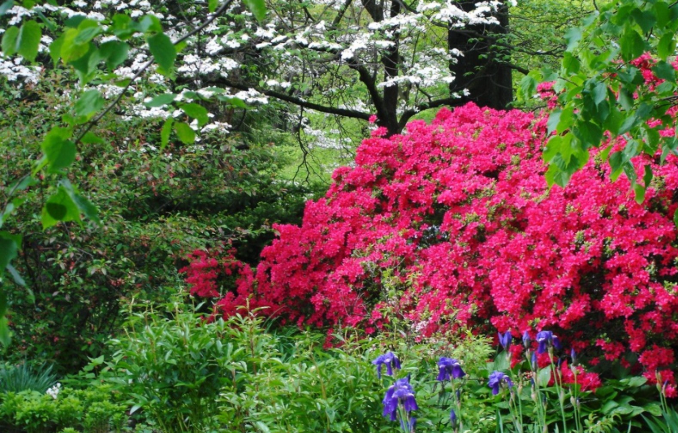
Full shade, in the strict horticultural sense, means less than about 3 hours of direct sun a day, often filtered through a dense tree canopy or blocked entirely by a north-facing wall. That’s a genuinely difficult environment for most shrubs, since flowering and fruiting both cost a plant real energy, and a shrub working with a fraction of the light a sunny bed receives usually has to choose between putting that limited energy into leaves or into blooms. Most of the shrubs that thrive here have made a clear choice: prioritize foliage, and treat any flowers as a modest bonus rather than the main event.
The flowers that do show up in deep shade tend to share a specific set of traits for a good reason. White or pale flowers stand out far better than red or purple ones against dim, filtered light, which is why so many shade-loving shrubs bloom white, and many of them lean hard on fragrance too, compensating for reduced visibility with scent strong enough to draw in the relatively few pollinators willing to venture under a dense canopy. Large, broad leaves are the other consistent adaptation, maximizing the surface area available to capture whatever light does filter through.
It’s worth being honest that “full shade” and “dry shade” are 2 different, sometimes overlapping challenges, since a spot under a mature tree is often both shaded and starved of moisture by the tree’s own root system. A handful of shrubs on this list handle both conditions at once, and those are specifically noted, since that combination rules out many otherwise shade-tolerant plants. The Missouri Botanical Garden’s plant finder lets you filter specifically by shade tolerance alongside moisture needs, which is worth checking before committing a genuinely difficult spot to any single species. What follows covers 50 shrubs that grow in full shade.
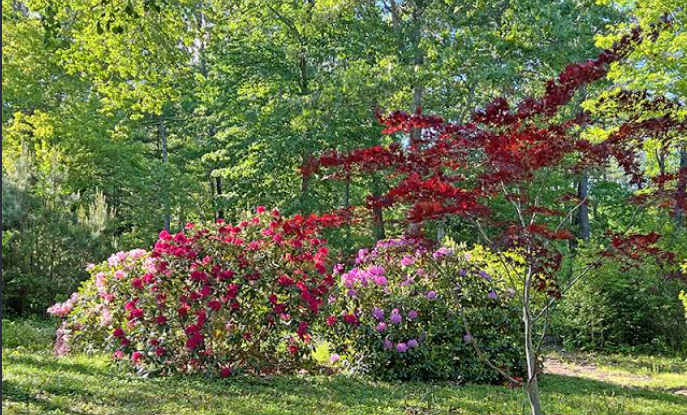
Sweet Box
Sweet box produces small, intensely fragrant white flowers in late winter, thriving specifically in deep shade where few other flowering plants perform at all. Its glossy, dark green foliage stays attractive year-round regardless of how little direct light it receives.
It also tolerates dry shade exceptionally well, making it a genuine solution for the difficult combination of low light and root competition found under a mature tree.
Aucuba
Aucuba, also called gold dust plant, produces bold, glossy evergreen leaves often speckled with gold variegation, tolerating some of the deepest shade of any broadleaf evergreen available. Its dramatic foliage genuinely brightens a dark corner where most other plants would simply thin out and fail.
It tolerates heavy shade and poor soil, asking for very little beyond an occasional watering during a genuinely dry stretch.
Leucothoe
Leucothoe produces arching stems of small, bell-shaped white flowers and glossy evergreen foliage that often takes on a bronze or purple tint in cold weather, thriving in shade that would leave a sun-loving shrub stretched and thin. Its low, cascading form works particularly well beneath taller shade trees.
It tolerates acidic soil and shade well, needing minimal pruning beyond removing an occasional damaged stem.
Anise Shrub
Anise shrub, botanically Illicium, produces glossy evergreen leaves that release a distinctive licorice scent when crushed, tolerating significant shade better than most broadleaf evergreens available. Its unusual star-shaped spring flowers add a subtle seasonal touch to an otherwise foliage-focused plant.
It thrives in consistently moist, shaded soil, conditions many other evergreen shrubs would find too dark or damp to tolerate.
Leatherleaf Mahonia
Leatherleaf mahonia produces spiky clusters of yellow winter flowers and dark blue berries on a genuinely low-maintenance evergreen shrub, tolerating deep shade better than most flowering alternatives on this list. Its bold, spiny, architectural foliage provides year-round structure regardless of light levels.
It tolerates poor soil and considerable neglect alongside its shade tolerance, needing minimal pruning beyond removing an occasional damaged cane.
Oregon Grape
Oregon grape produces bright yellow spring flowers and dark blue, grape-like berries on a genuinely low-maintenance native evergreen shrub, thriving in shade considerably deeper than its sunny-meadow relatives might suggest. Its spiny, holly-like leaves provide texture year-round.
It tolerates shade and poor soil well, needing minimal pruning once established in the right spot.
Skimmia
Skimmia produces glossy evergreen leaves and fragrant flower clusters followed by bright red berries, tolerating shade better than nearly any other broadleaf evergreen commonly available. Its compact size makes it a genuine solution for a small, dark foundation bed.
It requires a male and female plant nearby for reliable berry production and tolerates acidic, well-drained soil best.
Fatsia
Fatsia produces bold, glossy, deeply lobed evergreen leaves on a dramatic, tropical-looking shrub that thrives in some of the deepest shade any woody plant on this list can tolerate. Its rounded clusters of small white flowers in late fall are a genuine bonus rather than the main attraction.
It tolerates significant shade and a range of soil conditions, needing minimal pruning to maintain its naturally bold, architectural form.
Fatshedera
Fatshedera, a genuine hybrid between Fatsia and English ivy, produces large, glossy, lobed leaves on a sprawling, semi-climbing shrub that tolerates deep shade about as well as either of its parent plants. Its unusual growth habit can be trained upright or allowed to sprawl as a groundcover.
It tolerates poor soil and considerable neglect alongside its shade tolerance, thriving where few other broadleaf evergreens would survive.
Japanese Yew
Japanese yew produces dense, dark green needles on a genuinely shade-tolerant evergreen conifer, one of the few needled evergreens that performs well without any direct sun at all. Its considerable longevity has made it a traditional foundation and hedge plant for centuries.
It tolerates significant shade and a range of soil types, responding well to shearing if a formal hedge shape is wanted.
English Yew
English yew shares Japanese yew’s shade tolerance and dark, dense foliage, historically prized for elaborate topiary work given how well it responds to shaping even in low light. Every part of the plant except the flesh of its red berry is toxic if ingested.
It tolerates shade and a range of soil conditions, growing slowly enough that precise topiary shaping remains genuinely practical.
Hicks Yew
Hicks yew produces a naturally narrow, upright form that requires less corrective pruning than more spreading yew varieties to maintain a tidy silhouette in a shaded foundation planting. Its columnar shape makes it especially useful for a tight, dark side yard.
It tolerates shade and a range of soil types, sharing the toxicity concerns common to the broader yew genus.
Podocarpus
Podocarpus produces fine, yew-like evergreen needles on a versatile shrub that tolerates a meaningful degree of shade despite its conifer-like appearance. Its adaptable growth habit suits both a formal hedge and a looser screening planting.
It tolerates a range of soil and light conditions, needing a mild climate free of hard, prolonged freezes.
Japanese Euonymus
Japanese euonymus produces dense, glossy evergreen foliage, often variegated in cream or gold, tolerating a range of shade conditions on a versatile shrub that responds well to shearing. Its adaptability has made it a popular foundation planting even in a genuinely dim spot.
It tolerates a range of soil and light conditions, though it can be susceptible to scale insects in some regions.
Wintercreeper Euonymus
Wintercreeper euonymus forms a low, spreading, evergreen groundcover or climbing vine depending on how it’s trained, tolerating some of the deepest shade of any plant on this list. Its dense growth makes it a versatile problem-solver for a genuinely difficult, dark spot.
It tolerates shade and poor soil well, though it can become aggressive and difficult to contain if left unmanaged.
Japanese Privet
Japanese privet produces small, glossy evergreen leaves on a dense shrub that tolerates shade considerably better than many other hedging plants, though its growth slows noticeably compared to a sunnier planting. Its fast growth in better light quickly establishes a substantial screen.
It tolerates a range of soil types and light conditions, requiring regular shearing if a tight formal shape is wanted.
Kerria
Kerria produces bright yellow, rose-like flowers on slender green stems that provide genuine winter interest even without leaves, tolerating shade considerably better than most other flowering shrubs. Its suckering growth habit fills in a shaded bed with minimal input from the gardener.
It tolerates shade better than most other flowering shrubs, needing only occasional thinning to keep its spreading habit in check.
Mountain Laurel
Mountain laurel produces intricate, cup-shaped spring flowers in shades of pink and white on a genuinely shade-tolerant native evergreen shrub once sited in acidic, well-drained soil. Its glossy foliage provides year-round structure regardless of bloom timing.
It tolerates partial to significant shade well, requiring minimal pruning once established in the right spot.
Pieris
Pieris, also called andromeda, produces cascading clusters of small, bell-shaped spring flowers alongside glossy evergreen foliage that often emerges in vivid red new growth, tolerating shade about as well as its mountain laurel relative. Its care needs closely track those of mountain laurel.
It tolerates partial to significant shade and acidic soil, needing minimal ongoing care once properly sited.
Camellia Japonica
Camellia japonica produces elegant, rose-like flowers in late winter through early spring on a substantial shade-tolerant evergreen shrub once established in acidic, well-drained soil. Its glossy foliage provides handsome year-round structure between bloom periods.
It requires partial to significant shade and consistently moist, acidic soil, struggling badly in full sun or alkaline conditions.
Rhododendron
Rhododendron produces large, showy flower clusters in spring on a genuinely shade-tolerant evergreen shrub, thriving in dappled woodland light where its native range typically places it. Its considerable size makes a mature specimen a substantial presence even in a dim corner of the garden.
It tolerates significant shade and requires acidic, well-drained soil, struggling in alkaline conditions regardless of light level.
Virginia Sweetspire
Virginia sweetspire produces drooping, fragrant white flower spikes in early summer and vivid burgundy fall color, a genuinely shade-tolerant native shrub that performs nearly as well in a dim spot as in full sun. Its arching form needs little corrective pruning to look good.
It tolerates wet soil and shade equally well, making it a useful choice for a shaded rain garden or a consistently damp low spot.
Fothergilla
Fothergilla produces fragrant, bottlebrush-like white flowers in spring and vivid orange-to-red fall color on a genuinely shade-tolerant native shrub. Its compact size fits well into a smaller shaded foundation planting.
It tolerates both sun and significant shade, requiring minimal pruning and no regular fertilizing to perform reliably year after year.
Doublefile Viburnum
Doublefile viburnum produces striking, flat-topped white flower clusters arranged in neat rows along horizontal branches each spring, tolerating a meaningful degree of shade once established. Its layered, tiered growth habit provides real structural interest even without full sun.
It tolerates a range of soil conditions and shade and needs only minimal pruning to keep its naturally attractive branching pattern intact.
Leatherleaf Viburnum
Leatherleaf viburnum produces large, deeply veined evergreen leaves and clusters of creamy white spring flowers on a substantial, genuinely shade-tolerant shrub. Its bold texture provides year-round structure in a mixed border regardless of light conditions.
It tolerates partial to significant shade and a range of soil types, needing minimal pruning beyond occasional shaping.
Boxwood
Boxwood forms a dense, naturally rounded evergreen shrub that tolerates a meaningful degree of shade, though its growth slows and thins somewhat compared to a sunnier planting. Its fine, small leaves stay attractive year-round even in reduced light.
It tolerates a range of soil types and shade conditions, needing only occasional watering once established.
Inkberry Holly
Inkberry holly, a native evergreen holly, produces small black berries and fine, glossy foliage on a shrub that tolerates both shade and wet soil better than most other hollies. Its naturally rounded form needs little corrective pruning regardless of light conditions.
It handles significant shade and adapts to soil moisture levels that would stress less flexible evergreen shrubs.
Japanese Holly
Japanese holly produces small, boxwood-like evergreen leaves on a dense shrub tolerating a meaningful degree of shade, making it a reasonable boxwood substitute even in a dimmer spot. Its fine texture works well in both a formal hedge and a looser shaded border.
It tolerates a range of soil and light conditions, needing minimal fertilizer once its root system is established.
Nandina
Nandina, also called heavenly bamboo, provides evergreen structure and vivid red winter berries with minimal pruning required, tolerating shade reasonably well though its color intensifies with a bit more light. Its fine, layered foliage turns red in cooler weather regardless of exposure.
It tolerates considerable shade and neglect once established, needing only occasional shaping for a more formal appearance.
Winterberry Holly
Winterberry holly, a deciduous holly, produces a spectacular display of bright red berries along bare branches each winter, tolerating shade reasonably well though berry production improves somewhat with more sun. Its berries persist well into the cold season, providing food for wildlife.
It tolerates wet, poorly drained soil and shade both, thriving in exactly the soggy, dim conditions that stress out most alternatives.
American Holly
American holly produces classic spiny, glossy evergreen leaves and bright red winter berries on a substantial native shrub tolerating a genuine degree of shade, particularly as an understory planting. Its traditional holiday association comes directly from its wild native range.
It requires a male pollinator nearby for reliable berry production and tolerates shade and a range of soil conditions once established.
Bigleaf Hydrangea
Bigleaf hydrangea produces large, rounded flower clusters in blue or pink depending on soil pH, tolerating shade considerably better than many other flowering shrubs, particularly morning sun with afternoon shade. Its considerable flower size makes it a genuine focal point even in a dimmer garden bed.
It tolerates partial to significant shade, needing consistent moisture to support its large, water-hungry blooms.
Oakleaf Hydrangea
Oakleaf hydrangea produces distinctive, deeply lobed leaves that turn a rich burgundy in fall, alongside cone-shaped white flower clusters, tolerating shade better than most other flowering shrubs on this list. Its native status makes it well adapted to a range of woodland conditions.
It tolerates significant shade, needing minimal pruning beyond removing the occasional spent flower head.
Annabelle Hydrangea
Annabelle produces enormous, rounded white flower clusters on a smooth hydrangea variety that tolerates partial shade well, blooming reliably on new wood regardless of winter pruning severity. Its considerable flower size has made it a garden favorite for generations.
It tolerates partial shade better than panicle hydrangea types, needing consistent moisture to support its large blooms.
Spicebush
Spicebush, a genuine woodland understory native, produces small, fragrant yellow spring flowers before its leaves emerge, thriving specifically in the dappled shade beneath a deciduous tree canopy. It also serves as the primary host plant for the spicebush swallowtail butterfly.
It tolerates significant shade and consistently moist soil, thriving in exactly the woodland conditions many other flowering shrubs can’t tolerate.
Witch Hazel
Witch hazel produces spidery, fragrant flowers in yellow, orange, or red on bare branches in late fall or winter, tolerating a genuine degree of shade as a natural woodland understory plant. Its unusual bloom timing means it’s often flowering when the surrounding tree canopy is bare anyway.
It tolerates a range of soil and light conditions, needing only occasional light shaping rather than any real structural pruning.
Bottlebrush Buckeye
Bottlebrush buckeye produces long, upright spikes of white flowers in summer on a genuinely substantial native shrub that thrives in significant shade where few other large flowering shrubs can perform. Its considerable eventual size and suckering habit make it a genuine woodland statement plant.
It tolerates significant shade and a range of soil conditions, spreading slowly by suckers into an impressive colony over time.
Leatherwood
Leatherwood, a genuinely underused native shrub, produces small yellow flowers in very early spring before its leaves emerge, thriving in the dappled shade of a deciduous woodland understory. Its flexible, leathery bark was historically used by Indigenous peoples for cordage.
It tolerates significant shade and consistently moist, rich soil, reflecting its natural woodland habitat.
Cast Iron Plant
Cast iron plant, though more herbaceous than woody, is commonly grouped with shade shrubs given its substantial evergreen presence, tolerating some of the deepest, most neglected shade of any plant discussed here. Its broad, glossy leaves earned the plant its name through sheer toughness and near indestructibility.
It tolerates extremely low light and considerable neglect, thriving where almost nothing else, woody or herbaceous, would survive.
Deciduous Azalea
Deciduous azalea, particularly native species, tends to tolerate deeper shade than many evergreen azalea cultivars, producing fragrant spring flowers in a range of colors on a plant well adapted to a woodland edge. Its fall color adds a bonus most evergreen azaleas don’t offer.
It tolerates significant shade and acidic, well-drained soil, needing an occasional acidic feeding to maintain vigorous growth.
Encore Azalea
Encore azalea produces flowers in spring, summer, and fall rather than just once, tolerating partial shade well enough to extend its reblooming display even in a dimmer garden bed. Its repeated bloom cycle has made it a popular choice beyond a standard azalea’s single spring display.
It tolerates partial shade and acidic, well-drained soil, needing an occasional acidic feeding to maintain vigorous rebloom.
Pawpaw
Pawpaw, a genuine woodland understory native, tolerates significant shade particularly while young, eventually growing into a substantial small tree or large shrub if given more light over time. It also serves as the exclusive host plant for the zebra swallowtail butterfly.
It tolerates partial to significant shade and rich, well-drained soil, thriving in exactly the woodland conditions many fruiting plants can’t handle.
Daphne
Daphne produces intensely fragrant, often pink or white flowers on a compact shrub tolerating partial shade well, with a scent considered among the most captivating of any garden plant regardless of light level. Its relatively modest size suits a smaller shaded garden bed.
It demands excellent drainage and can be genuinely temperamental about being disturbed once planted, so choose its spot carefully from the start.
Bluebird Hydrangea
Bluebird hydrangea produces lacecap-style flower clusters that rebloom over an extended summer period, tolerating partial shade well and offering a more delicate, open flower form than mophead types. Its color also shifts between blue and pink depending on soil pH.
It tolerates partial shade and consistent moisture, blooming on both old and new wood for a longer overall season.
Distylium
Distylium produces fine, glossy evergreen foliage on a genuinely tough, disease-resistant shrub that tolerates a meaningful degree of shade, increasingly used as a low-maintenance boxwood alternative. Its small, inconspicuous flowers focus attention on the foliage itself.
It tolerates a wide range of soil and light conditions, showing notable resistance to the pests and diseases that trouble some other broadleaf evergreens.
Mountain Hydrangea
Mountain hydrangea, botanically Hydrangea serrata, produces smaller, more refined lacecap flower clusters than its bigleaf relative, tolerating partial shade well on a generally more compact, cold-hardy plant. Its finer texture suits a smaller shaded garden bed.
It tolerates partial shade and consistent moisture, sharing its bigleaf relative’s general care needs on a more modest scale.
Hardy Begonia
Hardy begonia, more shrub-like in habit than most other begonia species, produces pink flower clusters in late summer on a genuinely shade-loving perennial that returns reliably from its roots each spring. Its attractive, wing-shaped leaves provide ornamental value well before flowering begins.
It tolerates significant shade and consistently moist, well-drained soil, thriving in exactly the woodland conditions most flowering plants can’t tolerate.
Chinese Fringe Flower
Chinese fringe flower, also called loropetalum, produces distinctive, spidery pink or white flowers, with several cultivars offering rich burgundy foliage that holds its color reasonably well even in partial shade. Its unusual bloom shape provides genuine interest beyond typical flower forms.
It tolerates partial shade, though full sun brings out the most vivid foliage color in the darker-leaved cultivars.
Holly Osmanthus
Holly osmanthus produces small, fragrant fall flowers on a shrub with distinctly spiny, holly-like evergreen leaves, tolerating shade considerably better than its fragrant tea olive relative. Its prickly foliage provides a degree of security value alongside its ornamental appeal.
It tolerates partial to significant shade and a range of soil types, needing minimal pruning to maintain an attractive natural form.
Hydrangea Quercifolia Snow Queen
Snow Queen is an oakleaf hydrangea cultivar producing particularly upright, sturdy flower panicles that hold their shape well through a rainy summer, tolerating the same significant shade as the straight oakleaf species. Its deeply lobed leaves turn an especially vivid burgundy-red in fall.
It tolerates significant shade, needing minimal pruning beyond removing the occasional spent flower head, sharing standard oakleaf hydrangea’s general care needs.
Key Takeaway
Shrubs that grow in full shade can add structure, foliage, flowers, and year-round interest to areas where direct sunlight is limited. Shade-tolerant shrubs vary in size, leaf color, texture, flowering period, and growth habit, providing options for different garden styles and spaces.
Choosing the right shrub depends on the amount of available light, soil type, moisture, climate, and space. Some shrubs tolerate deep shade, while others perform better in partial or filtered shade, so checking each plant’s specific requirements can help ensure healthy growth.
With suitable selection and care, shade-grown shrubs can create attractive and layered garden areas. Providing adequate moisture, good soil conditions, sufficient spacing, and regular maintenance can help shrubs establish strong roots and maintain healthy foliage and flowering.