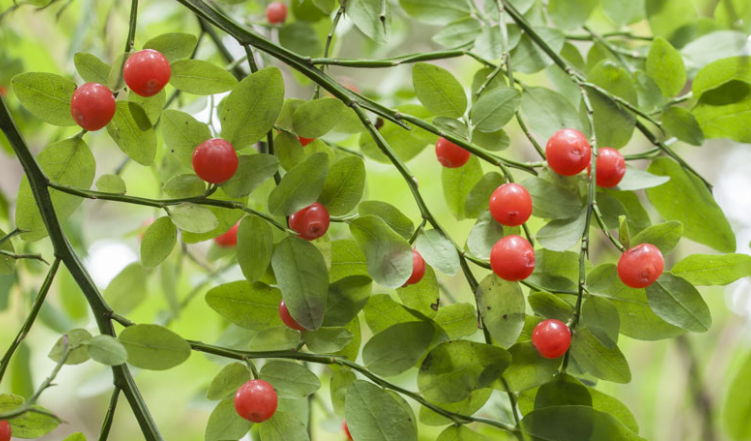
Red huckleberry (Vaccinium parvifolium) is a distinctive native shrub of the Pacific Northwest, recognized for its bright red berries, green angular stems, and delicate pinkish flowers. Unlike many familiar huckleberries that produce dark blue or purple fruit, this species stands out with berries that remain strikingly red when ripe.
It is primarily a woodland plant, growing naturally in moist forests, forest openings, and disturbed areas from British Columbia south through Washington and Oregon. Red huckleberry is especially interesting because it can grow on decaying wood and old stumps, a habit that gives it a very different appearance from many conventional garden shrubs.
For gardeners interested in native plants, wildlife habitat, or edible berries, red huckleberry is a fascinating species. It is not simply a berry bush; it is a plant closely connected to the ecology of Pacific Northwest forests. This guide covers how to identify it, where it grows, what its berries taste like, and what you should know before attempting to grow it.
What Is Red Huckleberry?
Red huckleberry is a deciduous shrub belonging to the Ericaceae, or heath family. Its scientific name is Vaccinium parvifolium. The genus Vaccinium also includes blueberries, cranberries, and numerous other huckleberry species.
The shrub is generally upright and branching, although its form can vary depending on its growing conditions. Mature plants commonly reach several feet in height and can become wider as they develop multiple stems.
Its common name comes from the unmistakable red color of its ripe fruit. This makes red huckleberry relatively easy to recognize when berries are present, although identification should always involve several characteristics when examining wild plants.
Also Read: Different Types of Huckleberry
How to Identify Red Huckleberry
Red huckleberry has several features that make it distinctive. The stems are green and often angular, giving the shrub an unusual appearance even when it is not carrying fruit.
The leaves are small, alternate, and generally oval to elliptical. They are green throughout the growing season and may become less noticeable against the surrounding forest vegetation.
The flowers are small and relatively understated. They are typically pinkish or yellowish-pink and have the rounded, urn-like form characteristic of many Vaccinium species.
What Do Red Huckleberries Look Like?
The fruit is the easiest feature to notice when the shrub is in season. Ripe red huckleberries are bright red, small, and round, usually measuring only a few millimeters across.
The berries have a somewhat translucent appearance and can stand out strongly against the plant’s green foliage. Unlike blueberries, they do not develop the familiar blue or purple coloration.
The fruit contains several tiny seeds and has a juicy texture. Its small size means that collecting a substantial amount can require considerable time, particularly when harvesting from wild plants.
What Do Red Huckleberries Taste Like?
Red huckleberries have a distinctive flavor that is often described as tart, refreshing, and slightly acidic. Their flavor is different from the sweeter taste associated with many cultivated blueberries.
The berries can be eaten fresh when ripe, although some people find them more enjoyable when incorporated into foods such as jams, jellies, sauces, desserts, and baked goods.
Flavor can vary according to ripeness, growing conditions, and individual plants. Fully developed berries generally provide a better eating experience than fruit picked before it has matured.
Where Does Red Huckleberry Grow?
Red huckleberry is native to the Pacific Northwest and adjacent regions of western North America. Its natural range extends from British Columbia through Washington and Oregon and into parts of northern California.
It is particularly associated with moist forests and woodland environments. The shrub commonly grows in coniferous forests alongside trees such as western redcedar, western hemlock, Douglas-fir, and Sitka spruce.
It can also appear along forest edges, in openings, and in areas affected by disturbances such as logging or windthrow.
One of Its Most Interesting Habits: Growing on Wood
Perhaps the most remarkable characteristic of red huckleberry is its ability to grow on rotting logs, stumps, and other decaying woody material.
In the forest, you may encounter a red huckleberry seemingly growing from an old stump rather than ordinary ground soil. This reflects the plant’s adaptation to the organic-rich conditions found in Pacific Northwest forests.
Decaying wood can retain moisture and accumulate organic material as it breaks down. These conditions can create a suitable rooting environment for the shrub.
This unusual growth habit is one reason red huckleberry is such an interesting native plant for woodland gardens.
Red Huckleberry Flowers
Red huckleberry flowers appear in spring. They are relatively small and may be overlooked compared with the showier flowers of ornamental shrubs.
The flowers have a rounded, bell- or urn-like structure and are adapted for pollination by insects. Once pollinated, they gradually develop into the red fruits that attract both wildlife and people.
Although the flowers are not the primary reason most people recognize the species, they are an important part of its annual fruiting cycle.
Also Read: Best Native Berry Bushes for Wildlife Gardens
Red Huckleberry Leaves
The leaves are relatively small and simple, with a smooth or slightly toothed margin depending on the plant and growing conditions.
Their arrangement on the branches and the distinctive green stems can help separate red huckleberry from some other native shrubs. However, identification becomes much easier when leaves are considered alongside fruit, flowers, stem structure, and habitat.
During autumn, the deciduous foliage changes before eventually dropping, leaving the shrub’s branching structure visible through the winter.
Red Huckleberry Habitat
This species thrives in environments characterized by moisture, organic matter, and acidic forest soils.
It is especially well adapted to the mild, wet climate of the Pacific Northwest. The plant can tolerate shade but may also occur in brighter forest openings.
Because it is a native understory species, red huckleberry fits naturally into forest ecosystems rather than open, dry landscapes.
Soil Requirements
If you are considering growing red huckleberry, soil is one of the first things to get right.
Like many Vaccinium species, it prefers acidic soil rich in organic matter. The soil should hold moisture but still drain adequately.
Ordinary alkaline garden soil may not be suitable. Before planting, consider testing the soil pH. If your native soil is unsuitable, growing the plant in an appropriately prepared raised bed or container may be easier than attempting to alter a large area.
Light Requirements
Red huckleberry is naturally associated with forest conditions, so it can tolerate partial shade and filtered sunlight.
In a woodland garden, a position beneath taller trees or near the edge of a wooded area can provide conditions similar to its natural habitat.
More sunlight can sometimes encourage productive growth, but increased exposure also increases moisture demand. A sunny location should therefore have adequate water availability.
Watering Red Huckleberry
Consistent moisture is particularly important during establishment.
The soil should not be allowed to dry completely for extended periods, especially during warm weather. At the same time, avoid creating permanently saturated conditions around the roots.
Organic mulch can help conserve soil moisture and keep the root zone cooler. Leaf mold and other woodland-style organic materials can also contribute to a more natural growing environment.
Can You Grow Red Huckleberry at Home?
Yes, but it is generally better suited to native-plant and woodland gardens than conventional vegetable gardens.
The plant can be challenging to establish because it has specialized habitat preferences. Nursery-grown specimens may also be difficult to find compared with common blueberries.
If you live within or near its native range and can provide acidic, moist soil with appropriate shade, red huckleberry can be an excellent choice for a naturalistic landscape.
How Fast Does Red Huckleberry Grow?
Red huckleberry is not usually considered a fast-growing garden shrub. Its growth rate depends heavily on soil, moisture, light, climate, and establishment.
Young plants may spend considerable time developing roots before producing substantial above-ground growth. Patience is therefore important.
Avoid trying to force rapid growth with excessive fertilizer. Providing the right soil and moisture conditions is generally more beneficial.
Wildlife Value
Red huckleberry is an important native food plant for wildlife.
Its berries are eaten by birds and mammals, making the shrub valuable in wildlife gardens and native forest ecosystems. The plant also contributes to the structural diversity of the forest understory.
For anyone creating a wildlife-friendly garden in the Pacific Northwest, native berry-producing shrubs such as red huckleberry can provide seasonal food while supporting local biodiversity.
Are Red Huckleberries Edible?
Yes, ripe red huckleberries are edible and have traditionally been collected as a wild food.
However, correct identification is essential before eating any wild berry. Never identify an unfamiliar berry using color alone, and do not assume that every red berry growing in the forest is edible.
When foraging, use a reliable regional field guide and confirm the plant using multiple characteristics. Local harvesting rules should also be checked before collecting plants or fruit from public land.
Red Huckleberry vs. Mountain Huckleberry
Red huckleberry (Vaccinium parvifolium) and mountain huckleberry (Vaccinium membranaceum) are both important western native berries, but they are easy to distinguish when fruit is present.
The most obvious difference is fruit color. Red huckleberry produces bright red berries, while mountain huckleberry generally produces darker berries ranging from red to purple and nearly black as they mature.
Their habitats also overlap in parts of the Pacific Northwest, but their growth forms and other botanical characteristics differ.
Red Huckleberry vs. Evergreen Huckleberry
Evergreen huckleberry (Vaccinium ovatum) is another Pacific Northwest native. Unlike red huckleberry, which is deciduous, evergreen huckleberry retains its leaves through winter in suitable climates.
Evergreen huckleberry also tends to have darker berries. Red huckleberry’s bright red fruit and deciduous growth habit make it relatively distinctive.
Both species are valuable native plants, but they suit somewhat different landscape situations.
Also Read: Best Berry Bushes for Backyard Planting
Interesting Red Huckleberry Facts
- The scientific name is Vaccinium parvifolium.
- It belongs to the Ericaceae family.
- It is native to the Pacific Northwest and western North America.
- It is a deciduous shrub.
- Its ripe berries are bright red.
- Its stems are often green and angular.
- It can grow on rotting logs and old stumps.
- It prefers acidic, organic-rich soil.
- It tolerates shade and filtered woodland light.
- Its berries provide food for wildlife.
- The fruit has a tart, distinctive flavor.
- It is an important native understory shrub in Pacific Northwest forests.
Is Red Huckleberry a Good Garden Plant?
For the right location, red huckleberry can be an excellent native garden plant. Its greatest advantage is that it brings an authentic piece of Pacific Northwest woodland ecology into the landscape.
However, it is not the best choice for every garden. Hot, dry conditions, alkaline soil, and poor drainage can make establishment difficult. Gardeners outside its natural climate should also carefully research whether their conditions are appropriate.
If you have a moist woodland garden with acidic soil, red huckleberry is particularly appealing. Its green stems, delicate flowers, colorful berries, and wildlife value give it several seasons of interest.
Final Thoughts
Red huckleberry is much more than a shrub that produces red berries. Vaccinium parvifolium is a highly adapted native plant that plays an important role in the forests of the Pacific Northwest. Its ability to grow on decaying wood, tolerate woodland shade, and produce nutritious fruit makes it especially fascinating.
For gardeners, the key to success is to imitate its natural environment. Provide acidic, organic-rich soil, consistent moisture, and suitable filtered light rather than treating it like a conventional garden berry. With the right conditions, red huckleberry can become a beautiful and ecologically valuable addition to a native landscape.
References
- USDA Forest Service — Fire Effects Information System: Vaccinium parvifolium — Information on red huckleberry’s ecology, habitat, reproduction, and response to forest disturbance. USDA Forest Service — Fire Effects Information System
- USDA Natural Resources Conservation Service — PLANTS Database — Botanical information and distribution data for Vaccinium parvifolium. USDA NRCS PLANTS Database
- Washington State University Extension — Pacific Northwest Native Plants — Regional information on native plants suitable for Pacific Northwest landscapes and wildlife habitat. Washington State University Extension
- Royal Botanic Gardens, Kew — Plants of the World Online — Taxonomic and botanical information for Vaccinium parvifolium. Plants of the World Online — Vaccinium parvifolium