Pigface (Carpobrotus spp.): The Coastal Succulent With an Identity Problem
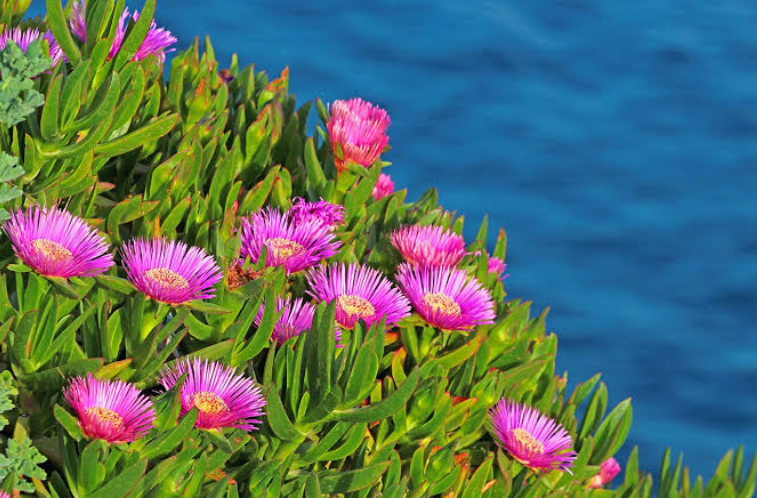
Pigface is a tough, sprawling succulent groundcover found on sand dunes and coastal cliffs across several continents, instantly recognizable when in bloom for its vivid pink flowers scattered across thick, triangular, fleshy leaves. Its genuinely edible fruit and remarkable tolerance for salt spray, wind, and drought have made it a longtime favorite for stabilizing difficult coastal ground.
The genus also carries a genuinely complicated identity problem that trips up gardeners, conservationists, and foragers alike. Several native and introduced species look remarkably similar, readily hybridize with one another, and are frequently mislabeled at nurseries under an entirely different genus name, making a confident identification considerably trickier than the plant’s tough, no-nonsense appearance might suggest.
This guide covers the genus’s classification and naming, how to identify it, where it grows, its genuine edible and traditional uses, the serious invasive species problem tangled up with the genus, a related naming confusion at garden centers, and what it takes to grow one successfully.
Botanical Classification
Pigface belongs to the genus Carpobrotus within the fig-marigold family, Aizoaceae, and current counts recognize somewhere between 12 and 20 accepted species depending on the specific taxonomic source consulted. The genus name comes from the ancient Greek words karpos, meaning fruit, and brotos, meaning edible, a direct reference to the genuinely edible fruit nearly every species in the genus produces.
Most Carpobrotus species are native to South Africa, but the genus also includes 4 to 6 species native to Australia, depending on which source and classification you follow, along with at least 1 species native to South America. All share the same basic growth form: a prostrate, creeping succulent that spreads to form a dense, low groundcover, often extending 2 meters or more from a single plant.
Brief History and Naming
Pigface carries a genuinely large collection of common names across the different regions and species involved, including ice plant, sour fig, sea fig, Hottentot fig, and clawberry, reflecting its independent common adoption across multiple cultures and continents long before any formal botanical standardization. Within Australia specifically, individual species carry their own additional common names, such as angular pigface for Carpobrotus glaucescens and inland pigface for the notably non-coastal Carpobrotus modestus.
The genus has a genuinely tangled taxonomic history too, since Carpobrotus was historically classified within the much larger genus Mesembryanthemum before being split out as its own distinct genus. That history still causes real confusion today, since Mesembryanthemum remains a valid genus in its own right, containing roughly 25 species mostly from Europe and South Africa, several of which look remarkably similar to true Carpobrotus and are edible in much the same way.
Identifying Characteristics
Pigface produces thick, fleshy, triangular leaves arranged in a distinctive 3-sided cross-section, growing densely along creeping, rooting stems that spread horizontally across the ground. Its considerable resilience shows in a genuinely unusual trait: if a spreading mat gets buried under shifting sand, the plant can grow upward through the sand and produce an entirely new mat directly over the buried original.
The plant’s large, daisy-like flowers, typically bright pink though sometimes purple or occasionally yellow depending on the species, open in spring and summer and are genuinely showy enough to stop foot traffic on a beach path. Following successful pollination, the flower fades and gives way to a fleshy, red-purple fruit with multiple internal seed chambers, the genuinely edible structure that gave the genus its fruit-referencing scientific name in the first place.
Native Range and Habitat
Carpobrotus occurs naturally across several widely separated regions with a shared Mediterranean-style coastal climate, including South Africa, the southern coast of Australia, and parts of South America, with individual species adapted to their own specific stretch of coastline. In Australia, Carpobrotus glaucescens grows along sand dunes from New South Wales north to around Rockhampton in Queensland, while Carpobrotus rossii occurs more broadly across the coastal regions of southern Australia.
Carpobrotus modestus stands out as a genuine exception to the genus’s otherwise coastal pattern, growing as an inland species across parts of Western Australia, South Australia, and Victoria rather than directly on a beach or dune. That inland adaptation reflects real underlying diversity within a genus most people picture purely as a dune-stabilizing coastal plant. Carpobrotus chilensis, found along the Pacific coast of the Americas, adds yet another regional variation to the genus, similar in general appearance to the South African ice plant but distinguished by a fruit with 8 to 10 internal chambers rather than the slightly different count typical of its African relative.
Edible Use and Traditional History
Pigface fruit has a long history of genuine human consumption, and Aboriginal peoples in Australia used the fruit as a food source well before European arrival, describing its flavor as something like a salty apple, while other accounts compare it more to a salty strawberry or kiwifruit. The plant’s roasted leaves have also been used traditionally as a salt substitute, a genuinely practical use given the leaves’ naturally salty flavor from growing in such salt-exposed coastal conditions.
European explorers arriving in Australia found a practical medicinal use for the plant too, employing it as a treatment against scurvy thanks to its vitamin content, a genuinely valuable discovery during an era when long sea voyages made fresh produce scarce. Eaten in large quantities, the fruit can also act as a mild laxative, a trait worth knowing if you’re foraging and sampling it for the first time. Anyone gathering pigface fruit in the wild is generally encouraged to avoid crushing the plant itself and to leave some fruit behind for birds and other wildlife that help disperse its seeds naturally.
The Invasive Species Problem
Here’s where pigface’s story takes a genuinely serious turn. Carpobrotus edulis, a South African species known as the ice plant or Hottentot fig, has become one of the world’s most problematic invasive coastal plants, naturalizing in California, New Zealand, parts of the United Kingdom, and within Australia itself, where it was likely introduced sometime after European settlement, possibly as early as the 16th century by ship in some regions.
The ice plant’s considerable success as an invader comes down to genuine ecological flexibility: it shows notably greater adaptability than many native species, capable of establishing in shaded coastal cliffs and nutrient-enriched sites that would exclude more specialized native plants. In an especially striking example of what ecologists call invasive mutualism, the invasive black rat has been shown to actively help spread ice plant seeds through its droppings, with both species benefiting from the relationship at the direct expense of the native ecosystem being invaded. The plant forms dense monocultures capable of smothering native dune vegetation entirely, and in New Zealand specifically it has taken over vast stretches of coastal sand dune habitat.
Native vs. Invasive Confusion
The invasive problem gets considerably more complicated by a genuine identification nightmare: Carpobrotus edulis readily hybridizes with Australia’s native Carpobrotus rossii, and the resulting hybrids are notoriously difficult to distinguish from the true native species without specialized botanical examination. That hybridization risk means a well-meaning gardener or land manager trying to protect native pigface populations can genuinely struggle to tell which plants in a given coastal area are truly native, which are invasive ice plant, and which are a hybrid mix of both.
Researchers studying this exact problem in South Australia have specifically documented the scope of hybridization between native and introduced Carpobrotus populations, underscoring that this isn’t a minor academic concern but a genuine, ongoing conservation challenge for coastal plant communities. Anyone seriously interested in planting or protecting true native pigface is well served by sourcing plants from a specialist native nursery that can verify species identity, rather than relying on a casual roadside or beach observation alone.
A Related Garden Center Confusion
Adding yet another layer of naming complexity, anyone shopping for pigface at an ordinary garden center is more likely to find plants labeled Mesembryanthemum than Carpobrotus, a direct legacy of the genus’s earlier taxonomic history within that broader group. Mesembryanthemum itself contains roughly 25 species, mostly native to Europe and South Africa, several of which have also naturalized in Australia and other regions.
These Mesembryanthemum relatives look remarkably similar to true Carpobrotus and are generally edible in the same way, but they represent a genuinely distinct, separately classified genus today rather than simply an older name for the same plant. Checking the specific scientific name on a plant tag, rather than assuming any succulent coastal groundcover labeled with a pigface-adjacent common name is the same species, remains the most reliable way to know exactly what you’re buying.
Landscape Uses
Pigface has become a genuinely popular landscaping choice specifically for its usefulness in a rockery, as a mass planting groundcover, or as a dedicated sand dune stabilizer in coastal restoration work. Its dense, spreading growth habit suppresses competing vegetation effectively while its extensive root system helps hold loose, shifting sand in place.
That same usefulness, unfortunately, is exactly what’s made invasive Carpobrotus species such effective and persistent colonizers wherever they’ve been introduced outside their native range, since the very traits that make a plant valuable for erosion control, fast coverage and genuine indifference to poor soil, are the same traits that let it outcompete slower-growing native vegetation once it escapes a garden bed. Choosing a verified native species for a restoration or coastal stabilization project, rather than an unlabeled nursery plant of uncertain origin, matters considerably more for pigface than for most other common landscaping plants given the genus’s documented hybridization and invasion history.
Growing Considerations
Pigface thrives in full to partial sun and well-drained soil, tolerating genuinely poor, sandy ground and extended dry periods once established. It’s relatively pest-free overall, though scale insects can occasionally show up during summer months.
The plant is easily propagated from cuttings, which root readily when pressed into suitable soil, making it a practical, low-cost way to expand an existing planting or share with neighbors. Given the genus’s considerable tendency to hybridize, though, propagating from a cutting of a known, verified native plant is a far more reliable way to maintain genuine species identity than growing from seed collected in an area where introduced or hybrid populations might also be present.
The Bottom Line
Pigface is a genuinely tough, useful coastal succulent with real edible value and a long history of human use, but its considerable taxonomic complexity, extensive hybridization with invasive relatives, and recurring confusion with a separate garden center genus mean a confident identification takes more care than its humble, sprawling appearance suggests. Choose a verified native species from a reputable source, and this hardy groundcover will reward you with vivid pink flowers and genuine coastal resilience for years with minimal upkeep.