Woolly Bush (Adenanthos sericeus): The Soft-Foliaged Shrub From Australia’s Wild South Coast
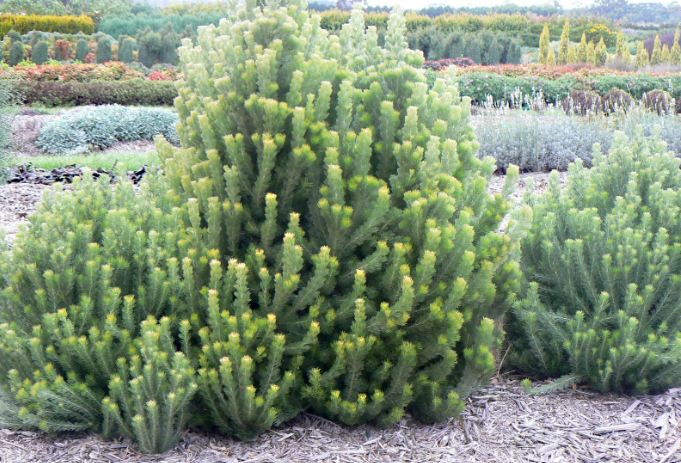
Woolly bush is a genuinely distinctive Australian native shrub, instantly recognizable by foliage so finely divided and velvet-soft that running a hand across it feels closer to touching fur than leaves. That remarkable texture, paired with a naturally conical growth habit, has made it an increasingly popular living alternative to a traditional cut Christmas tree in Australian households.
The plant also carries real historical weight, collected during one of the more dramatic early European scientific expeditions to Australian shores, a voyage that also brought back the first specimens of several other now-iconic native plants. Understanding woolly bush’s place within its considerably hybridization-prone genus, and the genuine conservation concern tied to at least one of its natural crosses, adds real depth to a plant most people encounter simply as an attractive, low-maintenance garden shrub.
This guide covers the plant’s classification and naming history, how to identify it, where it grows naturally, its relationship with pollinators, a threatened natural hybrid connected to the species, its popular uses, and what it takes to grow one successfully.
Botanical Classification
Woolly bush, scientifically Adenanthos sericeus, belongs to the family Proteaceae, the same considerable Australian plant family that includes banksia, grevillea, hakea, and waratah. The genus name Adenanthos comes from the Greek words aden, meaning gland, and anthos, meaning flower, a direct reference to the prominent nectar glands found in the genus’s flowers, while the species epithet sericeus is Latin for silky, describing the plant’s famously soft foliage texture.
The species was first formally described by the botanist Jacques Labillardière in 1805, in his work Novae Hollandiae Plantarum Specimen, though he originally published it under the feminine form Adenanthos sericea. The name was later corrected to the masculine form Adenanthos sericeus on the advice of Dr. Charles Nelson, the botanist who authored the Adenanthos treatment for the Flora of Australia monograph series, a genuinely technical but real nomenclatural correction that some nurseries only updated in their own records as recently as the early 2000s.
Brief History
Woolly bush’s scientific discovery is tied to one of the more dramatic chapters in early Australian botanical exploration. Labillardière collected the species while serving as a naturalist aboard an expedition led by d’Entrecasteaux, which had originally set out searching for the lost La Pérouse expedition rather than conducting a deliberate botanical survey. During a search for a missing crew member named Riche on the Western Australian coast, Labillardière convinced the expedition to extend its search by a further day, a decision that led not only to Riche’s safe recovery but also to the collection of several genuinely significant botanical specimens.
That same expedition and search effort produced the first scientific specimens of kangaroo paw and the West Australian Christmas tree, alongside the woolly bush material Labillardière would go on to formally describe. It’s a remarkable coincidence that a single day’s delay in a rescue mission ended up contributing directly to the documentation of several plants that remain iconic symbols of Western Australian flora today. Few garden shrubs can trace their formal scientific identity back to a story involving a missing crew member, an extended search effort, and a happy ending that also happened to produce some of the most significant early botanical records collected anywhere along that stretch of coast.
Identifying Characteristics
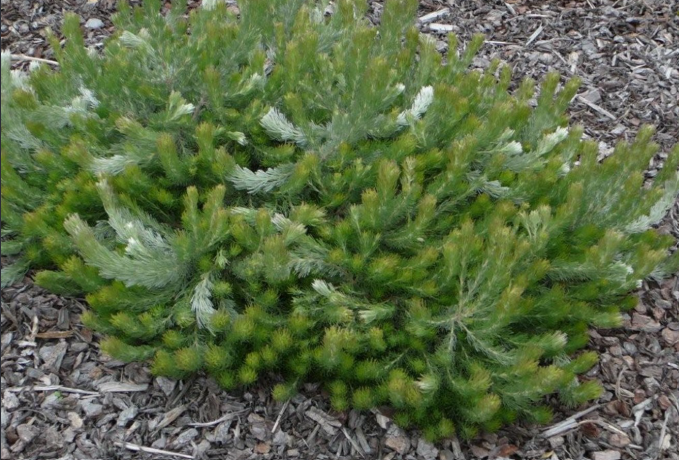
Woolly bush typically grows as an upright, spreading shrub, occasionally developing into a small tree reaching up to 5 meters tall, with young branches covered in short hairs that are gradually lost as the plant matures. Its most defining feature by far is its foliage: deeply divided, silvery-grey to soft green leaves with a genuinely velvety, almost fur-like texture, and new growth frequently flushes a soft pink before settling into its mature silvery-green color.
The plant’s flowers are small and bright red, typically appearing singly or in small clusters tucked somewhat inconspicuously within the foliage at the ends of the branches rather than displayed prominently. Each flower follows the classic Proteaceae structure, a tubular perianth made of 4 fused tepals ending in a specialized structure called a limb, with the flower’s pistil initially held captive inside that limb before being released as the flower opens. In woolly bush specifically, that tubular perianth runs about 28 millimeters long, hairy on the outside but smooth within, and blooms can appear on and off throughout much of the year rather than in one single concentrated season.
Native Range and Habitat
Woolly bush occurs naturally along a disjunct stretch of roughly 500 kilometers of Western Australia’s south coast, with the main subspecies concentrated around King George Sound, near the town of Albany, extending west as far as Torbay Inlet and east nearly to Cape Riche. In places, the species grows remarkably close to the ocean itself, tolerating direct exposure to salt spray within what one grower’s description calls splashing distance of the waves.
A second recognized subspecies occupies a more specific, restricted habitat on granitic soils within that same general coastal region, reflecting genuine ecological specialization within what might otherwise look like a single uniform species across its range. That kind of fine-grained subspecies division, tied to a specific rock or soil type rather than broad geography alone, is a genuinely common pattern across Western Australia’s considerable Proteaceae diversity, where countless species have carved out narrow ecological niches across the region’s ancient, varied landscape. That considerable coastal exposure across both subspecies is exactly why the plant has proven so useful in cultivation anywhere a tough, salt-tolerant shrub is needed.
Pollination
The genus name Adenanthos itself points directly at the plant’s relationship with pollinators, since its prominent floral nectar glands exist specifically to reward visiting animals for transferring pollen between flowers. Closely related Adenanthos species have been documented attracting a genuinely diverse pollinator community, including bees, the nectar-feeding honey possum, the silvereye, and several honeyeater species, with the western spinebill noted as a particularly frequent visitor to at least one close relative’s flowers.
Woolly bush’s own bright red, tubular flower shape is broadly consistent with the kind of bloom structure that tends to favor bird pollination specifically, a pattern shared with several other red-flowered Australian natives discussed in relation to nectar-feeding birds more broadly. Its tendency to flower across much of the year also provides a genuinely valuable, extended nectar resource for whatever pollinators visit it within its native coastal range.
A Threatened Natural Hybrid
Woolly bush’s genus shows a considerable tendency toward natural hybridization, and one specific cross connected to this species carries genuine conservation significance. Adenanthos × cunninghamii, itself also commonly called Albany woollybush, a name it confusingly shares with true Adenanthos sericeus, is a naturally occurring hybrid between woolly bush and its close relative Adenanthos cuneatus.
That hybrid has been formally assessed and listed as threatened under Australia’s national environmental protection legislation, a genuine conservation concern for what remains a naturally occurring, if rare, cross between 2 otherwise common parent species. Adenanthos cuneatus itself, incidentally, is known to have hybridized with at least 4 other species within the genus, underscoring just how genetically fluid this particular group of Western Australian shrubs can be where different species’ ranges overlap.
Popular Uses
Woolly bush’s naturally soft, conical growth form has made it a genuinely popular choice as a living Christmas tree alternative in Australia, typically grown in a large container, kept outdoors for most of the year, and brought inside for just a few weeks around the holiday season before returning to its usual spot. That practice takes direct advantage of the plant’s considerable tolerance for container life and its naturally tidy, tree-like shape without any need for the kind of aggressive pruning a more sprawling native shrub would require to achieve the same effect.
Beyond its seasonal decorative role, woolly bush works well as a windbreak, a soft informal screen, a coastal planting, a feature specimen, and even a cut flower given its attractive foliage texture. Its root system is also considered genuinely friendly around pipes and drains, a practical consideration for a plant commonly grown close to a house or alongside hardscaping.
Growing Considerations
Woolly bush thrives in full sun to light shade and well-drained sandy or loamy soil with a pH ranging from slightly acidic to neutral, performing best in a genuinely Mediterranean-style climate with dry summers rather than the more humid conditions found in parts of eastern Australia. It tolerates light frost reasonably well, generally cited as surviving temperatures down to around 20 to 25 degrees Fahrenheit, but struggles in consistently humid, wet climates outside its comfort zone.
Consistent moisture during the establishment period matters more than many gardeners expect, since the plant’s considerable drought tolerance really only develops once a strong root system has formed, typically after the first year or so in the ground. One grower’s account of accidentally flattening their own woolly bush with an enthusiastic dog, requiring a hard pruning to remove the damage, and the plant going on to thrive regardless, offers a genuinely reassuring real-world example of just how resilient a well-established specimen can be.
The Phosphorus Sensitivity Issue
Like virtually every other member of the Proteaceae family, woolly bush shows genuine sensitivity to phosphorus, and a standard all-purpose garden fertilizer can cause real, lasting damage rather than providing any benefit. A low-phosphorus fertilizer specifically formulated for Australian native plants, applied in early spring and again in autumn, is the only fertilizing approach generally recommended for this species.
That phosphorus sensitivity traces back to the same nutrient-poor soil conditions that shaped the evolution of the entire Proteaceae family across Australia’s ancient, leached landscapes, and it’s a genuinely important detail to know before reaching for whatever all-purpose fertilizer happens to already be in the garden shed. Sharp drainage matters just as much as fertilizer choice, since the plant genuinely dislikes sitting in damp, poorly drained soil despite its considerable overall toughness. A raised bed or naturally sloped planting site can make a real difference in a garden where native soil drainage is anything less than excellent.
The Bottom Line
Woolly bush combines genuinely striking, velvet-soft foliage with a real connection to one of early Australian botany’s more dramatic expeditions, a naturally tidy growth habit that’s made it a favorite living Christmas tree, and a close relative carrying genuine conservation weight through a threatened natural hybrid. Give it full sun, sharp drainage, and a low-phosphorus native fertilizer, and this distinctive south coast shrub will reward you with soft texture and reliable, low-maintenance performance for years.