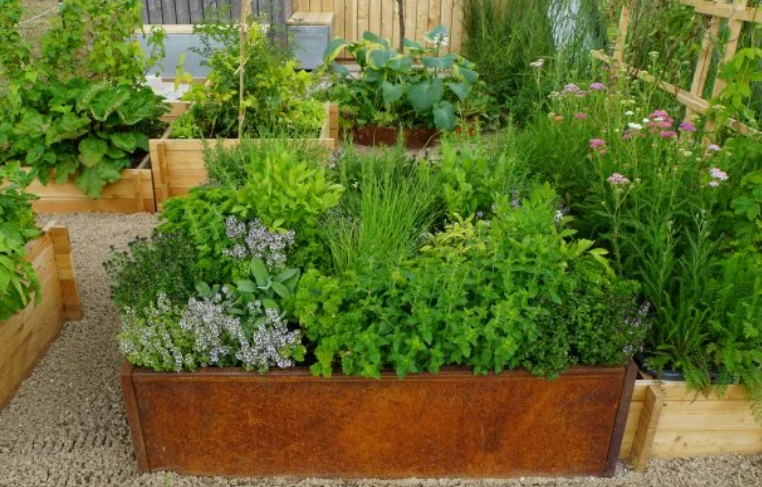
Perennial herbs that grow in Zone 5 have to survive winter temperatures that can drop to between negative 20 and negative 10 degrees Fahrenheit, and according to University of Illinois Extension, hardy perennials like chives, lovage, lavender, salad burnet, French tarragon, winter savory, and mint are genuinely well suited to surviving that cold in the ground year after year. That same source draws an important distinction worth knowing before planning a garden: rosemary, lemon verbena, lemongrass, and scented geraniums are frequently sold alongside genuinely hardy herbs but are actually tender perennials in a Zone 5 climate, meaning they need to be dug up and overwintered indoors rather than left in the ground.
According to University of Minnesota Extension, many of the most reliably cold-hardy culinary herbs belong to the mint family, including oregano, thyme, sage, catnip, and the various true mints themselves, a group whose aromatic leaves and generally bushy growth habit have made them popular garden staples well beyond their cold tolerance alone. That shared family also comes with a practical warning, since the same source notes these hardy perennials, mint in particular, can become genuinely invasive in a garden bed if left unchecked.
According to a hardiness reference table developed at the University of Massachusetts and hosted through NC State’s Cooperative Extension, sweet marjoram is generally classified as an annual rather than a reliable Zone 5 perennial, a useful distinction from its more cold-hardy relative oregano that’s easy to overlook when shopping for herb starts in spring. What follows covers 21 perennial herbs that grow in Zone 5, along with where each one thrives and the data behind its cold hardiness.
Chives
Chives return reliably from their underground bulbs each spring, producing mild, onion-flavored leaves and edible purple flowers on a compact perennial that tolerates Zone 5 winters without any special protection. According to the UMass hardiness table, the species is hardy to Zone 2 or 3, meaning a Zone 5 garden sits comfortably within its cold tolerance range with considerable room to spare.
It grows well in full sun to partial shade throughout Zone 5 gardens, and gardeners are advised to harvest the flowers before they go to seed to prevent the plant from spreading more aggressively than intended.
Garlic Chives
Garlic chives closely resemble standard chives in their clumping, bulb-based growth habit, distinguished by flatter leaves and a distinctly garlicky rather than onion-like flavor. Their cold tolerance matches that of standard chives, making them just as reliable a Zone 5 perennial.
It grows well throughout Zone 5 gardens in full sun, spreading somewhat more readily by seed than standard chives if the white flower heads are allowed to fully mature.
Oregano
Oregano is part of the mint family, which, according to Heirloom Grown’s Zone 5 growing guide, makes it notably difficult to kill and prone to spreading rapidly once established in a garden bed. Its pungent, savory leaves remain a kitchen staple, and the plant reliably returns from its woody base each spring even after a harsh winter.
It grows well throughout Zone 5 gardens in full sun and well-drained soil, tolerating the same cold winters that would eliminate many less hardy Mediterranean herbs.
Thyme
Thyme is classified as hardy to Zone 5 on the UMass hardiness reference table, tolerating the region’s cold winters while also handling considerable summer heat and drought once established. Numerous varieties are available, including lemon thyme, which carries a distinct citrus scent and flavor alongside the classic savory profile.
It grows well throughout Zone 5 gardens in full sun, forming a low, spreading mat that works well as an edging plant in addition to its culinary use.
Sage
Sage is a woody perennial herb hardy down to Zone 4, according to Heirloom Grown, meaning it handles Zone 5 winters with room to spare, often keeping some green leaves visible well into early winter before fully going dormant. Its silvery-green foliage and eventual small flowers have earned it a place as a semi-ornamental plant beyond its kitchen use.
It grows well throughout Zone 5 gardens in full sun and well-drained soil, tolerating drought conditions considerably better than many other herbs on this list.
Peppermint
Peppermint is very hardy in Zone 5, according to Heirloom Grown, and its vigorous, spreading rhizomes make container planting a genuinely important precaution to keep it from overtaking a garden bed. Its strong, cooling flavor makes it a popular choice for tea and flavoring well beyond its culinary seasoning use.
It grows well throughout Zone 5 gardens in full sun to partial shade, tolerating consistently moist soil better than most other Mediterranean-origin herbs on this list.
Spearmint
Spearmint shares peppermint’s cold hardiness and aggressive spreading habit, distinguished by a milder, sweeter flavor that’s made it a popular choice for cooking and cocktails rather than primarily medicinal tea use. Like peppermint, it’s best confined to a container or a bed with a physical root barrier.
It grows well throughout Zone 5 gardens in full sun to partial shade, spreading readily via underground runners wherever it’s left unconfined.
Lovage
Lovage produces celery-like stems and leaves on a substantial perennial that Virginia Cooperative Extension lists among the herbs worth propagating by division after surviving a Zone 5 winter. Its strong, savory flavor has made it a traditional substitute for celery in regions where that more tender vegetable struggles to overwinter.
It grows well throughout Zone 5 gardens in full sun to partial shade, often reaching a considerably larger mature size than most other herbs on this list.
French Tarragon
French tarragon is listed among Zone 5’s reliably hardy perennial herbs by University of Illinois Extension, though its narrower root system benefits from a layer of mulch heading into winter compared to some of the more bulletproof herbs on this list. Its anise-like flavor has made it a signature ingredient in French cuisine.
It grows well throughout Zone 5 gardens in full sun and well-drained soil, and gardeners should specifically seek out French tarragon starts by division rather than seed, since true French tarragon rarely produces viable seed.
Winter Savory
Winter savory produces small, needle-like evergreen leaves on a low, woody perennial specifically noted for its cold hardiness in its very name, tolerating Zone 5 winters reliably according to Gardening Know How’s regional herb guide. Its peppery, slightly resinous flavor is traditionally paired with beans and heartier winter dishes.
It grows well throughout Zone 5 gardens in full sun and well-drained soil, remaining semi-evergreen through much of the winter in milder years.
Sorrel
Sorrel produces tart, lemony leaves on a cold-hardy perennial that returns reliably each spring after dying back completely in winter, listed among Zone 5’s dependable perennial herbs by Gardening Know How. Its sharp, acidic flavor comes from naturally occurring oxalic acid concentrated in the leaves.
It grows well throughout Zone 5 gardens in full sun to partial shade, tolerating cooler, moister soil conditions better than many of the more drought-tolerant Mediterranean herbs on this list.
Catnip
Catnip is one of the most reliable winterers in a Zone 5 garden, according to firsthand grower reports, returning vigorously each spring from its root system regardless of how harsh the preceding winter was. Its famous effect on domestic cats is just one part of its broader history as a traditional medicinal herb.
It grows well throughout Zone 5 gardens in full sun to partial shade, often self-seeding readily enough that a single planting can spread well beyond its original bed.
Lemon Balm
Lemon balm produces bright green, citrus-scented leaves on a vigorous mint-family perennial that returns reliably each spring in a Zone 5 garden, listed among the region’s dependable herbs by both Gardening Know How and multiple regional growing guides. Its mild lemon flavor makes it a popular addition to tea blends.
It grows well throughout Zone 5 gardens in full sun to partial shade, and like its mint relatives, it can spread aggressively if not periodically divided or contained.
Horseradish
Horseradish produces a large, pungent taproot that survives Zone 5 winters without any difficulty, among the most cold-hardy root herbs grown in temperate gardens anywhere in the country. Its sharp, sinus-clearing flavor intensifies the deeper into the root a piece is harvested from.
It grows well throughout Zone 5 gardens in full sun, often persisting and resprouting in the same garden bed for many years even after an attempt to remove it entirely.
Bee Balm
Bee balm, also called wild bergamot, produces shaggy, tubular red or lavender-pink flowers on a cold-hardy mint-family perennial that regional growing guides recommend transplanting outdoors in early to late spring in a Zone 5 climate. Its aromatic leaves have a long history of use in traditional herbal tea.
It grows well throughout Zone 5 gardens in full sun to partial shade, drawing hummingbirds and a wide range of native pollinators throughout its summer bloom period.
Roman Chamomile
Roman chamomile, distinguished from the annual German chamomile more commonly used for tea, is a genuine cold-hardy perennial suited to Zone 5 gardens according to Gardening Know How’s regional guide. Its low, spreading, apple-scented foliage has also made it a traditional choice for fragrant lawn substitutes in milder climates.
It grows well throughout Zone 5 gardens in full sun to partial shade, tolerating some foot traffic better than most other herbs on this list.
Yarrow
Yarrow produces flat-headed clusters of small flowers atop finely divided, fern-like, aromatic foliage on an exceptionally cold-hardy perennial that tolerates poor, dry soil throughout a Zone 5 climate. Its long history of medicinal and culinary use spans centuries of traditional herbal practice.
It grows well throughout Zone 5 gardens in full sun, tolerating considerably poorer soil conditions than most other herbs on this list.
Echinacea
Echinacea, also called coneflower, produces coarse, bristly leaves and distinctive purple-pink daisy-like flowers on a cold-hardy medicinal perennial well suited to a Zone 5 growing season. Its seed heads also provide valuable winter forage for finches if left standing rather than cut back in fall.
It grows well throughout Zone 5 gardens in full sun, tolerating drought conditions considerably better than many other perennial herbs.
Comfrey
Comfrey produces large, bristly, lance-shaped leaves on a substantial perennial noted as one of the most reliable winterers in Zone 5 gardens by firsthand grower accounts. Its deep taproot allows it to draw nutrients from well below the reach of most other garden plants.
It grows well throughout Zone 5 gardens in full sun to partial shade, and its considerable mature size makes it best suited to a dedicated bed rather than a small herb container.
English Lavender
English lavender, particularly cold-hardy cultivars like Munstead and Hidcote, is classified as hardy to Zone 5 on the UMass reference table, though it benefits genuinely from winter protection and consistently well-drained soil to survive the coldest years reliably. Its fragrant purple flower spikes and silvery foliage have made it one of the most popular ornamental herbs grown anywhere in the country.
It grows well throughout Zone 5 gardens in full sun, and gardeners are specifically advised to choose a cold-hardy English lavender cultivar rather than the more tender French or Spanish types, which won’t survive the region’s winters.
Salad Burnet
Salad burnet produces finely divided, cucumber-flavored leaves on a compact, cold-hardy perennial listed among Zone 5’s dependable herbs by Gardening Know How’s regional guide. Its mild, refreshing flavor has made it a traditional addition to salads and cold summer drinks.
It grows well throughout Zone 5 gardens in full sun to partial shade, remaining semi-evergreen through much of a mild winter.
Conclusion
Perennial herbs that grow in Zone 5 can provide a reliable source of fragrance and flavor year after year. Many hardy herbs can withstand cold winters when planted in suitable locations with well-drained soil and adequate sunlight.
Choosing herbs suited to Zone 5 helps reduce the need to replace plants each season. Providing proper spacing, soil preparation, and some winter protection where necessary can also improve their ability to survive cold temperatures and return in spring.
With the right selection and care, a Zone 5 garden can support a useful variety of perennial herbs. Whether grown in garden beds, containers, or dedicated herb gardens, these plants can add lasting value and seasonal interest to the landscape.