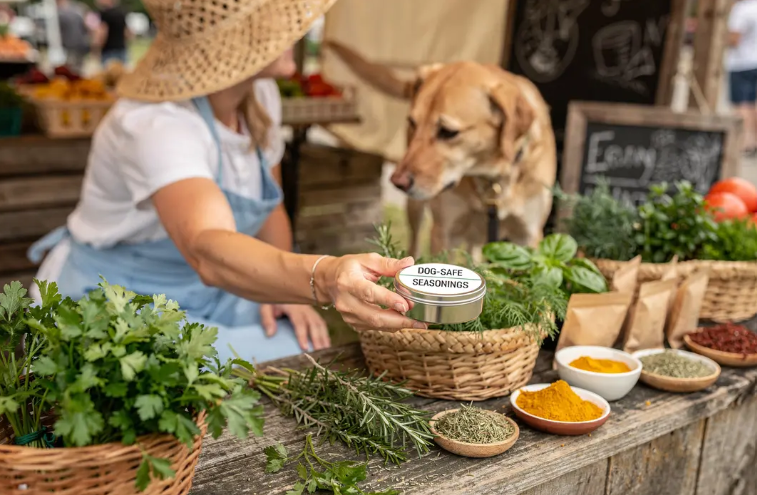
Spices that are good for dogs make up a considerably shorter list than the spice rack most people cook with, and getting the distinction wrong can genuinely harm a pet. According to reporting on canine nutrition from Bow Wow Labs, garlic and onion, whether raw, cooked, or powdered, damage a dog’s red blood cells and can cause a serious condition called hemolytic anemia, while nutmeg contains a compound called myristicin capable of causing disorientation, a racing heart, and even seizures. None of those 3 appear anywhere on this list, and any spice blend containing them should be kept well out of reach.
Even within genuinely dog-safe spices, the specific variety matters more than most pet owners realize. According to Under the Weather, cassia cinnamon, the common grocery-store type, contains meaningfully more coumarin than Ceylon cinnamon, a compound that can stress a dog’s liver, making Ceylon the considerably safer choice of the 2. According to Bow Wow Labs and other pet nutrition sources, the same kind of substitution matters with parsley, since flat-leaf and curly parsley are considered safe, while spring parsley is a genuinely different, toxic plant that happens to share the common name.
According to Vetic’s veterinary blog, spices are not a necessary part of a dog’s daily diet, and any new spice should be introduced gradually, in small amounts, with a veterinarian consulted first, particularly for a dog on medication or with an existing health condition. What follows covers 15 spices that are good for dogs in small, appropriately introduced amounts, along with the botanical background and the caution behind each one.
Turmeric
Turmeric, the bright yellow root spice best known as a curry ingredient, contains curcumin, a compound with documented anti-inflammatory properties that has made it a popular natural supplement in canine joint care. Its absorption in the body is genuinely poor on its own, which is part of why it’s commonly paired with a small amount of black pepper and a fat source to help the body take it up more effectively.
It should be introduced in only small amounts mixed into food, and a veterinarian should be consulted first, particularly for any dog already taking medication, since turmeric can interact with certain drugs.
Ceylon Cinnamon
Ceylon cinnamon, sometimes called true cinnamon, contains meaningfully less coumarin than the common cassia cinnamon sold in most grocery stores, making it the considerably safer variety to offer a dog. In small amounts, it carries genuine antioxidant and anti-inflammatory properties, and some evidence suggests it may help support healthy blood sugar regulation.
It should be limited to a small pinch, roughly an eighth of a teaspoon per 10 pounds of body weight, offered no more than a couple of times a week, since larger or more frequent amounts can irritate the mouth or stomach.
Ginger
Ginger, the pungent, spicy root long used to settle human stomachs, carries the same antiemetic reputation in dogs, commonly offered in small amounts to help with occasional motion sickness or mild digestive upset. Fresh raw ginger is generally considered the safest form to offer.
It should be limited to small, occasional amounts, since regular or excessive use can cause gastrointestinal upset, and it should be avoided entirely in dogs with bleeding disorders or those taking blood-thinning medication.
Parsley
Parsley, specifically the flat-leaf or curly variety rather than the unrelated and toxic spring parsley, is a genuine source of vitamins A, C, and K, and its fresh, clean scent has made it a common ingredient in dog dental treats aimed at freshening breath. Sprinkled finely over food, it’s one of the gentler spices on this list.
It should be offered in small amounts, roughly a pinch per 10 pounds of body weight, and pet owners should double-check they’re buying culinary parsley rather than the visually similar spring parsley sold at some nurseries.
Oregano
Oregano, a Mediterranean herb-spice with a strong, savory aroma, contains natural antioxidant compounds and has occasionally been used in small amounts in homemade dog treat recipes alongside other dog-safe herbs like basil and thyme. Its concentrated flavor means a little goes a genuinely long way.
It should be offered only in small, occasional amounts, since its essential oil content is considerably more concentrated than most other dog-safe herbs on this list.
Basil
Basil, a fragrant, mild herb-spice common in Mediterranean and Southeast Asian cooking, is considered safe for dogs in small amounts and is sometimes included in homemade treat and food topper recipes. Its mild flavor makes it one of the more approachable spices for a dog trying something new for the first time.
It should be offered fresh and finely chopped in small quantities, without any of the garlic, onion, or excessive salt often found in prepared basil-based sauces like pesto.
Coriander
Coriander, the seed and dried form of the cilantro plant, has been reported to support digestion and may offer some relief for dogs experiencing mild gastrointestinal upset. Its citrusy, slightly warm flavor is distinct from the fresh cilantro leaf, though both parts of the plant are generally considered safe.
It should be introduced in small amounts, starting with just a sprinkle mixed into food to confirm a dog tolerates it well before offering more.
Black Pepper
Black pepper, in genuinely small quantities, isn’t harmful to dogs and is sometimes added alongside turmeric specifically to help the body absorb the curcumin compound more effectively. It should never be confused with the considerably harsher effect of chili or cayenne pepper, which can cause real digestive irritation.
It should be limited to a very small amount, since too much can still irritate a dog’s stomach even though it isn’t considered toxic.
Marjoram
Marjoram, a close relative of oregano with a milder, sweeter flavor, is generally considered safe for dogs in small amounts and may offer mild digestive and antioxidant benefits similar to its more pungent relative. Its gentler flavor profile makes it a reasonable alternative for a dog that reacts poorly to stronger-tasting herbs.
It should be introduced gradually in small amounts, with close attention paid to how a dog responds before making it a regular addition.
Peppermint
Peppermint, distinct from the toxic English pennyroyal that shares the broader mint family, provides vitamins A and C along with fiber and breath-freshening properties when offered fresh or dried in small amounts. It’s a common ingredient in commercial dog dental chews for exactly that breath-freshening reason.
It should be offered only from a confirmed peppermint or spearmint source, never English pennyroyal, and only in the modest quantities recommended for fresh or dried herbs generally.
Thyme
Thyme, a small-leafed, aromatic Mediterranean herb-spice, is considered safe for dogs in small amounts and is occasionally included in homemade bone broth toppers and treat recipes alongside basil and parsley. Its concentrated, slightly minty-earthy flavor means only a small quantity is needed to season a dish.
It should be used sparingly, chopped fresh or lightly dried, and introduced gradually like any new addition to a dog’s usual diet.
Fennel
Fennel, with its mild, licorice-like flavor, is generally regarded as safe for dogs in small amounts and has occasionally been used to help settle mild digestive upset, similar to its carrot-family relatives dill and coriander. Its feathery foliage and aromatic seeds are both considered nontoxic.
It should be offered in small quantities, with a veterinarian consulted first if it’s being considered specifically to address a digestive issue rather than simple flavor variety.
Dill
Dill, a feathery, aromatic herb-spice closely related to fennel and coriander, is generally considered safe for dogs in small amounts and provides trace vitamins and antioxidants. Its mild flavor has made it a reasonably common addition to homemade dog treat recipes.
It should be introduced in small amounts, watching for any digestive sensitivity before making it a repeated addition to meals.
Rosemary
Rosemary, a fragrant, woody Mediterranean herb-spice, is safe for most dogs in small amounts and is sometimes used as a natural preservative in commercial dog food and treats. It should specifically be avoided in dogs with a history of seizures, since some evidence suggests it may lower the seizure threshold in sensitive individuals.
It should be used sparingly and finely chopped, with a veterinarian consulted first for any dog with a seizure history or other neurological condition.
Sage
Sage, an earthy, slightly peppery Mediterranean herb-spice, is generally considered safe for dogs in small amounts and contains trace antioxidant compounds. Its strong, distinctive flavor means it’s typically used far more sparingly than milder herbs like parsley or basil.
It should be offered only in small quantities, and as with every spice on this list, gradual introduction and veterinary guidance remain the safest approach for a dog trying it for the first time.
Conclusion
Some herbs and spices can be used safely around dogs in very small amounts, but “natural” does not automatically mean safe. Dogs have different dietary needs from humans, and certain common seasonings can cause digestive problems or be toxic to them.
When adding any new ingredient to a dog’s food, it is important to consider the specific spice, the amount, and the dog’s individual health and dietary needs. Avoid seasoning foods with ingredients known to be harmful to dogs, and never assume that a spice is safe simply because it is commonly used in human cooking.
A dog’s regular, nutritionally complete diet should remain the main source of nutrition. If there is uncertainty about a particular spice or ingredient, especially for puppies or dogs with existing health concerns, a veterinarian can provide appropriate guidance before it is added to the diet.