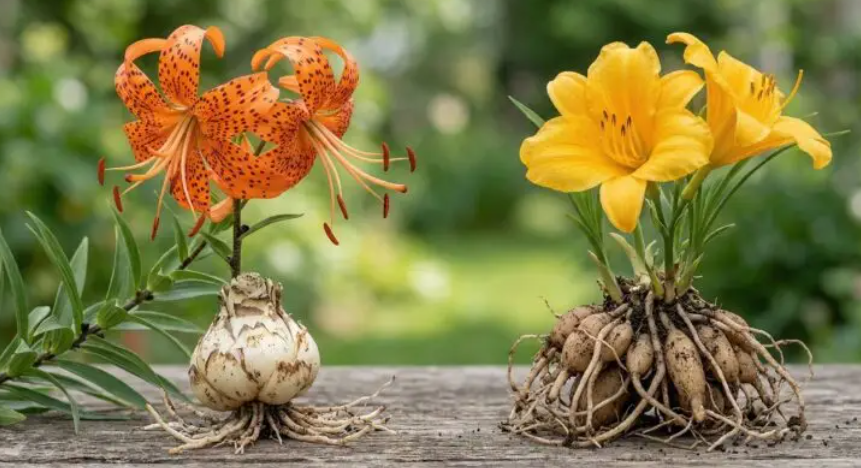
Tiger Lily (Lilium lancifolium, formerly Lilium tigrinum) is a striking and widely recognized flowering bulb plant belonging to the lily family Liliaceae, native to China, Japan, Korea, and parts of eastern Siberia. It is one of the most widely grown ornamental lilies in the world, cultivated across temperate gardens on every inhabited continent. With millions of bulbs traded internationally each year, tiger lily ranks among the most commercially significant ornamental bulbs in the global horticultural market.
As a plant, tiger lily produces tall, sturdy stems clothed in narrow, lance-shaped dark green leaves arranged alternately or in whorls along the stem. Small, dark, bead-like structures called bulbils form in the leaf axils along the stem, giving the plant a distinctive appearance unlike most other lily species. These bulbils serve as a natural vegetative propagation mechanism, eventually falling to the ground and producing new plants over time.
The flowers are tiger lily’s most spectacular feature, consisting of large, nodding blooms with strongly reflexed petals that curl dramatically backward. Each flower is bright orange with distinctive dark purple to black spots scattered across the petals, creating the bold, tiger-like pattern that gives the plant its common name. A single mature stem can carry anywhere from 5 to 20 or more blooms simultaneously, creating an impressive floral display in midsummer.
Tiger Lily thrives in USDA zones 3 through 9, making it one of the most cold-hardy and widely adaptable ornamental lilies available to gardeners worldwide. This broad hardiness range allows successful cultivation across most of North America, Europe, and similar temperate climates. Its ability to tolerate cold winters while thriving in summer heat gives it exceptional versatility in the garden.
Tiger lilies typically reach heights of 3 to 5 feet (90 to 150 centimeters) at maturity, with some well-established clumps producing stems exceeding 6 feet under ideal growing conditions. Each bulb multiplies steadily over time, with a single planting eventually developing into a sizeable clump of flowering stems. This natural multiplication makes tiger lily an excellent long-term investment for the garden.
In many Asian cultures, tiger lily holds both culinary and medicinal significance, with the bulbs consumed as a vegetable and used in traditional medicine for centuries. In Chinese cuisine, dried tiger lily bulbs are used in soups and stir-fries, valued for their subtle flavor and nutritional content. The plant also carries symbolic meaning in various Asian traditions, often associated with wealth, pride, and prosperity.
Despite its beauty, tiger lily can be highly toxic to cats, causing acute kidney failure even from small exposures to pollen, petals, or leaves. Gardeners with cats should exercise extreme caution when growing tiger lilies and consider alternative ornamental plants if feline safety is a concern. For gardens without cats, however, tiger lily offers outstanding ornamental value with remarkably little maintenance required.
Also Read: How To Grow And Care For Tiger Lily
How to Grow Tiger Lily From Bulbs
- Source Quality Bulbs: Purchase firm, plump bulbs from a reputable supplier, ensuring they are free from soft spots, mold, or visible damage. Larger bulbs generally produce more flowering stems in the first season than smaller ones. Avoid bulbs that appear dried out, shriveled, or show signs of disease, as these are unlikely to establish successfully.
- Plant Bulbs Promptly: Tiger lily bulbs do not store well for extended periods and should be planted as soon as possible after purchase. If immediate planting is not possible, store bulbs briefly in slightly moist peat moss or wood shavings in a cool location. Delaying planting unnecessarily increases the risk of bulb deterioration and poor establishment.
- Choose the Right Planting Location: Select a site that receives at least six hours of direct sunlight daily, with some light afternoon shade in hotter climates. Tiger lilies prefer a position where their roots remain cool and shaded while their stems and flowers reach into the sun. Planting among low-growing groundcovers or perennials that shade the soil naturally achieves this ideal balance.
- Prepare the Planting Site Thoroughly: Dig the planting area to a depth of at least 12 inches, incorporating generous amounts of compost or well-rotted manure to improve fertility and drainage. Tiger lilies perform best in deep, loose, fertile soil that allows bulbs to develop and multiply freely. Removing stones and breaking up compacted layers ensures roots can penetrate deeply.
- Plant at the Correct Depth: Tiger lily bulbs should be planted at a depth of approximately 6 inches, or roughly three times the diameter of the bulb. Planting too shallow leaves bulbs vulnerable to frost heave and drying out, while planting too deep can delay or weaken emergence. Consistent planting depth across a group produces even, uniform growth.
- Orient Bulbs Correctly: Place bulbs in the planting hole with the pointed growing tip facing upward and the flatter, root-bearing base facing down. If the orientation is unclear, planting on its side still allows the shoot to find its way upward. Careful orientation helps ensure straight, upright stem development from the start.
- Space Bulbs Appropriately: Plant bulbs 12 to 18 inches apart to allow adequate room for mature growth and the development of daughter bulbs over time. Proper spacing also ensures good air circulation around stems, reducing the risk of fungal diseases. Groups of three or more bulbs planted together create the most visually impactful display.
- Backfill and Firm the Soil: After placing bulbs at the correct depth and orientation, backfill carefully with the prepared soil mixture, firming gently to eliminate air pockets around the bulb. Avoid compacting the soil too heavily, as tiger lily roots need loose, well-aerated conditions to develop properly. A smooth, level surface after planting helps with subsequent watering and mulching.
- Water Thoroughly After Planting: Give bulbs a deep watering immediately after planting to settle the soil around them and initiate root development. This initial watering is important for encouraging early root growth before winter dormancy in autumn plantings. Subsequent watering can rely largely on natural rainfall until active spring growth begins.
- Apply Mulch Over the Planting Area: A 2 to 3 inch layer of organic mulch applied over the planted area helps insulate bulbs from temperature extremes, retain soil moisture, and suppress weeds. Mulch is particularly valuable during the first winter after planting, when bulbs are still becoming established. Pull mulch back slightly in early spring to allow emerging shoots to push through easily.
- Mark the Planting Area: Because tiger lily bulbs remain dormant and invisible underground for several months, marking the planting area prevents accidental disturbance during other garden work. Simple plant markers or stakes placed at the corners of the planting area serve this purpose effectively. This is especially important in busy garden beds where digging might otherwise occur.
- Monitor First Season Emergence: In spring, watch for the appearance of the first dark green shoots pushing through the soil surface. Early emerging shoots can be vulnerable to late frost damage, so having frost cloth on hand for unexpected cold snaps is advisable. Healthy first-year emergence is a reliable indicator of successful bulb establishment.
- Support Stems as They Grow: As stems develop and reach increasing heights through spring and early summer, installing stakes or other supports prevents wind damage. Inserting stakes early when stems are still short avoids damaging the bulb or roots below. Soft ties looped loosely around stems at intervals provide support without restricting growth.
- Feed Bulbs During Active Growth: As new shoots emerge in spring, applying a balanced slow-release fertilizer supports strong stem and leaf development leading up to flowering. A second application of a high-potassium fertilizer in early summer encourages robust bloom production. Avoid high-nitrogen formulas, which promote excessive leafy growth at the expense of flowers.
- Allow Foliage to Complete Its Cycle: After flowering, resist the urge to cut back the stems and foliage immediately. The continued photosynthesis of the leaves through late summer and early autumn is essential for the bulb to store energy for next year’s growth. Only remove stems once foliage has fully yellowed and died back naturally.
- Expect Improvement in Subsequent Years: First-year tiger lily plantings sometimes produce fewer or smaller blooms as bulbs settle into their new environment. From the second year onward, established bulbs typically produce taller, stronger stems with significantly more flowers. Over several years, multiplying bulbs develop into impressive, multi-stemmed clumps that represent the full ornamental potential of this remarkable plant.
Also Read: Different Types of Tiger Lilies