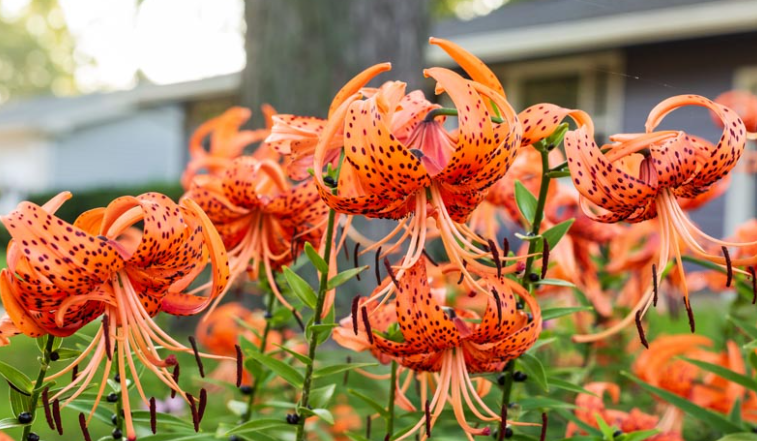
Tiger Lily (Lilium lancifolium, formerly Lilium tigrinum) is a striking and widely recognized flowering bulb plant belonging to the lily family Liliaceae, native to China, Japan, Korea, and parts of eastern Siberia. It is one of the most widely grown ornamental lilies in the world, cultivated across temperate gardens on every inhabited continent. With millions of bulbs traded internationally each year, tiger lily ranks among the most commercially significant ornamental bulbs in the global horticultural market.
As a plant, tiger lily produces tall, sturdy stems clothed in narrow, lance-shaped dark green leaves arranged alternately or in whorls along the stem. Small, dark, bead-like structures called bulbils form in the leaf axils along the stem, giving the plant a distinctive appearance unlike most other lily species. These bulbils serve as a natural vegetative propagation mechanism, eventually falling to the ground and producing new plants over time.
The flowers are tiger lily’s most spectacular feature, consisting of large, nodding blooms with strongly reflexed petals that curl dramatically backward. Each flower is bright orange with distinctive dark purple to black spots scattered across the petals, creating the bold, tiger-like pattern that gives the plant its common name. A single mature stem can carry anywhere from 5 to 20 or more blooms simultaneously, creating an impressive floral display in midsummer.
Tiger Lily thrives in USDA zones 3 through 9, making it one of the most cold-hardy and widely adaptable ornamental lilies available to gardeners worldwide. This broad hardiness range allows successful cultivation across most of North America, Europe, and similar temperate climates. Its ability to tolerate cold winters while thriving in summer heat gives it exceptional versatility in the garden.
Tiger lilies typically reach heights of 3 to 5 feet (90 to 150 centimeters) at maturity, with some well-established clumps producing stems exceeding 6 feet under ideal growing conditions. Each bulb multiplies steadily over time, with a single planting eventually developing into a sizeable clump of flowering stems. This natural multiplication makes tiger lily an excellent long-term investment for the garden.
In many Asian cultures, tiger lily holds both culinary and medicinal significance, with the bulbs consumed as a vegetable and used in traditional medicine for centuries. In Chinese cuisine, dried tiger lily bulbs are used in soups and stir-fries, valued for their subtle flavor and nutritional content. The plant also carries symbolic meaning in various Asian traditions, often associated with wealth, pride, and prosperity.
Despite its beauty, tiger lily can be highly toxic to cats, causing acute kidney failure even from small exposures to pollen, petals, or leaves. Gardeners with cats should exercise extreme caution when growing tiger lilies and consider alternative ornamental plants if feline safety is a concern. For gardens without cats, however, tiger lily offers outstanding ornamental value with remarkably little maintenance required.
Also Read: Types of Tiger Lilies (Lilium lancifolium)
How to Grow and Care for Tiger Lily
- Choose a Sunny to Partially Shaded Location: Tiger lilies perform best in full sun to light partial shade, requiring at least six hours of sunlight daily for strong stem development and abundant flowering. In hotter climates, afternoon shade helps prevent flower color from fading prematurely. An open border or woodland edge planting suits tiger lilies particularly well.
- Select Well-Draining, Fertile Soil: Tiger lilies thrive in deep, fertile soil with excellent drainage, as bulbs sitting in waterlogged soil quickly rot. Incorporating generous amounts of compost into the planting area improves both fertility and drainage. Sandy loam soils are ideal, while heavy clay should be amended with grit or organic matter before planting.
- Plant Bulbs in Autumn: Tiger lily bulbs are best planted in autumn, allowing roots to establish before winter dormancy sets in. Planting depth should be approximately three times the diameter of the bulb, typically around 6 inches deep. Proper depth protects bulbs from frost while allowing shoots to emerge easily in spring.
- Space Bulbs Generously: Plant bulbs approximately 12 to 18 inches apart to allow adequate room for mature growth and air circulation. Proper spacing reduces competition for nutrients and moisture between neighboring bulbs. As clumps multiply over the years, some thinning may be necessary to maintain vigorous flowering.
- Water Consistently During the Growing Season: Tiger lilies need regular watering throughout spring and summer to support strong stem development and flowering. The soil should be kept consistently moist but never waterlogged during this active growth period. Reduce watering significantly once foliage begins to yellow and die back after flowering.
- Mulch Around the Base of Plants: Applying a 2 to 3 inch layer of organic mulch around the base helps retain soil moisture, regulate root temperature, and suppress competing weeds. Mulch also helps keep the soil cool, which tiger lily bulbs particularly appreciate during hot summer months. Keep mulch a few inches away from emerging stems to prevent rot.
- Fertilize in Spring and Midsummer: As new growth emerges in spring, applying a balanced slow-release fertilizer supports strong stem and leaf development. A second application of a high-potassium fertilizer in early summer encourages robust flowering. Avoid high-nitrogen formulas, which promote excessive leafy growth at the expense of blooms.
- Stake Tall Stems: Because tiger lily stems can reach considerable heights and carry heavy flower loads, staking helps prevent toppling in exposed or windy positions. Installing stakes early in the season when stems are still short causes minimal root disturbance. Soft ties looped loosely around stems provide support without restricting growth.
- Deadhead Spent Flowers: Removing individual spent blooms as they fade keeps the plant looking tidy and prevents energy from being directed toward seed production. The main stem should be left intact after deadheading, as the foliage continues to photosynthesize and feed the bulb. Only cut the entire stem back once foliage has fully yellowed and died back naturally.
- Allow Foliage to Die Back Naturally: After flowering, tiger lily foliage should be left in place until it yellows and withers completely on its own. This period of continued photosynthesis is essential for the bulb to store energy for the following year. Cutting back foliage prematurely can significantly weaken or kill the bulb.
- Collect and Plant Bulbils: The small, dark bulbils that form in the leaf axils along the stem can be collected when they detach easily and planted immediately. Bulbils planted about 1 inch deep in prepared soil develop into flowering-sized bulbs within two to three years. This is one of the easiest and most rewarding methods of increasing a tiger lily collection.
- Divide Established Clumps: After several years, tiger lily clumps can become crowded, leading to reduced flowering and increased disease pressure. Dividing clumps every three to four years in autumn after foliage has died back maintains vigor. Carefully separate individual bulbs and replant promptly at the correct depth.
- Watch for Lily Beetle: The bright red lily beetle and its larvae can cause severe defoliation if left unchecked, consuming leaves, stems, and buds rapidly. Regular inspection and hand-picking of both adult beetles and larvae from the undersides of leaves prevents major damage. Neem oil or insecticidal soap can be used for larger infestations.
- Monitor for Botrytis Blight: This fungal disease causes brown spots and blighting of leaves and flowers, particularly during cool, damp weather. Improving air circulation through proper spacing and removing affected plant material promptly helps limit spread. Applying a suitable fungicide at the first signs of infection provides additional protection.
- Be Aware of Virus Susceptibility: Tiger lily is known to carry certain lily viruses without showing significant symptoms itself, but can transmit these viruses to other lily species through aphid feeding. Planting tiger lilies away from other lily varieties reduces the risk of cross-infection. Controlling aphid populations through regular monitoring helps limit virus transmission.
- Protect from Deer and Rodents: Deer find lily foliage highly attractive and can cause severe damage to emerging shoots and flowers. Installing physical barriers such as wire cloches over young growth or applying deer repellent sprays helps protect vulnerable plants. Underground wire mesh around the planting area deters rodents from digging up and consuming bulbs.
Also Read: Different Types of Yellow Lilies