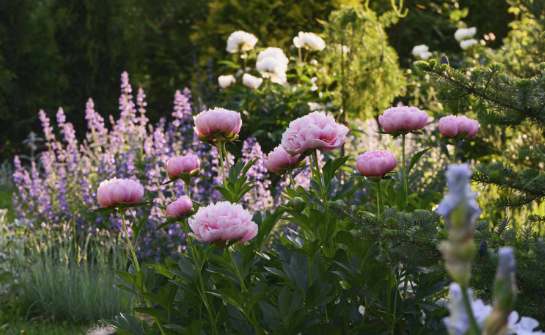
Peonies are the kind of flowers that reward gardeners who are willing to think long term.
A newly planted peony may look surprisingly unimpressive compared with the spectacular plant you imagined. It may produce only a few leaves, or perhaps no flowers at all during its first season. But underground, the plant is establishing the root system that will eventually support years—sometimes decades—of flowering.
That slow beginning is not a sign that something has gone wrong.
In fact, patience is one of the most important parts of growing peonies successfully.
Once established, peonies can become remarkably dependable. Their large flowers appear in late spring or early summer, depending on the type and climate, and established plants can return every year with relatively little maintenance.
The trick is getting the fundamentals right from the beginning.
Peonies don’t like being planted too deeply, they need plenty of sunlight, they prefer soil that drains well, and they don’t appreciate being moved repeatedly. Understanding these characteristics will save you from many of the problems gardeners encounter with them.
Here is how to grow and care for peonies, from choosing the right planting site to encouraging more flowers and keeping mature plants healthy.
Understanding Peonies Before You Plant
Peonies belong to the genus Paeonia, which includes herbaceous, tree, and intersectional peonies.
The three broad groups behave somewhat differently.
Herbaceous peonies die back to the ground during winter and produce fresh stems from underground buds each spring. These are among the most familiar garden peonies.
Tree peonies develop woody stems and can become substantial shrubs. They don’t die completely back to ground level in winter.
Intersectional peonies, sometimes called Itoh peonies, are hybrids between herbaceous and tree peonies. They combine characteristics of both groups and are valued for strong stems and attractive flowers.
There are also enormous differences between individual varieties.
Flowers may be:
- White
- Cream
- Pink
- Red
- Coral
- Yellow
- Burgundy
- Lavender
Some have simple single flowers, while others have huge double blooms packed with petals.
Knowing which type you are growing matters because pruning and winter care can differ.
Also Read: Different Types of Peonies You Can Grow
The Most Important Peony Rule: Don’t Plant Too Deeply
If there is one mistake that deserves special attention, it is planting a peony too deeply.
Peony roots are generally planted with the dormant buds—often called “eyes”—near the surface of the soil.
If those buds are buried too deeply, the plant may produce healthy foliage but refuse to flower.
This can be incredibly frustrating because the plant may look perfectly healthy.
A gardener might respond by adding fertilizer, watering more, or moving the plant repeatedly, when the real problem is simply planting depth.
For bare-root herbaceous peonies, the eyes should generally be covered by only a small amount of soil. Exact depth varies somewhat with climate and soil conditions, so follow the recommendations supplied with your particular variety.
The general principle is simple:
Peony eyes should be shallow, not deeply buried.
When planting container-grown plants, avoid adding a thick layer of soil over the crown.
Choose the Right Location
Peonies are much easier to care for when planted in a suitable location from the beginning.
Choose a site with plenty of sunlight and good air circulation.
In cooler climates, full sun is usually ideal.
In very hot climates, some protection from intense afternoon heat can help flowers last longer.
Morning sunlight followed by light afternoon shade can be useful where summers are particularly hot.
Avoid planting peonies immediately beside large trees.
Tree roots compete aggressively for water and nutrients, and the canopy can reduce sunlight.
A peony may survive under such conditions, but flowering is unlikely to be as impressive.
Remember that a peony is a long-term plant.
Don’t choose its location based only on how the garden looks today.
Consider how nearby trees and shrubs will grow over the next five or ten years.
Give Peonies Room to Breathe
Good air circulation is important because dense, humid foliage creates a more favorable environment for fungal diseases.
Don’t crowd peonies tightly against walls, shrubs, or other large plants.
Spacing requirements vary according to the variety’s mature size, but give each plant enough room for air to move around its foliage.
This is particularly important in regions with humid summers.
Good spacing also makes watering, pruning, inspection, and weed control easier.
Prepare the Soil Before Planting
Peonies prefer fertile, well-drained soil.
They appreciate soil that contains organic matter but does not remain saturated after rain.
Heavy clay can create problems if it stays wet for prolonged periods.
Very sandy soil presents the opposite problem: it may drain so rapidly that the plant experiences repeated moisture stress.
Before planting, improve poor soil where necessary with suitable organic matter.
Compost can help improve structure and provide a slow source of nutrients.
But don’t create an extremely rich planting hole surrounded by poor soil.
Roots eventually expand beyond the original hole.
It is better to improve the broader planting area.
Also Read: How To Grow Peonies From Seeds
Drainage Matters More Than Most People Realize
Peonies are relatively long-lived plants, which means root problems can become increasingly serious over time.
A site that occasionally becomes wet after heavy rain may be acceptable.
A location that remains saturated for days is much less suitable.
If drainage is poor, consider:
- A raised bed
- A slightly elevated planting position
- Soil improvement
- Relocating the plant to a better-drained part of the garden
It is much easier to solve drainage before planting than after a mature peony has established.
When Should You Plant Peonies?
Peonies are commonly planted during their dormant period.
Bare-root plants are often sold in fall, while container-grown plants may be available during the growing season.
Fall planting gives roots time to establish before the following growing season in many temperate climates.
However, planting times should be adjusted to local climate and the type of peony.
The important thing is to avoid planting when the soil is waterlogged, frozen solid, or exposed to extreme heat.
Plant Bare-Root Peonies Carefully
Bare-root peonies may look unimpressive when you first receive them.
Don’t judge the plant by its appearance.
The dormant root may have several pink or reddish buds, or “eyes,” that will eventually produce stems.
Inspect the root before planting and remove obviously damaged or rotten sections with clean tools if necessary.
Dig a broad planting hole rather than a narrow deep hole.
Position the root so the eyes are facing upward.
Cover the root lightly with soil.
Don’t bury it deeply.
Water after planting to settle the soil around the roots.
Don’t Expect Instant Flowers
This is where patience becomes important.
A newly planted peony may not flower immediately.
Some plants can take several seasons to establish before producing a substantial display.
This is especially true when a small division has been planted.
The plant is building roots and developing underground reserves.
If you see healthy foliage but few flowers during the early years, don’t automatically assume that something is wrong.
Give the plant time.
A mature peony can eventually produce a spectacular number of blooms from the same planting location year after year.
Watering Peonies
Newly planted peonies need consistent moisture while establishing their root systems.
Water deeply rather than applying small amounts every day.
Once established, peonies are considerably more resilient.
They still benefit from adequate moisture during active growth and especially during periods of drought, but they don’t need constantly wet soil.
A useful approach is to check the soil rather than following a rigid watering schedule.
If the upper layer has dried and there has been little recent rainfall, water thoroughly.
Then allow excess water to drain.
During hot weather, pay particular attention to plants growing in containers or sandy soil.
Avoid Overwatering
Overwatering is one of the easiest mistakes to make with peonies.
A plant that wilts is not necessarily thirsty.
If the soil is already saturated, wilting can actually be a symptom of root stress.
Before adding water, check the soil.
If it is wet several inches below the surface, give the plant time to dry.
Healthy roots need both water and oxygen.
Mulching Peonies
A moderate layer of mulch can help maintain consistent soil moisture and suppress weeds.
Useful materials include:
- Compost
- Shredded leaves
- Straw
- Fine bark
- Other suitable organic mulch
However, avoid piling mulch directly over the crown.
This is particularly important for peonies because excessive covering can effectively increase planting depth over time.
Spread mulch around the plant while leaving the crown relatively clear.
Fertilizing Peonies
Peonies don’t need to be heavily fertilized.
If planted in reasonably fertile soil, they can often grow and flower successfully with modest supplemental feeding.
Excessive nitrogen can encourage large amounts of foliage while producing fewer flowers.
If you fertilize, use a balanced or relatively low-nitrogen fertilizer and follow the product instructions.
Compost applied around the plant can also help maintain soil fertility.
Don’t assume that a plant with poor flowering needs more fertilizer.
Check sunlight and planting depth first.
Those two factors are often much more important.
Why Is My Peony Not Flowering?
This is probably the most common question about peonies.
A healthy-looking peony that refuses to bloom can be frustrating.
Before doing anything drastic, check the following.
It may be too young
New plants often need time to mature.
It may be planted too deeply
This is one of the classic causes of poor flowering.
It may not receive enough sunlight
Shade can encourage foliage while reducing flower production.
It may have been overfertilized
Especially with high-nitrogen fertilizer.
The plant may have been disturbed
Repeated transplanting or root disturbance can delay flowering.
Weather may have affected the buds
Late freezes, unusual temperatures, or other environmental conditions can damage developing flower buds.
In other words, don’t assume that a non-flowering peony needs more food.
Sometimes it simply needs more sun, shallower planting, or more time.
Supporting Peony Flowers
Large double-flowered peonies are notorious for producing heavy blooms.
The stems may stand upright when the flowers are dry, only to collapse after rain.
By the time the flowers become heavy, it can be too late to install support without disturbing the plant.
Install peony rings, stakes, or other support structures early in the growing season.
As stems develop, they can grow through the support.
The support then becomes almost invisible beneath the foliage.
This is especially useful for varieties with huge, densely petaled flowers.
Deadheading Peonies
Once flowers fade, remove them to keep the plant looking tidy.
Cut the spent flower back above a healthy set of leaves.
Removing faded flowers also prevents the plant from putting energy into seed production if you don’t intend to collect seed.
However, don’t remove healthy foliage simply because flowering has finished.
The leaves remain important for the rest of the growing season.
They are effectively the plant’s solar panels.
Don’t Cut Peony Leaves Too Early
This is another important part of long-term care.
After flowering, the plant may look less exciting.
There are no longer huge flowers to admire, but the foliage is still working.
The leaves capture sunlight and help replenish the plant’s underground energy reserves.
If you cut the foliage down immediately after flowering, you reduce the time available for the plant to build those reserves.
Allow healthy foliage to remain until it naturally declines later in the season.
This is particularly important if you want strong flowering in subsequent years.
When to Cut Back Herbaceous Peonies
Herbaceous peonies die back naturally at the end of the growing season.
Once the foliage has yellowed or been killed by frost, cut the stems back near ground level.
Remove the plant material from the garden if it is diseased.
Cleaning up fallen foliage can reduce the amount of disease material remaining around the plant.
Don’t cut back green, healthy foliage merely because the flowers have faded.
Wait until the plant has entered its natural decline.
What About Tree Peonies?
Tree peonies are different.
They develop woody stems and should not be cut back to the ground like herbaceous peonies.
Instead, remove dead, damaged, or weak branches as necessary.
Pruning should be conservative because tree peonies can take considerable time to recover from heavy cutting.
If you’re unsure which type of peony you have, identify it before pruning.
Common Peony Diseases
Peonies are generally sturdy plants, but fungal diseases can occur.
Botrytis blight
This can cause gray or brown areas on buds, flowers, and foliage, particularly during cool, damp conditions.
Good airflow, appropriate spacing, and careful cleanup can help reduce disease pressure.
Avoid repeatedly keeping foliage wet.
Powdery mildew
A white powdery coating can appear on leaves.
Although it can look alarming, it doesn’t always cause severe damage.
Improve air circulation and avoid excessive crowding.
Leaf spots
Dark or reddish spots may develop on foliage.
Remove badly affected plant material and maintain good garden hygiene.
Disease problems are easier to manage when plants are already growing under suitable conditions.
What Are the Ants Doing on My Peonies?
This is one of the classic peony questions.
Ants are frequently found crawling over peony buds.
They are attracted to the sweet nectar produced around developing flower buds.
Their presence doesn’t necessarily mean that the plant has a pest problem.
In fact, ants visiting peony buds are generally part of the normal garden ecosystem.
You don’t need to eliminate every ant simply because you see them on the plant.
If you cut peony flowers for indoor arrangements, you may want to gently inspect or shake the stems outdoors before bringing them inside.
Growing Peonies in Containers
Peonies can be grown in containers, but this requires more attention than growing them in the ground.
Choose a large, sturdy container with excellent drainage.
A mature peony has substantial roots, so a tiny decorative pot is unlikely to provide adequate long-term space.
Container-grown plants are also more exposed to temperature fluctuations.
The soil can heat up rapidly in summer and cool quickly during winter.
Watering also needs closer attention because containers can dry faster.
For long-term performance, planting in the ground is usually easier when your garden conditions are suitable.
Propagating Peonies
The most common method of propagating herbaceous peonies is division.
An established plant can be carefully lifted during its dormant period and divided into sections containing healthy roots and viable eyes.
Each division needs enough root material and buds to develop into a new plant.
This is why dividing peonies isn’t as simple as chopping a large root into random pieces.
Tree peonies and some hybrids can require different propagation methods.
Growing peonies from seed is also possible, but it is a long-term project.
Seed-grown plants may take several years before producing flowers, and the resulting plants may differ from the parent.
For gardeners who enjoy experimentation and breeding, this can be rewarding.
For someone who wants a reliable clone of a particular variety, division or another vegetative propagation method is preferable.
Why Peonies Are Excellent Long-Term Garden Plants
Peonies occupy an unusual place in the garden.
They are not particularly fast.
They don’t flower continuously throughout the year.
They can be fussy about planting depth.
And they may take years to reach their full potential.
Yet those limitations are also part of their appeal.
Once established in the right location, a peony can become a permanent feature of the landscape.
Instead of buying another plant every year, you can watch the same plant become larger and more impressive with time.
The investment is front-loaded.
You put the effort into selecting the location and planting correctly.
Then the plant does much of the work.
A Simple Annual Peony Care Routine
You don’t need a complicated maintenance program.
Early season
Watch for emerging shoots and protect them from unusual late freezes where necessary.
Check supports and install them before plants become tall.
During active growth
Water during prolonged dry periods.
Keep weeds under control.
Inspect leaves and buds for signs of disease or pests.
Flowering season
Enjoy the flowers.
Deadhead spent blooms.
Cut flowers for arrangements if desired.
After flowering
Continue watering during dry weather.
Leave healthy foliage intact.
Avoid heavy pruning.
Autumn or dormancy
Once herbaceous peony foliage naturally dies back, cut it down and remove debris.
Apply a modest layer of suitable organic matter around the plant if desired.
Avoid burying the crown under thick mulch.
The Peony’s Secret Is Underground
The most useful way to think about a peony is to remember that the spectacular flower you see is only the final product of a much longer process.
The plant spends much of its life preparing for a relatively short flowering period.
Roots establish.
Leaves capture sunlight.
Energy is stored underground.
Dormant buds develop.
Then, when the conditions are right, those reserves are converted into flowers.
This explains why several common mistakes have such long-lasting consequences.
Plant the eyes too deeply, and flowering can suffer.
Remove the leaves too early, and the plant has less opportunity to replenish its reserves.
Keep the roots saturated, and the underground system can become stressed.
Move the plant repeatedly, and you interrupt the establishment process.
In contrast, a well-sited peony can become increasingly impressive simply because you leave it alone.
The Best Way to Get More Peony Flowers
If your goal is a bigger display, don’t begin by buying more fertilizer.
Start with the fundamentals.
Give the plant sufficient sunlight.
Make sure it isn’t planted too deeply.
Keep the soil well drained.
Water during prolonged dry periods.
Avoid excessive nitrogen.
Support heavy flower heads.
Leave healthy foliage intact after flowering.
Give young plants time to mature.
Those practices may sound simple, but they address the factors that most directly influence long-term flowering.
Final Thoughts: Plant Peonies for the Future
Peonies are not impatient plants.
They don’t care that you want a spectacular flower display next week.
They operate on a much longer timetable.
A small plant establishes its roots. Its foliage captures sunlight. Underground reserves gradually increase. Dormant buds become stronger. Eventually, the plant reaches the point where it can produce the impressive flowers that make peonies so popular.
That is why the best peony care is less about constant intervention and more about making good decisions at the beginning.
Choose a sunny location.
Prepare well-drained soil.
Plant at the correct depth.
Water sensibly.
Don’t overfeed.
Support heavy flowers.
Leave healthy foliage alone after blooming.
And most importantly, don’t give up on a young plant simply because it hasn’t reached its potential yet.
A mature peony can become one of the most dependable plants in a perennial garden.
Its flowering season may be relatively short, but the plant’s value extends far beyond those few weeks. The foliage provides structure for much of the growing season, the flowers are excellent for cutting, and an established plant can return year after year with surprisingly little maintenance.
In a world of fast-growing annuals and constantly changing garden trends, peonies offer something different.
They reward patience.
Plant one today, care for it properly, and you may eventually find yourself enjoying the same plant many years from now—only larger, fuller, and covered with more flowers.
The best time to appreciate a mature peony is when it is blooming. The best time to create that mature peony is when you plant it.