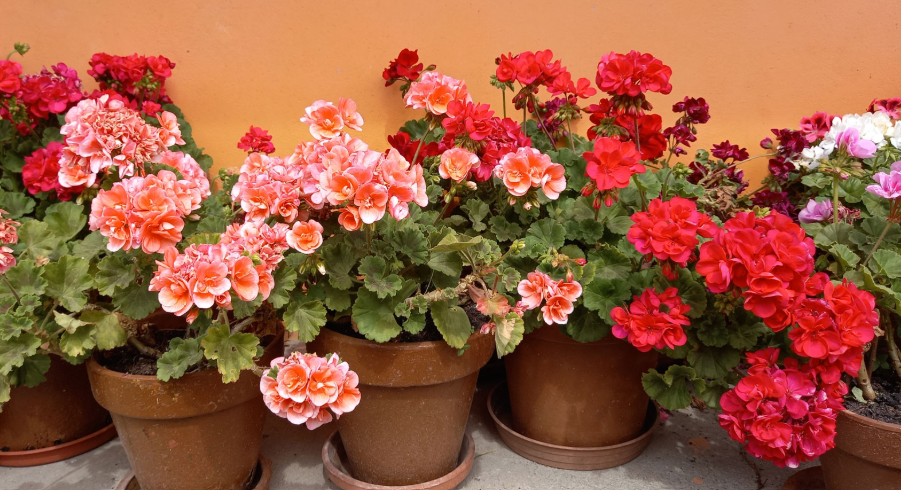
Geraniums are among the most beloved and widely cultivated flowering plants in the world, gracing gardens, window boxes, balconies, and indoor spaces with their cheerful blooms and often wonderfully fragrant foliage. The name “geranium” is commonly applied to two distinct but related plant groups: the true hardy geraniums of the genus Geranium, commonly called cranesbills, and the tender pelargoniums of the genus Pelargonium, which are the brightly flowering plants most people picture when they hear the word. Both groups belong to the family Geraniaceae and share a long history of cultivation stretching back centuries.
The pelargonium group, native primarily to South Africa, was introduced to European gardens in the early 17th century and quickly became a horticultural sensation. By the Victorian era, pelargoniums were among the most fashionable greenhouse and bedding plants in Britain and continental Europe. Today, geraniums and pelargoniums together rank among the top five best-selling flowering plants globally, with annual retail sales in the United States alone exceeding $150 million. They are grown on every inhabited continent and adapted to an extraordinary range of climates and garden styles.
True hardy geraniums (Geranium spp.) are perennial ground covers and border plants valued for their delicate, saucer-shaped flowers and deeply lobed, often aromatic foliage. Unlike pelargoniums, they are fully frost-hardy in most temperate climates and require minimal care once established. There are over 400 recognized species in the Geranium genus, and hundreds more named cultivars have been developed through selective breeding and hybridization over the past century.
Whether spilling from a terracotta pot in Mediterranean sunshine, carpeting a shaded woodland border, or perfuming a sunny conservatory, geraniums in all their forms offer remarkable versatility. The following 42 types represent the full breadth of this extraordinary plant family, from classic garden varieties to rare species and modern hybrids.
Also Read: Different Types of Phlox Plants
Varieties of Geraniums
1. Zonal Geranium
Zonal geraniums (Pelargonium × hortorum) are the most widely grown of all geranium types, recognized by the distinctive darker band or “zone” that marks the center of their rounded leaves. They produce large, dome-shaped flower clusters in shades ranging from white and pale pink to deep red and salmon orange, blooming prolifically from spring through frost. Zonal geraniums account for the majority of geranium sales worldwide and are a cornerstone of summer bedding plant displays in parks, public gardens, and private homes across the globe.
2. Ivy-Leaved Geranium
Ivy-leaved geraniums (Pelargonium peltatum) are trailing plants with thick, waxy, five-lobed leaves that closely resemble those of ivy. Their cascading stems make them the ideal choice for hanging baskets, window boxes, and raised planters where the trailing habit can be fully appreciated. Originally native to the coastal cliffs of South Africa, they are extremely heat and drought tolerant and will bloom continuously throughout summer with minimal deadheading.
3. Regal Geranium
Regal geraniums (Pelargonium × domesticum), also called Martha Washington geraniums or show pelargoniums, produce some of the most lavish and dramatic flowers in the entire group. Each large bloom features richly colored, often ruffled petals in deep purples, burgundies, pinks, and whites, frequently marked with darker veining or blotching at the center. They prefer cooler growing conditions than zonals and typically bloom in spring and early summer rather than throughout the entire warm season.
4. Scented-Leaf Geranium
Scented-leaf geraniums are a diverse group of Pelargonium species and hybrids cultivated primarily for the aromatic oils in their foliage rather than for floral display. The leaves can release fragrances mimicking rose, lemon, mint, nutmeg, cinnamon, apple, or even chocolate when brushed or crushed. They have been used in the perfume and culinary industries for centuries, and Pelargonium graveolens (rose geranium) remains a commercially important source of geraniol, an essential oil widely used in cosmetics and aromatherapy.
Also Read: How To Grow And Care For Geraniums
5. Angel Geranium
Angel geraniums are compact hybrid pelargoniums (Pelargonium × angelorum) that sit in character somewhere between regal and zonal types. They produce masses of small, pansy-like flowers in bicolor combinations of purple, pink, and white, with delicate veining on the upper petals. Their small, neatly toothed leaves and tidy, mounding growth habit make them excellent candidates for container growing, indoor windowsills, and cottage-garden borders.
6. Unique Geranium
Unique geraniums are a group of older hybrid pelargoniums with a somewhat shrubby, upright growth habit and deeply aromatic, often sticky foliage. Their flowers are typically smaller than those of regal geraniums but appear in greater abundance and over a longer season. Many unique geraniums carry a strong, spicy or fruity scent in their leaves that makes them particularly rewarding for sensory gardens and scented planting schemes.
7. Cranesbill Geranium
Cranesbill geraniums (Geranium spp.) are the true hardy geraniums, a vast and varied group of perennials and annuals valued for their wiry stems, deeply divided leaves, and delicate five-petaled flowers. The common name “cranesbill” refers to the long, beak-like seed pods that develop after flowering. With over 400 species distributed across temperate regions worldwide, cranesbills are among the most ecologically diverse flowering plant groups in cultivation.
8. Bloody Cranesbill
Bloody cranesbill (Geranium sanguineum) is a tough, spreading perennial native to Europe and the Caucasus, celebrated for its vivid magenta-pink flowers and its exceptional autumn color. The deeply divided, dark green leaves turn brilliant shades of red and orange in fall, giving the plant a second season of ornamental interest. It is one of the most drought-tolerant hardy geraniums available and thrives in poor, well-drained soils where more demanding plants struggle.
Also Read: How to Grow Geraniums From Cuttings
9. Meadow Cranesbill
Meadow cranesbill (Geranium pratense) is a tall, clump-forming perennial with large, violet-blue flowers that are among the most beautiful in the genus. Native to Europe and Asia, it is a common wildflower of traditional hay meadows and roadsides and has given rise to numerous cultivated varieties in shades of white, pink, and deep purple. It grows to around 24 to 30 inches in height and is well-suited to naturalistic and wildflower garden styles.
10. Wood Cranesbill
Wood cranesbill (Geranium sylvaticum) is a woodland-edge perennial bearing purple-pink to violet flowers in late spring and early summer. It is one of the earliest hardy geraniums to bloom each season and naturalizes readily in dappled shade beneath deciduous trees. Several named cultivars have been developed, offering white, pale pink, and deep violet flower forms suited to formal shade gardens as well as wilder, more naturalistic planting schemes.
11. Dusky Cranesbill
Dusky cranesbill (Geranium phaeum), sometimes called the mourning widow, produces small but distinctive near-black to deep maroon flowers with reflexed petals that give the blooms an unusual, nodding appearance. It is one of the most shade-tolerant geraniums available and will grow in deep, dry shade conditions that defeat most other flowering perennials. The foliage is often attractively marked with brown or purple blotching, adding ornamental value even when the plant is not in bloom.
12. Armenian Cranesbill
Armenian cranesbill (Geranium psilostemon) is a spectacular, large-growing hardy geranium with brilliant magenta-pink flowers, each marked with a bold black center and fine black veining. It grows to an impressive 3 to 4 feet in height and spread, making it one of the most architecturally imposing species in the genus. The foliage turns attractive shades of orange and red in autumn, making it a valuable multi-season plant for large borders and cottage gardens.
13. Bigroot Geranium
Bigroot geranium (Geranium macrorrhizum) is a semi-evergreen ground cover valued for its exceptional drought and shade tolerance, its strongly aromatic foliage, and its pink to magenta flowers produced in late spring. The thick, knotted rhizomes from which the plant takes its name store water efficiently, allowing it to thrive in dry shade — one of the most difficult planting conditions in any garden. It is widely used in landscape design as a low-maintenance ground cover beneath trees and shrubs.
Also Read: How to Grow Geraniums From Seed – (16 Simple Steps)
14. Dalmatian Cranesbill
Dalmatian cranesbill (Geranium dalmaticum) is a low-growing, mat-forming species native to the limestone mountains of the Balkans. Its small, glossy, aromatic leaves form neat cushions no more than 6 inches tall, above which soft pink flowers are held on slender stems in early summer. It is an excellent choice for rock gardens, paving crevices, and alpine troughs, and the foliage takes on warm orange and red tones in autumn.
15. Himalayan Cranesbill
Himalayan cranesbill (Geranium himalayense) produces large, deep violet-blue flowers with reddish centers on a spreading, clump-forming plant reaching about 12 to 18 inches in height. It is one of the most floriferous hardy geraniums, often blooming from late spring into midsummer with a second flush of flowers in early autumn. The cultivar ‘Plenum’ offers fully double, violet-blue flowers with a rose-like form that is especially attractive in cottage garden plantings.
16. Johnson’s Blue
‘Johnson’s Blue’ is one of the most famous and widely planted hardy geranium cultivars in the world, a hybrid of Geranium himalayense and Geranium pratense with lavender-blue flowers of exceptional clarity and size. It forms a low, spreading mound and blooms generously from late spring through summer, the flowers hovering above the finely cut foliage on slender stems. It has been in cultivation since the 1950s and remains a benchmark variety against which other blue-flowered geraniums are often measured.
17. Rozanne
‘Rozanne’ (Geranium ‘Gerwat’) is arguably the most celebrated hardy geranium of modern times, having won the Royal Horticultural Society’s Award of Garden Merit and been named the most popular perennial in the UK on multiple occasions. It produces large, violet-blue flowers with white centers from late spring through the first hard frosts of autumn — an extraordinary bloom period of up to six months. Since its introduction in 2000, Rozanne has been one of the best-selling perennial plants worldwide, a testament to its outstanding garden performance.
Also Read: How to Grow Geranium in Pots & Containers
18. Pelargonium Graveolens (Rose Geranium)
Rose geranium (Pelargonium graveolens) is one of the most commercially important scented-leaf pelargoniums, widely cultivated for the rose-like fragrance of its deeply lobed, velvety leaves. The essential oil extracted from its foliage is a significant ingredient in the perfume, cosmetics, and aromatherapy industries, with major commercial cultivation centered in Réunion Island, Egypt, and China. Small pink to lilac flowers appear in spring and summer, though the plant’s foliage is its primary ornamental and commercial asset.
19. Lemon Geranium
Lemon geranium (Pelargonium crispum) is a compact, upright scented-leaf species with small, fan-shaped, distinctly crimped leaves that release a fresh, citrusy lemon scent when touched. It is a popular herb garden plant and is widely used in culinary applications, with the fragrant leaves used to flavor cakes, teas, jellies, and sorbets. The plant produces small lavender to pink flowers in spring and summer, though it is primarily grown for its aromatic foliage.
20. Peppermint Geranium
Peppermint geranium (Pelargonium tomentosum) is a vigorous, spreading plant with large, velvety, heart-shaped leaves that emit a strong, unmistakable peppermint fragrance. The soft, felted texture of the leaves is almost irresistible to touch, making this one of the most tactilely satisfying plants in the scented-leaf group. It prefers partial shade and regular moisture compared to most pelargoniums and makes an excellent container plant for shaded patios and conservatories.
21. Coconut Geranium
Coconut geranium (Pelargonium grossularioides) is a small, spreading species with tiny, deeply lobed leaves that carry a surprisingly convincing coconut scent. It is one of the lesser-known scented-leaf geraniums but is prized by collectors and fragrance garden enthusiasts for its unusual and delightful aroma. Small, dark pink flowers appear in clusters during spring and summer, and the plant spreads gently to form a low aromatic ground cover.
Also Read: How To Grow Delphinium From Seed
22. Nutmeg Geranium
Nutmeg geranium (Pelargonium × fragrans) is a compact hybrid with small, rounded, grayish-green leaves that release a warm, spicy nutmeg fragrance. It is one of the most popular scented-leaf geraniums for indoor cultivation and is well-suited to small pots and herb garden collections. White flowers with fine pink veining appear in spring and summer, adding a delicate ornamental quality to this primarily foliage-focused plant.
23. Tulip Geranium
Tulip geraniums are a specialized form of zonal pelargonium in which the individual florets within each flower cluster never fully open, remaining in a tightly furled, tulip-bud shape throughout their bloom period. The effect is charming and distinctive, with dense clusters of small, perfectly formed buds that look remarkably like miniature bouquets. They are particularly popular in container cultivation and among collectors of unusual pelargonium forms.
24. Cactus Geranium
Cactus geraniums, also known as stellar pelargoniums, feature narrow, sharply pointed petals that give each flower a spiky, star-like or cactus-flower appearance quite unlike the rounded petals of traditional geraniums. The leaves of some cactus pelargoniums also have a star-shaped outline with pointed lobes. Colors range across the full pelargonium spectrum, from white and pale pink to deep red and salmon, and the unusual flower form makes them standout container plants.
Also Read: Types of Columbine Flowers
25. Rosebud Geranium
Rosebud geraniums are another specialized zonal pelargonium form, producing densely packed double flowers in which the tightly layered petals create a form that closely resembles a miniature rose in full bloom. ‘Apple Blossom Rosebud’ is among the most famous cultivars, bearing flowers in soft blush pink fading to creamy white. These plants are slow to develop their characteristic bloom form and are best appreciated up close, making them ideal for container cultivation near seating areas and entrances.
26. Stellar Pelargonium
Stellar pelargoniums are a group developed primarily in Australia, distinguished by their star-shaped flowers with narrow, pointed upper petals and broader, sometimes notched lower petals. The leaves are also typically star-shaped or deeply lobed, giving the plants a distinctive overall appearance. They are compact and free-flowering, performing exceptionally well in containers and sunny borders, and have become increasingly popular globally over the past two decades.
27. Deacon Geranium
Deacon geraniums are a series of miniature to dwarf zonal pelargoniums developed in the United Kingdom by Reverend Stanley Stringer in the 1970s. They produce dense, perfectly rounded plants bearing large flower heads relative to their compact size, in colors ranging from white and pink to lilac and bright red. Despite their small stature — typically under 12 inches — Deacon geraniums are notably floriferous and make outstanding windowsill and small container plants.
28. Multibloom Geranium
Multibloom geraniums are a series of seed-raised zonal pelargoniums developed for maximum flower production and ease of cultivation from seed. Each plant produces a greater number of individual flower stems than most traditional varieties, creating a denser, more colorful display with less deadheading required. They are widely used in commercial bedding plant schemes and public park displays where reliable, high-impact performance across large areas is essential.
Also Read: Perennials That Grow Fast and Spread Quickly
29. Geranium Endressii
Geranium endressii is a vigorous, clump-forming hardy geranium from the Pyrenean mountains, bearing soft pink flowers with slightly notched petals throughout summer and into autumn. It is semi-evergreen in mild winters and spreads steadily to form a useful ground-covering mat beneath shrubs and along border edges. The cultivar ‘Wargrave Pink’ is one of the most popular forms, bearing salmon-pink flowers over an exceptionally long season.
30. Geranium Renardii
Geranium renardii is a distinctive species from the Caucasus region, prized as much for its foliage as its flowers. The leaves are rounded, sage-green, and deeply textured with a velvety, wrinkled surface that catches light beautifully throughout the growing season. White to pale lavender flowers with bold purple veining appear in early summer, and the plant forms a neat, compact mound well-suited to the front of sunny borders and rock gardens.
31. Geranium Maculatum
Geranium maculatum, the wild geranium, is a North American native species found in deciduous woodlands from Manitoba to Georgia. It produces soft pink to lavender flowers in spring and is one of the few geranium species native to the Americas. As awareness of native plant gardening has grown — native plant sales in the US increased by over 30 percent between 2019 and 2023 — G. maculatum has gained significant new interest among ecologically minded gardeners and habitat restoration projects.
32. Geranium Wallichianum
Geranium wallichianum is a spreading, late-flowering species from the Himalayas, valued for producing its violet-purple to blue flowers from midsummer well into autumn when most other perennials have finished blooming. The cultivar ‘Buxton’s Variety’ is perhaps the most celebrated form, bearing large, clear blue flowers with white centers and dark veining against attractively marbled foliage. It is a sprawling, ground-hugging plant that weaves beautifully through shrubs and other perennials.
33. Geranium Nodosum
Geranium nodosum is one of the most shade-tolerant hardy geraniums available, capable of flowering reliably in deep, dry shade where many other plants fail entirely. Its glossy, bright green leaves remain attractive throughout the growing season, and the small but cheerful pink to mauve flowers are produced continuously from late spring through autumn. It spreads steadily by rhizomes and self-seeding to form a useful, low-maintenance ground cover in difficult positions.
Also Read: Best Annual Flowers that Bloom All Summer
34. Geranium Oxonianum
Geranium × oxonianum is a group of vigorous hybrid hardy geraniums that are among the most commonly planted of all cranesbills in temperate gardens. They produce pink flowers in an almost uninterrupted succession from late spring to autumn and tolerate a wide range of soil types and light conditions. ‘Wargrave Pink,’ ‘A.T. Johnson,’ and ‘Claridge Druce’ are among the most widely grown named forms, all offering excellent ground-covering performance and reliable seasonal color.
35. Cambridge Geranium
Cambridge geranium (Geranium × cantabrigiense) is a hybrid between G. macrorrhizum and G. dalmaticum that combines the ground-covering vigor of the former with the compact neatness of the latter. It produces bright pink to white flowers in late spring and has pleasantly aromatic foliage that takes on reddish tones in autumn. This cultivar is widely used in landscape and municipal planting schemes because of its low maintenance requirements and exceptional reliability across a broad range of growing conditions.
36. Geranium Clarkei
Geranium clarkei is a spreading, rhizomatous species from Kashmir bearing upward-facing flowers in violet-blue or white, often with delicate purple veining. ‘Kashmir Purple’ and ‘Kashmir White’ are the two most widely available cultivars and are reliable, medium-sized border plants that spread gently without becoming invasive. The flowers are held well above the finely divided foliage on slender, branching stems, giving the plant an airy, naturalistic quality.
37. Geranium Palmatum
Geranium palmatum is a bold, architectural species from Madeira with large, deeply divided, palmate leaves and tall, branching stems bearing masses of pink to magenta flowers in summer. It behaves as a biennial or short-lived perennial, seeding itself freely to maintain a colony in favorable conditions. The large rosettes of foliage have a distinctly tropical appearance and make a strong structural statement in sheltered courtyard gardens and mild coastal planting schemes.
Also Read: Plants That Grow Well Under Deciduous Trees
38. Geranium Tuberosum
Geranium tuberosum is an unusual species that grows from small underground tubers, allowing it to survive summer drought by dying back completely after its spring flowering period. Native to the Mediterranean and the Middle East, it produces bright pink-purple flowers in April and May before retreating underground for the dry summer months. It is well-suited to gravel gardens and dry, sunny borders where its summer dormancy is an advantage rather than a drawback.
39. Maverick Series Geranium
The Maverick series is one of the most successful and widely grown seed-raised zonal pelargonium series in commercial horticulture, developed for uniform growth, early flowering, and exceptional heat tolerance. Individual plants in the series are compact and well-branched, producing large, rounded flower clusters in a broad color range including red, pink, white, coral, and bicolor. The Maverick series is a cornerstone of the bedding plant industry in North America and Europe, used extensively in municipal parks, retail garden centers, and home gardens.
40. Patriot Series Geranium
Patriot geraniums are a series of vegetatively propagated zonal pelargoniums recognized for their unusually large flower heads, vigorous growth, and strong heat and humidity tolerance. They are widely used in landscapes across the southeastern United States, where summer conditions can challenge less robust geranium varieties. The series offers an extensive color palette and is notable for producing some of the largest individual flower clusters of any commercial geranium series currently available.
41. Tango Series Geranium
The Tango series is a group of compact, seed-raised zonal geraniums distinguished by particularly vivid, saturated flower colors and a neat, uniform growth habit. The series performs exceptionally well in hot, dry summer conditions and maintains strong color intensity even under intense sunlight — a quality not shared by all geranium varieties. Tango geraniums are popular in container and window box displays where their bright, unfading colors deliver maximum visual impact throughout the season.
Also Read: Annual Flowers & Plants That Groundhogs Will Not Eat
42. Pelargonium Sidoides
Pelargonium sidoides, the South African geranium, is a medicinal species native to the highlands of South Africa and Lesotho, where it has been used in traditional Zulu and Basuto medicine for centuries to treat respiratory ailments. Extracts of its roots are the active ingredient in a widely sold European herbal cold and flu remedy, making it one of the most economically significant medicinal plants in the Pelargonium genus. Small, deep burgundy to nearly black flowers are produced on slender stems above attractive, silver-green, heart-shaped leaves throughout summer.