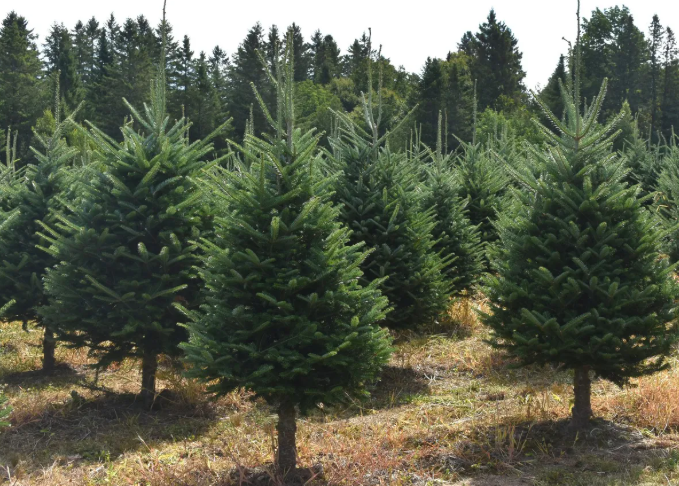
Nova Scotia has a remarkably diverse tree-growing environment. From the warmer Annapolis Valley and South Shore to the cooler Cape Breton Highlands, trees face different combinations of winter cold, wind, moisture, soil depth, and growing-season length. The province is part of the Acadian Forest region, where red spruce, balsam fir, white pine, red maple, birches, aspens, and other native species form much of the natural landscape.
If you want a tree that establishes quickly, the best choices are not necessarily the species that grow fastest in another part of Canada. A tree needs to be matched to Nova Scotia’s site conditions. Wet lowlands can favour willows, poplars, and tamarack, while dry or exposed properties may require tougher species. Nova Scotia’s forestry research also shows why growth should be viewed as site-specific rather than as a fixed number for every tree.
The trees below are therefore selected for their relatively rapid growth in suitable Nova Scotia conditions. The growth rates are approximate annual height increases under favourable conditions. Young trees with adequate moisture, sunlight, nutrition, and weed control can grow considerably faster than stressed trees.
Quick Comparison: Fast Growing Trees for Nova Scotia
| Tree | Approx. growth rate | Typical mature size | Best feature |
|---|---|---|---|
| Hybrid Poplar | 4–8 ft/year | 50–80+ ft | Extremely rapid growth |
| Eastern Cottonwood | 3–6 ft/year | 60–100+ ft | Fast shade |
| Trembling Aspen | 2–4 ft/year | 40–70 ft | Fast native pioneer |
| Balsam Poplar | 2–4 ft/year | 50–80 ft | Moist soils |
| Black Willow | 3–6 ft/year | 40–70 ft | Wet ground |
| White Willow | 3–6 ft/year | 50–80 ft | Very rapid growth |
| Red Maple | 2–3 ft/year | 40–70 ft | Adaptability |
| Silver Maple | 3–5 ft/year | 50–80 ft | Rapid shade |
| Manitoba Maple | 2–4 ft/year | 40–70 ft | Tough, quick establishment |
| Paper Birch | 1.5–3 ft/year | 40–70 ft | Attractive bark |
| River Birch | 1.5–3 ft/year | 40–70 ft | Moist sites |
| White Pine | 2–3 ft/year | 70–100+ ft | Native evergreen |
| Eastern Larch | 1.5–2.5 ft/year | 40–70 ft | Wet sites |
| White Spruce | 1–2 ft/year | 50–80 ft | Hardy evergreen |
| Red Spruce | 1–2 ft/year | 50–80 ft | Native evergreen |
| Black Spruce | 1–2 ft/year | 30–60 ft | Poor or wet soils |
| Jack Pine | 1–2.5 ft/year | 30–60 ft | Sandy, dry sites |
| Northern Red Oak | 1.5–2.5 ft/year | 60–80 ft | Long-term shade |
| Red Pine | 1.5–2.5 ft/year | 50–80 ft | Sandy sites |
| Norway Spruce | 1.5–2.5 ft/year | 60–100+ ft | Fast evergreen screen |
| Tamarack | 1.5–2.5 ft/year | 40–80 ft | Cold, wet locations |
1. Hybrid Poplar
Approximate growth rate: 4–8 ft per year
Hybrid poplars are among the quickest trees you can plant when rapid height growth is the main objective. Different clones can perform very differently, but hybrid poplar is particularly attractive for Nova Scotia properties where the goal is to establish a tall screen, windbreak, biomass planting, or shade canopy in a relatively short period. Research from the Acadian Forest region describes hybrid poplar as a fast-growing, shade-intolerant hardwood, with early vegetation control improving establishment and seedling growth.
The drawback is size and longevity. Hybrid poplars can become enormous trees, and their fast growth can produce wood that is less structurally durable than slower-growing hardwoods. Give them plenty of room away from foundations, septic systems, overhead wires, and small garden spaces.
2. Eastern Cottonwood
Approximate growth rate: 3–6 ft per year
Eastern cottonwood is another exceptionally vigorous poplar for sites with adequate moisture. It is best suited to large properties, stream margins, floodplains, and other locations where the soil remains reasonably moist. The combination of rapid juvenile growth and large eventual size makes it one of the strongest choices when shade needs to be established quickly.
Cottonwood should not be treated as a small residential tree. Its extensive root system and large branches can eventually become difficult to manage near buildings or underground infrastructure. Plant it where its mature size is an advantage rather than a problem.
3. Trembling Aspen
Approximate growth rate: 2–4 ft per year
Trembling aspen is one of Nova Scotia’s naturally occurring fast-establishing trees. It is a classic pioneer species, often appearing quickly after disturbance and taking advantage of open sunlight. Research from the University of New Brunswick describes trembling aspen as fast-growing but relatively short-lived, with rapid growth and strong ability to reproduce vegetatively.
For a rural property, aspen can provide quick cover, wildlife habitat, and attractive movement in the leaves. It spreads readily through suckering, however, so it is better suited to naturalized areas and larger properties than to carefully controlled foundation plantings.
4. Balsam Poplar
Approximate growth rate: 2–4 ft per year
Balsam poplar is a useful choice for moist Nova Scotia landscapes. It naturally occurs in cool, moisture-rich environments and can develop into a substantial tree. Its ability to spread through roots also helps explain why stands can establish quickly once conditions are favourable.
This is another tree best given plenty of space. It is particularly useful for restoration, wildlife plantings, streamside areas, and large rural properties rather than small urban yards.
5. Black Willow
Approximate growth rate: 3–6 ft per year
Black willow is one of the better choices when both rapid growth and wet-soil tolerance are important. Willows can put on impressive amounts of new growth when their roots have consistent access to water, making them useful around ponds, streams, drainage areas, and wet lowlands.
The trade-off is relatively weak wood and a tendency for large branches to break with age or during storms. Black willow is therefore better positioned away from buildings and frequently used areas.
6. White Willow
Approximate growth rate: 3–6 ft per year
White willow is another vigorous willow capable of producing several feet of growth annually under good conditions. It develops a broad canopy and can provide shade relatively quickly, especially when planted in deep, moisture-retentive soil.
Because mature white willows become large trees with extensive root systems, site selection matters. They are most appropriate beside spacious lawns, ponds, drainage areas, or rural properties rather than close to foundations or underground utilities.
7. Red Maple
Approximate growth rate: 2–3 ft per year
Red maple is one of the most versatile native trees for Nova Scotia. It occurs across a wide range of habitats and is an important component of the province’s forests. Nova Scotia research also documents its ability to regenerate vigorously after disturbance, including through stump sprouting.
Its moderate-to-fast growth is only part of its appeal. Red maple also offers excellent autumn colour, tolerates a range of soils, and is considerably easier to fit into a residential landscape than cottonwood or willow. It is one of the strongest all-around choices for homeowners who want growth without choosing an extremely aggressive tree.
8. Silver Maple
Approximate growth rate: 3–5 ft per year
Silver maple is among the fastest-growing maples and can produce substantial shade relatively quickly. It performs particularly well where moisture is available and can be useful on larger Nova Scotia properties.
Its rapid growth comes with structural compromises. Branches can be relatively brittle, and the tree eventually develops a large root system and broad crown. It is therefore better for large open spaces than for planting directly beside houses, driveways, or utility lines.
9. Manitoba Maple
Approximate growth rate: 2–4 ft per year
Manitoba maple is a tough, adaptable tree that can establish rapidly in disturbed landscapes. It tolerates conditions that would challenge some slower-growing ornamental trees and can become a substantial shade tree.
However, it is not usually chosen for formal gardens because its structure can be irregular and its branches can be relatively weak. For rural properties where quick cover is more important than perfect form, it can be useful.
10. Paper Birch
Approximate growth rate: 1.5–3 ft per year
Paper birch is one of Nova Scotia’s familiar native hardwoods and is particularly valuable when you want reasonably quick growth combined with attractive white bark. It is commonly associated with open and disturbed sites and can establish well where sunlight is abundant.
Paper birch is better suited to cooler conditions than many ornamental birches. Keeping the root zone from becoming excessively hot and dry during summer can help maintain vigorous growth.
11. River Birch
Approximate growth rate: 1.5–3 ft per year
River birch is worth considering for properties with consistently moist soil. Its attractive bark, multi-stemmed form, and tolerance of wet conditions make it especially useful around ponds, drainage areas, and low sections of a landscape.
Although it can grow relatively quickly, it is not normally as rapid as cottonwood or willow. Its advantage is the combination of moderate-fast growth, ornamental bark, and better performance in moist landscapes.
12. Eastern White Pine
Approximate growth rate: 2–3 ft per year
Eastern white pine is one of Nova Scotia’s most valuable native trees and one of the province’s signature large conifers. It can grow rapidly when young and eventually becomes a very tall tree with a distinctive open crown. White pine is also part of the natural forest communities documented throughout Nova Scotia.
For homeowners, white pine offers something that many fast-growing hardwoods do not: year-round evergreen structure combined with considerable eventual height. It needs plenty of room, though, because mature trees can exceed 80 ft and sometimes become much taller.
13. Eastern Larch (Tamarack)
Approximate growth rate: 1.5–2.5 ft per year
Eastern larch, commonly called tamarack, is an unusual conifer because it loses its needles in autumn. It is particularly valuable for wet and cold parts of Nova Scotia where other trees may struggle.
It is not the fastest tree on this list, but its combination of cold tolerance, wet-soil adaptation, and moderate growth makes it an excellent regional choice. Nova Scotia forest classifications associate larch strongly with wet environments.
14. White Spruce
Approximate growth rate: 1–2 ft per year
White spruce is a dependable evergreen that can grow relatively quickly once established. It is widely suited to Nova Scotia’s climate and is useful for windbreaks, screening, shelterbelts, and larger landscapes.
Its growth is generally slower than poplar, willow, or silver maple, but white spruce has an important advantage: it maintains a dense evergreen canopy. For a homeowner wanting privacy throughout the year, that can matter more than gaining an extra foot of height annually.
15. Red Spruce
Approximate growth rate: 1–2 ft per year
Red spruce is one of the defining trees of the Acadian Forest and is particularly well suited to Nova Scotia’s climate. It is a long-term choice rather than an instant-growth tree, but healthy trees can establish steadily on suitable sites.
Red spruce also has considerable ecological value. Nova Scotia forest research identifies it as one of the province’s major canopy species, particularly on moist, productive sites.
16. Black Spruce
Approximate growth rate: 1–2 ft per year
Black spruce is a particularly useful option for colder, wetter, and less productive sites. It is adapted to conditions that can be difficult for many broadleaf trees, including wet soils and nutrient-poor landscapes.
It does not compete with poplar or willow for raw speed, but its reliability makes it valuable in northern and wet areas of Nova Scotia. It is especially appropriate for naturalized plantings and woodland restoration.
17. Jack Pine
Approximate growth rate: 1–2.5 ft per year
Jack pine is a hardy conifer associated with sandy, dry, rocky, or nutrient-poor sites. It can establish where more demanding trees struggle, making it useful for difficult rural landscapes.
Its open, somewhat irregular form gives it a more natural appearance than many landscape evergreens. It is a better candidate for large, low-maintenance properties than for formal residential gardens.
18. Northern Red Oak
Approximate growth rate: 1.5–2.5 ft per year
Northern red oak is one of the better long-term hardwood choices for Nova Scotia. It may not match the growth rate of poplars and willows, but under good conditions it can establish at a respectable pace while eventually developing into a large shade tree.
Red oak is particularly attractive for homeowners who want a tree that combines reasonable early growth with long-term structural value. Nova Scotia also has documented old-growth red oak stands, demonstrating that the species can form substantial, long-lived trees in the province.
19. Red Pine
Approximate growth rate: 1.5–2.5 ft per year
Red pine is best suited to sunny, relatively dry, sandy, or well-drained sites. It forms a tall, straight trunk and can be an attractive evergreen for larger properties.
Its growth is moderate rather than spectacular, but red pine can be valuable where a landowner wants a conifer adapted to poorer soils. It should receive plenty of sunlight because young trees do not tolerate heavy shade well.
20. Norway Spruce
Approximate growth rate: 1.5–2.5 ft per year
Norway spruce is a non-native conifer that can grow faster than many traditional spruce choices when planted on suitable sites. Its dense branches make it particularly useful for wind protection and evergreen screening.
It eventually becomes a very large tree, so spacing is important. Nova Scotia has also conducted research specifically on the growth potential of Norway spruce plantations, making it a species with a long history of forestry interest in the province.
21. Tamarack
Approximate growth rate: 1.5–2.5 ft per year
Tamarack is another name for eastern larch, so this choice is essentially a second way of highlighting one of Nova Scotia’s most useful wet-site conifers. If you are looking for a tree that can tolerate cold conditions while handling wet ground, it deserves consideration.
Its golden-yellow autumn needles make it particularly distinctive. Rather than choosing it for maximum speed, choose tamarack when site conditions demand a hardy deciduous conifer.
Which Trees Grow Fastest in Nova Scotia?
If maximum height growth is the priority, hybrid poplar, eastern cottonwood, black willow, white willow, silver maple, trembling aspen, and balsam poplar are among the strongest candidates.
Hybrid poplar is particularly impressive where the soil, moisture, sunlight, and weed control are favourable. But rapid growth should not be confused with superior landscape performance. Very fast-growing trees often become large, develop extensive root systems, have weaker wood, or have shorter useful lifespans.
Nova Scotia’s own growth-and-yield research illustrates why site matters. The province maintains more than 1,300 permanent sample plots covering plantations and different forest types, and its growth models are explicitly designed around site-specific conditions.
Best Fast Growing Trees for Small Yards
For a smaller Nova Scotia property, avoid planting cottonwood, hybrid poplar, silver maple, or large willow simply because they grow quickly.
Red maple, paper birch, and some smaller forms of native trees are generally easier to incorporate into residential landscapes. The important consideration is not just the height of the young tree but its mature crown spread, root system, branch structure, and distance from buildings.
A tree that grows 3 ft per year but eventually becomes 80 ft tall is not necessarily a better choice for a suburban yard than one that grows 2 ft per year and remains easier to manage.
Best Fast Growing Trees for Wet Soil
Nova Scotia has many properties with poorly drained or seasonally wet ground. For those locations, consider:
- Black willow
- White willow
- Balsam poplar
- Eastern cottonwood
- Eastern larch
- Tamarack
- Black spruce
- River birch
Do not assume that simply planting a moisture-loving tree will solve a drainage problem. Extremely wet soils can still limit root oxygen and reduce growth. Match the tree to the actual drainage pattern of the property.
Best Fast Growing Evergreen Trees
If year-round screening is the objective, the strongest candidates include:
- Eastern white pine
- White spruce
- Red spruce
- Norway spruce
- Red pine
- Black spruce
- Jack pine
Eastern white pine is particularly useful when you want both substantial height and a distinctive native Nova Scotia character. White and red spruce are better choices when dense evergreen structure and wind protection are priorities.
Southern Nova Scotia vs. Cape Breton
Tree performance can vary considerably across the province.
In southern and central Nova Scotia, including areas around Halifax, the Annapolis Valley, the South Shore, and the southwestern mainland, a broad selection of hardwoods and conifers can perform well. Warmer microclimates can also extend the growing season.
In northern Nova Scotia and Cape Breton, colder conditions, exposed sites, and shorter growing seasons become increasingly important. Hardy native conifers, aspens, birches, larch, and spruce can be more dependable choices.
Coastal exposure deserves special attention anywhere in the province. A tree growing quickly in a sheltered inland yard may grow much more slowly on an exposed coastal property because wind, salt, and moisture stress reduce effective growth.
How to Make Trees Grow Faster
Choosing a fast-growing species is only the beginning. Good establishment can make a major difference in the first several years.
Give the tree enough water
Newly planted trees need consistent moisture while their root systems become established. Avoid allowing the root ball to repeatedly dry out, particularly during hot summer weather.
Control competing vegetation
Grass and weeds compete directly with young trees for water and nutrients. Keeping a vegetation-free area around the trunk can significantly improve establishment.
Research from the Acadian Forest region has found that vegetation control can improve the establishment and early growth of planted hardwoods, particularly fast-growing species such as hybrid poplar.
Choose the right soil
Do not plant a wet-site tree on a dry, rocky slope simply because it has a reputation for rapid growth. Likewise, avoid placing a drought-tolerant pine in permanently saturated soil.
Avoid excessive fertilizer
More fertilizer does not automatically mean more useful tree growth. A tree planted in unsuitable soil, suffering from drought, or competing with grass will not necessarily become healthier simply because fertilizer is added.
Leave enough room
A fast-growing tree can become a large tree surprisingly quickly. Consider the mature canopy before planting near buildings, septic systems, driveways, roads, power lines, and property boundaries.
Are Fast Growing Trees Always Better?
No. This is one of the most important considerations when selecting a tree for Nova Scotia.
Poplars, willows, silver maple, and other rapid growers can provide shade and screening quickly, but some have relatively weak wood, aggressive roots, large mature dimensions, or shorter useful lifespans.
Slower-growing trees such as red spruce, white pine, red oak, and sugar maple can provide greater long-term value on the right property. Nova Scotia’s forests themselves demonstrate the importance of diversity: the province’s major forest species include spruce, fir, pine, maple, birch, beech, larch, and other trees occupying different ecological niches.
Things to Remember
The best fast-growing tree for Nova Scotia depends on what you want the tree to accomplish. Hybrid poplar and cottonwood are strong choices when maximum height growth is the priority and there is plenty of space. Willows and balsam poplar make more sense for wet properties. Red maple and paper birch offer a better balance between growth and landscape value, while white pine, spruce, and red pine provide evergreen structure.
Most importantly, treat the growth rates in this guide as realistic ranges rather than promises. Soil, moisture, sunlight, wind exposure, planting quality, competition, genetics, and local climate can all change how quickly a tree grows. Nova Scotia’s own forestry data reinforces that point: tree growth is fundamentally linked to the site where the tree is growing.
For homeowners, the best tree is rarely the one that grows the fastest. It is the one that grows fast enough, fits the available space, suits the soil and moisture conditions, and remains healthy and useful for decades.
Further References
- Nova Scotia Department of Natural Resources and Renewables — Growth and Yield Model.
Nova Scotia Growth and Yield Model
One of the strongest sources for the article because the model is based on more than 1,300 permanent sample plots monitored for over 40 years across Nova Scotia. It provides species- and site-specific information for major softwood and hardwood trees. - Nova Scotia Department of Natural Resources and Renewables — Forestry Field Handbook.
Nova Scotia Forestry Field Handbook
Particularly useful for growth projections, site productivity, stand characteristics, and comparing how different tree species perform under varying site conditions. - Dalhousie University — A Neural Network Growth and Yield Model for Nova Scotia Forests.
Dalhousie University — Nova Scotia Forest Growth Model
This research developed a tree-growth model specifically for Nova Scotia. It considers species, site quality, stocking levels, diameter growth, and height growth, making it useful when explaining why growth rates differ between trees and locations. - Nova Scotia Department of Natural Resources and Renewables — Assessment of 1989–1991 Plantations.
Nova Scotia Plantation Growth Research
A particularly useful source for actual early growth comparisons. The study reports differences among eastern larch, black spruce, Norway spruce, white spruce, red spruce, and white pine, including annual leader-growth measurements during the first years after planting. - University of New Brunswick and partners — Acadian Phenocam Network.
Acadian Phenocam Network Research
A recent research project monitoring leaf and radial growth across 24 sites and 12 tree species in Nova Scotia. It is useful for discussing seasonal growth and how climate affects the growing period of trees in the Acadian Forest.