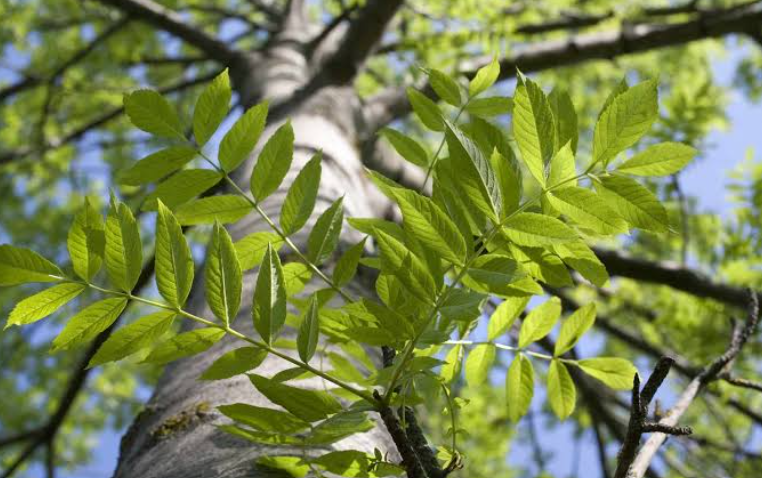
Types of ash trees range from towering hardwoods once prized for baseball bats and tool handles to compact shrubby species barely tall enough to qualify as trees at all, spanning nearly every temperate region of the Northern Hemisphere. For most of the 20th century, ash trees were among the most widely planted street and shade trees across North America, valued for their fast growth, tolerance of urban conditions, and strong, flexible wood. That popularity has come with a heavy cost over the past two decades, since a single invasive insect has reshaped the fate of the entire genus across the continent.
That insect, the emerald ash borer, was first discovered in southeastern Michigan in 2002 after arriving from Asia in wood packing material, and it has since killed hundreds of millions of ash trees across North America. According to Michigan State University’s Extension emerald ash borer program, the insect has already killed more than 30 million ash trees in southeastern Michigan alone, with the potential to eventually wipe out more than 700 million trees statewide. Because North American ash species evolved with no natural resistance to the beetle, nearly every native species on this list now carries some level of conservation concern, even as several remain widely planted and, in some regions, still relatively healthy.
Despite that threat, ash trees remain remarkably diverse as a group, with species native to riverbanks, deserts, mountain slopes, and coastal wetlands across North America, Europe, and Asia. Some reach 80 feet or more with massive, arching canopies, while others stay under 20 feet and are more accurately described as large shrubs. Their compound leaves, opposite branching pattern, and distinctive paddle-shaped winged seeds unite the group visually even as individual species vary enormously in size, habitat, and cold tolerance.
What follows covers 28 types of ash trees, spanning native North American species, Old World relatives, and several commercially significant cultivars, along with where each one grows and the data that sets it apart.
White Ash
White ash is native throughout the eastern United States and southeastern Canada, typically found in rich, well-drained upland forests rather than the wetter sites favored by some of its relatives. According to Purdue University’s Introduction to Trees of Indiana series, it’s considered the best-known and most preferred of the eastern ash species, reaching up to 80 feet tall with a straight, clear trunk and narrow, oblong crown on good sites. Its wood has long been the standard choice for baseball bats, tool handles, and furniture, prized for a combination of strength and flexibility that few other native hardwoods can match.
It tolerates USDA zones 3 through 9 and grows at a moderate to fast rate, though its populations have been severely reduced across much of its range by emerald ash borer infestation over the past 2 decades.
Green Ash
Green ash is the most widely distributed native ash species in North America, according to a Virginia Tech Dendrology fact sheet on the species, growing naturally along stream banks and in moist bottomlands from the Rocky Mountains east to the Atlantic coast. It reaches up to 70 feet tall with an irregular to rounded crown, and its exceptional tolerance for a wide range of soil and moisture conditions made it one of the most heavily planted urban shade trees in the country before emerald ash borer arrived. Its durable wood is used similarly to white ash, including tool handles, baseball bats, and pulpwood.
It tolerates USDA zones 3 through 9 and remains a common shelterbelt tree across the Great Plains states, valued historically for its rapid establishment and wind tolerance.
Black Ash
Black ash is native to the northeastern United States, the upper Midwest, and much of eastern Canada, typically found in swamps, bogs, and other consistently wet, poorly drained sites where few other ash species can survive. It reaches 40 to 50 feet tall with light gray, flaky bark, and its wood separates easily along annual growth rings, a trait that has given it a long tradition of use in Indigenous basket-making across its native range. It grows more slowly than white or green ash, generally adding under a foot of height per year even under good conditions.
It tolerates USDA zones 2 through 7 and is considered particularly vulnerable to emerald ash borer, since its wetland habitat offers limited options for the assisted migration or replanting strategies sometimes used for upland species.
Blue Ash
Blue ash is native to a comparatively narrow range centered on the Ohio Valley and parts of the upper Midwest and mid-South, typically found on limestone-based soils and rocky uplands rather than the wetter sites many other ash species prefer. It’s distinguished from its relatives by distinctly four-angled, corky twigs and a platy, ashy-gray bark, and it historically supplied a blue dye extracted from its inner bark, which is how the species got its common name. It reaches 60 to 70 feet tall and is considerably less common than white or green ash across most of its range.
It tolerates USDA zones 4 through 7 and has shown somewhat greater natural resistance to emerald ash borer than other North American ash species, though it still suffers significant mortality in heavily infested areas.
Pumpkin Ash
Pumpkin ash is native to wetland forests and swamps across the southeastern and lower midwestern United States, often found alongside bald cypress and water tupelo in seasonally flooded bottomlands. It can reach up to 90 feet tall, making it one of the largest North American ash species, and its trunk base develops a distinctive swollen, buttressed shape when grown under regularly flooded conditions. Its winged seeds are notably larger than those of green or white ash, often exceeding 2 inches in length.
It tolerates USDA zones 5 through 9 and remains one of the least commonly cultivated ash species, found almost exclusively in its native wetland habitat rather than in urban plantings.
Oregon Ash
Oregon ash is native to the Pacific coast of North America, ranging from southern British Columbia through Washington, Oregon, and into central California, typically growing along stream banks and in seasonally wet bottomland forests. It’s the only ash species native to the Pacific Northwest, reaching 60 to 80 feet tall with a broad, rounded crown, and it plays an important ecological role in riparian corridors throughout its range. Its wood has historically been used similarly to eastern white ash, valued for tool handles and furniture.
It tolerates USDA zones 5 through 9 and, because emerald ash borer had not spread widely into its western range as of recent years, populations there have so far avoided the severe losses documented across much of the Midwest and East.
Velvet Ash
Velvet ash, also called Arizona ash, is native to the desert southwestern United States and northern Mexico, typically found along desert washes, canyon bottoms, and other reliable water sources in an otherwise arid landscape. It reaches up to 35 feet tall with a rounded crown, and its leaves are covered in fine hairs on the underside, giving the species its common name. It’s been widely planted as a fast-growing shade tree in desert cities well beyond its native range, valued for its tolerance of heat and alkaline soil.
It tolerates USDA zones 7 through 10 and requires supplemental irrigation in most urban desert landscape settings, since its natural habitat is limited to sites with reliable underground or seasonal surface water.
Carolina Ash
Carolina ash, also called water ash or pop ash, is native to swamps, floodplains, and other consistently wet lowland habitats across the southeastern United States, from Virginia south to Florida and west along the Gulf Coast. It stays comparatively small, typically reaching just 30 feet tall with a trunk around 6 inches in diameter, making it one of the more modest-sized species in the genus. Its broad-winged samaras, sometimes bearing three wings on a single seed, are distinctive among North American ash species.
It tolerates USDA zones 7 through 10 and is rarely planted outside its native wetland range, remaining primarily a component of natural bottomland forest communities.
Texas Ash
Texas ash is native to the limestone hill country of central Texas and adjacent parts of Oklahoma, typically growing on rocky slopes and along limestone-based stream drainages in a region with hot, dry summers. It reaches 30 to 50 feet tall with a rounded crown and notably attractive maroon to burgundy fall color, a trait that has made it popular as an ornamental tree in Texas landscapes despite its more limited natural range. It tolerates alkaline soils considerably better than many other ash species.
It tolerates USDA zones 6 through 9 and shows good drought tolerance once established, reflecting its adaptation to the hot, dry limestone terrain of its native range.
Chihuahuan Ash
Chihuahuan ash is native to the Chihuahuan Desert region spanning parts of west Texas, southern New Mexico, and northern Mexico, typically found along desert canyon bottoms and intermittent streams at moderate elevations. It stays relatively small, generally under 30 feet tall, with a shrubby, multi-stemmed growth habit in many populations. Its leaves are notably smaller than those of most other ash species, an adaptation likely tied to the dry, high-heat conditions of its native desert range.
It tolerates USDA zones 7 through 9 and remains one of the lesser-known and less widely cultivated ash species, found almost exclusively within its native desert range rather than in ornamental plantings.
Fragrant Ash
Fragrant ash is native to the mountains of the southwestern United States and northern Mexico, typically found on rocky slopes and canyon woodlands at moderate to high elevations across its range. It’s notable among ash species for producing fragrant, showy white flower clusters, unlike most ash species, which have small, inconspicuous flowers that rely on wind rather than insect pollination. It stays small, generally reaching just 15 to 20 feet, more shrub-like than tree-like in overall form.
It tolerates USDA zones 6 through 9 and is occasionally grown as an ornamental specifically for its unusual flowering display, though it remains uncommon outside specialty native plant nurseries.
Gregg’s Ash
Gregg’s ash is native to the Trans-Pecos region of west Texas and adjacent areas of northern Mexico, typically found on rocky slopes and canyon walls in arid, mountainous terrain. It’s one of the smallest species in the genus, often staying under 15 feet tall with tiny, compound leaves made up of small individual leaflets well adapted to minimizing water loss in its dry native habitat. It’s evergreen or nearly so in milder parts of its range, an unusual trait among ash species that are otherwise almost universally deciduous.
It tolerates USDA zones 7 through 9 and is occasionally used in xeriscaping and native plant gardens across the desert Southwest for its drought tolerance and compact form.
Berlandier Ash
Berlandier ash, also called Mexican ash, is native to a range spanning central and southern Texas south through much of Mexico, typically found along stream banks and in riparian woodlands at low to moderate elevations. It reaches 30 to 50 feet tall with a broad, rounded crown, and it has become a popular shade tree choice in central and south Texas landscapes for its fast growth and tolerance of both heat and periodic flooding. Its leaves are notably glossy compared to several of its close relatives.
It tolerates USDA zones 7 through 10 and performs well in a range of soil types, including the heavy clay soils common across much of its native Texas range.
Two-Petal Ash
Two-petal ash, also called foothill ash, is native to California, typically found in the foothill chaparral and oak woodland zones ringing the state’s Central Valley and coastal ranges. Unlike most ash species, it produces showy white flowers with distinctive paired petals, appearing in long, hanging clusters as the leaves emerge each spring, a trait rare enough among ash species that it’s sometimes mistaken for an entirely different plant family. It stays compact, typically reaching just 15 to 20 feet as a large shrub or small single-stemmed tree.
It tolerates USDA zones 7 through 9 and is drought-tolerant once established, reflecting its adaptation to California’s dry-summer Mediterranean climate.
Singleleaf Ash
Singleleaf ash is native to the desert Southwest, including parts of Arizona, Utah, Nevada, and California, typically found in desert canyons and on rocky slopes at moderate elevations. It’s biologically unusual within its genus for producing simple, undivided leaves rather than the compound, multi-leaflet leaves typical of nearly every other ash species worldwide. It stays small and shrubby, generally under 20 feet tall, and is well adapted to the extreme heat and minimal rainfall of its native desert range.
It tolerates USDA zones 6 through 9 and remains almost exclusively a wild desert species, rarely cultivated even within native plant gardens due to its unusual, less recognizably ash-like appearance.
Manna Ash
Manna ash, also called flowering ash, is native to southern Europe and parts of western Asia, typically found on rocky hillsides and in open woodlands across the Mediterranean region. Unlike most ash species, it produces large, showy clusters of fragrant white flowers each spring, a trait that has made it a popular ornamental street and specimen tree across temperate regions worldwide. It reaches 40 to 60 feet tall with a rounded, dense crown, and historically its sap was harvested to produce a mild natural sweetener called manna.
It tolerates USDA zones 5 through 9 and is considerably more tolerant of urban pollution and compacted soil than many North American ash species, contributing to its popularity as a city street tree.
European Ash
European ash, also called common ash, is native across most of Europe and extends into western Asia, typically found in a wide range of woodland habitats from river valleys to upland forests. It’s one of the largest ash species in the world, capable of reaching 100 feet or more under ideal conditions, with a long history of use in European furniture-making, tool handles, and traditional wood-bending crafts. Its wood shares many of the same strength and flexibility properties prized in North American white ash.
It tolerates USDA zones 4 through 7 and has faced its own severe disease pressure in recent decades from a fungal pathogen called ash dieback, which has devastated populations across much of its European range in a crisis somewhat parallel to the emerald ash borer situation in North America.
Narrow-Leaved Ash
Narrow-leaved ash is native to southern Europe, North Africa, and parts of southwestern Asia, typically found in riparian woodlands and along watercourses throughout the Mediterranean basin. It reaches 60 to 80 feet tall with notably slender, narrow leaflets compared to most other ash species, and it serves as the parent species behind several popular ornamental cultivars grown for their distinctive fall color. It tolerates warmer, drier climates better than many northern European ash species.
It tolerates USDA zones 6 through 9 and has been widely planted as a street tree in warm-temperate regions of North America, Australia, and the Mediterranean.
Chinese Ash
Chinese ash is native to a broad range across China, Korea, and parts of Japan, typically found in mixed hardwood forests at low to moderate elevations. It reaches 40 to 65 feet tall with a rounded crown, and it has been cultivated for centuries in East Asia both as a landscape tree and as a host plant for white wax scale insects, historically farmed to produce a natural wax used in candles, polish, and traditional medicine. Its wood is used regionally for furniture and tool handles, similar to Western ash species.
It tolerates USDA zones 5 through 8 and has attracted growing interest from North American researchers studying natural resistance to emerald ash borer, since Asian ash species evolved alongside the insect and generally tolerate it far better than native American species.
Japanese Ash
Japanese ash is native to Japan, typically found in mixed forests across the country’s mountainous terrain at low to mid elevations. It reaches 60 to 80 feet tall with a straight trunk and rounded crown, and its wood has traditionally been valued in Japan for furniture, flooring, and sports equipment, playing a role in Japanese culture roughly similar to that of white ash in North America. It shares many visual similarities with North American ash species, including compound leaves and winged seeds.
It tolerates USDA zones 4 through 7 and, like other Asian ash species, generally shows meaningfully greater natural resistance to emerald ash borer than North American species.
Manchurian Ash
Manchurian ash is native to northeastern China, Korea, and parts of the Russian Far East, typically found in cold, continental forest climates with harsh winters. It reaches 60 to 80 feet tall and is notably one of the most cold-hardy species in the entire genus, tolerating winter temperatures that would kill many other ash species outright. Its wood is commercially harvested across its native range for furniture and flooring, valued for a grain pattern similar to American white ash.
It tolerates USDA zones 3 through 6 and has become a species of significant interest to North American breeding programs working to develop emerald ash borer-resistant hybrid ash trees.
Shamel Ash
Shamel ash, also called evergreen ash, is native to Mexico, typically found in canyon woodlands and along stream courses in the country’s central and northern regions. Unlike nearly every other species on this list, it retains most or all of its foliage year-round in mild climates, only becoming briefly deciduous during colder winters or drought stress. It grows quickly, often reaching 40 to 60 feet within a couple of decades, with a dense, rounded canopy that has made it a popular shade tree across Southern California.
It tolerates USDA zones 8 through 11 and requires consistent moisture to maintain its evergreen habit, often shedding leaves more heavily during extended dry periods.
Raywood Ash
Raywood ash is a cultivated selection of narrow-leaved ash first identified in Australia in the mid-1900s, prized specifically for its reliable, deep burgundy-purple fall color, a trait not consistently present in the wild parent species. It reaches 30 to 40 feet tall with an upright, oval crown, and it produces no viable seed in most growing conditions, making it a popular low-litter shade tree choice for residential streets and yards. Its relatively fast growth rate has contributed to its popularity in warmer climate landscaping.
It tolerates USDA zones 6 through 9 and has shown a tendency toward limb breakage as it ages in some growing regions, a trade-off some arborists attribute to its fast growth rate and wood density.
Autumn Purple Ash
Autumn Purple is a cultivated selection of white ash first introduced in the mid-1900s, bred specifically for its consistent, deep purple fall foliage color, seedlessness, and improved resistance to certain foliar diseases compared to standard white ash seedlings. It reaches 45 to 50 feet tall with a broad, rounded crown, and its lack of seed production has made it a popular low-maintenance shade tree choice for decades. Like standard white ash, it remains highly susceptible to emerald ash borer.
It tolerates USDA zones 4 through 9 and, despite its ornamental advantages, has become far less commonly planted in recent years as emerald ash borer has spread across most of its practical growing range.
Marshall’s Seedless Ash
Marshall’s Seedless is a cultivated selection of green ash first introduced in the 1950s, valued specifically for producing no seed, which eliminates the messy, prolific seed drop associated with standard green ash trees. It reaches 40 to 50 feet tall with a symmetrical, oval crown, and it was, for a period, one of the most widely planted street trees in North American cities before emerald ash borer devastated the species. Its rapid growth rate made it a popular choice for quickly establishing shade in new residential developments.
It tolerates USDA zones 3 through 9 and, like other green ash cultivars, is fully susceptible to emerald ash borer, with most municipal plantings across the Midwest and Northeast now dead or removed.
Patmore Ash
Patmore ash is a cultivated selection of green ash developed in Canada, selected specifically for a strong central leader, uniform branching structure, and seedlessness, traits that made it especially popular for formal street tree plantings requiring a predictable, symmetrical form. It reaches 40 to 50 feet tall with a dense, upright-oval crown, and it was widely planted across the northern United States and Canada through the late 20th century. Its improved structural form reduced the pruning maintenance typically required by standard green ash seedlings.
It tolerates USDA zones 2 through 7, making it notably more cold-hardy than many other ash cultivars, though it remains just as vulnerable to emerald ash borer as the species it was selected from.
Summit Ash
Summit ash is a cultivated selection of green ash noted for its strong, upright central leader and a distinctly narrower, more pyramidal crown shape than typical green ash trees, making it well suited to tighter street tree planting strips. It reaches 40 to 45 feet tall and was widely planted throughout the 1970s and 80s across the northern United States for its predictable form and reliable fall color. Its seedless habit also made it a lower-maintenance option compared to standard seed-bearing green ash trees.
It tolerates USDA zones 3 through 9 and, in regions where emerald ash borer has become established, requires ongoing systemic insecticide treatment to survive long-term, a cost that has led many municipalities to remove rather than treat older plantings.
Fan-Tex Ash
Fan-Tex ash is a cultivated selection of velvet ash developed specifically for improved form and vigor compared to wild-collected Arizona ash seedlings, selected at a research station in Texas for use as a shade tree across hot, arid regions of the Southwest. It reaches 35 to 45 feet tall with a denser, more symmetrical crown than the species typically produces in the wild. Its improved branching structure has made it a popular replacement for less structurally sound desert shade tree options.
It tolerates USDA zones 7 through 10, and as detailed by Iowa State University Extension’s emerald ash borer resources, the insect has continued expanding its range westward since first appearing in Iowa in 2010, meaning even warm-climate ash cultivars like Fan-Tex are increasingly likely to face the same long-term pest pressure already devastating ash populations across the Midwest and East.
List of Popular Ash Trees
- Black Ash (Fraxinus nigra)
- Green Ash (Fraxinus pennsylvanica)
- White Ash (Fraxinus americana)
- Blue Ash (Fraxinus quadrangulata)
- California Ash (Fraxinus dipetala)
- Carolina Ash (Fraxinus caroliniana)
- European Ash (Fraxinus excelsior)
- Gregg’s Ash (Fraxinus greggii)
- Manna Ash (Fraxinus ornus)
- Narrow Leaf Ash (Fraxinus angustifolia)
- Pumpkin Ash (Fraxinus profunda)
- Velvet Ash (Fraxinus velutina)
- Manchurian Ash (Fraxinus mandshurica)
- Oregon Ash (Fraxinus latifolia)
- Chinese Ash (Fraxinus chinensis)
- Shamel Ash (Fraxinus uhdei)
- Autumn Purple (Fraxinus americana Autumn Purple)
- Texas Ash (Fraxinus albicans)
- Berrinda Ash (Fraxinus velutina ‘Berrinda’)
- Raywood ash (Fraxinus angustifolia “Raywood”)
Further References
- Oregon State University Extension — Recognizing Ash Trees.
Oregon State University — Recognizing Ash Trees
One of the best general references for comparing ash species and cultivars. It covers characteristics such as leaf arrangement, samaras, mature size, fall color, growing conditions, and several species including Oregon ash, white ash, green ash, European ash, and Raywood ash. - North Carolina State University Extension — Fraxinus (Ash).
NC State Extension — Fraxinus
Useful for the overall genus, including ash classification, geographic distribution, growing conditions, landscape characteristics, pests, diseases, and cultivars. It also explains the serious threat posed by emerald ash borer. - North Dakota State University Extension — Ash Tree Identification.
NDSU Extension — Ash Tree Identification
Excellent for explaining the features that distinguish true ash trees: opposite branches and buds, compound leaves, bark patterns, and single-winged samaras. It also helps distinguish true ash from plants such as mountain-ash and prickly-ash. - Cornell University — Woody Plants Database: Fraxinus Species.
Cornell University — Woody Plants Database
Particularly useful for individual species and growing details. Cornell provides information on mature height, spread, USDA hardiness, soil tolerance, moisture requirements, cultivars, and pests. Its database includes species such as European ash and green ash. - Colorado State University — Ash Tree Identification.
Colorado State University — Ash Tree Identification
A practical identification reference covering opposite branching, compound leaves, leaflet numbers, bark characteristics, and paddle-shaped seeds. It is particularly helpful for the identification section of a multi-species ash article.