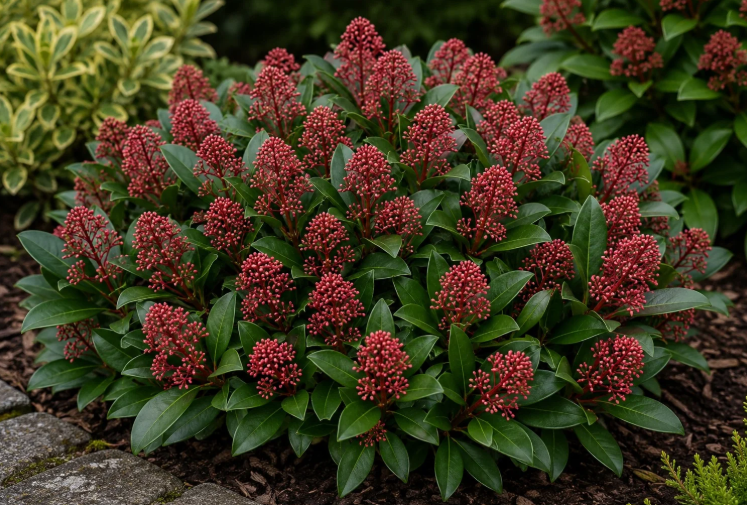
Evergreen shrubs do most of the structural work in a landscape, holding a garden’s shape and color through the exact months when everything deciduous has gone bare. That year-round presence makes the category genuinely broad, spanning needled conifers built for cold climates, broadleaf evergreens suited to milder, wetter regions, and a handful of desert and Mediterranean shrubs that stay green through drought rather than winter.
Climate does most of the sorting here more than any other single factor. A needled conifer like arborvitae or yew handles genuine winter cold that would kill most broadleaf evergreens outright, while a broadleaf evergreen like camellia or gardenia wants the mild, humid conditions of the coastal South and struggles badly anywhere with a real hard freeze. Matching an evergreen shrub to the actual regional climate matters more than picking based on appearance alone.
The Missouri Botanical Garden’s plant finder is a useful tool for checking a specific species’ actual hardiness zone and light requirements before committing a permanent spot to it. What follows covers 103 evergreen shrubs for outdoor planting, spanning conifers, broadleaf evergreens, and a handful of drought-adapted options.
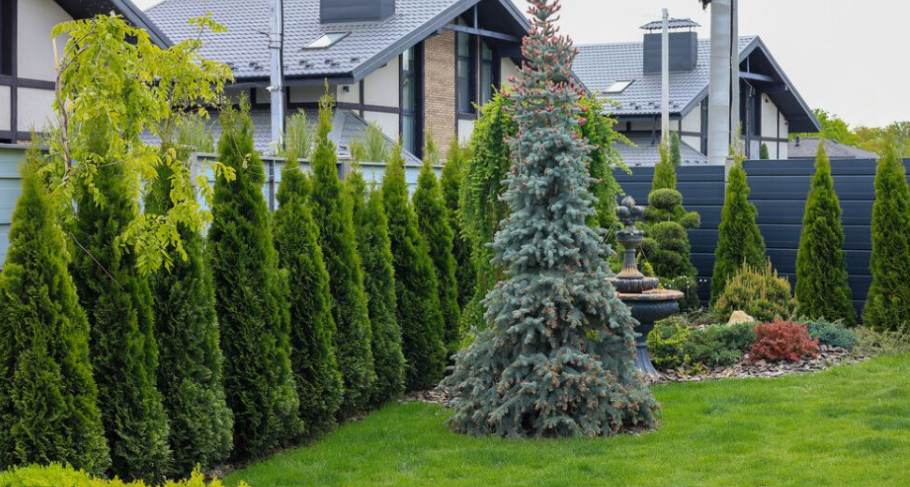
Boxwood
Boxwood forms a dense, naturally rounded evergreen shrub prized for centuries in formal garden design, holding its fine-textured foliage through winter in most climates. Its slow, predictable growth makes it easy to shape into a hedge or topiary form.
It tolerates a range of soil types and light conditions, needing only occasional watering once established.
Littleleaf Boxwood
Littleleaf boxwood, a distinct species from common boxwood, produces finer, smaller evergreen foliage on a shrub that holds its shape with minimal shearing. Its refined texture suits a smaller formal garden particularly well.
It shares common boxwood’s general care needs, tolerating a range of soil types and requiring little more than occasional watering.
Korean Boxwood
Korean boxwood offers notably better cold tolerance than common boxwood, extending reliable evergreen structure into colder climates where other boxwood types can suffer winter damage. Its foliage takes on a bronze tint in cold weather before greening back up in spring.
It tolerates a range of soil conditions and needs minimal pruning to maintain a neat, rounded form.
Also Read: Low-Maintenance Shrubs
Japanese Holly
Japanese holly produces small, boxwood-like evergreen leaves on a dense shrub that’s become a popular boxwood substitute in regions where boxwood blight is a concern. Its fine texture works well in both a formal hedge and a looser border.
It tolerates a range of soil and light conditions, needing minimal fertilizer once established.
Inkberry Holly
Inkberry holly, a North American native evergreen holly, produces small black berries and glossy foliage on a shrub that tolerates wet soil better than most other hollies. Its naturally rounded form needs little corrective pruning.
It handles both sun and partial shade, adapting to soil moisture levels that would stress less flexible evergreen shrubs.
Dwarf Yaupon Holly
Dwarf yaupon holly is a compact cultivar of standard yaupon holly, staying naturally low and dense without the pruning a full-sized yaupon eventually needs. Its fine evergreen foliage provides tidy year-round structure.
It tolerates poor, sandy soil and drought considerably better than many other evergreen holly species.
Yaupon Holly
Yaupon holly produces small red berries and fine evergreen foliage on a native shrub well suited to a Southern landscape. Its dense growth makes it a popular hedging and screening choice.
It tolerates poor, sandy soil and genuine drought better than most other holly species available.
American Holly
American holly produces classic spiny, glossy evergreen leaves and bright red winter berries on a substantial native tree-form shrub. Its traditional holiday association comes directly from its wild native range across the eastern United States.
It requires a male pollinator nearby for reliable berry production and tolerates a range of soil conditions once established.
English Holly
English holly shares American holly’s classic spiny, glossy foliage in an even richer, darker green, historically the source of traditional holiday holly wreaths. It’s become naturalized and occasionally invasive in parts of the Pacific Northwest.
It tolerates a range of soil types and needs a male pollinator nearby for berry production, similar to its American relative.
Also Read: Drought Tolerant Shrubs For Landscaping
Chinese Holly
Chinese holly produces distinctively rectangular, spiny leaves and abundant red berries on a dense, adaptable evergreen shrub. Several compact cultivars have made it a popular foundation planting choice.
It tolerates heat and drought better than many other holly species, thriving in a warmer regional climate.
Foster Holly
Foster holly, a hybrid between American and Chinese holly, produces fine, narrow, spiny leaves and abundant red berries on a naturally pyramidal shrub. Its refined texture combines traits from both parent species.
It tolerates a range of soil conditions and needs minimal pruning to maintain its naturally attractive pyramidal form.
Nellie Stevens Holly
Nellie Stevens holly produces glossy, spiny evergreen leaves and abundant red berries on a fast-growing, dense shrub popular for privacy screening. Unlike many hollies, individual plants can produce berries without a separate male pollinator.
It tolerates a wide range of soil and light conditions, growing quickly enough to establish a mature screen faster than many other evergreen options.
Burford Holly
Burford holly produces large, glossy, nearly spineless leaves and abundant red berries on a substantial, self-fertile evergreen shrub. Its considerable mature size makes it well suited to a large screening hedge.
It tolerates heat, drought, and poor soil reasonably well, needing minimal ongoing care once established.
Blue Princess Holly
Blue princess holly produces blue-green evergreen foliage and bright red berries on a compact, cold-hardy holly requiring a Blue Prince male pollinator nearby. Its distinctive foliage color sets it apart from more traditional dark-green hollies.
It tolerates a range of soil conditions and handles considerably more cold than many other holly types.
Compacta Holly
Compacta holly is a naturally dwarf inkberry holly cultivar, staying dense and rounded without the legginess that can develop in the straight species over time. Its fine texture suits a smaller foundation planting.
It shares inkberry holly’s tolerance for wet soil, adapting well to both sun and partial shade.
Dwarf Alberta Spruce
Dwarf Alberta spruce forms a naturally dense, perfectly conical evergreen shrub requiring no shearing to maintain its classic form. Its fine, soft needles provide a formal presence in a foundation planting.
It tolerates full sun to partial shade, growing slowly enough that it rarely outgrows its intended space.
Dwarf Blue Spruce
Dwarf blue spruce produces striking, silvery-blue needles on a compact, naturally rounded evergreen shrub suited to a smaller landscape. Its distinctive color provides genuine contrast against greener plants nearby.
It tolerates full sun and a range of soil types, needing minimal pruning to maintain its naturally attractive form.
Bird’s Nest Spruce
Bird’s nest spruce forms a distinctive, flattened, nest-shaped mound of dense evergreen needles, among the more architecturally unusual dwarf conifers available. Its low, spreading habit fits well into a rock garden or foundation bed.
It tolerates full sun to partial shade, growing extremely slowly and rarely needing any pruning at all.
Dwarf Mugo Pine
Dwarf mugo pine forms a low, naturally rounded evergreen mound requiring essentially no pruning to maintain its compact form. Its dense needles provide year-round texture in a foundation planting.
It tolerates a range of soil conditions and full sun, needing no fertilizer once established.
Japanese Yew
Japanese yew produces dense, dark green needles on a genuinely shade-tolerant evergreen shrub, one of the few conifers that performs well without full sun. Its considerable longevity has made it a traditional foundation and hedge plant.
It tolerates significant shade and a range of soil types, responding well to shearing if a formal hedge shape is wanted.
English Yew
English yew shares Japanese yew’s shade tolerance and dark, dense foliage, historically used for elaborate topiary work given how well it responds to shaping. Every part of the plant except the flesh of its red berry is toxic if ingested.
It tolerates shade and a range of soil conditions, growing slowly enough to make precise topiary shaping genuinely practical.
Hicks Yew
Hicks yew produces a naturally narrow, upright form that requires less corrective pruning than more spreading yew varieties to maintain a tidy silhouette. Its columnar shape makes it useful for a tight foundation planting.
It tolerates shade and a range of soil types, sharing the toxicity concerns common to the broader yew genus.
Emerald Green Arborvitae
Emerald green arborvitae produces a naturally narrow, columnar form ideal for a privacy screen without the width some other arborvitae varieties eventually reach. Its bright green foliage holds its color well through winter.
It tolerates a range of soil conditions and full sun to light shade, requiring minimal shearing to maintain its natural columnar shape.
Globe Arborvitae
Globe arborvitae forms a naturally rounded evergreen shrub requiring minimal shearing to maintain its tidy, ball-like shape. Its dense, scale-like foliage provides year-round structure in a foundation planting.
It tolerates a range of soil conditions and full sun to light shade, needing very little beyond occasional watering during dry stretches.
American Arborvitae
American arborvitae, the native species behind many popular arborvitae cultivars, forms a substantial, dense evergreen screen well suited to a larger property. Its considerable mature size makes it a genuine long-term privacy solution.
It tolerates a range of soil conditions, including consistently moist ground, better than some of its more refined cultivated descendants.
Also Read: Shrubs With Red Berries
Hinoki Cypress
Hinoki cypress produces fan-shaped, glossy evergreen foliage on a shrub with a distinctly layered, sculptural growth habit. Its refined texture has made it a staple of Japanese garden design.
It tolerates partial shade and prefers consistently moist, well-drained soil, struggling in genuinely dry conditions.
Dwarf Hinoki Cypress
Dwarf Hinoki cypress shares the species’ distinctive fan-shaped, layered foliage on a considerably more compact, slow-growing form suited to a smaller garden bed. Its sculptural shape provides genuine focal-point value.
It shares standard Hinoki cypress’s preference for moist, well-drained soil and partial shade.
Golden Threadleaf Cypress
Golden threadleaf cypress produces cascading, thread-like golden foliage on a distinctly weeping evergreen shrub, among the more visually striking conifers available. Its color holds best with adequate sun exposure.
It tolerates full sun to partial shade and prefers consistently moist, well-drained soil.
Blue Star Juniper
Blue star juniper forms a low, mounding shrub with striking silvery-blue, star-shaped foliage clusters, among the more compact and colorful juniper cultivars available. Its dense growth habit provides genuine textural interest.
It tolerates poor soil and drought well, needing full sun to hold its best color.
Blue Rug Juniper
Blue rug juniper forms an extremely low, flat, spreading mat of silvery-blue foliage, among the most ground-hugging juniper cultivars available for erosion control or a rock garden. Its trailing habit works well cascading over a wall.
It tolerates poor, dry soil exceptionally well, thriving in exactly the difficult conditions many other groundcovers struggle with.
Shore Juniper
Shore juniper forms a low, spreading mat tolerating salt spray and sandy soil better than most other juniper cultivars, making it a genuine coastal landscaping option. Its fine texture provides dense, low ground coverage.
It tolerates full sun and poor, sandy soil, thriving in exactly the harsh coastal conditions it’s named for.
Chinese Juniper
Chinese juniper, in its many cultivated forms, ranges from low groundcovers to substantial upright shrubs, offering genuine versatility across a huge range of landscape uses. Its foliage varies from soft and feathery to sharp and scale-like depending on the specific cultivar.
It tolerates poor soil and drought well, needing full sun to perform at its best across nearly any cultivar.
Common Juniper
Common juniper, a genuinely widespread native species, tolerates some of the harshest, most exposed growing conditions of any evergreen shrub, found naturally across a huge range of North American and Eurasian habitat. Its blue-green berries are the source of gin’s distinctive flavor.
It tolerates poor, rocky soil and considerable cold, thriving in exposed conditions that would challenge less hardy shrubs.
PJM Rhododendron
PJM rhododendron is a compact, cold-hardy rhododendron hybrid producing bright lavender-pink spring flowers on evergreen foliage that takes on a plum color in winter. Its smaller mature size reduces the need for corrective pruning.
It tolerates more sun and cold than many other rhododendron types, needing acidic, well-drained soil to thrive.
Catawba Rhododendron
Catawba rhododendron produces large, showy purple-pink flower clusters on a substantial native evergreen shrub well suited to the acidic soil of the Appalachian region. Its considerable mature size makes it a genuine specimen plant.
It tolerates partial shade and requires acidic, well-drained soil, struggling in alkaline conditions.
Encore Azalea
Encore azalea is a reblooming evergreen azalea series flowering in spring, summer, and fall rather than just once, extending seasonal interest considerably. Its repeated bloom cycle has made it a popular choice beyond a standard azalea’s single spring display.
It tolerates partial shade and acidic, well-drained soil, needing an occasional acidic feeding to maintain vigorous growth.
Southern Indica Azalea
Southern Indica azalea produces large, vivid spring flowers on a substantial evergreen shrub well suited to the mild, humid climate of the Deep South. Its considerable mature size makes it a popular foundation and specimen plant across the region.
It tolerates partial shade and requires the same acidic, well-drained soil as other azalea types to thrive.
Mountain Laurel
Mountain laurel produces intricate, cup-shaped spring flowers on a genuinely low-maintenance native evergreen shrub once sited in acidic, well-drained soil. Its glossy foliage provides year-round structure.
It tolerates partial shade well, requiring minimal pruning once established in the right spot.
Pieris
Pieris, also called andromeda, produces cascading clusters of small, bell-shaped spring flowers alongside glossy evergreen foliage that often emerges in vivid red new growth. Its care needs closely match mountain laurel’s.
It tolerates partial shade and acidic soil, needing minimal ongoing care once properly sited.
Leucothoe
Leucothoe produces arching stems of small, bell-shaped white flowers and glossy evergreen foliage that often takes on a bronze or purple tint in cold weather. Its low, cascading form works well in a shaded foundation planting.
It tolerates shade and acidic soil well, needing minimal pruning beyond removing occasional damaged stems.
Also Read: Shrubs That Are Safe to Grow Near Buildings
Sweet Box
Sweet box produces small, intensely fragrant white flowers in late winter on an evergreen shrub well suited to deep shade where few other flowering plants perform at all. Its glossy, dark green foliage stays attractive year-round.
It tolerates dry shade better than almost any other flowering evergreen, making it a genuine solution for a difficult, low-light spot.
Skip Laurel
Skip laurel, a compact cultivar of cherry laurel, produces glossy, dark evergreen foliage on a shrub considerably more resistant to shot hole disease than the standard species. Its dense growth makes it a popular privacy screening choice.
It tolerates partial shade and a range of soil conditions, requiring minimal pruning to maintain a full, dense form.
English Laurel
English laurel, also called cherry laurel, produces large, glossy evergreen leaves on a fast-growing shrub commonly used for privacy hedging. Its rapid growth quickly establishes a substantial screen.
It tolerates partial shade and a range of soil types, though it’s become invasive in parts of the Pacific Northwest.
Otto Luyken Laurel
Otto Luyken laurel is a compact cherry laurel cultivar staying considerably lower and more spreading than the standard species, producing the same glossy evergreen foliage and fragrant white spring flower spikes. Its manageable size suits a smaller foundation planting.
It tolerates partial shade and a range of soil conditions, needing minimal pruning to maintain its naturally low, spreading form.
Also Read: Perennial Shrubs With Purple Flowers
Aucuba
Aucuba, also called Japanese laurel or gold dust plant, produces bold, glossy evergreen leaves often speckled with gold variegation, tolerating deep shade better than nearly any other broadleaf evergreen. Its dramatic foliage brightens a dark corner considerably.
It tolerates heavy shade and poor soil, needing minimal care once established in the right spot.
Japanese Euonymus
Japanese euonymus produces dense, glossy evergreen foliage, often variegated in cream or gold, on a versatile shrub that tolerates shearing into a formal hedge shape. Its adaptability has made it a popular foundation planting.
It tolerates a range of soil and light conditions, though it can be susceptible to scale insects in some regions.
Wintercreeper Euonymus
Wintercreeper euonymus forms a low, spreading, evergreen groundcover or climbing vine depending on how it’s trained, tolerating a wide range of soil and light conditions. Its dense growth makes it a versatile problem-solver for a difficult spot.
It tolerates shade and poor soil well, though it can become aggressive and difficult to contain if left unmanaged.
Japanese Privet
Japanese privet produces small, glossy evergreen leaves on a dense shrub commonly sheared into a formal hedge. Its fast growth quickly establishes a substantial screen or border.
It tolerates a range of soil types and light conditions, requiring regular shearing if a tight formal shape is wanted.
Escallonia
Escallonia produces glossy evergreen leaves and clusters of small pink or red flowers on a shrub well suited to a mild coastal climate. Its dense growth makes it a popular hedging choice in regions where it thrives.
It tolerates salt spray and coastal conditions well, needing a genuinely mild climate to perform at its best.
Laurustinus
Laurustinus, botanically Viburnum tinus, produces clusters of pink-tinged white winter flowers on a dense evergreen shrub that provides rare cold-season color. Its dark blue-black berries follow the winter bloom.
It tolerates a range of soil conditions and partial shade, needing minimal pruning to maintain an attractive natural form.
Viburnum davidii
Viburnum davidii produces bold, deeply veined evergreen leaves and small white flowers on a low, mounding shrub with a distinctly architectural presence. Its metallic blue berries provide additional seasonal interest.
It tolerates partial shade and a range of soil types, needing minimal pruning to maintain its naturally neat, rounded form.
Pittosporum
Pittosporum produces dense, glossy evergreen foliage on a versatile shrub popular throughout mild coastal and Mediterranean climates. Its small, fragrant flowers add a subtle citrus scent in spring.
It tolerates a range of soil conditions and salt exposure, needing a genuinely mild climate to survive winter outdoors.
Also Read: Fastest Growing Evergreen Shrubs For Landscaping
Podocarpus
Podocarpus produces fine, yew-like evergreen needles on a versatile shrub commonly sheared into a formal hedge or grown as a large screening plant. Its adaptable growth habit suits a range of landscape uses.
It tolerates a range of soil and light conditions, needing a mild climate free of hard, prolonged freezes.
Anise Shrub
Anise shrub, botanically Illicium, produces glossy evergreen leaves that release a distinctive licorice scent when crushed, alongside unusual star-shaped spring flowers. Its shade tolerance makes it a useful choice for a wooded understory planting.
It tolerates significant shade and consistently moist soil, thriving in conditions many other evergreen shrubs find too dark or damp.
Distylium
Distylium produces fine, glossy evergreen foliage on a genuinely tough, disease-resistant shrub increasingly used as a low-maintenance boxwood alternative. Its small, inconspicuous flowers focus attention on the foliage itself.
It tolerates a wide range of soil and light conditions, showing notable resistance to the pests and diseases that trouble some other broadleaf evergreens.
Leyland Cypress
Leyland cypress produces dense, feathery evergreen foliage on one of the fastest-growing large screening shrubs available, capable of establishing a substantial privacy hedge within just a few years. Its considerable mature size makes it best suited to a larger property.
It tolerates a range of soil conditions, though its rapid growth requires more frequent shearing than slower-growing hedge alternatives.
Bay Laurel
Bay laurel produces glossy, aromatic evergreen leaves harvested and dried for cooking, growing into a substantial shrub or small tree over time in a frost-free or lightly frost-prone climate. A single well-tended plant can supply a household’s bay leaves indefinitely.
It tolerates full sun to light shade and soil that drains well, benefiting from container culture in a colder climate.
Rosemary
Rosemary forms a woody, aromatic evergreen shrub tolerating genuine drought once established, thriving in poor, sandy, fast-draining soil. Its needle-like leaves and small blue flowers make it as ornamental as it is culinary.
It needs full sun and excellent drainage, since wet soil threatens it far more than dry heat ever does.
English Lavender
English lavender combines fragrant purple flower spikes with silvery, evergreen, drought-tolerant foliage, handling more cold than its French and Spanish relatives. Its compact form suits both a formal border and a xeriscape bed.
It demands sharp drainage, since a wet winter poses more risk to its roots than summer drought ever does.
Manzanita
Manzanita produces smooth, reddish bark and small, leathery evergreen leaves on a shrub genuinely adapted to California’s dry, fire-prone chaparral. Its small, urn-shaped flowers provide an early nectar source for native pollinators.
It wants lean, well-drained soil, since overwatering an established manzanita causes more decline than drought ever does.
Silverberry
Silverberry, also called silverthorn, produces small, fragrant fall flowers and silvery, evergreen, scaled foliage on a genuinely drought-tolerant shrub. Its dense, spiny growth has made it a popular privacy hedge.
It tolerates poor soil and drought well, though its spread into surrounding natural areas is worth considering before planting extensively.
Agarito
Agarito, also called algerita, produces spiny, holly-like evergreen leaves and fragrant yellow spring flowers on a tough desert shrub native to the Texas Hill Country and surrounding region. Its tart red berries are traditionally used for jelly.
It tolerates poor, rocky soil and considerable drought, thriving in exactly the harsh conditions typical of its native range.
Skimmia
Skimmia produces glossy evergreen leaves and fragrant flower clusters followed by bright red berries, tolerating shade better than most other broadleaf evergreens. Its compact size suits a shaded foundation planting.
It requires a male and female plant nearby for reliable berry production and tolerates acidic, well-drained soil best.
Also Read: Different Types of Deciduous Shrubs
Daphne
Daphne produces intensely fragrant, often pink or white flowers on a compact evergreen shrub, with a scent considered among the most captivating of any garden plant. Its relatively modest size suits a smaller garden bed.
It demands excellent drainage and can be genuinely temperamental about being disturbed once planted, so choose its spot carefully from the start.
Nandina
Nandina, also called heavenly bamboo, provides evergreen structure and vivid red winter berries with minimal pruning required, tolerating a wide range of soil and light conditions. Its fine, layered foliage turns red in cooler weather.
It tolerates considerable neglect once established, needing only occasional shaping for a more formal appearance.
Yucca
Yucca produces stiff, sword-like evergreen leaves and a tall flower spike of white or cream blooms, needing essentially no ongoing maintenance once established. Its architectural form provides year-round structure.
It tolerates extended drought and poor soil, asking for nothing beyond removing an occasional spent flower stalk.
Dwarf Palmetto
Dwarf palmetto, a genuinely cold-hardy native palm, produces fan-shaped evergreen fronds on a low, often trunkless form well suited to a Southern woodland understory. Its considerable cold tolerance for a palm sets it apart from more tender tropical species.
It tolerates shade and a range of soil moisture conditions, adapting well to both a dry slope and an occasionally wet low spot.
Fringe Flower
Fringe flower produces distinctive, spidery pink or white flowers on a genuinely low-maintenance evergreen shrub, with several cultivars offering rich burgundy foliage. Its unusual bloom shape sets it apart from more conventional flowering shrubs.
It wants full sun to partial shade, tolerating considerably drier conditions than its lush appearance suggests.
Camellia Japonica
Camellia japonica produces elegant, rose-like flowers in late winter through early spring on a substantial evergreen shrub once established in acidic, well-drained soil. Its glossy foliage provides handsome year-round structure.
It requires partial shade and consistently moist, acidic soil, struggling in full sun or alkaline conditions.
Camellia Sasanqua
Camellia sasanqua blooms earlier than camellia japonica, typically in fall, producing smaller but more abundant flowers on a genuinely sun-tolerant evergreen shrub. Its earlier bloom timing extends the camellia season considerably.
It tolerates more sun than camellia japonica, though it still wants the same acidic, well-drained soil to thrive.
Also Read: Shrubs With White Flowers
Gardenia
Gardenia produces intensely fragrant white flowers on a genuinely demanding evergreen shrub, requiring acidic soil, consistent moisture, and protection from cold to perform well. Its glossy foliage and legendary scent have kept it a garden favorite despite the fuss.
It requires a mild climate and acidic, well-drained soil, struggling considerably in alkaline conditions or a hard freeze.
Oregon Grape
Oregon grape produces bright yellow spring flowers and dark blue, grape-like berries on a genuinely low-maintenance native evergreen shrub. Its spiny, holly-like leaves provide texture and a degree of security value.
It tolerates shade and poor soil well, needing minimal pruning once established in the right spot.
Leatherleaf Mahonia
Leatherleaf mahonia produces spiky clusters of yellow winter flowers and dark blue berries on a genuinely low-maintenance evergreen shrub tolerating deep shade better than most flowering alternatives. Its bold, architectural foliage provides year-round structure.
It tolerates poor soil and considerable neglect, needing minimal pruning beyond removing an occasional damaged cane.
Indian Hawthorn
Indian hawthorn produces clusters of pink or white spring flowers and dark blue berries on a compact evergreen shrub well suited to a mild coastal or Mediterranean climate. Its naturally rounded form needs little corrective pruning.
It wants full sun to partial shade and tolerates poor soil, needing only occasional deep watering once established.
Also Read: Shrubs That Grow Well Under Maple Trees
Bottlebrush
Bottlebrush produces distinctive red, brush-shaped flower spikes on a genuinely drought-tolerant evergreen shrub well suited to a Mediterranean or mild coastal climate. Its blooms are a reliable hummingbird attractant through much of the year.
It wants full sun and tolerates poor soil, needing only occasional deep watering once established.
Abelia
Abelia produces small, fragrant, tubular flowers over a genuinely long bloom period on an evergreen or semi-evergreen shrub requiring minimal pruning to stay attractive. Its glossy foliage and reliable flowering have made it a popular low-fuss choice.
It tolerates a range of soil types and light conditions, needing only occasional deep watering once established.
Photinia
Photinia produces bright red new growth maturing to glossy evergreen foliage, forming a dense, fast-growing hedge. Its rapid growth quickly fills a bare screening space.
It tolerates a range of soil types and full sun, needing only occasional deep watering during genuinely extended dry spells.
Pyracantha
Pyracantha, also called firethorn, produces clusters of bright orange or red berries against dense, thorny, evergreen foliage. Its thorns provide a practical security benefit alongside its ornamental value.
It tolerates poor soil and considerable neglect, needing full sun for the best berry production.
Also Read: Shrubs that Like Waterlogged (Wet) Soil
Wax Myrtle
Wax myrtle produces aromatic, evergreen to semi-evergreen foliage and small waxy berries on a genuinely tough native shrub tolerating poor, sandy soil and coastal salt exposure. Its dense growth makes it a useful privacy screen.
It tolerates a wide range of soil and moisture conditions, adapting well to both dry and occasionally wet ground.
Cotoneaster
Cotoneaster produces small white or pink spring flowers followed by red berries on a genuinely tough, often semi-evergreen shrub tolerating poor soil and neglect. Its arching, spreading branches work well cascading over a wall or slope.
It tolerates drought and poor soil with real ease, needing minimal pruning to maintain an attractive form.
California Lilac
California lilac, an evergreen shrub in many of its cultivated forms, produces clouds of small blue or purple flowers genuinely native to California’s chaparral hillsides. Its nitrogen-fixing roots help it thrive in poor, rocky soil.
It demands excellent drainage and resents regular summer watering once established.
Texas Sage
Texas sage, also called cenizo, produces silvery evergreen foliage and a flush of purple flowers triggered by humidity ahead of rain, earning it the nickname barometer bush. It’s a genuinely tough choice for hot, dry Southwestern landscaping.
It wants full sun and excellent drainage, tolerating extreme heat with minimal ongoing care.
Agave
Agave, technically a succulent rather than a true woody shrub, is commonly grouped with evergreen landscape shrubs given its considerable structural presence. Its thick, fleshy leaves store water efficiently through dry periods.
It wants full sun and extremely well-drained soil, tolerating drought about as well as any plant used in Southwestern landscaping.
Osmanthus
Osmanthus, also called tea olive, produces small, intensely fragrant flowers that perfume an entire garden area, growing on a dense, glossy evergreen shrub. Its scent, often compared to apricot, is a genuine seasonal highlight.
It tolerates partial shade and a range of soil types, needing minimal pruning to maintain an attractive natural form.
Also Read: Shrubs That Can Be Shaped Into Trees
Sweet Viburnum
Sweet viburnum produces large, glossy evergreen leaves and clusters of fragrant white spring flowers on a substantial shrub often trained into a small tree or dense privacy screen. Its fast growth quickly establishes a tall, effective hedge.
It tolerates a range of soil conditions and full sun to partial shade, needing only occasional shearing to control its considerable mature size.
Chindo Viburnum
Chindo viburnum, a sweet viburnum selection, produces particularly glossy, deep green foliage and a naturally denser growth habit than the straight species. Its refined appearance has made it a popular upgrade for a formal privacy hedge.
It shares sweet viburnum’s tolerance for a range of soil and light conditions, needing minimal ongoing care once established.
Spring Bouquet Viburnum
Spring bouquet viburnum produces small, fragrant pink-tinged white flower clusters on a compact, dense evergreen shrub well suited to a smaller foundation planting. Its tidy, naturally rounded form needs little corrective pruning.
It tolerates a range of soil conditions and partial shade, adapting well to both a formal hedge and a looser mixed border.
Green Giant Arborvitae
Green Giant arborvitae grows remarkably fast into a substantial, dense evergreen screen, among the most vigorous privacy hedge options available for a larger property. Its resistance to the bagworm and deer pressure that trouble some other arborvitae types has made it increasingly popular.
It tolerates a wide range of soil conditions and full sun to partial shade, requiring minimal shearing thanks to its naturally tidy, pyramidal form.
Techny Arborvitae
Techny arborvitae forms a dense, cold-hardy pyramidal screen holding its rich green color through winter better than some other arborvitae cultivars, which can bronze in cold weather. Its considerable cold tolerance suits a genuinely harsh northern climate.
It tolerates a range of soil conditions and full sun to partial shade, needing minimal pruning to maintain its naturally dense pyramidal shape.
Dwarf Norway Spruce
Dwarf Norway spruce forms a compact, irregularly mounded evergreen shrub, considerably slower-growing and smaller than the towering standard species. Its dense branching provides genuine textural interest in a smaller garden bed.
It tolerates full sun to partial shade and a range of soil types, growing slowly enough to rarely need any corrective pruning.
Colorado Blue Spruce
Colorado blue spruce produces striking silvery-blue needles on a substantial evergreen shrub or small tree, among the most recognizable conifers in American landscaping. Its considerable eventual size makes it best suited to a larger property.
It tolerates full sun and a range of soil types, handling genuine cold better than most other ornamental evergreens.
Also Read: Shrubs That Like Alkaline Soil
Fat Albert Blue Spruce
Fat Albert is a Colorado blue spruce cultivar bred for a more compact, densely conical form than the straight species, retaining the same striking silvery-blue needle color. Its more manageable size suits a mid-sized landscape better than the full species would.
It tolerates full sun and a range of soil conditions, sharing its parent species’ considerable cold hardiness.
Weeping Norway Spruce
Weeping Norway spruce produces long, cascading branches that drape dramatically toward the ground, creating a genuinely sculptural specimen unlike any upright conifer. Its exact mature form varies considerably depending on how it’s staked and trained while young.
It tolerates full sun to partial shade and a range of soil types, needing minimal pruning beyond removing any awkwardly crossing branches.
Compact Japanese Holly
Compact Japanese holly is a naturally dense, slow-growing cultivar of standard Japanese holly, staying tidy and rounded with even less pruning than the already low-maintenance species. Its fine, boxwood-like texture suits a small formal hedge.
It tolerates a range of soil and light conditions, needing minimal fertilizer once its root system is established.
Soft-Touch Holly
Soft-Touch holly is a compact Japanese holly cultivar with distinctly softer, less prickly foliage than most other hollies, making it a comfortable choice near a walkway or play area. Its naturally rounded, mounding form needs little shaping.
It tolerates a range of soil conditions and partial shade, sharing Japanese holly’s generally low care requirements.
Sky Pencil Holly
Sky Pencil holly grows in a genuinely narrow, columnar form reaching considerable height on a surprisingly slender footprint, making it useful for a tight vertical accent where width is limited. Its fine, glossy foliage provides year-round structure.
It tolerates partial shade and a range of soil types, occasionally needing a light interior pruning to prevent splaying under snow or heavy rain.
Arizona Cypress
Arizona cypress produces fine, blue-green to silvery evergreen foliage on a fast-growing conifer well adapted to hot, dry Southwestern conditions unlike many other cypress species. Its considerable drought tolerance sets it apart from moisture-loving relatives like Hinoki cypress.
It tolerates full sun and poor, rocky soil, needing minimal supplemental water once established.
Blue Ice Arizona Cypress
Blue Ice is an Arizona cypress cultivar selected for especially vivid, icy-blue foliage color, retaining the species’ considerable drought tolerance in a more ornamentally striking form. Its color holds up well even through a hot, dry summer.
It tolerates full sun and poor soil, sharing standard Arizona cypress’s low water needs once established.
Also Read: Shrubs that Can Be Planted in Winter
Deodar Cedar
Deodar cedar produces gracefully drooping branches of soft, blue-green evergreen needles on a substantial conifer, distinguished from stiffer cedar relatives by its notably softer overall silhouette. Its considerable eventual size suits a large open landscape.
It tolerates full sun and a range of soil types, needing minimal pruning to maintain its naturally graceful weeping form.
Dwarf Deodar Cedar
Dwarf deodar cedar shares the species’ soft, drooping blue-green foliage on a considerably more compact, slow-growing form suited to a smaller garden. Its graceful texture provides the same ornamental appeal on a manageable scale.
It tolerates full sun and a range of soil conditions, growing slowly enough to rarely outgrow its intended space.
Blue Atlas Cedar
Blue Atlas cedar produces striking silvery-blue evergreen needles on a substantial, pyramidal conifer valued as a genuine specimen tree in a larger landscape. Its considerable mature size and dramatic color make it a real focal point.
It tolerates full sun and well-drained soil, needing minimal pruning to maintain its naturally handsome pyramidal form.
Weeping Blue Atlas Cedar
Weeping blue Atlas cedar produces the same striking silvery-blue needles as the standard species on dramatically cascading, sculptural branches, trained while young into a genuinely unique specimen form. Its exact shape varies considerably based on how it’s staked during training.
It tolerates full sun and well-drained soil, needing only occasional corrective pruning to maintain its trained cascading form.
Little Gem Southern Magnolia
Little Gem is a compact Southern magnolia cultivar producing the species’ classic glossy evergreen leaves and large, fragrant white flowers on a considerably smaller, more manageable tree than the standard species. Its reduced mature size fits into a residential landscape the full-sized species would eventually overwhelm.
It tolerates full sun to partial shade and a range of soil types, needing minimal pruning to maintain its naturally dense, pyramidal form.
Also Read: Shrubs That Grow Well Under Pine Trees
Conclusion
Evergreen shrubs are valuable additions to outdoor landscapes because they provide foliage and structure throughout the year. They come in a wide range of sizes, shapes, textures, and colors, making them suitable for borders, hedges, foundation plantings, privacy screens, and mixed garden beds.
Choosing the right evergreen shrub depends on the local climate, soil, sunlight, available space, and intended landscape use. Some varieties tolerate drought or shade, while others prefer moist, well-drained soil and full sun. Considering these requirements before planting can help shrubs establish successfully.
With proper selection and basic care, evergreen shrubs can provide long-lasting interest and structure in outdoor spaces. Regular watering during establishment, appropriate pruning, and suitable growing conditions can help maintain healthy foliage and keep these shrubs attractive throughout the year.