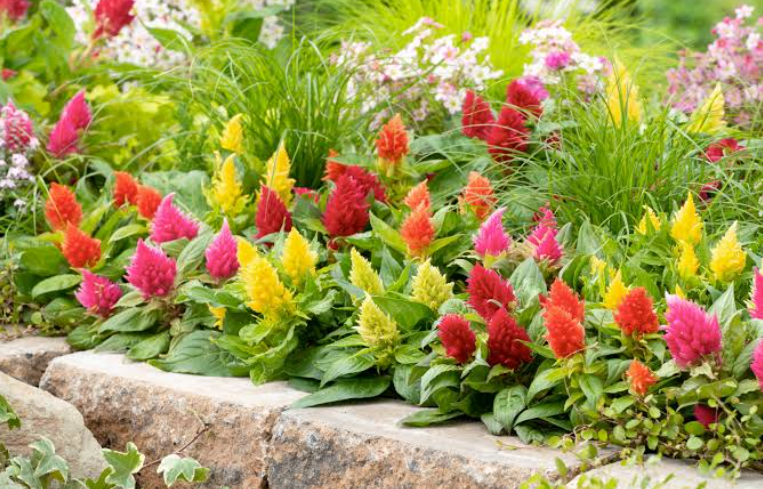
No flower is completely bee-proof, and it’s worth saying that honestly before recommending a single one. Bees are opportunistic foragers, and a hungry bee will occasionally investigate almost anything blooming nearby. What actually varies is how attractive a flower is relative to its neighbors, and a handful of genuine, well-documented traits reliably push a flower toward the bottom of a bee’s preference list.
The biggest factor is color. Bees see blue, purple, yellow, and ultraviolet patterns extremely well, which is exactly why those colors dominate typical pollinator gardens, but they perceive red as a dull, low-contrast color closer to black. A vivid red flower that looks spectacular to a human eye often looks comparatively unremarkable to a bee, which is part of why so many red, tubular flowers ended up specializing in hummingbird pollination instead. Flower shape matters just as much: a long, narrow tube favors a hummingbird’s bill or a moth’s long proboscis over a bee’s considerably shorter tongue.
Modern plant breeding adds a third, entirely artificial factor to the mix. Many popular double-flowered varieties, with their extra rows of petals, have been bred in a way that reduces or eliminates the pollen and nectar a bee would normally be after, sometimes replacing reproductive structures with petals entirely. The Xerces Society’s pollinator plant guidance is a useful resource for understanding which traits actually drive pollinator attraction if the goal is either encouraging or discouraging bee activity in a specific bed. What follows covers 40 flowers that don’t attract bees, organized by which of these mechanisms is actually responsible.
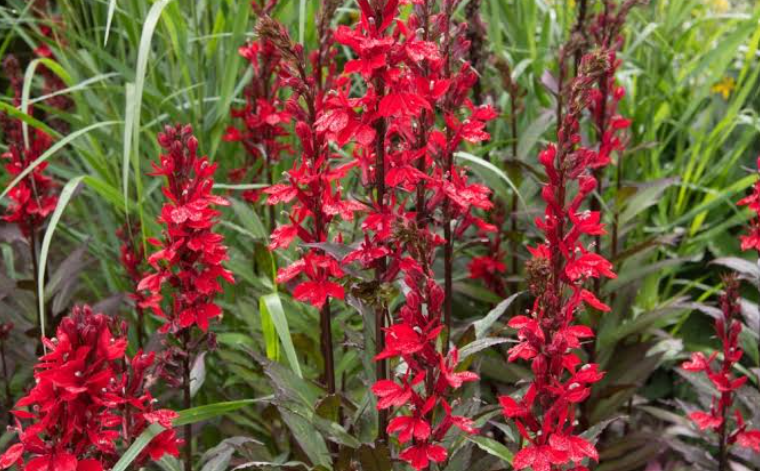
Red Cardinal Flower
Red cardinal flower produces vivid scarlet, tubular blooms specifically adapted to hummingbird pollination, a color and shape combination that makes it genuinely unappealing to most bees. Its narrow floral tube also physically excludes a typical bee’s shorter tongue from reaching any nectar inside.
It thrives in consistently moist soil and partial shade, often planted along a stream bank or pond edge where hummingbirds reliably visit.
Red Salvia
Red salvia produces tall spikes of tubular scarlet flowers bred and selected specifically for their hummingbird appeal, a color bees perceive poorly against green foliage. Its narrow flower shape further limits bee access even when one does investigate.
It thrives in full sun and average garden soil, blooming continuously from early summer through the first frost.
Cypress Vine
Cypress vine produces small, star-shaped red tubular flowers on a delicate, fern-like climbing vine, a genuine hummingbird favorite given its color and narrow floral tube. Bees show comparatively little interest in its blooms.
It grows quickly from seed each season, climbing a trellis or fence with fine, lacy foliage that provides ornamental value beyond the flowers themselves.
Fuchsia
Fuchsia produces pendant, tubular flowers in red, pink, and purple that hang downward in a way that makes them physically awkward for a bee to approach and forage from effectively. Hummingbirds, by contrast, hover beneath the blooms with ease.
It prefers partial shade and consistently moist soil, thriving in a hanging basket or shaded container where its cascading form can be fully appreciated.
Red Impatiens
Red impatiens produces flat-faced but distinctly red flowers that offer little visual contrast against green foliage from a bee’s perspective, reducing their overall attractiveness compared to blue or purple bedding plants nearby. Their relatively shallow nectar reward also gives a bee little incentive to linger.
It thrives in shade to partial shade, providing reliable, continuous color in a spot too dim for most sun-loving bedding plants.
Also Read: Shrubs that Attract Hummingbirds
Red Trumpet Honeysuckle
Red trumpet honeysuckle produces long, narrow, scarlet tubular flowers specifically evolved to match a hummingbird’s bill length, a shape that leaves most bees unable to reach the nectar reward at all. Its color adds a second layer of reduced bee appeal on top of the shape.
It climbs vigorously given a trellis or fence to grow on, blooming over a long stretch of summer in full sun to partial shade.
Double Petunias
Double petunias produce ruffled, multi-layered blooms bred specifically for a fuller, showier appearance, a breeding process that often reduces the accessible pollen and nectar a standard single petunia would offer. Bees generally show a clear preference for the simpler, single-flowered forms instead.
It thrives in full sun and regular watering, providing continuous color through summer in a bed, container, or hanging basket.
Double Impatiens
Double impatiens produce rose-like, densely petaled blooms that often lack the open central structure a bee needs to access pollen and nectar efficiently. Their showy appearance comes at the direct cost of pollinator accessibility.
It thrives in shade to partial shade, offering the same reliable color as standard impatiens with a more elaborate, rose-like bloom form.
Double Marigolds
Double marigolds produce dense, fully packed flower heads bred for a fuller appearance than the simpler single-flowered marigold types, a structure that makes accessing any remaining pollen considerably more difficult for a foraging bee. Their strong scent, often described as pungent, may further discourage bee visits.
It thrives in full sun and average soil, blooming reliably from summer through the first frost with minimal care required.
Double Begonias
Double begonias produce rose-like, fully ruffled blooms that have often been bred away from the simpler, more open flower structure a bee could easily forage from. Their ornamental appeal comes specifically from that dense petal structure.
It thrives in shade to partial shade and consistently moist soil, providing reliable color in a container or shaded bed.
Double Ranunculus
Double ranunculus produces extraordinarily dense, tissue-paper-like layered petals, among the most fully doubled flower forms commonly grown, offering little to no accessible pollen for a foraging bee. Its dramatic, rose-like appearance is entirely a product of selective breeding.
It grows from a corm planted in fall or early spring depending on climate, providing a dramatic, long-lasting cut flower display.
Double Peonies
Double peonies produce lush, fully packed blooms bred for maximum petal count, a structure that buries or eliminates the pollen-bearing stamens a bee would normally seek out in a single-flowered peony. Their considerable size and fragrance are focused entirely on visual and scent appeal rather than pollinator reward.
It thrives in full sun and rich, well-drained soil, returning reliably for decades once established in the right spot.
Double Roses
Double roses, including most modern hybrid tea varieties, have been bred with so many extra petal layers that the pollen-producing stamens are often reduced, hidden, or eliminated entirely. Many modern hybrids have also lost much of the fragrance that once helped attract pollinators in the first place.
It thrives in full sun and well-drained, fertile soil, requiring regular feeding and pruning to maintain the best bloom quality.
Double Daffodils
Double daffodils produce a ruffled, multi-layered center in place of the simple trumpet structure found in standard daffodils, a form that typically reduces or eliminates the flower’s pollen production. Bees show little interest in the resulting blooms.
It grows from a bulb planted in fall, providing reliable, low-maintenance spring color for years once established.
Double Tulips
Double tulips produce a rounded, peony-like bloom with considerably more petals than a standard single tulip, a structure that reduces the visible reproductive parts a bee would typically forage from. Their dense petal count is purely an ornamental breeding choice.
It grows from a bulb planted in fall, providing a distinctive, fuller-looking spring flower than the classic single tulip shape.
Double Hollyhocks
Double hollyhocks produce a dense, ruffled bloom in place of the simple, open, saucer-shaped flower found on standard single hollyhocks, considerably reducing bee accessibility to any remaining pollen. Their tall spikes still provide dramatic vertical structure in a border.
It thrives in full sun and well-drained soil, often self-seeding readily once established in a favorable spot.
Double Zinnias
Double zinnias produce fully packed, pompom-like flower heads bred specifically for a fuller appearance than single or semi-double zinnia types, reducing the exposed pollen a bee could easily access. Single and semi-double zinnia varieties remain considerably more attractive to pollinators by comparison.
It thrives in full sun and well-drained soil, blooming reliably from summer through fall with minimal care.
Pompom Dahlias
Pompom dahlias produce tightly packed, perfectly spherical blooms made up of small, curled petals, a form that leaves essentially no accessible pollen or nectar for a foraging bee. Their precise, formal shape has made them a popular cut flower and show variety.
It grows from a tuber planted after the last frost, producing continuous blooms from midsummer through the first fall frost.
Double Carnations
Double carnations produce a dense, ruffled bloom considerably fuller than the simpler wild carnation flower form, a breeding choice that reduces the reproductive structures a bee would typically seek out. Their strong, spicy fragrance remains a genuine ornamental draw despite the reduced pollinator appeal.
It thrives in full sun and well-drained, slightly alkaline soil, providing a long-lasting cut flower in addition to garden color.
Moonflower
Moonflower produces large, fragrant white blooms that open only at dusk and close again by midmorning, a bloom schedule that misses the daytime hours when most bees are actively foraging. Its scent and pale color are specifically tuned to attract night-flying moths instead.
It grows as a fast, vigorous climbing vine, best planted along a trellis or fence near an outdoor seating area where its evening fragrance can be enjoyed.
Evening Primrose
Evening primrose produces pale yellow flowers that open in late afternoon and remain open through the night, timed specifically to attract night-flying moths rather than daytime bees. Many flowers close again by the following midday.
It tolerates poor, dry soil and considerable neglect, often naturalizing readily in a sunny, low-maintenance meadow planting.
Four O’Clocks
Four o’clocks produce fragrant, trumpet-shaped flowers that open in late afternoon, as the common name suggests, and remain open through the evening and into the following morning. That bloom timing largely misses the peak daytime activity window of most bee species.
It grows as a tender perennial or annual depending on climate, self-seeding readily once established in a sunny garden bed.
Night-Blooming Jasmine
Night-blooming jasmine produces small, intensely fragrant white flowers that open only after dark, releasing a scent specifically evolved to attract night-flying moths rather than daytime bee pollinators. Its fragrance can fill an entire garden after sunset.
It grows as a large shrub in a frost-free climate, appreciated for its evening scent near a patio or bedroom window.
Angel’s Trumpet
Angel’s trumpet produces enormous, pendant, trumpet-shaped flowers that release their strongest fragrance at night, specifically timed to attract moth pollinators rather than daytime bees. Every part of the plant is toxic if ingested, a genuine safety consideration.
It thrives in full sun to partial shade in a frost-free climate, grown as a container specimen brought indoors for winter in colder regions.
Wax Begonia
Wax begonia produces small, relatively simple flowers that offer comparatively little nectar reward, making it a consistently low-priority forage choice for bees compared to showier bedding plants nearby. Its main appeal lies in reliable, low-maintenance foliage and flower color rather than pollinator value.
It thrives in shade to partial shade, tolerating heat and humidity better than many other common bedding plants.
Standard Impatiens
Standard impatiens produces flat, relatively shallow flowers with a modest nectar reward that generally ranks low on a bee’s list of preferred forage options compared to more rewarding blue or purple flowering plants. Its reliable shade performance is its real horticultural strength.
It thrives in shade to partial shade, providing continuous color in a spot too dim for most sun-loving bedding plants.
Vinca
Vinca, also called periwinkle, produces simple, flat, 5-petaled flowers offering a comparatively modest nectar reward that rarely draws heavy bee traffic compared to more rewarding options nearby. Its considerable heat and drought tolerance are its real selling points.
It thrives in full sun and tolerates poor, dry soil, making it a popular low-maintenance bedding and groundcover choice.
Common Geranium
Common geranium, more precisely pelargonium, produces showy flower clusters that offer surprisingly little nectar reward for their size, making them a consistently low priority for foraging bees compared to true geranium species. Their scented foliage is a bigger draw for people than their flowers are for pollinators.
It thrives in full sun and well-drained soil, remaining one of the most popular container and bedding plants despite its modest pollinator value.
Sweet Pea
Sweet pea produces flowers with a complex, hinged structure that requires a bee to physically “trip” the mechanism to access pollen, a task considerably easier for a heavier bumblebee than a typical honeybee. That structural barrier reduces overall bee traffic compared to a simpler, open flower shape.
It climbs readily given a trellis or fence, providing fragrant cut flowers through a relatively cool spring and early summer growing window.
Nasturtium
Nasturtium produces a distinctive spurred flower shape that favors a longer-tongued pollinator over a typical bee’s shorter reach, limiting how easily most bees can access the nectar stored deep within the spur. Its bold color still draws occasional bee interest despite the structural challenge.
It thrives in average to poor soil and full sun, both flowers and leaves adding a peppery flavor to salads if harvested for the kitchen.
Red Bird of Paradise
Red bird of paradise produces striking red and orange flowers with long, protruding stamens specifically adapted to hummingbird pollination, a color and structure combination that draws comparatively little bee interest. Its dramatic, exotic appearance is its main garden draw.
It thrives in full sun and tolerates considerable heat and drought, common throughout warm Southwestern and desert landscaping.
Red Canna Lily
Red canna lily produces bold, vividly red, tropical-looking blooms on a tall, dramatic plant that draws hummingbirds far more reliably than bees, given both the color and the flower’s specific structure. Its large, banana-like leaves provide additional ornamental value.
It thrives in full sun and consistently moist, rich soil, often grown near a pond edge or in a large container.
Red Gladiolus
Red gladiolus produces tall spikes of vivid red, trumpet-shaped flowers that draw considerably more hummingbird than bee attention, both for their color and their somewhat restrictive floral tube. Other gladiolus colors, particularly purple and blue shades, attract bees more readily by comparison.
It grows from a corm planted in spring, providing a dramatic, long-lasting cut flower display through summer.
Red Zinnia
Red zinnia varieties draw noticeably fewer bee visits than orange, yellow, or purple zinnias grown in the same bed, a difference researchers have specifically attributed to how poorly bees perceive red against green foliage. Butterflies, which see red considerably better than bees do, remain reliable visitors regardless of zinnia color.
It thrives in full sun and well-drained soil, blooming reliably from summer through fall with minimal care.
Scarlet Runner Bean
Scarlet runner bean produces vivid red, tubular flowers on a vigorous climbing vine specifically favored by hummingbirds over bees, given both the color and the flower’s narrow shape. Its edible beans provide a genuine food crop beyond the ornamental flower display.
It climbs readily given a trellis or fence, thriving in full sun with regular watering through a long summer growing season.
Red Trumpet Vine
Red trumpet vine produces large, vivid orange-red, trumpet-shaped flowers specifically adapted to hummingbird pollination, with a long, narrow floral tube that limits bee access to any nectar inside. Its vigorous, aggressive growth habit can become a genuine management challenge if left unchecked.
It climbs aggressively given any nearby structure to grow on, tolerating poor soil and considerable neglect once established.
Red Coral Bells
Red coral bells produce delicate spikes of small, tubular red flowers on a plant grown primarily for its colorful foliage rather than its blooms, with the flowers themselves favoring hummingbirds over bees. Its considerable foliage color range remains the main horticultural draw.
It thrives in partial shade and well-drained soil, valued as much for year-round leaf color as for its modest flower display.
Red Yucca
Red yucca, despite the name, isn’t a true yucca, producing tall, coral-red flower spikes primarily favored by hummingbirds rather than bees given both the color and the tubular flower shape. Its fine, grass-like foliage provides year-round structure beyond the summer bloom period.
It thrives in full sun and excellent drainage, tolerating extreme heat and drought with minimal ongoing care.
Red Penstemon
Red penstemon varieties draw considerably more hummingbird than bee attention compared to blue or purple penstemon cultivars, a color-based preference difference documented across the broader genus. Its tubular flower shape reinforces that same hummingbird-favoring pattern.
It thrives in full sun and well-drained, even poor soil, tolerating considerable drought once established.
Red Columbine
Red and yellow columbine varieties, particularly those with long floral spurs, favor hummingbird pollination over bee visits, while blue and purple columbine types tend to draw considerably more bee interest by comparison. That color and spur-length difference plays out consistently across the genus.
It thrives in partial shade and well-drained soil, often self-seeding readily once established in a favorable woodland-edge planting.
Conclusion
Flowers that do not attract bees can be useful for gardeners who want to add color and variety while reducing the number of bees visiting particular areas. However, no flower can be guaranteed to attract no bees, since bee activity can vary depending on flower shape, scent, nectar, pollen, season, and local conditions.
Choosing suitable flowers depends on the garden’s climate, soil, sunlight, and the desired appearance. Some flowers may be less appealing to bees because they produce little nectar, have different flower structures, or are pollinated primarily by wind, birds, butterflies, or other animals.
With careful plant selection and proper placement, gardeners can create attractive landscapes while reducing bee activity around specific areas. It is also important to remember that bees are valuable pollinators, so completely avoiding them is not necessary for most gardens and supporting pollinator-friendly plants elsewhere can benefit the wider ecosystem.