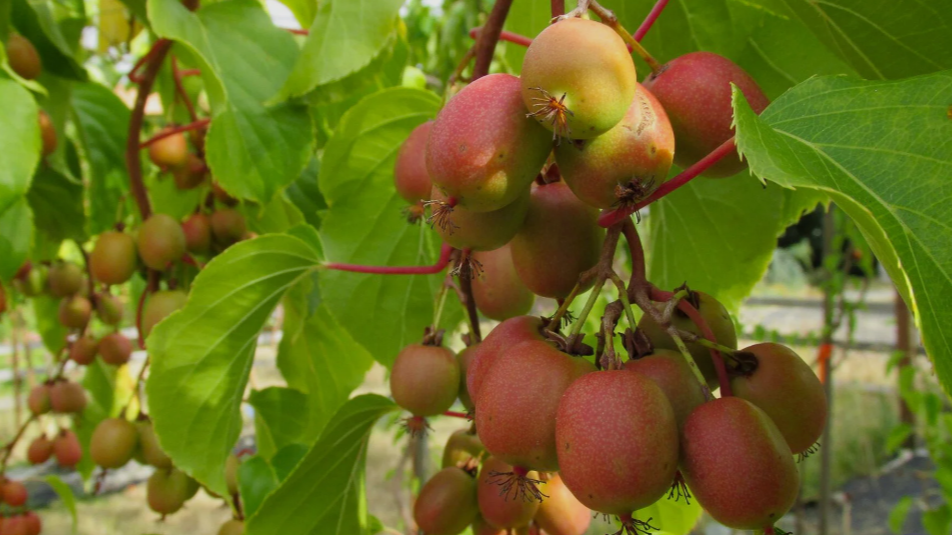
Cold hardy kiwi varieties bear little resemblance to the fuzzy brown fruit in the supermarket. The familiar kiwifruit is native to southern China and is grown commercially in mild climates such as California, Italy and New Zealand. China itself accounts for about 55% of the world crop.
The kiwi group is much larger than that one fruit. It includes about 80 species native to the forests of eastern Asia, and several of them come from regions with severe winters. Their fruit is the size of a grape, with thin, smooth skin that is eaten along with the flesh.
These small fruits are sold as kiwiberries. They are generally sweeter than fuzzy kiwifruit, with sugar levels that can reach 29%, against about 14% for the fuzzy type. The most common hardy species survives about -25°F, and the hardiest tolerates -40°F.
Kiwi vines are either male or female, so a male must be planted near the fruiting females. A single mature vine can yield 50 to 100 pounds of fruit. The 15 varieties below are the ones most often grown in cold regions, and each entry notes where they are grown.
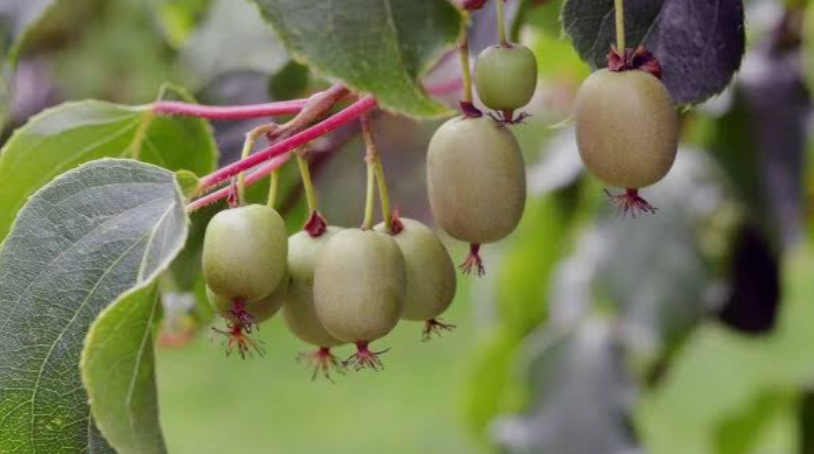
1. Ananasnaya
Ananasnaya is the most widely planted hardy kiwi in North America. It is often sold as Anna. Its fruit has jade-colored skin and bright green flesh with black seeds. The flavor has a hint of pineapple, which is what its Russian name means. The vine is vigorous and bears heavy clusters.
Penn State Extension lists it first among the hardy kiwi varieties available from nurseries. Nurseries rate it hardy to -25°F. The University of New Hampshire considers it commercially viable for the Northeast. Growers find its strong kiwi flavor ideal for jam. It is grown in Oregon, Pennsylvania, New England, the Great Lakes states and British Columbia.
2. Issai
Issai is a hardy kiwi from Japan. It is advertised as self-fruitful, so it can set fruit without a male vine. Its fruit is small, with good flavor. The vine is less vigorous than other hardy kiwis. It begins bearing young, often in its third year.
Its small size suits small gardens and containers. Yields are lighter than those of the vigorous varieties. The fruit can taste bitter if picked before it is fully ripe. It is somewhat less hardy than Ananasnaya. It is grown in Japan, the Pacific Northwest, the Mid-Atlantic and the Midwest.
3. Ken’s Red
Ken’s Red is a hardy kiwi from New Zealand with striking color. Its fruit has olive-green skin that turns red as it ripens. The flesh is darker green, with deep red streaks. The fruit is large for a kiwiberry and very sweet. It ripens just after Ananasnaya.
It is a hybrid between two hardy kiwi types. Growers in Washington report that it begins to crop after only 3 to 4 years. Oregon State University lists it among the easiest varieties to find. It needs a male hardy kiwi nearby. It is grown in New Zealand, Oregon, Washington and the Mid-Atlantic.
4. Hardy Red
Hardy Red is a kiwiberry with red flesh. The skin is also red when ripe. The flavor is sweet-sour and distinctive. The fruit is small and oval. It ripens in early fall.
One grower reports that it draws a surprisingly positive response at farmers’ markets. It was among the varieties evaluated in western Washington. Ohio State University has also included it in trials. The vine is somewhat less vigorous than Ananasnaya. It is grown in Washington, Oregon, Ohio and the Northeast.
5. Dumbarton Oaks
Dumbarton Oaks is a sweet, heavy-producing hardy kiwi. Its fruit is medium-sized and green, with slight ribs. It ripens earlier than most other varieties. The flavor is very sweet. The vine is vigorous and productive.
It takes its name from a historic garden in Washington, D.C., where the original vine grew. Penn State lists it among the varieties available to home growers. Its early ripening helps in areas with short seasons. It needs a male pollinator. It is grown in the Mid-Atlantic, the Northeast and the Pacific Northwest.
6. Geneva 3
Geneva 3 is the leading kiwiberry for commercial growers in the Northeast. Its fruit is medium-sized and sweet. It often develops a red blush in sun. It ripens early. The vine is vigorous and reliably productive.
The University of New Hampshire strongly recommends it for the Northeast. The university uses it as the standard against which its new breeding selections are judged. It is one of several selections named for the research station at Geneva, New York. Its identity has been confirmed by genetic testing at a major nursery. It is grown in New Hampshire, Vermont, New York, Pennsylvania and Michigan.
7. Michigan State
Michigan State is a hardy kiwi with exceptionally large fruit. The berries are elongated and sweet. One nursery describes them as twice the size of Ananasnaya. It ripens in early fall. The vine is vigorous.
North Carolina State University notes that it was discovered growing on a fence at Michigan State University. It is sometimes sold under the name Jumbo. Growers have found that two different vines circulate under this name. It needs a male pollinator. It is grown in Michigan, Ohio, the Northeast and the Pacific Northwest.
8. 74-49
74-49 is a hardy kiwi selected at a federal plant station in Chico, California. It is sometimes sold as Fortyniner. Its fruit is medium-sized, green and smooth. The berries separate easily from the stem. It ripens about a week earlier than Ananasnaya.
It is the most widely circulated of the Chico selections. Its easy picking is an advantage for growers. A related male from the same program is recommended as a pollinator in the Northeast. It is hardy across the main kiwiberry regions. It is grown in the Pacific Northwest, the Northeast and the Midwest.
9. Chang Bai Giant
Chang Bai Giant is a hardy kiwi from northeastern China. It is named for a mountain range on the border with Korea. Its fruit is large and round. The flavor is sweet. The vine is vigorous.
Its origin in a region of harsh winters suggests good hardiness. Ohio State University included it in its variety trials. It is offered by several specialist nurseries. It needs a male pollinator. It is grown in the Pacific Northwest, Ohio and the Northeast.
10. Cordifolia
Cordifolia is a hardy kiwi prized for especially sweet fruit. Its leaves are heart-shaped, which is the meaning of its name. The fruit is medium-sized and green. It ripens early in the season. The vine is vigorous.
It is one of the parents of Ken’s Red. Ohio State University has grown it in trials. Its early ripening suits cooler areas. It needs a male vine for pollination. It is grown in the Pacific Northwest, Ohio and the Mid-Atlantic.
11. Natasha
Natasha is a hardy kiwi from Russia. Its fruit is medium-sized, green and sweet. It ripens early. The vine is vigorous and productive. It is a female variety and needs a male nearby.
It comes from breeding work in a region with long, cold winters. Several American nurseries now offer it. It is often planted with another Russian variety for a longer harvest. Its early ripening is useful in short seasons. It is grown in Russia, the upper Midwest, the Northeast and the Pacific Northwest.
12. Meader
Meader is best known as a male pollinator for hardy kiwis. A male vine bears no fruit but is essential for the females to crop. Meader flowers early, with a bloom period that covers the main female varieties. One male serves about eight females. A female vine is also sold under the same name.
The University of New Hampshire recommends it as the first-choice male for the Northeast. It is named for a New Hampshire plant breeder. The university suggests pairing it with a second, slightly later male. It is hardy across the kiwiberry-growing regions. It is grown in New England, Pennsylvania, New York and Michigan.
13. Arctic Beauty
Arctic Beauty is the hardiest kiwi in cultivation. It belongs to a different species from the other varieties here. Its fruit is small, smooth, very sweet and rich in vitamin C. The vine is less vigorous and grows to only about 20 feet. Its leaves are splashed with pink and white.
It tolerates winter temperatures of -35°F to -40°F. The University of Minnesota calls it the best choice for Minnesota growers interested in planting for profit. New vines take 4 to 5 years to train for production. The fruit ripens earlier than other kiwiberries. It is grown in Minnesota, Alaska, the Canadian prairies, Russia and Scandinavia.
14. September Sun
September Sun is a fruiting female of the same very hardy species as Arctic Beauty. Its fruit is large for its type. The berries are sweet and ripen early, in late summer. The leaves show the same pink and white markings. The vine is compact.
It was selected in Russia. It needs a male of its own species for pollination. It grows best in part shade, since strong sun can scorch the leaves. Ripe fruit drops readily and should be gathered often. It is grown in the upper Midwest, New England, Canada and northern Europe.
15. Red Beauty
Red Beauty is another female of the very hardy species. Its foliage turns red in fall, which gives it its name. The fruit is small, sweet and smooth. It ripens early. The vine is compact and ornamental.
It shares the extreme hardiness of Arctic Beauty. It is offered by nurseries that specialize in northern fruit. It needs a male of the same species. It suits small gardens, fences and arbors. It is grown in the upper Midwest, New England and Canada.
Key Takeaways:
– Hardy kiwis tolerate colder winters than fuzzy kiwis: Hardy kiwi (Actinidia arguta) and Arctic kiwi (Actinidia kolomikta) can survive much lower winter temperatures than the fuzzy kiwi (Actinidia deliciosa), making them suitable for many temperate gardens.
– Several varieties thrive in cold climates: Popular options include ‘Issai’, ‘Anna’, ‘Geneva’, ‘Ken’s Red’, and ‘Arctic Beauty’. Their cold tolerance, fruit characteristics, and pollination requirements vary by cultivar.
– Hardy kiwi fruits are usually smaller and smooth-skinned: Unlike supermarket fuzzy kiwis, hardy kiwis typically produce grape-sized fruits that can be eaten whole without peeling. Some varieties develop green, red, or purplish skin and flesh.
– Pollination requirements affect fruit production: Many kiwi vines are dioecious, meaning male and female flowers grow on separate plants. A compatible male plant is often needed for fruit production, although some cultivars, including ‘Issai’, are described as self-fertile.
– Kiwi vines need support and suitable growing conditions: Most varieties grow vigorously and benefit from a sturdy trellis or arbor, full sun to partial shade, fertile soil, and consistent moisture. Good drainage helps prevent root problems.
– Choose varieties based on your local climate: Check winter hardiness, spring frost exposure, ripening season, and pollination needs before planting. Even cold-hardy kiwi vines can lose young shoots or flowers to late spring frosts, affecting the harvest.
Sources:
- Penn State Extension: Hardy Kiwi in the Home Fruit Planting
- University of New Hampshire Extension: Kiwiberry Updates
- University of Minnesota Extension: Commercial kiwiberry production
- Ohio State University: Kiwifruit and Hardy Kiwi
- North Carolina State University: hardy kiwi
- University of Wisconsin: Kiwifruit
- Washington State University: hardy kiwi fact sheet
- Oregon State University: growing kiwifruit
- University of New Hampshire: Northeast Kiwiberries project
- Cornell University: hardy kiwifruit nursery list
- Burnt Ridge Nursery: kiwi scionwood
- Raintree Nursery: kiwi plants
- Growing Fruit forum: hardy kiwi varieties
- Wikipedia: Kiwifruit