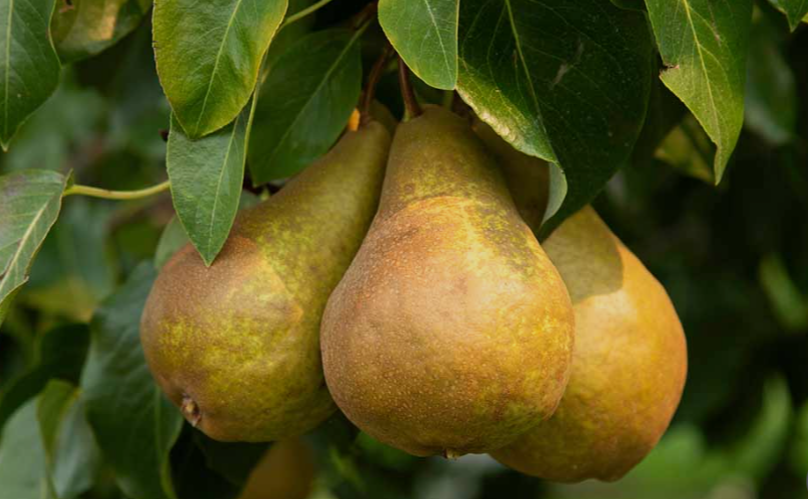
Cold-hardy pear varieties allow one of the oldest orchard fruits to be grown where winter lows fall to -30°F and below. Pears have been cultivated for several thousand years in both Europe and East Asia. More than 3,000 varieties exist, though only a handful are sold in most stores.
China grows nearly three-quarters of the world’s pears. In the United States, the 2025 crop was forecast at 625,000 tons, with Washington, Oregon and California producing almost all of it. Those commercial varieties are European pears, which have the classic tapered shape and soft, buttery flesh.
European pears are only moderately hardy. North Dakota State University notes that they will not survive in the northern part of that state, and that Asian pears are not hardy there at all. The answer for cold regions has been to cross European pears with the Ussurian pear, a wild species from Siberia and northern China.
Two more points matter in the north. Most pears need a second variety nearby for pollination, and fire blight is the leading killer of pear trees. The 27 pears below run from the hardiest prairie hybrids to familiar varieties for milder northern sites, and each entry notes where they are grown.
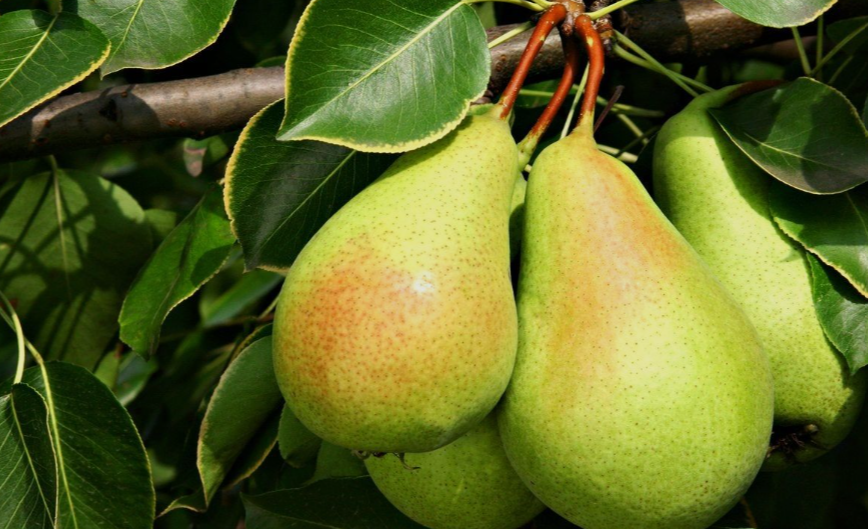
1. Summercrisp
Summercrisp is an early pear meant to be eaten crisp. Its fruit is medium-sized and green with a red blush. The flesh is sweet and crunchy, like an Asian pear. It ripens in mid-August. The fruit should be picked firm and refrigerated at once.
The University of Minnesota describes it as the hardiest pear it has released. The original seedling came to the university in 1933 from a grower in southeastern Minnesota. It showed no fire blight in 20 years of testing. It has even fruited in Anchorage, Alaska. It is grown in Minnesota, the Dakotas, Wisconsin, Montana, Maine and Alaska.
2. Parker
Parker bears fruit similar in size, flavor and texture to Bartlett. The pears are medium to large and yellow with a red blush. The flesh is tender, sweet and juicy. It ripens in early September. The tree is upright and vigorous.
The University of Minnesota released it in 1934. It is a seedling of a Manchurian pear. It is somewhat less hardy than the other Minnesota pears and may not grow well north of the Twin Cities. It can set some fruit without a second variety. It is grown in southern Minnesota, Iowa, Wisconsin and the lower Midwest.
3. Patten
Patten produces large pears comparable in character to Bartlett. The fruit is yellow, juicy and sweet. It is excellent eaten fresh. It ripens in early September. The tree is vigorous and spreading.
It originated in Iowa in the early 1900s. Its hardiness is slightly better than that of Parker. It is reputed to set some fruit without a second variety for cross-pollination. One Minnesota orchard has grown it for more than 20 years. It is grown in Iowa, Minnesota, Wisconsin and the Northeast.
4. Luscious
Luscious is a dessert pear with a flavor like Bartlett but more intense. Its fruit is medium to small and bright yellow. The flesh is juicy and melting. It ripens in early to mid-September. The leaves turn glossy red in fall.
It was bred at South Dakota State University. It is reportedly somewhat resistant to fire blight. Its pollen is sterile, so it cannot pollinate other pears. Some sources rate it only for milder areas, but it is doing well at several North Dakota sites. It is grown in the Dakotas, Minnesota, Iowa, Wisconsin and New England.
5. Gourmet
Gourmet is a firm, crisp pear from South Dakota. Its fruit is medium-sized, juicy and sweet. The texture is somewhat reminiscent of an Asian pear. It has more acidity than most pears. It ripens in mid to late September.
It was bred at South Dakota State University. Like Luscious, it has sterile pollen and needs another variety nearby. One northern grower rated it among the best-tasting pears for its region. North Dakota State University considers it probably not hardy in the coldest part of that state. It is grown in South Dakota, Minnesota, Iowa and Wisconsin.
6. Golden Spice
Golden Spice is a small, very hardy pear. Its fruit is yellow with a light red blush. The flavor is tart and spicy. It is best for canning, stewing and spiced preserves. It ripens in mid-September.
The University of Minnesota released it in 1949. It is hardy in the coldest regions where pears are grown. Growers suggest picking it early and storing it cool for a month to bring out the spice. It is a valuable pollinator for Ure. It is grown in Minnesota, the Dakotas, Vermont and the Canadian prairies.
7. Ure
Ure is a small, greenish-yellow pear from Manitoba. Its flavor is sweet and has been compared to Bartlett. It ripens in mid-August. The tree is compact. It has a very short window of ripeness.
It was released from a research station at Morden, Manitoba, in 1978. It is a cross between the Siberian pear and the European pear. It is hardy in the coldest pear-growing areas. Golden Spice is its usual pollination partner. It is grown in Manitoba, Saskatchewan, the Dakotas, Minnesota and Vermont.
8. Early Gold
Early Gold is a seedling of Ure with better vigor and earlier ripening. Its fruit is glossy green-gold. The pears are good for canning, preserving and eating fresh. It matures in early to mid-August. It needs another pear for pollination.
North Dakota State University recommends it and rates it hardy in the state’s coldest zone. It ripens about 10 days ahead of Ure. One grower reports that it survives even where winters reach -50°F. Ure is its recommended pollinator. It is grown in Manitoba, Saskatchewan, North Dakota and Minnesota.
9. Loma
Loma is an early pear for very cold regions. Its fruit is more acidic than is typical for pears. That gives it a bright, refreshing taste. It is suited to eating fresh. It ripens in late August.
It appears on a list of recommended pears presented at a North Dakota State University field day. It is rated for the coldest pear-growing zone. Its early harvest fits short northern summers. It is not widely sold. It is grown in North Dakota, Minnesota and the Canadian prairies.
10. John
John is a prairie pear bred for extreme cold. Its fruit is large for such a hardy tree. The flesh is firm and somewhat coarse. It is best for canning and cooking. It ripens in September.
It came from breeding work on the Canadian prairies. Some growers describe its fresh eating quality as poor. Its value lies in surviving where better pears cannot. It also serves as a hardy pollinator. It is grown in Saskatchewan, Alberta, Manitoba and the northern Plains.
11. Beedle
Beedle is one of the hardiest pears of decent quality. Its fruit is medium-sized, at about 100 grams. It ripens on the tree in early September. There is no astringency. It stores for up to a couple of months, which is rare for a prairie pear.
It was discovered in a row of Siberian pear seedlings on a city boulevard in St. Albert, Alberta. It is named for a local urban forester. The original tree has since been cut down. Canadian nurseries rate it for the very coldest garden zones. It is grown in Alberta, Saskatchewan and Manitoba.
12. Krazulya
Krazulya is a Russian summer pear with outstanding flavor. Its name means beauty in Russian. The fruit is medium-sized and brightly colored. It is harvested in late August. It keeps for only a week or two.
It is rated hardy where winter lows reach -40°F. It is also described as highly resistant to disease. It was unavailable in the United States for years and is now offered by a few northern nurseries. It is one of several new Russian pears being tried in the north. It is grown in Russia, the Canadian prairies and the northern United States.
13. Savignac
Savignac is a hardy pear from Quebec. Its fruit is medium-sized, sweet and juicy. The tree is spreading and of low to medium vigor. It begins bearing at a young age. It ripens in early fall.
It is named for a Quebec clergyman who collected hardy fruit. Northern nurseries rate it for the very coldest zones, though some growers think such claims are optimistic. It has survived in hard-winter orchards where others failed. It is grown in central Washington as well as the Northeast. It is grown in Quebec, Ontario, New York, Vermont and Washington.
14. Hudar
Hudar is a yellow pear with sweet, juicy flesh. The fruit is medium-sized. It ripens very early, in August. The quality is good enough for farmers’ markets. It was introduced by a nursery in northern New York.
It is rated hardy where winter lows reach -40°F. North Dakota State University describes it as very slow to begin fruiting but of very high quality. The tree is resistant to fire blight in some reports and a good pollinator. Results vary, and some growers have lost it. It is grown in New York, Vermont, Maine, North Dakota and Idaho.
15. Nova
Nova is a large, round pear with a slight anise flavor. The flesh is juicy and sweet. It ripens in early September. It can be used firm or soft. It was introduced by the same northern New York nursery as Hudar.
It is rated hardy to about -45°F. North Dakota State University counts it among the pears that succeeded in its trial orchard. The university advises picking it light green and refrigerating it before ripening. One Minnesota orchard has grown it for more than 20 years. It is grown in New York, Vermont, Minnesota, North Dakota and eastern Canada.
16. Stacey
Stacey is a small, very sweet pear from Maine. The fruit is yellow with a blush. The tree is very sturdy and productive. It ripens in late summer. It is slow to begin bearing.
It is rated among the hardiest pears of all. One grower reports a tree that has proven very hardy over 17 years. Another, in a region with -40°F winters, harvested small but very tasty pears. It is susceptible to fire blight in some sites. It is grown in Maine, Vermont, New York and the upper Midwest.
17. Southworth
Southworth is a hardy pear similar to Bartlett. Its fruit is medium to large and yellow. The flesh is sweet and smooth. It ripens in September. It is much hardier than Bartlett.
It is offered by nurseries that specialize in northern fruit. Growers list it among the survivors in hard-winter orchards. It is rated for regions with lows to -40°F. It gives northern growers a pear close to the familiar supermarket type. It is grown in New York, Vermont, Maine and Wisconsin.
18. Honeysweet
Honeysweet is a seedling of Seckel with larger fruit. The pears are very sweet and rich. They keep better than Seckel. The tree is very productive. It is self-fertile, which is rare in a pear.
It is hardy to at least -35°F. Its ability to fruit alone solves the pollination problem for small gardens. It resists fire blight. It ripens in September. It is grown in the Midwest, the Northeast and Ontario.
19. Flemish Beauty
Flemish Beauty is an old Belgian pear of very high quality. Its fruit is medium to large and rounded. The skin is yellow with a red blush. The flavor is rich and sweet. It ripens in September.
It dates from about 1810. It is often rated among the hardiest of the classic European pears. It has been grown commercially in west-central Wisconsin. Some Minnesota growers report that it did not survive there. It is grown in Wisconsin, New England, Quebec, Ontario and Europe.
20. Clapp’s Favorite
Clapp’s Favorite is a large, early pear from Massachusetts. Its fruit is yellow with a red cheek. The flesh is sweet and smooth. It ripens before Bartlett. It must be picked promptly, since it softens quickly.
It was developed near Boston in the 1800s. One northern grower rates its flavor as good as the finest European pears. It is very susceptible to fire blight. A Maine grower found that it cropped poorly after a severe winter. It is grown in New England, New York, Michigan and Ontario.
21. Seckel
Seckel is the small, intensely sweet sugar pear. Its fruit is russet-brown with a red blush. The flesh is rich and spicy. It ripens in early to mid-September. The tree is compact and naturally small.
It is an old American variety. Iowa’s extension service has recommended it for northern Iowa. It has some resistance to fire blight. It is one of the hardier classic pears, though not for the coldest regions. It is grown in the Northeast, the Midwest and the Pacific Northwest.
22. Bartlett
Bartlett is the most widely grown pear in the world. Its fruit is large and bell-shaped. The skin turns from green to yellow as it ripens. The flesh is juicy, sweet and aromatic. It is the standard pear for canning.
It is not truly cold-hardy, and northern extension services do not list it among their hardy pears. It succeeds only in the mildest northern sites. Iowa State University’s Agricultural Marketing Resource Center notes that its marketing season runs from July to December in the western states. It is highly susceptible to fire blight. It is grown in Washington, Oregon, California, Michigan, New York and Ontario.
23. Anjou
Anjou is a winter pear grown for long storage. Its fruit is large, egg-shaped and green. The flesh is firm, mild and sweet. It ripens late and keeps for about 5 months in cold storage. It stays green when ripe.
It is an old French variety dating from before 1628. It is the second most important pear in the Pacific Northwest. It is moderately hardy and suits the milder northern zones. It needs a long season to mature. It is grown in Washington, Oregon, Michigan and New York.
24. Kieffer
Kieffer is a rugged hybrid between a European and an Asian pear. Its fruit is large, yellow and coarse-textured. It is best for canning, baking and preserves. It ripens in October. The tree is vigorous and long-lived.
Iowa’s extension service has recommended it for northern Iowa. Its hybrid background gives it strong resistance to fire blight. It tolerates heat, cold and poor soil. Its fresh eating quality is only fair. It is grown from the Midwest and Northeast to the Gulf Coast.
25. Harrow Delight
Harrow Delight is an early pear from Ontario. Its fruit resembles Bartlett, with a red blush. The flavor is excellent. It ripens about two weeks ahead of Bartlett. Its foliage stays remarkably clean.
It was introduced from a Canadian research station in 1982. It was bred for resistance to fire blight. It is rated for the milder northern zones. Northern growers rank its flavor well above that of the hardier hybrids. It is grown in Ontario, Michigan, New York and the Pacific Northwest.
26. Harrow Sweet
Harrow Sweet is a late pear with excellent flavor. Its fruit is yellow with a red blush. The flesh is sweet and juicy. It ripens about three and a half weeks after Bartlett. It keeps for about 3 months in cold storage.
It came from a cross made in Ontario in 1965. It is resistant to fire blight. It has proved hardy in southwestern Minnesota to at least -34°F. The tree is medium-sized and very productive. It is grown in Ontario, Michigan, Minnesota, New York and the Pacific Northwest.
27. Ussurian Pear
The Ussurian pear is the hardiest pear species in the world. It is native to Siberia, northern China and Korea. Its fruit is small, hard and too astringent to eat fresh. The tree is covered in white blossom in spring. The leaves turn red in fall.
Its importance is as a parent, pollinator and rootstock. North Dakota State University notes that Ure and Golden Spice belong to this hardier group. In areas too cold for other pears, it is planted to pollinate Ure. It is also used as a street and shelterbelt tree. It is grown across the Canadian prairies, the northern Plains and Russia.
Key Takeaways:
– Pear trees vary in winter hardiness: Many European and Asian pear varieties tolerate cold winters, but their ability to survive freezing temperatures depends on the cultivar, rootstock, tree age, and local growing conditions.
– Several varieties thrive in colder regions: ‘Summercrisp’, ‘Ure’, ‘John’, and ‘Luscious’ are examples of pear cultivars known for their suitability for colder climates. Always check their recommended hardiness zones before planting.
– European and Asian pears differ: European pears (Pyrus communis) commonly have a soft, buttery texture when ripe, while Asian pears typically remain crisp and juicy. Both groups include varieties suitable for cold-climate gardens.
– Winter hardiness and spring frost resistance are different: A pear tree may survive a freezing winter but lose flowers or developing fruit to a late spring frost. Choosing varieties with suitable flowering times can help reduce this risk.
– Sunlight and proper pollination support fruit production: Pear trees generally perform best in full sun and well-drained soil. Many varieties require a compatible pear tree nearby for effective cross-pollination and reliable harvests.
– Choose varieties suited to your local conditions: Consider USDA hardiness zones, winter temperatures, chill-hour requirements, disease resistance, and harvest season. Selecting an appropriate variety improves the chances of healthy growth and consistent fruit production.
Sources:
- University of Minnesota: Pears
- North Dakota State University: The Best Pear Cultivars for North Dakota
- Iowa State University, Agricultural Marketing Resource Center: Pears
- North Dakota State University: Pear Selection
- North Dakota State University: Pears in North Dakota
- University of Minnesota: Summercrisp Pear
- USDA GRIN: Summercrisp
- NAFEX list: a pear for Iowa zone 4
- Growing Fruit forum: cold hardy pears for zone 4
- Growing Fruit forum: cold hardy pears revisited
- Growing Fruit forum: pears for the north
- Growing Fruit forum: pear for zones 3b to 4a
- Gardening Know How: Zone 4 Pears
- Wikipedia: List of pear cultivars
- FreshFruitPortal: US pear crop 2025