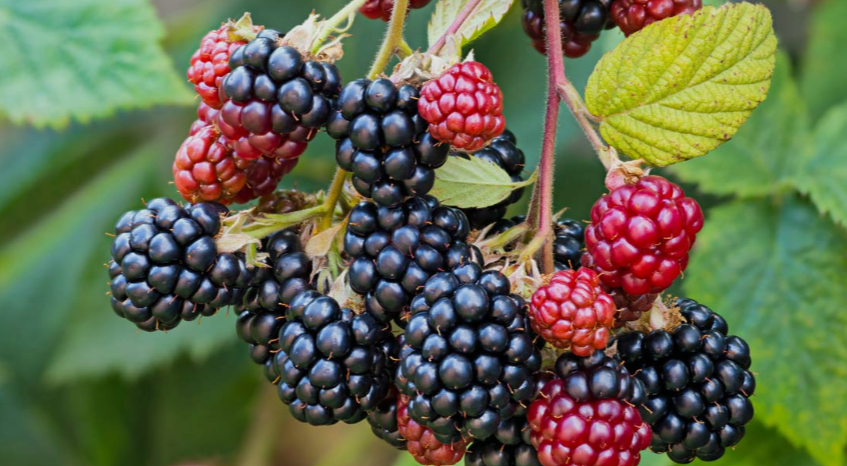
Cold-hardy blackberry varieties are harder to find than hardy raspberries, because the blackberry is the more tender of the two. Blackberries belong to the rose family and grow wild across much of the Northern Hemisphere. Each berry is a cluster of tiny, juicy segments, and unlike a raspberry it keeps its soft core when picked.
Blackberry plants are grouped by the way they grow. Erect types stand on their own, semi-erect types arch and need a trellis, and trailing types sprawl along the ground. Trailing blackberries are the least hardy and are seldom grown where winters are severe.
Cold is the main limit on the crop. Ohio State University notes that most common blackberry varieties are not cane-hardy where lows reach -10°F to -15°F. The roots usually survive, but the canes that would carry next summer’s fruit do not.
Growers in cold regions have two answers. One is to plant the few varieties with truly hardy canes, and the other is to grow newer types that fruit on first-year canes. The 18 varieties below cover both approaches, and each entry notes where they are grown.
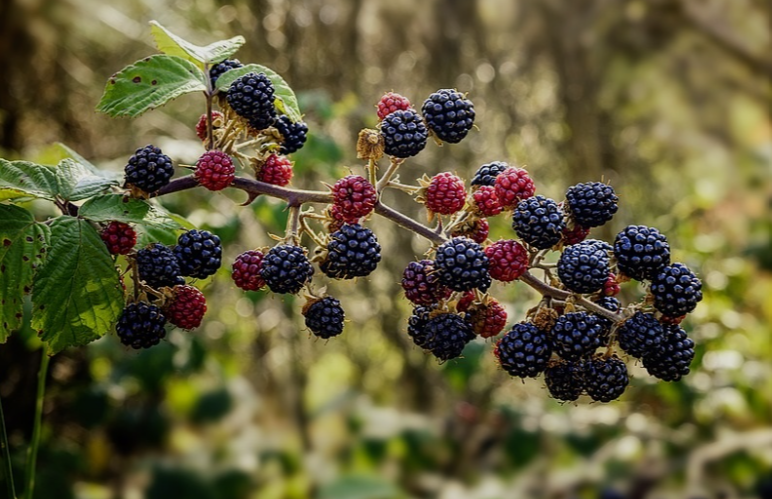
1. Illini Hardy
Illini Hardy is the standard for cold tolerance in blackberries. Its berries are medium-sized and glossy black. The flavor is good, with a pleasant tartness. The canes are erect and very thorny. It fruits over a long season in midsummer.
It was developed and patented by the University of Illinois for northern growers. University of Illinois Extension recommends it for the northern, central and southern parts of the state and credits it with dependable production. In a Utah trial it had the highest winter bud survival of 21 varieties, averaging about 93%. Many hardy Canadian varieties have it as a parent. It is grown in Illinois, Iowa, Wisconsin, Minnesota, Utah and the Northeast.
2. Darrow
Darrow is an old variety with a long record in cold regions. Its berries are large, glossy and firm. The flavor is sweet with some tartness. It fruits over an extended season. The canes are upright, vigorous and thorny.
It was released in New York in the 1950s. Extension services in Iowa and Nebraska list it with Illini Hardy among the hardiest varieties. The University of New Hampshire rates it moderately hardy and productive. Growers in the coldest areas still report cane loss in bad winters. It is grown in New York, New England, Iowa, Nebraska and the Great Lakes states.
3. Nelson
Nelson is an heirloom blackberry from Maine. Its berries are moderately large and very juicy. The flavor is that of a true wild blackberry. It ripens over about two weeks in mid-August. The canes are tall, sturdy and up to an inch thick.
It has survived Maine winters for at least a century. It was introduced by the descendants of a farmer whose 1928 family photograph shows the bushes beside the barn. One experienced grower calls it exceptionally hardy. Growers in northwestern Wisconsin report it as their only successful blackberry. It is grown in Maine, Vermont, Wisconsin and Minnesota.
4. Fort Kent King
Fort Kent King is a selection of a native blackberry from northern Maine. Its berries are smaller than those of modern varieties. The flavor is very good. The canes are thorny and upright. It ripens in late summer.
University of Wisconsin researchers describe it as probably a superior native selection. They found it winter-hardy, perhaps to the second-coldest garden zone. That is hardier than nearly any named blackberry. Its small fruit limits its commercial appeal. It is grown in northern Maine, northern New England and Wisconsin.
5. Balsors Hardy
Balsors Hardy is a thorny blackberry from Nova Scotia. Its berries are medium-sized and sweet. The canes are erect and vigorous. It ripens in midsummer. It spreads readily by suckers.
It has been grown by one Nova Scotia family for more than a century. It is sold in Canada as one of the hardiest blackberries available. Its long history in a maritime climate shows its endurance. It is little known in the United States. It is grown in Nova Scotia, New Brunswick, Quebec and Ontario.
6. Snyder
Snyder is an old-time hardy blackberry from the 1800s. Its berries are small and firm. The flavor is sweet but plain. The canes are upright and thorny. It ripens in midsummer.
It was once the main blackberry of the northern states. It is still sold because few modern varieties match its hardiness. Its fruit size and quality fall short of newer types. It is best for jam and pies. It is grown in the upper Midwest, New England and eastern Canada.
7. Doyle’s Thornless
Doyle’s Thornless is a trailing blackberry known for huge crops. Its berries are medium-sized and sweet-tart. The canes are completely thornless and very long. They must be tied to a trellis. It ripens over many weeks.
In a Utah trial it had the second-highest yields of the varieties tested. Wisconsin researchers found it hardier than Triple Crown. Garden references suggest it for the milder half of the colder blackberry zones. The canes can be laid down and covered for winter. It is grown in Indiana, the Midwest, Utah and the Northeast.
8. Chester
Chester is the hardiest of the thornless blackberries. Its berries are large, round and firm. The fruit holds up well and can be taken to market without leaking. It ripens late, and the harvest can last up to 6 weeks. The canes are semi-erect and need a trellis.
It was released by federal breeders in the 1980s. Utah State University credits it with exceptional winter survival, with about 84% of buds alive after winter. It showed the best survival of the thornless semi-erect types there. It also resists sunscald in hot weather. It is grown in the Midwest, the Northeast, Utah, Oregon and Europe.
9. Triple Crown
Triple Crown is prized for flavor, vigor and yield. Its berries are very large, glossy and sweet. It ripens in midsummer, ahead of Chester. The canes are thornless and semi-erect. It needs a sturdy trellis.
It was released by federal breeders in the 1990s. In Utah trials it consistently had the highest yields. It is a long-time favorite among growers there. It is less winter-hardy than Chester, and Kansas State University rates it semi-cold-hardy. It is grown in the Mid-Atlantic, the Midwest, Utah and the Pacific Northwest.
10. Hull
Hull is an older thornless blackberry with large, sweet fruit. The berries are firm and less tart than many. It ripens in mid to late summer. The canes are semi-erect and vigorous. It needs a trellis.
It was released by federal breeders in the early 1980s. It ranked third for winter survival among the semi-erect types in Utah. University of Illinois Extension describes it as not very winter-hardy. It had the third-highest yields in the Utah trial. It is grown in the lower Midwest, the Mid-Atlantic and Utah.
11. Apache
Apache is an erect, thornless blackberry with very large fruit. Its berries are among the biggest of any variety. The flavor is sweet, and it topped taste tests in Utah. It ripens late in the season. The canes stand without support.
It was released by the University of Arkansas in the late 1990s. In Utah, about 88% of its buds survived winter, second only to Illini Hardy. It yields more and bears larger fruit than the earlier Arkansas thornless types. Kansas State University rates it cold-hardy. It is grown in Arkansas, the Midwest, the Mid-Atlantic and Utah.
12. Navaho
Navaho was the first erect, thornless blackberry. Its berries are small to medium, firm and very sweet. The fruit stores well after picking. It ripens in midseason. The canes are stiffly upright.
It was released by the University of Arkansas in the late 1980s. It showed some of the best winter survival among erect types in Utah. Kansas State University rates it cold-hardy. It needs 800 to 900 hours of winter chilling. It is grown in Arkansas, the Carolinas, the Midwest and Utah.
13. Arapaho
Arapaho is the earliest of the thornless erect blackberries. Its berries are medium-sized, with small seeds. The flavor is good, and it ranked high in taste tests. It ripens before Apache and Navaho. The canes are erect and self-supporting.
It was released by the University of Arkansas in 1993. It was among the erect types with the best winter survival in Utah. University of Illinois Extension still suggests it only for the southern part of that state. Its early ripening is useful where summers are short. It is grown in Arkansas, the lower Midwest, the Mid-Atlantic and Utah.
14. Ouachita
Ouachita is the standard commercial blackberry of Arkansas. Its berries are large, firm and sweet. It ripens between Arapaho and Navaho. The canes are erect and thornless. Yields are consistent from year to year.
It was released by the University of Arkansas in the early 2000s. Its winter hardiness appears to be less than that of Navaho and similar to Apache. Kansas State University rates it cold-hardy for that region. It needs only 400 to 500 hours of winter chilling. It is grown in Arkansas, the Carolinas, the lower Midwest and the Mid-Atlantic.
15. Natchez
Natchez is an early, thornless blackberry with very large fruit. Its berries are long, glossy and firm. The flavor is sweet when fully ripe. It ripens before Ouachita. The canes are erect to semi-erect.
It was released by the University of Arkansas. Kansas State University lists it as cold-hardy. Ohio State University includes it among the varieties suited to protected growing systems. It can overbear, so the canes may need thinning. It is grown in Arkansas, Kansas, Ohio, the Carolinas and the Mid-Atlantic.
16. Prime-Jim
Prime-Jim was one of the first blackberries to fruit on first-year canes. That trait changes the problem of winter cold. The canes can be mowed to the ground each year, and the new growth bears a fall crop. The berries are medium-sized. The canes are erect and thorny.
It was released by the University of Arkansas in 2004, together with a sister variety. The crosses were made in 1994. It was offered mainly for home gardens. Its fall crop ripens late and may not finish in very short seasons. It is grown in Arkansas, the Midwest, Oregon and the Northeast.
17. Prime-Ark 45
Prime-Ark 45 was the first first-year-fruiting blackberry with fruit firm enough to ship. Its berries are medium to large and sweet. The canes are erect and thorny. It bears a summer crop on old canes and a fall crop on new ones. It needs only about 300 hours of winter chilling.
The University of Arkansas released it in 2009. Ohio State University notes that trials show it to be more productive than Prime-Jim. Nurseries rate it for the middle range of garden zones. In the far north the fall crop ripens too late without a tunnel. It is grown in Arkansas, Ohio, California, the Carolinas and the Midwest.
18. Prime-Ark Freedom
Prime-Ark Freedom was the first thornless blackberry to fruit on first-year canes. Its berries are very large and sweet. It ripens very early in the summer crop. The canes are erect. It is recommended for home gardens and local sales.
The University of Arkansas released it in 2013. Ohio State University notes that the canes must be tipped for best yields. Growers report that the fall crop fails when summer temperatures stay in the 90s. In the coldest regions it needs about another month of season to ripen fully. It is grown in Arkansas, Ohio, the Mid-Atlantic and the lower Midwest.
Key Takeaways:
– Blackberry varieties differ in winter hardiness: Blackberries (Rubus spp.) vary in their ability to withstand freezing temperatures. Many erect and semi-erect varieties tolerate cold winters better than less-hardy trailing types, although performance depends on the cultivar and growing conditions.
– Several varieties suit colder climates: ‘Chester Thornless’, ‘Darrow’, ‘Illini Hardy’, and ‘Prime-Ark Freedom’ are worth considering for different climates and growing systems. Their winter tolerance varies, so check local recommendations before planting.
– Thornless and thorny varieties are available: Thornless blackberries, such as ‘Chester Thornless’, make harvesting easier, while some thorny cultivars are valued for their fruit quality or cold tolerance.
– Winter protection can improve cane survival: Blackberry canes may suffer damage during severe cold, especially in exposed locations. Mulching the root zone and protecting vulnerable canes where practical can help reduce winter injury.
– Sunlight and drainage support healthy growth: Most blackberry plants perform best in full sun and well-drained soil with consistent moisture. Proper pruning and adequate spacing improve airflow and help maintain productive plants.
– Choose varieties suited to your local growing zone: Consider minimum winter temperatures, USDA hardiness zones, fruiting season, disease resistance, and whether the variety fruits on first-year or second-year canes. Matching these characteristics to your climate can improve plant survival and harvests.
Sources:
- University of Illinois Extension: Growing Blackberries
- Utah State University Extension: Selecting Blackberry Cultivars for Utah
- Ohio State University: Blackberries
- University of Wisconsin: Blackberry
- Kansas State University: Small- and Tree-Fruit Cultivars
- University of Florida: Blackberry Cultivars
- University of Florida: The Blackberry
- University of Arkansas: Prime-Ark 45 background
- University of New Hampshire Extension: Raspberry and Blackberry Varieties
- ASHS: A Comparison of Blackberry Cultivars for a High-elevation Arid Climate
- American Pomological Society: blackberry production in Arkansas
- Fedco Trees: Nelson Blackberry
- Gardening Know How: Zone 4 Blackberries
- Growing Fruit forum: selecting a blackberry for zone 5
- Growing Fruit forum: favorite blackberry