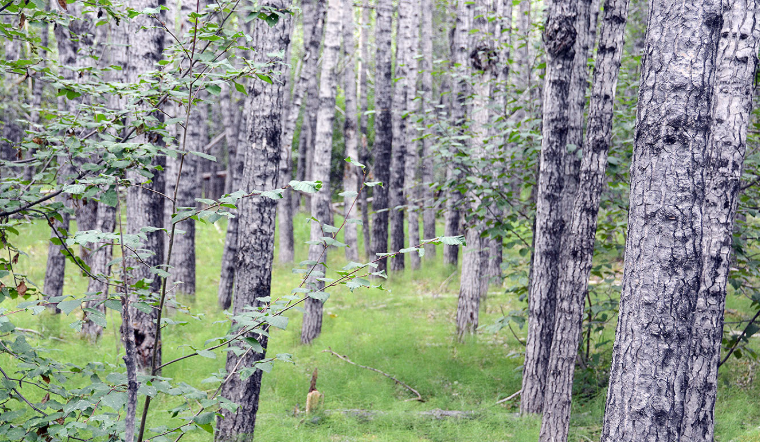
The balsam poplar tree is one of North America’s most cold-hardy hardwoods, famous for the sweet, resinous fragrance that fills northern forests each spring as its sticky buds unfurl. Native to a vast stretch of the continent’s boreal regions, this fast-growing tree has long played a role in indigenous medicine, wildlife habitat, and northern forestry. This article walks through everything to know about the balsam poplar, from its origins to its identifying traits and its specific growing requirements.
Botanical Classification
The balsam poplar belongs to the willow family, placing it alongside willows, aspens, and cottonwoods within one of the most widespread plant families in temperate and boreal climates. Within that family, it sits in the poplar genus, a group of roughly 25 to 35 recognized species distributed across the Northern Hemisphere. The balsam poplar is a deciduous broadleaf tree and, like its poplar relatives, is dioecious, meaning individual trees are either male or female.
Taxonomists recognize several regional varieties of the balsam poplar, and the species is known to hybridize with the black cottonwood in areas where their ranges overlap along the Pacific Northwest and western Canada, producing intermediate forms that can complicate field identification.
Brief History
The balsam poplar has one of the northernmost natural ranges of any broadleaf tree in North America, and its presence across the continent’s boreal zone dates back thousands of years, with pollen records suggesting the species recolonized much of Canada and Alaska relatively quickly following the retreat of glacial ice sheets roughly 10,000 years ago.
Indigenous peoples across the tree’s range have used balsam poplar for centuries, harvesting its resinous buds to produce salves and treatments valued for their anti-inflammatory properties, a practice documented among numerous northern and subarctic communities long before European settlement. The bark and inner wood were also used in traditional construction and tool-making, given the tree’s light weight and workability.
European settlers arriving in Canada and the northern United States during the 18th and 19th centuries quickly recognized the tree’s value as a fast-growing timber source, and by the late 1800s, balsam poplar was being harvested commercially for pulpwood and lumber across parts of Quebec, Ontario, and the northern Great Lakes region. Its rapid growth rate, often exceeding 3 feet per year in favorable conditions, made it an attractive option for reforestation projects throughout the 20th century, particularly in areas recovering from logging or fire.
Identifying Characteristics
The most distinctive identifying feature of the balsam poplar is its fragrance. In early spring, the large, resin-coated buds release a strong, sweet, balsamic scent that can often be detected before the tree is even visually spotted, a trait that gives the species both its common name and much of its cultural significance among northern communities.
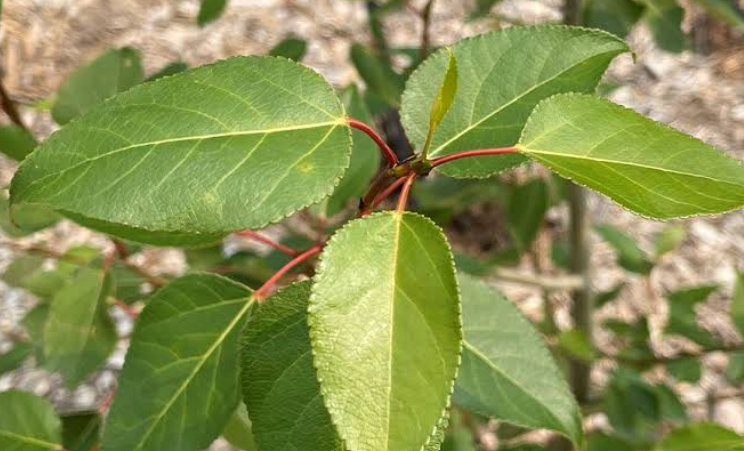
The leaves are broadly oval to heart-shaped, typically 3 to 5 inches long, with finely toothed edges and a glossy dark green upper surface. The undersides are notably paler, often silvery-white or rusty-brown, and coated with a fine network of veins visible to the naked eye. This two-tone coloring produces a shimmering effect similar to other poplar species when wind moves through the canopy.
Bark on young balsam poplars is smooth and grayish-green, often marked with prominent lenticels, but it becomes deeply furrowed and gray-brown as the tree matures, developing a rough, ridged texture on the lower trunk while the upper branches typically retain smoother bark.
Mature specimens commonly reach 60 to 80 feet in height, with exceptional individuals recorded at over 100 feet in ideal river-bottom conditions, and trunk diameters frequently exceeding 2 to 3 feet. The crown tends to be narrow and rounded compared to other poplars, giving the tree a somewhat more upright, less sprawling profile.
Catkins appear in early spring before leaf-out, with male catkins measuring 2 to 4 inches and female catkins slightly shorter, maturing into cottony seed capsules that release seeds capable of traveling considerable distances on wind currents, often more than a mile under strong spring winds.
Habitat and Distribution
The balsam poplar has one of the broadest native ranges of any North American hardwood, stretching from Alaska and the Yukon across the Canadian boreal forest to Labrador and Newfoundland, with its range extending south into the northern United States, including parts of Minnesota, Wisconsin, Michigan, New York, and New England.
The species thrives in moist, well-drained soils along riverbanks, floodplains, and lakeshores, often forming dense stands in areas subject to periodic flooding that clears competing vegetation and exposes the bare mineral soil the tree’s seeds require for germination. It is also commonly found colonizing disturbed sites following fire or logging, taking advantage of its fast growth and wind-dispersed seeds to establish quickly in open ground.
Balsam poplar is considered a foundational species in many boreal ecosystems, providing critical habitat and food sources for wildlife including moose, beaver, and numerous bird species, with some studies estimating that balsam poplar stands support significantly higher biodiversity than surrounding conifer-dominated forest in the same region.
Unlike some of its more aggressive poplar relatives, balsam poplar is not typically classified as invasive within its native range, though it can spread readily through both root suckering and seed dispersal in disturbed areas, sometimes forming clonal colonies covering an acre or more from a single parent tree.
USDA Hardiness Zone and Growing Needs
The balsam poplar is exceptionally cold-hardy, growing reliably across USDA hardiness zones 1 through 6, making it one of the most cold-tolerant broadleaf trees available for northern landscapes and reforestation projects.
For those planting or managing the species, several growing considerations are worth noting.
Full sun exposure produces the strongest growth, and the species performs poorly in shaded conditions, reflecting its ecological role as an early colonizer of open, disturbed ground. Soil moisture requirements are relatively high, with the species performing best in consistently moist, well-drained soils, particularly near natural water sources, though established trees show reasonable tolerance for brief dry periods.
Spacing should account for the tree’s suckering tendency and eventual size, with most foresters recommending at least 20 to 30 feet between trees in managed plantings to reduce competition and allow full crown development. Pruning is best conducted during dormancy in late winter, minimizing sap loss from the tree’s notably resinous wood.
Pest and disease resistance is moderate, though the species can be affected by poplar borer, leaf rust, and canker diseases, particularly in stressed or drought-affected specimens. Cold tolerance is exceptional, with the species able to withstand winter temperatures well below negative 40 degrees Fahrenheit in its northernmost range, a trait almost unmatched among broadleaf trees on the continent. Lifespan for the species typically ranges from 70 to 100 years, longer than faster-declining poplar relatives, reflecting its adaptation to harsher, slower-growing northern conditions.
Wildlife value is considerable, and property owners in rural or forested settings often retain balsam poplar specifically to support local wildlife populations that depend on the tree for food and habitat. Root system spread is extensive though generally shallow, and suckering can be managed through periodic mowing in landscaped settings where spread is undesirable.
Fun Facts and Additional Notes
The resinous compound found in balsam poplar buds, historically used in folk remedies, has drawn modern scientific interest, with researchers studying its natural compounds for potential applications in skin care and anti-inflammatory treatments.
A single mature balsam poplar can produce well over 10 million seeds in a single growing season, though germination success depends heavily on the seeds landing on bare, consistently moist mineral soil within a narrow window of viability, often just a few weeks.
The species holds the distinction of having one of the northernmost natural ranges of any hardwood tree in the world, with documented populations growing near the Arctic Circle in parts of Alaska and northern Canada.
Balsam poplar wood, while not highly valued for fine furniture due to its softness, has been used historically for pulp, matchsticks, and boxes, and remains a component of pulpwood harvests across parts of the Canadian boreal forest today.
The balsam poplar stands as a defining species of the northern forest, valued both for its ecological role and its long cultural history among the peoples who have relied on it for generations. For anyone in a cold-climate region considering the species, its exceptional hardiness and wildlife value make it a compelling choice, provided there is space to accommodate its size and suckering habit.