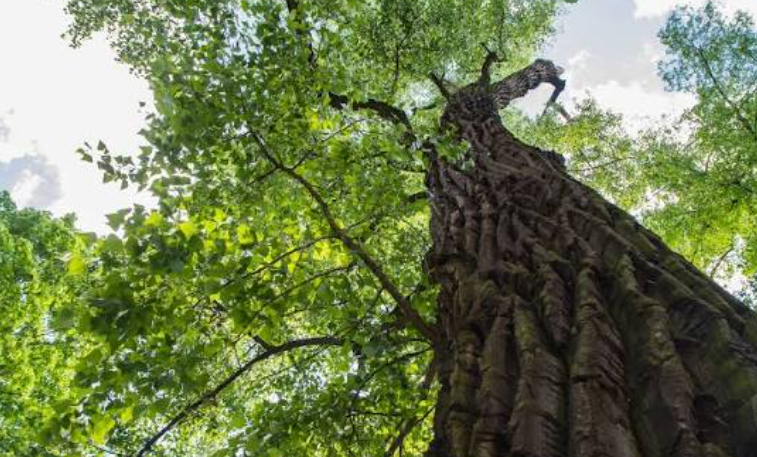
The eastern cottonwood tree is one of the largest and fastest-growing hardwoods native to North America, instantly recognizable each early summer when its cottony seed fluff drifts through the air like a light snowfall. A dominant presence along rivers and floodplains across much of the continent, this towering shade tree has shaped both natural ecosystems and human history for centuries.
This article covers everything to know about the eastern cottonwood, from its botanical background to its identifying features and specific growing needs.
Botanical Classification
The eastern cottonwood belongs to the willow family, placing it alongside willows, aspens, and other poplars within one of the most widespread plant families in temperate climates worldwide. Within that family, it sits in the poplar genus, a group of roughly 25 to 35 recognized species found throughout the Northern Hemisphere. The eastern cottonwood is a deciduous broadleaf tree and, like its poplar relatives, is dioecious, meaning individual trees are either male or female, with only female trees producing the cotton-like seed fluff the species is named for.
Several regional varieties of the eastern cottonwood are recognized across its range, and the species is known to hybridize with other cottonwood relatives in areas where their ranges overlap, particularly in the western portions of its distribution.
Brief History
The eastern cottonwood has grown along North American rivers and floodplains for thousands of years, and its rapid colonization of newly exposed sandbars and riverbanks made it one of the defining tree species of the continent’s major river systems long before European settlement. Indigenous peoples across its range used the tree’s wood for canoe construction, given its light weight and workability, and its inner bark served as an emergency food source and livestock forage in some communities.
Historical accounts from westward expansion frequently reference the eastern cottonwood, since its presence along rivers and creek beds served as a reliable indicator of water for travelers crossing the Great Plains during the 1800s. Its dense, fast-growing form also made it one of the few sources of shade and timber across otherwise treeless prairie stretches, and early settlers relied heavily on the species for construction, fuel, and windbreaks.
By the late 19th and early 20th centuries, the eastern cottonwood had become a significant species in American forestry and shade-tree planting, prized for a growth rate that can exceed 6 feet per year under ideal river-bottom conditions, among the fastest of any North American hardwood. That same vigorous growth eventually led many municipalities to reduce new plantings in urban settings, as mature cottonwoods frequently outgrew available space and caused infrastructure issues with their large, aggressive root systems.
Identifying Characteristics
The eastern cottonwood is easily identified by its impressive size, with mature specimens commonly reaching 80 to 100 feet in height, and exceptional individuals recorded at over 150 feet, making it one of the tallest hardwood trees in eastern and central North America. Trunk diameters on old-growth specimens frequently exceed 4 to 5 feet, with some historic trees documented at over 8 feet in diameter.
The leaves are broadly triangular, typically 3 to 6 inches long, with coarsely toothed edges and a distinctive flattened leaf stalk that causes the foliage to flutter and rustle noticeably in even light wind, a trait shared with several other poplar relatives. Leaves emerge a glossy light green in spring and turn a bright golden yellow in autumn, providing strong seasonal color.
Bark on young trees is smooth and pale yellow-green, but it develops into thick, deeply furrowed gray-brown ridges as the tree matures, becoming one of the more rugged-looking barks among fast-growing hardwoods. Twigs are notably stout, and winter buds are large, resinous, and pointed, offering a reliable identification feature even when the tree is bare.
The species produces catkins in early spring before leaf-out, with male catkins reaching 3 to 4 inches and female catkins slightly longer, maturing into seed capsules that split open in late spring to release the cottony seed fluff that gives the tree its common name. A single mature female cottonwood can release cotton for two to three weeks each year, with some large specimens producing well over 25 million seeds in a single season.
Habitat and Distribution
The eastern cottonwood has one of the broadest native ranges of any North American hardwood, stretching from southern Quebec and the Great Lakes region south to the Gulf Coast, and from the Atlantic seaboard west through the Great Plains into eastern Montana, Colorado, and Texas. This expansive range makes it one of the most widely distributed large trees on the continent.
The species is closely tied to riparian environments, thriving along riverbanks, floodplains, and lakeshores where periodic flooding exposes bare, moist mineral soil, the specific germination condition its wind-dispersed seeds require. This dependence on disturbance and bare soil means cottonwood populations are often closely linked to natural river dynamics, with dense young stands frequently establishing on newly formed sandbars following seasonal flooding.
Eastern cottonwood plays a significant ecological role across its range, providing critical nesting habitat for large birds including bald eagles and great blue herons, with some wildlife studies noting that mature cottonwood stands support a disproportionately high number of cavity-nesting species compared to surrounding forest types. The tree’s fast growth and soft wood make it prone to natural cavity formation, further enhancing its wildlife value.
While not classified as invasive within its native range, the species can spread aggressively in disturbed or open areas through both seed dispersal and root suckering, occasionally forming dense colonial stands that require management in agricultural or developed settings near waterways.
USDA Hardiness Zone and Growing Needs
The eastern cottonwood grows reliably across USDA hardiness zones 2 through 9, giving it one of the broadest climate ranges of any large North American shade tree and explaining its extensive natural distribution across such varied regions.
For those planting or managing the species, several growing considerations are especially important.
Full sun exposure is essential for healthy development, and the species performs poorly in shaded conditions, consistent with its ecological role as an early colonizer of open riverbank environments. Soil moisture needs are substantial, with the species performing best in consistently moist, well-drained soils, and it shows a strong natural affinity for sites near rivers, streams, or other reliable water sources.
Spacing requirements are considerable given the tree’s mature size, with most arborists recommending at least 50 to 60 feet of clearance from structures, driveways, and underground utilities to accommodate both canopy spread and root expansion. Pruning is best performed during dormancy in late winter, since the species is prone to heavy sap flow if cut during the growing season. Pest and disease resistance is moderate, with the species susceptible to cottonwood borer, leaf rust, and various canker diseases, particularly in drought-stressed specimens.
Wind tolerance is a notable concern, since the combination of soft wood, rapid growth, and a large canopy makes mature cottonwoods prone to limb failure and even full toppling during severe storms. Lifespan for the species typically ranges from 70 to 100 years, shorter than many slower-growing hardwoods, reflecting its fast-growth, fast-decline strategy.
Cotton production management is a common consideration for property owners, since many nurseries now offer male cultivars specifically selected for landscape use to avoid the seasonal seed fluff associated with female trees. Root system awareness is critical near infrastructure, as the aggressive, wide-spreading root system is one of the most common reasons municipalities restrict new plantings in urban and suburban settings. Water table sensitivity should also be considered, since the species can struggle in sites with significantly lowered water tables, a growing concern in some regions experiencing long-term drought conditions.
Fun Facts and Additional Notes
The eastern cottonwood holds the distinction of being the state tree of Kansas, Nebraska, and Wyoming, reflecting its historical importance as one of the few large trees found naturally across the Great Plains.
Some historic specimens have been documented living for well over 100 years and reaching trunk diameters exceeding 9 feet, making individual old-growth cottonwoods among the largest hardwood trees measured in North America.
The tree’s wind-fluttering leaves, caused by their unusually flattened stalks, produce a distinctive rustling sound that early travelers on the plains often described as resembling flowing water, a detail noted in several 19th-century frontier accounts.
Cottonwood seed fluff, while often considered a seasonal nuisance in urban settings, plays an important ecological role by carrying seeds long distances, with wind capable of transporting the lightweight seeds over a mile from the parent tree under favorable conditions.
The eastern cottonwood remains a defining tree of North America’s river systems and prairie landscapes, valued for its towering size, rapid growth, and significant ecological contributions. For anyone with the space to accommodate its eventual scale, the species offers fast shade and strong wildlife value, provided its aggressive roots and shorter lifespan are factored into long-term planning.