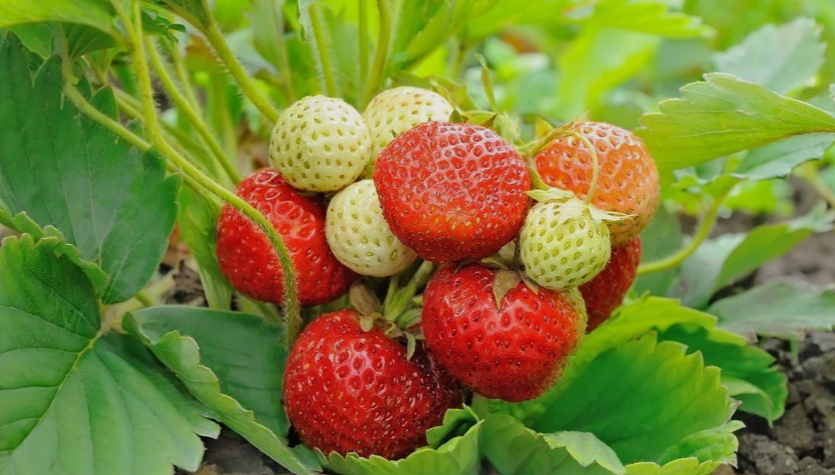
Cold hardy strawberries make it possible to pick fresh berries in places where winter lows fall far below zero. The garden strawberry is a low, leafy perennial that spreads by runners. It arose in Europe in the 1700s as a cross between two wild American species, and it is now grown on every inhabited continent.
Strawberries come in three types. June-bearing plants give one large crop in early summer, everbearing plants give two smaller crops, and day-neutral plants fruit steadily through the season. In the United States, California grows the great majority of the commercial crop.
The plant is less tough than its range suggests. An unprotected strawberry crown can be killed at about 15°F, a temperature most northern gardens pass in early winter. Snow or a thick layer of straw is what carries the plants through.
North Dakota State University recommends a 4-inch layer of clean straw and warns growers not to depend on snow alone. Variety matters just as much, since some strawberries survive hard winters far better than others. The 10 below are the most dependable, and each entry notes where they are grown.
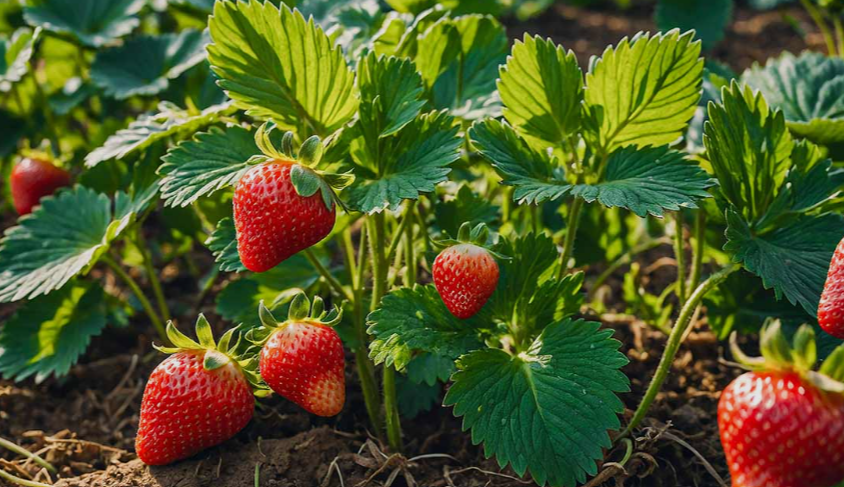
1. Honeoye
Honeoye is one of the most productive strawberries ever bred. Its berries are large, bright red and cone-shaped. The flavor is strong and slightly perfumed. It ripens in early to mid-season. The plants are vigorous and send out many runners.
Cornell University released it in 1979. Cornell notes that it has reigned as the yield king for many years. It is very winter-hardy and performs best in cooler locations. In hot weather the fruit turns dark, soft and bland. It is grown in New York, New England, the upper Midwest, Canada and northern Europe.
2. Jewel
Jewel is the leading mid-season strawberry in the Northeast. Its berries are large, glossy and wedge-shaped. The color is a bright, even red. The flavor is excellent, and the fruit is firm. It holds up well after picking.
Cornell University released it in 1985. Cornell calls it the favorite in its season and the one to beat for overall fruit quality. It is moderately winter-hardy and needs a good mulch in the coldest areas. It can lose vigor in poor or very cold sites. It is grown in New York, Pennsylvania, New England, Michigan, Wisconsin and Ontario.
3. Earliglow
Earliglow is famous for its flavor. Cornell still describes it as the best-tasting berry around. The fruit is medium-sized, glossy and deep red. It is one of the first strawberries to ripen each year. The berries are firm and sweet.
It was bred by government scientists in Maryland and released in 1975. Penn State calls it the best early-season variety for flavor and disease resistance. It is only moderately productive, and berry size drops after the first pickings. The plants are vigorous and hardy. It is grown in the Mid-Atlantic, the Northeast, the Midwest and southern Canada.
4. Sparkle
Sparkle is an old variety prized for jam. Its berries are medium-sized, dark red and soft. The flavor is rich and intense. It ripens in mid to late season. The fruit is red all the way through.
It was introduced in New Jersey in the 1940s. It has long been a favorite in northern gardens for its hardiness. It blooms late, which helps it escape spring frost. The soft fruit does not ship, so it is mainly a home garden berry. It is grown in New England, New York, the upper Midwest and eastern Canada.
5. Mesabi
Mesabi is a June-bearing strawberry bred for Minnesota winters. Its berries are medium to large and deep red. They are red throughout and moderately firm. University trials rate its flavor as excellent. It ripens in mid to late June.
The University of Minnesota released it in 1999 together with federal researchers. The university describes it as winter-hardy, with impressive disease resistance. It has been among the top yielders in trials the university has run since 1982. The fruit does not keep long and is best eaten soon after picking. It is grown in Minnesota, Wisconsin, the Dakotas, Michigan and the Canadian prairies.
6. Itasca
Itasca is among the hardiest strawberries available. The University of Minnesota rates it hardy through the colder half of the second-coldest garden zone. Its berries are medium-sized and richly colored. The flavor is tart and bright. The plants are very productive.
It was released in 2006 and is named for the lake at the source of the Mississippi River. It yields nearly as heavily as Mesabi in university trials. The fruit is somewhat soft, so it suits home gardens and pick-your-own farms. It resists several leaf diseases. It is grown in Minnesota, the Dakotas, northern Wisconsin and Manitoba.
7. Annapolis
Annapolis is a large-fruited, early strawberry from Nova Scotia. Its berries are medium to large and light red. The flavor is mild and sweet. It ripens just after the earliest varieties. The fruit freezes well.
It was released by Canadian government breeders in the 1980s. The plants are vigorous, winter-hardy and quick to form dense beds. It resists red stele, a serious root disease of wet soils. It is prone to mildew and to rot in crowded plantings. It is grown in Atlantic Canada, Quebec, Ontario, New England and the upper Midwest.
8. Cavendish
Cavendish is a high-yielding strawberry with very large fruit. Its flavor is sweet and less tart than that of Honeoye. The berries are firm and dark red. It ripens in early to mid-season. Cornell calls it a high-quality berry in a good year.
It was released in Nova Scotia in 1990. It resists red stele and verticillium wilt and tolerates black root rot. In hot weather the fruit can ripen unevenly, leaving pale patches. It is very winter-hardy. It is grown in Atlantic Canada, Quebec, the Canadian prairies, New England and the northern states.
9. Kent
Kent is a dependable strawberry for the coldest farming regions. Its berries are medium-sized and bright red. The flavor is good, and yields are very high. It is especially productive in new plantings. It ripens in mid-season.
It was released in Nova Scotia in the early 1980s. Manitoba’s agriculture department notes that it is known for winter hardiness on the Prairies. For years it made up much of the strawberry acreage there. The skin can turn soft in hot weather. It is grown in Manitoba, Saskatchewan, Alberta, Atlantic Canada and the northern Plains.
10. Fort Laramie
Fort Laramie is the best-known hardy everbearing strawberry. It gives a crop in early summer and another in late summer. Its berries are medium to large, bright red and aromatic. The fruit is fairly soft. The plants send out many runners.
It was developed at a federal horticultural station in Cheyenne, Wyoming, which opened in 1928. North Dakota State University recommends it and describes the plants as very cold-hardy. It is the most common strawberry grown in Wyoming, often outdoors with no cover. Its later flowering reduces the risk of frost damage to the crop. It is grown in Wyoming, Montana, the Dakotas, Colorado, Minnesota and the Canadian prairies.
Key Takeaways:
– Strawberry varieties differ in winter hardiness: Strawberries (Fragaria × ananassa) vary in their ability to withstand freezing temperatures. Many June-bearing varieties tolerate cold winters well, especially when protected by snow or winter mulch.
– Several varieties perform well in colder climates: ‘Honeoye’, ‘Jewel’, ‘Kent’, ‘Cavendish’, and ‘Sparkle’ are popular options for cold-climate gardens. Their performance depends on local conditions, so check regional growing recommendations before planting.
– Winter protection helps strawberry plants survive: Strawberry crowns can be damaged by repeated freezing and thawing. Applying clean straw mulch after plants become dormant can help insulate crowns and reduce winter injury.
– Strawberries have different fruiting habits: June-bearing varieties produce one main crop, while everbearing types generally provide two main harvest periods. Day-neutral varieties can continue producing fruit through much of the growing season when temperatures remain suitable.
– Sunlight and soil drainage are essential: Strawberries grow best in full sun and fertile, well-drained soil. Consistent moisture, adequate spacing, and good airflow support healthy plants and better fruit production.
– Choose varieties suited to your local climate: Consider USDA hardiness zones, winter temperatures, disease resistance, fruiting type, and harvest season. Selecting a locally recommended variety and providing suitable winter protection can improve plant survival and future yields.
Sources:
- Cornell University: Strawberry Variety Review
- University of Minnesota: Strawberries
- North Dakota State University Extension: Strawberries
- University of Minnesota Extension: Strawberry varieties and purchasing plants
- Cornell University: Strawberry Varieties, Tried and True
- Penn State Extension: Strawberry Variety Descriptions
- University of Wyoming Extension: Three strawberry types
- Manitoba Agriculture: Strawberry cultivars
- Wyoming Tribune Eagle: Fort Laramie strawberries
- Gardener’s Path: Winter care for strawberries
- Wikipedia: List of strawberry cultivars