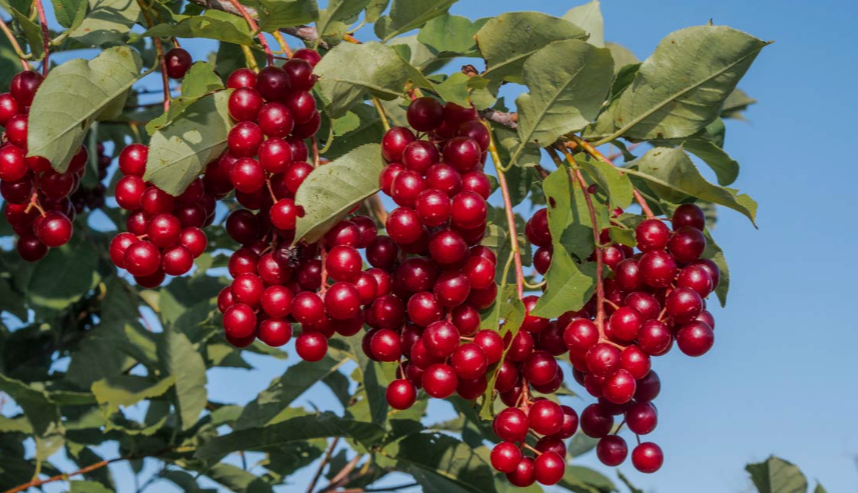
Cold-hardy cherry fruit trees make it possible to grow cherries where winter lows reach -30°F and beyond. Cherries are stone fruits in the same family as plums and peaches. They fall into two main groups, the sweet cherries eaten fresh and the tart cherries used for pies, juice and preserves.
The two groups differ sharply in toughness. University of Wisconsin researchers note that sweet cherries are less cold-hardy than tart cherries by at least 15°F to 20°F. Sweet cherries also bloom earlier, which exposes their flowers to late spring frost.
For that reason, nearly all cherries for cold regions are tart types. In the United States, Michigan grows most of the tart cherry crop, and Washington leads in sweet cherries. Tart cherries are self-fruitful, so a single tree will bear on its own.
The hardiest cherries of all came from decades of breeding on the Canadian prairies, where bush-sized trees were selected to survive -40°F. The 18 cherries below run from those prairie bushes to the toughest sweet varieties, and each entry notes where they are grown.
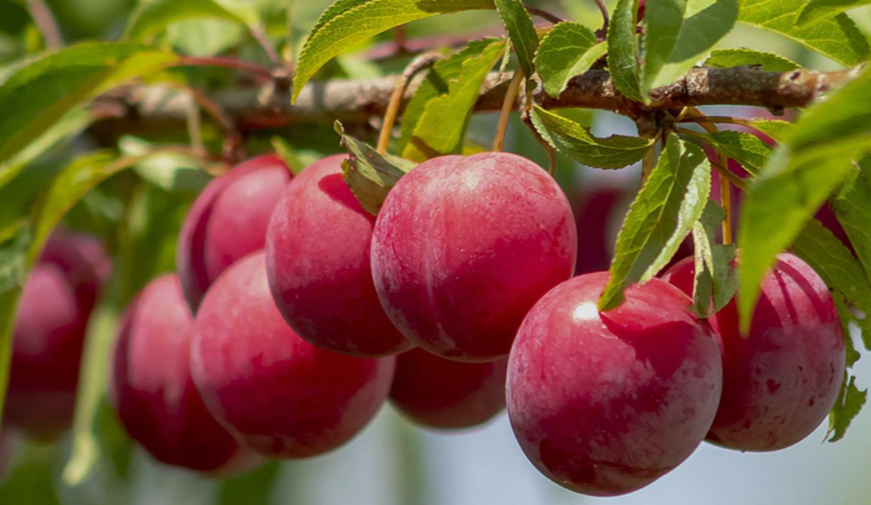
1. Evans
Evans is widely regarded as the hardiest tart cherry that grows as a true tree. Its fruit is bright red, with yellow flesh and clear juice. The flavor is tart and rich, and it sweetens if left on the tree. It ripens in late July or August. The tree is small and pollinates itself.
It was found growing near Edmonton, Alberta, where it had been cultivated locally for decades. An Alberta plant scientist named it and distributed it widely from the 1970s. It is also sold under the name Bali. It is a good producer even in Anchorage, Alaska. It is grown in Alberta, Saskatchewan, Alaska, Minnesota, Maine and the northern Plains.
2. Carmine Jewel
Carmine Jewel was the first of the dwarf prairie cherries. Its fruit is dark red, almost black, with red flesh and juice. It is moderately sweet for a tart cherry. It is the first of its group to ripen, near the end of July. The plant grows as a bush only 6 to 8 feet tall.
The University of Saskatchewan released it in 1999 from a breeding line that began in the 1940s. It survives winters in the coldest garden zones. Montana trials found it among the most productive during establishment. It grows on its own roots, so it regrows true if damaged. It is grown across the Canadian prairies, Montana, North Dakota, Minnesota and Wisconsin.
3. Romeo
Romeo is one of the sweetest of the prairie cherries. Its fruit is dark black-red. Its sugar level matches or exceeds that of many sweet cherries, though its acidity keeps it tart. It is excellent for juice and for eating fresh. It ripens in early to mid-August.
It was released as part of the university’s Romance series in the early 2000s. The breeder recommends it and Juliet as the best all-around varieties for the prairies. It was among the most productive in Montana trials. The bush grows about 6 to 8 feet tall. It is grown in Saskatchewan, Alberta, Manitoba, Montana and the northern states.
4. Juliet
Juliet is the best of the prairie cherries for eating fresh. Its fruit is dark red and large, at about 5 grams. The flavor is sweet for a tart cherry. It ripens in mid-August. The bush reaches about 6.5 feet.
It belongs to the Romance series from the University of Saskatchewan. Montana researchers found it slightly sweeter-tasting than Carmine Jewel and among the largest-fruited. It is hardy in the coldest garden zones. It suckers less than some of its sisters. It is grown across the Canadian prairies, Montana and the upper Midwest.
5. Cupid
Cupid bears the largest fruit of the prairie cherries. The cherries average about 6.5 grams. They are dark red to almost black. It ripens last in the series, in late August. The bush grows about 6.5 feet tall.
It blooms about a week later than the others. That late bloom helps it escape spring frost. It extends the dwarf cherry harvest into early September. It is hardy to the coldest garden zones. It is grown in Saskatchewan, Alberta and Manitoba.
6. Valentine
Valentine is the most traditional of the prairie cherries. Its fruit is bright scarlet red, like a classic pie cherry. It is the most tart of the series. It is recommended mainly for cooking and jam. It ripens in early to mid-August.
The bush is the tallest of the group, at about 8 feet. It was released with the rest of the Romance series. Its bright color sets it apart from its dark-fruited sisters. It is hardy to the coldest garden zones. It is grown in Saskatchewan, Alberta, Manitoba and the northern Plains.
7. Crimson Passion
Crimson Passion has the best fruit texture of the prairie cherries. Its cherries are almost black, firm and very sweet. They average about 6 grams. It ripens in early August. The bush is the shortest of the series, at about 5.5 feet.
It does not send up suckers, which makes it well suited to pots. It grows slowly and is the least vigorous of the group. It is somewhat less hardy while young, and Montana trials found it slow to flower. Yields are lighter than those of its sisters. It is grown in Saskatchewan, Alberta, Montana and the upper Midwest.
8. North Star
North Star is a dwarf pie cherry bred for Minnesota. Its fruit has bright red skin that deepens to mahogany. The flesh is yellow, juicy and tender. It ripens in early July. The tree grows only 7 to 10 feet tall.
The University of Minnesota released it in 1950. The university describes it as very productive and resistant to leaf spot and brown rot. It needs no second tree for pollination. It is hardy where winter lows reach about -30°F. It is grown in Minnesota, Wisconsin, Michigan, New England and the Mountain West.
9. Meteor
Meteor is a hardy, vigorous pie cherry. Its fruit is large and bright red. The flesh is yellow, firm and juicy. It ripens in mid-July. The tree is semi-dwarf, at 10 to 14 feet.
The University of Minnesota released it in 1952. It needs no cross-pollination. Its dense foliage helps shield the fruit from birds. It is hardy where winter lows reach about -30°F. It is grown in Minnesota, the Dakotas, Wisconsin, Montana and New England.
10. Mesabi
Mesabi is a cross between a sweet and a tart cherry. Its fruit is red and noticeably sweeter than other northern pie cherries. It has a small pit. It ripens later than Meteor. The tree is of medium size.
One experienced grower ranks it second only to Evans for hardiness in its group. It fruits consistently, and the cherries hang well on the tree. Its later ripening reduces losses to birds. It originated in Minnesota. It is grown in Minnesota, Wisconsin and northern New England.
11. Montmorency
Montmorency is the most popular tart cherry in North America. Its fruit is bright red, with light yellow flesh. It is very juicy and has the classic pie cherry flavor. It ripens in midseason. The tree is productive and self-fruitful.
It is an old French variety. It is the mainstay of the Michigan tart cherry industry. It is hardy where winter lows reach about -30°F, though growers in the coldest areas report failures. It is the standard against which other tart cherries are judged. It is grown in Michigan, Wisconsin, New York, Utah, Washington and Ontario.
12. Surefire
Surefire is a tart cherry bred to avoid spring frost. It blooms late, after most other cherries. Its fruit is bright red, with red flesh. It is self-fertile. The tree is productive but not highly vigorous.
Cornell University released it in 1993. Its late bloom gives it more reliable crops in frost-prone sites. A grower in central Minnesota reports that it stays healthy and seems hardy there. The fruit resists cracking in rain. It is grown in New York, New England, the upper Midwest and Ontario.
13. English Morello
English Morello is an old tart cherry with very dark fruit. The skin is deep red to nearly black. The flesh and juice are dark red as well. It ripens late, well after Montmorency. The tree is small and drooping.
It is self-fertile and bears reliably. It is hardy where winter lows reach about -30°F. The fruit is too tart for most people to eat fresh. It is prized for cooking, preserves and liqueur. It is grown in Britain, northern Europe and the northern United States.
14. Balaton
Balaton is a dark tart cherry from Hungary. Its fruit is deep red inside and out. It is firmer and higher in sugar than Montmorency. It ripens about a week later. The tree is large and vigorous.
A Michigan State University breeder brought it from Hungary in the 1980s. It resists cracking. Its winter hardiness is slightly less than that of other tart cherries. Minnesota growers find its wood hardy but its flowers unreliable there. It is grown in Michigan, New York, Utah, Ontario and Hungary.
15. Kristin
Kristin is one of the hardiest sweet cherries. Its fruit is large, black and firm. The flesh is red, aromatic and sweet. It ripens in early to mid-season. It needs another sweet cherry for pollination.
It was bred at Cornell University and tested in Norway. Michigan State University credits it with exceptional hardiness. It is said to survive winter lows of -25°F. It has moderate to good resistance to cracking in rain. It is grown in New York, Michigan, Montana, the Northeast and Norway.
16. BlackGold
BlackGold is a late-blooming sweet cherry. Its fruit is dark, firm and sweet. It ripens in late mid-season. It is self-fertile, which is unusual for a sweet cherry. Its late bloom makes it somewhat frost-resistant.
Cornell University introduced it in 2001. It pollinates every other sweet cherry that blooms at the same time. Michigan State University recommends it for home orchards in that state. It tolerates rain moderately well. It is grown in New York, Michigan, Pennsylvania, the Midwest and the Northeast.
17. WhiteGold
WhiteGold is a yellow sweet cherry with a red blush. Its flesh is light-colored, firm and sweet. It is self-fertile. It blooms in mid to late season. It ripens in early to mid-season.
Cornell University introduced it in 2001. Michigan State University lists it among the sweet cherries suited to that state, including sites outside the main fruit belt. Its light color attracts fewer birds than dark cherries. It is a good pollinator for other varieties. It is grown in New York, Michigan, the Midwest and New England.
18. Nanking Cherry
The Nanking cherry is a bush cherry from northern China and Mongolia. It bears bright scarlet fruit about half an inch across. The cherries are juicy and sweet-tart. They are eaten fresh or made into jelly and juice. Pale pink flowers cover the branches very early in spring.
It is hardy where winter lows reach -40°F and colder. It grows 6 to 10 feet tall and wide. Two plants are needed for good fruit set. The University of Minnesota once released a named selection of it. It is grown across the Canadian prairies, the northern Plains and the Mountain West.
Key Takeaways:
6 Key Takeaways: Cold-Hardy Cherry Fruit Trees
– Cherry trees differ in cold tolerance: Sour cherries (Prunus cerasus) are generally more winter-hardy than sweet cherries (Prunus avium), making many sour cherry varieties suitable for regions with colder winters.
– Several varieties perform well in cold climates: ‘North Star’, ‘Meteor’, ‘Montmorency’, and ‘Balaton’ are popular sour cherry cultivars known for their suitability for cold-climate gardens. Their performance depends on local conditions and rootstock.
– Sweet and sour cherries have different uses: Sweet cherries are commonly eaten fresh, while sour cherries are often used in pies, jams, preserves, and juices. Both types can be grown in suitable climates.
– Winter hardiness does not guarantee a reliable harvest: Cherry trees may survive freezing winters but lose blossoms or developing fruit to late spring frosts. Flowering time and local weather conditions therefore matter when selecting a variety.
– Sunlight and pollination influence fruit production: Cherry trees generally grow best in full sun and well-drained soil. Many sour cherry varieties are self-fertile, while some sweet cherry cultivars require a compatible pollinator.
– Choose varieties suited to your growing zone: Check USDA hardiness zones, chill-hour requirements, disease resistance, and expected harvest dates before planting. Selecting the right variety helps support healthy growth and consistent fruit production.
Sources:
- University of Saskatchewan: Zone 2 hardy Sour Cherries
- University of Minnesota: Cherries
- Michigan State University: Cherries for the Backyard in Michigan
- Montana State University: dwarf sour cherries
- University of Wisconsin: Carmine Jewel
- University of Wisconsin: Sweet Cherry
- Michigan State University: Sweet Cherry Varieties for Eastern U.S.
- Michigan State University: Growing Balaton
- Washington State University: cherry varieties
- Fruit Growers News: Canada’s dwarf sour cherries
- Good Fruit Grower: Fruit from the prairie
- Prairie Gardens: sour cherry information
- Sunset: hardier cherry varieties
- Brainerd Dispatch: Ask the Master Gardener
- Cummins Nursery: Balaton Cherry
- NAFEX list: sour cherry varieties