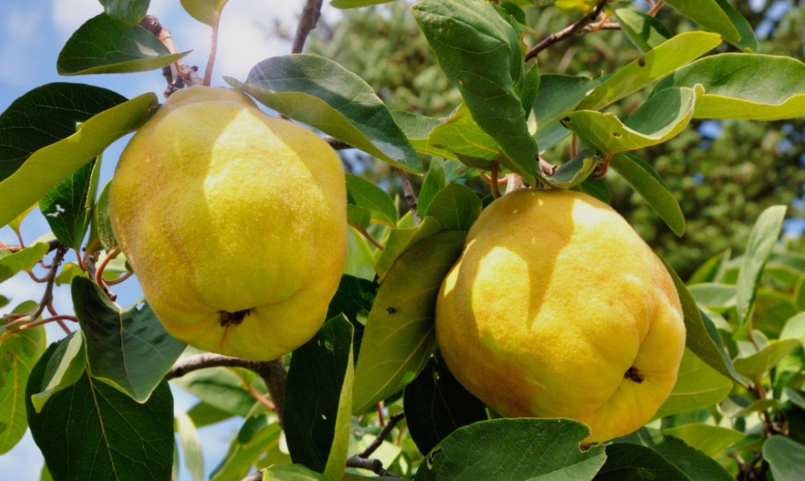
Types of quince fruits are far more varied than the single yellow fruit most shoppers picture. The quince is one of the oldest cultivated fruits, native to the Caucasus and Central Asia, where wild trees still grow in Iran, Azerbaijan and Turkmenistan. Many historians believe the golden apples of Greek myth were quinces.
The tree is small, usually 8 to 12 feet tall, with twisted branches and large, pale pink flowers. Its fruit is hard, fragrant and covered in gray fuzz that rubs off when ripe. Most varieties are too firm and astringent to eat raw, but long cooking turns the flesh soft, sweet and pink to deep red.
World production reached an all-time high of 702,015 metric tons in 2022. Turkey grew 197,503 tons of that total, or about 28%, followed by China at roughly 116,000 tons and Iran at about 90,000. Morocco, Azerbaijan and Argentina are the next largest producers.
The quince is a very minor crop in the United States. The University of California reports that about 180 acres are grown commercially in Tulare County, in the San Joaquin Valley. California produced roughly 205 tons in 2012, worth about 440,000 dollars.
The fruit is prized for its pectin, which made it the standard base for jellies before commercial gelatin appeared. The 21 quinces below include American, European, Turkish, Russian and Asian varieties, along with two related fruits that share the name. Each entry notes where the variety originated and where it is grown today.
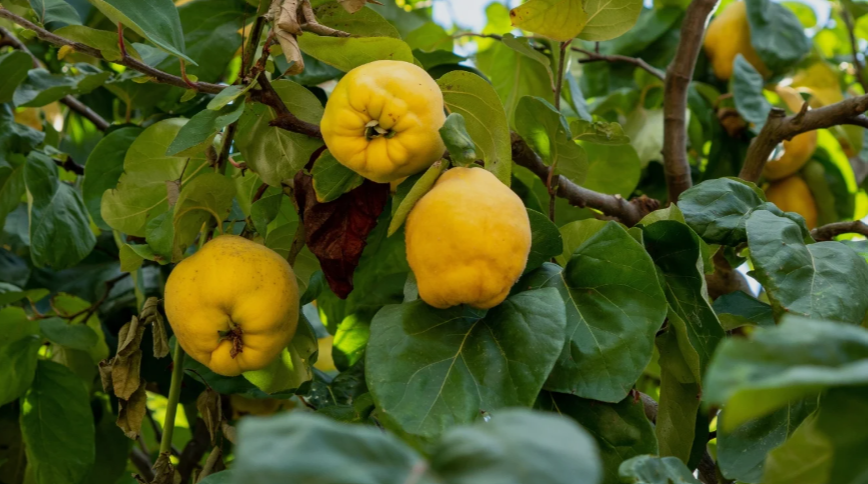
1. Smyrna
Smyrna is a large, oblong quince with furrowed, lemon-yellow skin covered in brown fuzz. It was brought from the city of Smyrna in Turkey to Fresno, California, in 1897. The flesh is light yellow, tender and very fragrant.
It keeps longer in cold storage than any other common variety. The tree needs only about 200 hours of winter chill, which suits mild climates. It is grown in California’s San Joaquin Valley and in home gardens across the Southwest.
2. Pineapple
Pineapple is a large, round quince with smooth, golden skin and white flesh. Plant breeder Luther Burbank developed it in Santa Rosa, California, and released it in 1899. He bred it to cook as tender as an apple and named it for a flavor that reminded him of pineapple.
Harvard University’s Arnold Arboretum notes that Pineapple and one other Burbank variety remain in commercial production. It is the leading quince grown in California. It also does well in home orchards in the Pacific Northwest and the South.
3. Orange
Orange is an old American variety with round, apple-shaped fruit and bright golden skin. It is also sold as the apple quince. The flesh is orange-yellow and richly flavored.
It ripens early, in September in California. The tree has a low chilling requirement and bears reliably. It is grown in home orchards across California, the Midwest and the eastern states.
4. Champion
Champion is a medium to large, pear-shaped quince with greenish-yellow skin and flesh. It is an American variety from the 1800s. The fruit has a mild, delicate flavor and ripens late.
University of California Cooperative Extension lists it among the common varieties for California, with harvest in early October. The tree begins bearing while young and is cold-hardy. It is grown in the Northeast, the Midwest and the Pacific Coast states.
5. Van Deman
Van Deman is a very large, oblong quince with smooth, pale orange skin. Luther Burbank selected it in Santa Rosa, California, from about 700 crosses of the Orange and Portugal varieties, and introduced it in 1891. It was named for the first head of fruit science at the federal agriculture department.
The pale yellow flesh is coarse and aromatic and turns deep red when cooked. The tree is vigorous and hardier than most quinces. It is grown in California and in home orchards across the country.
6. Cooke’s Jumbo
Cooke’s Jumbo is known for its size, with fruits that can reach 6 to 8 inches across. It originated in California’s San Joaquin Valley in the 1970s. The skin is yellow-green, and the flesh is white.
The fruit is used for baking, jellies and preserves. One quince can be enough for a whole batch of jam. It is grown mostly in home orchards in California and other mild-winter parts of the West.
7. Meech’s Prolific
Meech’s Prolific is a large, pear-shaped quince with fine-textured, bright yellow skin. It originated in Connecticut around 1850 and was grown in Vineland, New Jersey, before being introduced in 1883. The fruit is exceedingly fragrant and can weigh up to 18 ounces.
The tree bears early and crops heavily every year. It also resists blight better than Champion. It is grown in the eastern United States and is one of the most popular garden quinces in Britain.
8. Rea’s Mammoth
Rea’s Mammoth is a strain of the Orange quince selected for very large fruit. It was raised in New York in the 1800s. The fruit is round, golden and handsome.
The tree is strong-growing and productive, with darker leaves than the ordinary Orange. It ripens slightly later than its parent. It is now an heirloom, grown by collectors in the Northeast and Midwest.
9. Portugal
Portugal is one of the oldest named quinces, known in England since the early 1600s. The fruit is large, oblong and golden-yellow with heavy fuzz. It is valued for flesh that turns a deep crimson when cooked.
The tree is vigorous but less cold-hardy than most. It is one parent of the Van Deman quince. It is grown in Portugal, Spain and Britain, and in mild-winter regions elsewhere.
10. Vranja
Vranja is a very large, pear-shaped quince with pale gold skin. It comes from the area around Vranje in southern Serbia. Single fruits have been recorded at nearly 3 pounds.
The flesh is tender and strongly perfumed. The tree is upright and vigorous, with large leaves. It is widely grown in the Balkans and is a favorite in British gardens.
11. Leskovac
Leskovac is a round, apple-shaped quince from the Leskovac district of Serbia. It is sometimes sold as Serbian Gold. The fruit is medium to large, with golden skin and aromatic flesh.
It is the main quince grown in Serbia. Much of the crop is made into preserves and a traditional fruit brandy. The tree is hardy and is also planted in central and eastern Europe.
12. Aromatnaya
Aromatnaya is a round, bright yellow quince from the Krymsk fruit research station in southern Russia. Its name means fragrant. The flesh has a lemony flavor and less astringency than most varieties.
Thin slices can be eaten fresh when the fruit is fully ripe. The tree shows good disease resistance. It is grown in southern Russia and has become a common choice for home orchards in the Pacific Northwest.
13. Kuganskaya
Kuganskaya is a medium to large quince from the Black Sea region of Russia. It is one of the few varieties described as sweet enough for fresh eating. The fruit is round and yellow.
It ripens somewhat late. Growers who have compared the Russian varieties often rank it among the best for eating raw. It is grown in southern Russia and by enthusiasts in Oregon and Washington.
14. Krymsk
Krymsk, also sold as Crimea, is another sweet quince from southern Russia. It is closely related to Kuganskaya, and the two have shared a Russian name. The fruit is round to slightly pear-shaped, with golden skin.
The flesh is mild and can be eaten fresh in thin slices. It ripens a little earlier than Kuganskaya. It is grown in the Black Sea region and in specialist orchards in the Pacific Northwest.
15. Ekmek
Ekmek is one of the most important quinces in Turkey, and its name means bread. It is the main variety of western Turkey and the Aegean coast. The fruit is medium to large, and the flesh is soft enough to eat fresh.
A study shared by Çukurova University found that Ekmek had the highest fruit weight among the Turkish varieties tested. It also ranked high in acidity and antioxidant capacity. It is grown across the Aegean and Marmara regions.
16. Eşme
Eşme is a roundish, blunt-ended quince and the leading commercial variety in Turkey. It is grown most intensively in the Geyve district of Sakarya Province, east of Istanbul. The fruit is large, yellow and firm.
It stores and ships well, which makes it the main export quince. Turkey supplied about 42% of the world’s quince exports in 2022. Eşme is also planted in Bursa, Bilecik and other provinces of northwestern Turkey.
17. Isfahan
Isfahan is a large, pear-shaped quince from the province of the same name in central Iran. The skin is bright yellow, and the flesh is aromatic and fairly sweet. It is the best-known quince in Iranian markets.
The fruit is used in stews, jams and syrups, and the seeds are used in traditional remedies. Iran is one of the world’s largest quince producers. Isfahan is grown mainly in the central and northwestern parts of the country.
18. Kaunching
Kaunching is a sweet quince that reached the United States from the former Soviet Union. The fruit is round and yellow, with mild flesh. It is one of several low-astringency varieties held in the national fruit collection in Corvallis, Oregon.
Thin slices can be eaten raw. Tasters usually place it between Aromatnaya and the sweeter Kuganskaya. It is grown by home orchardists in the Pacific Northwest.
19. Karp’s Sweet
Karp’s Sweet is a round quince that came from the Arequipa region of Peru, where it is called the apple quince. A family brought it to Simi Valley, California, and it was later named for a fruit writer who shared it. The flesh is juicy and unusually low in astringency.
In warm climates it ripens sweet enough to eat like an apple. In cooler regions the fruit stays firmer and more tart. It is grown in southern California and in Peru.
20. Chinese Quince
The Chinese quince belongs to a different group from the common quince. It is a large, oblong, smooth-skinned fruit 5 to 7 inches long that ripens to deep yellow. The flesh is very hard and woody, with a strong, sweet scent.
The tree is ornamental, with bark that flakes in patches of gray, green and orange. The fruit is sliced for tea, syrup and candy. It is grown in China, Korea and Japan and is planted as a garden tree in the American South.
21. Japanese Quince
The Japanese quince, also called flowering quince, is a thorny shrub from East Asia. Its fruits are small, round and yellow-green, usually 1.5 to 2.5 inches across. They are extremely sour and rich in pectin.
The shrub is grown mainly for its red, pink or white spring flowers. The fruit makes excellent jelly and is pressed for juice. It is planted in gardens across the United States and is farmed for fruit in Latvia and Lithuania.
Key Takeaways:
- Quince fruits belong to the species Cydonia oblonga and are closely associated with apples and pears, sharing similar shapes and belonging to the rose family (Rosaceae).
- Quince fruits are usually yellow when ripe, with some varieties producing round, apple-shaped fruits while others develop a more elongated, pear-like appearance.
- Most quince varieties have firm, aromatic flesh that is often too hard and astringent to enjoy raw. Cooking softens the flesh and brings out its distinctive sweet, fragrant flavor.
- Quince trees grow best in temperate climates with full sunlight and well-drained soil. They are cultivated in many regions, including parts of Europe, Asia, North Africa, and the Mediterranean.
- Quince fruits are widely used in cooking, particularly for making jams, jellies, preserves, sauces, desserts, and traditional fruit pastes because their flesh contains pectin.
- Quince fruits offer nutritional benefits, providing dietary fiber and vitamin C, along with various plant compounds. Their unique fragrance, culinary versatility, and ornamental trees make quince a valued fruit in many cultures.
Sources:
- University of California: Quince
- Harvard University, Arnold Arboretum: The Unappreciated Quince
- UC Cooperative Extension: quince cultivars for California
- Çukurova University: quince cultivars grown in Türkiye
- Ankara University: Türkiye’s quince trade
- Tekirdağ Namık Kemal University: Eşme quince orchards in Geyve
- HelgiLibrary: quince production 2022
- USDA GRIN: Smyrna quince
- USDA GRIN: Pineapple quince
- USDA GRIN: Van Deman quince
- USDA GRIN: Meech’s Prolific
- USDA GRIN: Karp’s Sweet Quince
- USDA GRIN: Aromatnaya
- USDA GRIN: Kuganskaya
- Heritage Fruits Society: quince varieties