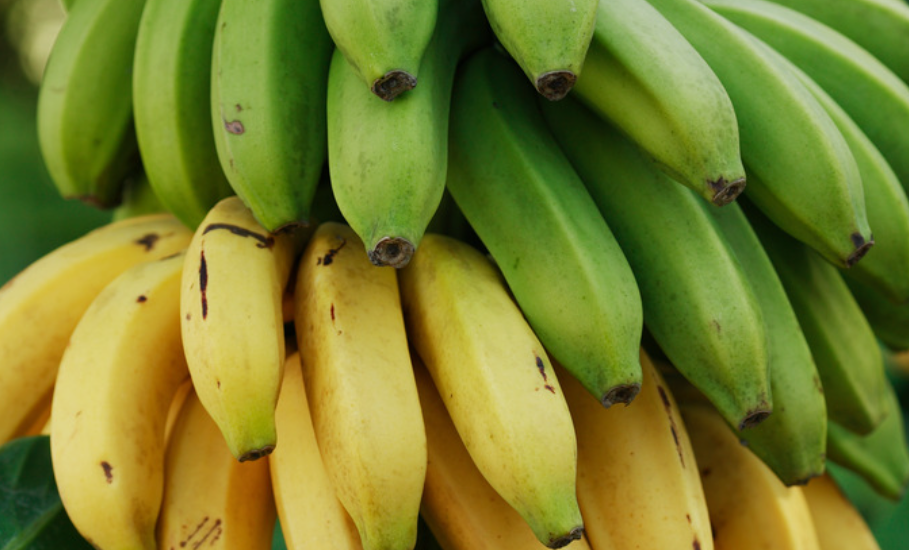
Fruits that resemble bananas are found in many parts of the world, from tropical rainforests to temperate woodlands and home gardens. Some have the familiar elongated, curved shape of a banana, while others resemble bananas because of their yellow or green skin, clustered growth, or soft, creamy flesh.
Fruit lookalikes are not necessarily closely related. For example, the pawpaw (Asimina triloba) is a North American fruit that resembles a short, plump banana, while certain melons develop long, slender shapes that look quite different from the round melons found in supermarkets. These similarities show how fruits from unrelated plant families can develop comparable shapes and appearances.
There is considerable variety among fruits that look like bananas. Some are sweet and aromatic, others are tart or mildly acidic, and some have a custard-like texture when ripe. Their skin can be green, yellow, orange, or brown, and their sizes range from small, finger-shaped fruits to larger, elongated varieties.
In this guide, we explore 18 fruits that look like bananas, including their identifying features, flavors, origins, and common uses. Resources from authoritative institutions, such as Penn State Extension’s guide to unusual fruits, provide further information about unusual fruits such as the pawpaw.
1. Pawpaw
The North American pawpaw is one of the closest natural lookalikes to a short, thick banana. Its fruits are usually oblong or cylindrical, with thin green skin that may turn yellowish as the fruit ripens. Inside, the flesh is soft, creamy, and yellow to golden, with several large, dark seeds.
Ripe pawpaw has a sweet, custard-like flavor often compared with banana, mango, and other tropical fruits. The fruit grows on a small deciduous tree native to eastern North America rather than on a tropical banana plant. Clemson University’s pawpaw guide provides additional information about its appearance, ripening, and growing requirements.
2. Banana Passionfruit
Banana passionfruit gets its name from its long, curved fruit, which can resemble a small banana. The skin is often yellowish when mature, and the fruit develops on a climbing vine rather than a tree. When opened, it contains juicy pulp and numerous seeds typical of passionfruit.
Its flavor is aromatic, sweet, and tangy, making the pulp suitable for juices, desserts, and other fruit preparations. The plant is native to the Andean region of South America, although it has been introduced elsewhere. Its elongated shape makes it a particularly convincing banana lookalike.
3. Banana Melon
Banana melon is an elongated muskmelon variety that can look surprisingly similar to a large, straight banana. Its skin is usually pale yellow when mature, and some fruits develop a slightly curved shape with subtle ridges. The interior commonly has salmon-orange or orange flesh rather than the pale cream flesh associated with ordinary bananas.
When ripe, banana melon has a sweet, fragrant flavor and a juicy texture. It belongs to the melon family and grows on a trailing vine close to the ground. Oregon State University’s guide to types and varieties of melons explains the diversity of melon shapes, sizes, colors, and flesh types.
4. Snake Melon
Snake melon is a long, slender member of the muskmelon species, Cucumis melo. Its fruits can grow into curved or winding shapes, making them resemble unusually long green bananas. The skin is typically green or pale green with lighter stripes, and the flesh is usually pale and crisp.
Unlike sweet dessert melons, snake melons are often harvested young and eaten more like cucumbers. They are used in salads, pickles, and cooked dishes in several regions. Their elongated shape is the main reason they belong among fruits that can be mistaken for bananas.
5. Armenian Cucumber
Despite its common name, the Armenian cucumber is botanically a type of melon. Its long, narrow fruits often bend slightly as they grow, and their pale green skin has noticeable longitudinal ridges. When mature, some fruits become long enough to resemble large green bananas.
Armenian cucumbers have crisp, watery flesh and a mild flavor similar to ordinary cucumbers. They are generally harvested before becoming overripe and are eaten raw, pickled, or added to salads. The plant grows as a warm-season vine and needs space to spread or climb.
6. Cassabanana
Cassabanana is a tropical fruit that can grow into a long, curved cylinder resembling an oversized banana. Its skin often becomes reddish-purple, maroon, or dark orange as it matures, depending on the variety and growing conditions. The fruit can be much larger than an ordinary banana, with a firm outer rind and aromatic flesh.
Cassabanana is grown on a vigorous climbing vine and is valued for its distinctive fragrance. The ripe fruit is used in some regions for drinks, desserts, and sweet preparations. Its size and elongated form make it a striking example of a banana-shaped fruit from an unrelated plant family.
7. Monstera Fruit
The fruit of Monstera deliciosa, commonly called ceriman or Swiss cheese plant fruit, develops as an elongated, green, cone-like structure. Its surface is covered with hexagonal plates that give it a distinctive textured appearance. Although it does not have the smooth peel of a banana, its elongated shape and pale flesh make it an interesting comparison.
When fully ripe, the edible portions have a soft, creamy texture and a flavor often compared with banana, pineapple, and mango. Only fully ripened portions should be eaten because unripe fruit contains irritating calcium oxalate crystals. The University of Wisconsin’s horticulture guide to Monstera deliciosa explains its unusual fruit and ripening process.
8. Ice Cream Bean
Ice cream bean grows in long, often curved pods that can resemble oversized green bananas. The pods have a thick outer covering, while the inside contains large seeds surrounded by soft, white, cotton-like pulp. The edible pulp is the main reason this tropical tree is cultivated.
The pulp is sweet and is often described as having a flavor reminiscent of vanilla ice cream. Ice cream bean trees are native to tropical parts of Central and South America and are grown in some regions for food and shade. Although the pod resembles a banana, its interior structure is very different.
9. Tamarind
Tamarind produces elongated, slightly curved pods that can resemble small, brown bananas, especially when viewed from a distance. The outer shell becomes brittle as the fruit matures, revealing sticky brown pulp surrounding several hard seeds. Unlike a banana’s soft, uniform flesh, tamarind pulp is concentrated around the seeds inside the pod.
The pulp has a distinctive sweet-and-sour flavor and is widely used in sauces, chutneys, drinks, soups, and other dishes. Tamarind grows on a tropical tree and is cultivated in many warm regions. Its curved form and elongated outline make it a recognizable fruit lookalike.
10. Carob
Carob fruits are long, flattened pods that often turn dark brown or chocolate-brown when mature. Their curved outlines can resemble small, straight bananas, although the pods are much flatter and firmer. Inside, the pod contains hard seeds embedded in sweet, dry pulp.
Carob is commonly grown in Mediterranean climates and other warm regions. The dried pulp is used as an ingredient in powders, baked goods, and other foods, sometimes as an alternative to cocoa. Unlike bananas, carob pods are not usually eaten as a soft, fresh fruit.
11. Jackfruit
Jackfruit is much larger than a banana, but its elongated, oblong shape can create a broad visual resemblance. The exterior is green to yellow-green and covered with numerous small, blunt projections. Inside, the fruit contains yellow, fleshy bulbs surrounding seeds.
Ripe jackfruit has a sweet tropical flavor, while unripe jackfruit is often used in savory dishes because of its firmer texture. The tree is native to South and Southeast Asia and produces some of the largest edible tree fruits in the world. Its shape and yellow flesh make it a useful comparison in an article about banana lookalikes.
12. Soursop
Soursop usually has a heart-shaped or elongated oval form, with green skin covered in soft, curved spines. Some fruits are narrow and slightly curved, giving them a loose resemblance to a thick banana. When cut open, the fruit reveals white, fibrous flesh containing dark seeds.
The flesh has a sweet, tangy flavor often associated with tropical fruit drinks, desserts, and juices. Soursop grows on a small tropical tree and is cultivated in warm climates. Its shape is less banana-like than that of pawpaw, but the elongated fruits can look similar at a glance.
13. Cherimoya
Cherimoya is a tropical fruit with green skin and a rounded, heart-shaped or elongated form. Some fruits develop a longer outline that can loosely resemble a thick banana, although their bumpy, segmented skin makes them easy to distinguish. The flesh is creamy white and contains several dark seeds.
Ripe cherimoya has a sweet, aromatic flavor often compared with a mixture of banana, pineapple, and other tropical fruits. It grows on a small tree native to the Andes of South America and is cultivated in suitable subtropical climates. The soft flesh is generally eaten fresh after the seeds are removed.
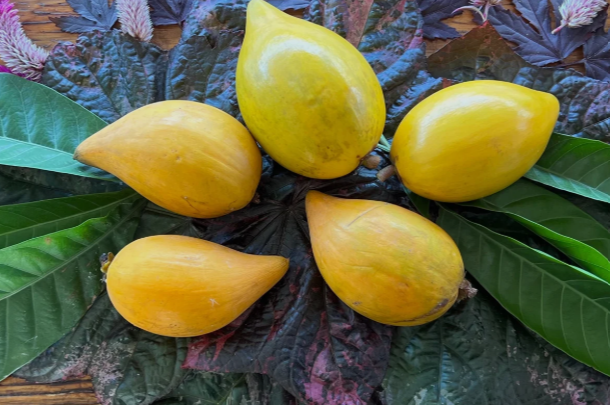
14. Canistel
Canistel, also known as eggfruit, has yellow or orange-yellow skin and an oval to elongated shape. Some fruits taper toward one end, giving them a slight resemblance to a short, thick banana. Its interior is bright yellow, with a dense texture that differs considerably from the juicy flesh of most banana lookalikes.
When ripe, canistel has a sweet flavor and a texture often compared with cooked egg yolk or soft custard. The fruit grows on a tropical evergreen tree and is cultivated in parts of Central America, the Caribbean, and other warm regions. It is commonly eaten fresh or incorporated into shakes, desserts, and baked foods.
15. Plantain
Plantains are closely related to common dessert bananas and have the same characteristic elongated, curved shape. They are often larger and firmer than supermarket bananas, with thick green, yellow, or darkening skin depending on their stage of ripeness. Their flesh is usually starchier, particularly when the skin is still green.
Unlike sweet dessert bananas, plantains are commonly cooked before eating. They can be fried, boiled, baked, grilled, or mashed, and they are important staple foods in many tropical regions. Plantains are banana relatives rather than unrelated lookalikes, but they are among the fruits most likely to be compared with ordinary bananas.
16. Red Banana
Red bananas resemble conventional bananas in their elongated, curved form, but their skin develops reddish, maroon, or purple-red tones as they ripen. The flesh is typically cream-colored to pale pinkish-orange, depending on the cultivar. They may be shorter and plumper than familiar yellow bananas.
Ripe red bananas are generally sweet and soft, with some varieties offering fruity or berry-like notes. They are eaten fresh and can also be used in smoothies, fruit salads, and desserts. Their unusual skin color makes them easy to distinguish from standard yellow bananas while retaining the same overall shape.
17. Lady Finger Banana
Lady Finger bananas are typically smaller and more slender than many common commercial bananas. Their narrow, curved fruits have thin yellow skin when ripe, making them look like miniature versions of the familiar banana. The flesh is usually creamy and sweet.
These bananas are eaten fresh and are valued for their convenient size and flavor. They are grown in several tropical and subtropical regions, although names and exact characteristics can vary between markets and cultivars. Their small, finger-like shape is a clear example of how different banana varieties can look alike while differing in size and taste.
18. Blue Java Banana
Blue Java bananas are a distinctive banana cultivar known for the bluish-green, waxy appearance of their skin before full ripeness. Their fruits are elongated and curved, similar to conventional bananas, though they may be thicker and more angular. As they ripen, the skin usually becomes paler and more yellow.
The flesh is creamy and sweet, and the variety is sometimes nicknamed the ice cream banana because of its texture. Blue Java bananas grow on large tropical plants and are cultivated in some warm regions. Like plantains, red bananas, and Lady Finger bananas, they are banana varieties rather than separate botanical lookalikes.
Key Takeaways:
- Many fruits resemble bananas in shape and appearance, including pawpaw, banana passionfruit, banana melon, cassabanana, and snake melon.
- Not all banana lookalikes are closely related to bananas. Some belong to entirely different plant families but share similar elongated shapes, colors, or textures.
- Banana-like fruits vary in color, with skins ranging from green and yellow to orange, reddish-purple, and brown, depending on the species and stage of ripeness.
- Their flavors and textures differ considerably. Some have sweet, creamy flesh, while others are tangy, crisp, fibrous, or mildly acidic.
- Several banana lookalikes grow on vines or trees in tropical and subtropical regions, although some, such as the North American pawpaw, grow in temperate climates.
- Some unusual fruits require careful identification before eating. For example, unripe Monstera fruit contains irritating compounds and should not be consumed until it has ripened properly.
- Appearance alone is not enough to identify a fruit. Examining its skin, flesh, seeds, growing habit, and ripeness helps distinguish banana lookalikes and understand their culinary uses.
Sources:
- University of Florida: Banana Growing in the Florida Home Landscape
- Kentucky State University: Pawpaw Description and Nutritional Information
- University of Arizona: Banana yucca
- University of Kentucky: Pawpaw
- Kentucky Monthly: Kentucky pawpaws
- Chandler-Gilbert Community College: Banana yucca field guide
- Statista: per capita availability of fresh bananas, USDA data
- FAO: world banana production by type