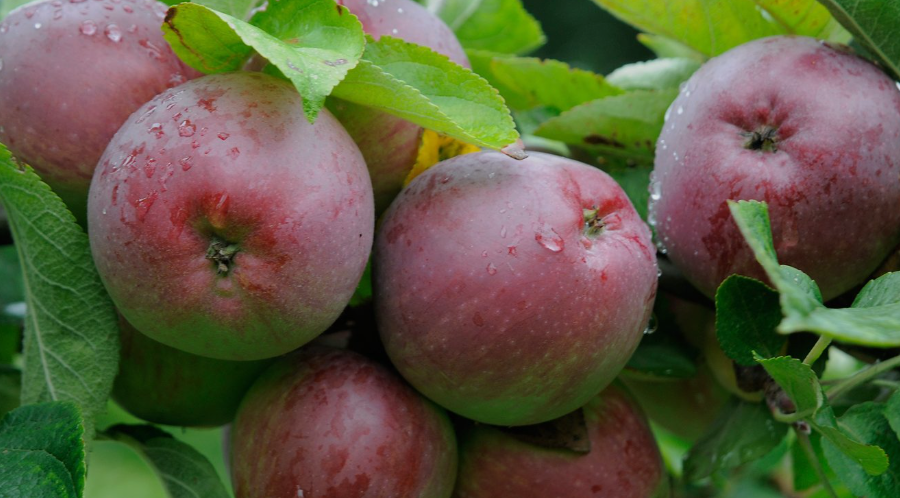
Fruits that look like apples turn up in orchards, hedgerows, tropical markets and even on beaches, and many of them have no connection to the apple at all. Lookalike fruits are common throughout the plant world, since round shapes, smooth skins and red or green colors have evolved again and again in unrelated families. The resemblance is often close enough to fool anyone who is not looking carefully.
Some of the confusion is built into the language. For centuries the word apple was used for almost any round fruit, which is how the pineapple, the custard apple and the pomegranate got their names. The apple’s own family, the rose family, adds to the muddle, since it contains about 3,000 species and includes pears, quinces, medlars and hawthorns.
Most lookalikes are harmless, and many are delicious, but mistaken identity does carry some risk. American poison centers recorded 668,111 plant ingestions between 2000 and 2009, and children younger than 6 accounted for 88% of them. More recent figures show over 28,000 plant-related calls in 2023, with about 95% of accidental cases managed safely at home.
The 21 fruits below are grouped loosely, beginning with the apple’s own relatives and moving on to tropical fruits that only share its shape. One of them is dangerously poisonous and is placed last so that it stands out. A quick test for a true apple is to cut it across the middle, where the core shows five seed chambers arranged in a star.
1. Asian Pear
The Asian pear is round, firm and crisp, with yellow or bronze skin that makes it look like a russet apple. It comes from China, Japan and Korea, where it has been grown for thousands of years. The flesh is very juicy and sweet, with the slightly grainy texture of a pear.
Clemson University notes that the nickname apple pear is misleading, because the fruit is not a cross between an apple and a pear. Most varieties simply share the apple’s round shape and crunch. In the United States it is grown mainly in California and Oregon and is harvested from August to October.
2. Quince
The quince is a golden-yellow fruit shaped like a lumpy apple or a short pear. It is native to the Caucasus region and Iran and belongs to the same family as the apple. The skin is covered with gray fuzz that rubs off when the fruit is ripe.
The raw flesh is hard, dry and astringent, so the fruit is almost always cooked. Long simmering turns it soft, fragrant and deep pink. It is used for jelly, preserves and the firm Spanish paste called membrillo.
3. Flowering Quince
The flowering quince is an ornamental shrub from East Asia that bears small, apple-shaped fruits about 2 inches across. The fruits ripen from green to yellow in fall and often carry a red blush. They sit close to the thorny branches and are easy to overlook among the leaves.
The flesh is extremely hard and sour, far more so than a true quince. It is rich in pectin and makes a good jelly when cooked with sugar. Most gardeners grow the shrub for its red, pink or white spring flowers and leave the fruit to the wildlife.
4. Crabapple
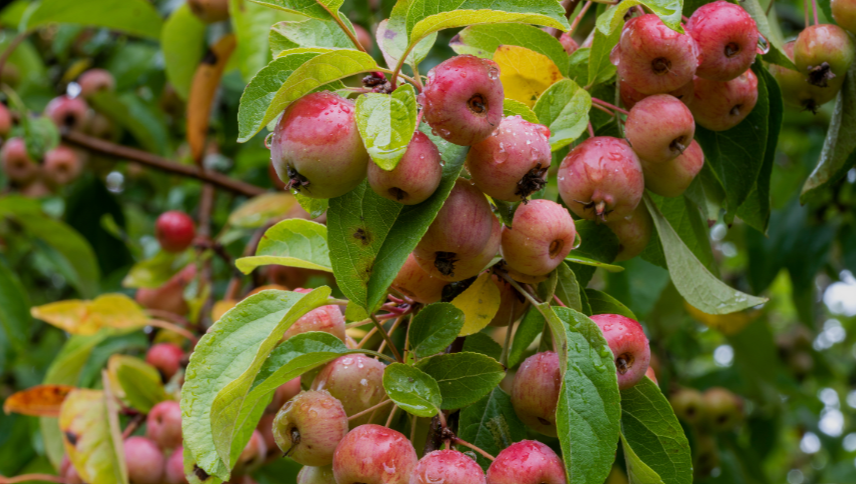
The crabapple is the closest lookalike of all, since it is a true apple in miniature. Any apple with fruit less than 2 inches in diameter is classed as a crabapple. The fruits may be red, yellow, orange or green, and they hang on long, thin stems.
Most crabapples are too sour and astringent to enjoy raw. Their high acid and pectin content makes them excellent for jelly and cider. Several species are native to North America, and hundreds of ornamental varieties are planted for their spring blossom.
5. Medlar
The medlar looks like a small, brown, flattened apple with an open, crown-like hollow at the blossom end. It comes from southwest Asia and southeastern Europe and is another member of the apple’s family. The skin is rough and russeted, and the fruit is 1 to 2 inches across.
The fruit is rock hard and inedible when first picked in late fall. It must be stored for several weeks until the flesh turns soft and brown, a process called bletting. The ripened pulp tastes like spiced applesauce and was a favorite winter fruit in medieval Europe.
6. Mayhaw
The mayhaw is the fruit of a native Southern hawthorn and resembles a tiny crabapple. The University of Georgia describes it as a small, tart, apple-like fruit that ranges from yellow to deep red. Wild fruits are about half an inch wide, and selected varieties can reach an inch.
The trees grow in river bottoms and swamps from Texas to Georgia and northern Florida. The fruit ripens in late April and May and is prized for a clear, rosy jelly. Colquitt, Georgia, calls itself the mayhaw capital of the world, and Louisiana has named the mayhaw its official state fruit tree.
7. Chinese Hawthorn
The Chinese hawthorn bears bright red fruits that look like small, glossy apples dotted with pale specks. It is native to northern China, where it has been cultivated for many centuries. The fruits are 1 to 1.5 inches wide, much larger than those of most hawthorns.
The flesh is tart and mealy, with several hard seeds at the center. In China the fruits are threaded on sticks and coated with hardened sugar syrup as a street snack. They are also pressed into thin, sweet discs known as haw flakes.
8. Jujube
A fresh jujube looks like a small, smooth apple, green at first and then mottled with red-brown as it ripens. The tree has been grown in China for more than 4,000 years. The flesh at this stage is white, crisp and sweet, with a texture very close to that of an apple.
Left on the tree, the fruit wrinkles, darkens and dries into something like a date. The tree tolerates heat, drought and poor soil. It is grown in California, Texas and New Mexico, and the fruit ripens in early fall.
9. Indian Jujube
The Indian jujube, or ber, is a round, glossy, green fruit that can be mistaken for a small Granny Smith apple. It is native to South Asia and is a close relative of the Chinese jujube. Improved varieties are 2 inches or more across and are sometimes sold as apple ber.
The flesh is white, crisp and mildly sweet, surrounding a single hard stone. The stone, in place of a core with seeds, is the easiest way to tell it from an apple. It is grown widely in India, Thailand and Taiwan and is eaten fresh with salt or chili.
10. Rose Apple
The rose apple is a pale yellow, round fruit 1 to 2 inches wide, with a prominent green crown at the base. It comes from Southeast Asia and belongs to the myrtle family, not the apple family. The fruit is hollow, and the loose seed inside rattles when it is shaken.
The thin layer of flesh is crisp and smells and tastes strongly of rose water. It is eaten fresh or candied. The tree has been planted in Florida, Hawaii and the Caribbean and has become invasive in some of those places.
11. Wax Apple
The wax apple is a bell-shaped fruit with shiny, waxy skin in red, pink, pale green or nearly black. It originated in the Malay Archipelago. The glossy red types look very much like polished apples from a distance.
The flesh is white, spongy and very watery, with a mild sweetness. It is one of the most popular fruits in Taiwan, Thailand and Indonesia. The fruit bruises easily and is rarely exported fresh.
12. Malay Apple
The Malay apple is an oblong, deep red fruit 2 to 3 inches long, with thin skin and snow-white flesh. It is native to Malaysia and nearby islands. Polynesian voyagers carried it across the Pacific to Hawaii, where it is called mountain apple.
The flesh is juicy, crisp and faintly rose-scented, with one large seed. The fruit reached Jamaica in the 1790s and is known there as the Otaheite apple. It is eaten fresh, stewed with spices or made into wine.
13. Star Apple
The star apple is a round, smooth fruit about the size of a small apple, with skin of dull purple or pale green. It is native to the Caribbean and Central America. Cutting it across the middle reveals a star pattern formed by the seed cells.
The pulp is soft, sweet and jelly-like, and it is eaten with a spoon. The skin and rind contain a bitter, sticky latex and are not eaten. The tree is grown in south Florida, where the fruit ripens from February to May.
14. Velvet Apple
The velvet apple, or mabolo, is a round fruit covered in short, reddish-brown fuzz. It is native to the Philippines and is related to the persimmon. It is about the size and shape of a flattened apple.
The flesh is cream-colored, firm and mildly sweet, with a flavor between apple and banana. The skin gives off a strong, cheese-like odor and is peeled away before eating. The tree is also valued for its very dark, dense wood.
15. White Sapote
The white sapote is a green to yellow fruit with the size and outline of an apple. It is native to the highlands of central Mexico and belongs to the citrus family. The skin is thin and bruises easily when the fruit is ripe.
The flesh is nothing like an apple, being soft and custard-like with a flavor of banana, peach and vanilla. Several large seeds sit in the center and should not be eaten. The tree is grown in California and Florida, mostly in home gardens.
16. Pond Apple
The pond apple is a smooth, heart-shaped to round fruit 3 to 5 inches long that ripens from green to yellow. It is native to the swamps of southern Florida, the Caribbean and tropical America. The tree grows in standing water, often alongside mangroves and cypress.
The orange pulp is edible but has a resinous taste that few people enjoy. Alligators and other wildlife eat the fallen fruit, which gives the tree its other name, alligator apple. It is related to the custard apple and soursop.
17. Kei Apple
The Kei apple is a round, bright yellow fruit about 1 to 1.5 inches across, with velvety skin. It is native to southern Africa and takes its name from the Kei River. The fruit looks like a small golden apple or an apricot.
The juicy flesh is extremely acidic, with 5 to 15 small seeds. It is seldom eaten raw and is made into jam, jelly and pickles. The shrub is armed with long, sharp thorns and is planted as a barrier hedge in California and Florida.
18. Guava
The common guava is a round or oval fruit with green to yellow skin, and round types are often called apple guava. It is native to tropical America. A ripe fruit is about the size of a small apple and has a strong, musky fragrance.
The flesh may be white, pink or red and holds many small, hard seeds. Those scattered seeds, in place of a central core, separate it from an apple at once. In the United States it is grown in Florida, Hawaii and Puerto Rico.
19. Pomegranate
The pomegranate is a round, red fruit with tough, leathery skin and a small crown at the blossom end. It is native to the region from Iran to northern India. Its name comes from Latin words meaning seeded apple.
Inside, the fruit holds hundreds of juicy seed sacs separated by white membranes. Nothing about the interior resembles an apple. California’s San Joaquin Valley grows nearly all of the American commercial crop, and the harvest runs from September to November.
20. Nectarine
The nectarine is a peach without fuzz, and its smooth, red-and-yellow skin makes it look much like an apple. Like the peach, it originated in China. It is round, firm when first picked and about the same size as a medium apple.
A groove running from stem to tip and a single large pit set it apart. The flesh is yellow or white and softens as it ripens, which an apple does not do. California grows the great majority of American nectarines.
21. Manchineel
The manchineel bears a bright green fruit 1 to 2 inches wide that looks distinctly like a small apple. The University of Florida warns that all parts of the tree are extremely poisonous. Its name comes from a Spanish word meaning little apple.
The tree is native to southern Florida, the Caribbean, Mexico and Central America, where it grows along coasts and in brackish swamps. The milky sap can cause burn-like blisters on the skin, and eating the fruit is dangerous. Trees in public areas are often marked with warning signs, and the fruit should never be touched or tasted.
Key Takeaways:
- Several fruits resemble apples in shape, size, skin color, or overall appearance, including Asian pears, quince, persimmons, and certain guava varieties.
- Some apple lookalikes have crisp, juicy flesh, while others are softer, grainier, or more aromatic when ripe.
- Fruits that resemble apples can have green, yellow, red, orange, or brown skin, making color alone an unreliable identification feature.
- Asian pears are among the closest visual lookalikes because many varieties have a rounded shape, firm flesh, and a crisp texture.
- Quince and certain persimmons can resemble apples in appearance, although their textures, flavors, and typical uses differ considerably.
- Many apple-like fruits belong to different botanical families, so similar shapes do not necessarily indicate a close relationship.
- To identify an apple lookalike accurately, examine its leaves, skin texture, seeds, flesh, aroma, and growing habit rather than relying on appearance alone.
Sources:
- Clemson University: Asian Pear
- University of Georgia: Did you know you can grow mayhaw
- University of Florida: Manchineel
- UF/IFAS Extension Sarasota County: May Apple Haws
- Auburn University: Asian Pear Culture in Alabama
- Asia Pacific Journal of Medical Toxicology: holiday plant ingestions, 2000 to 2009
- CEUfast: Toxic plant ingestion in children
- The Hospitalist: Holiday Poisonings