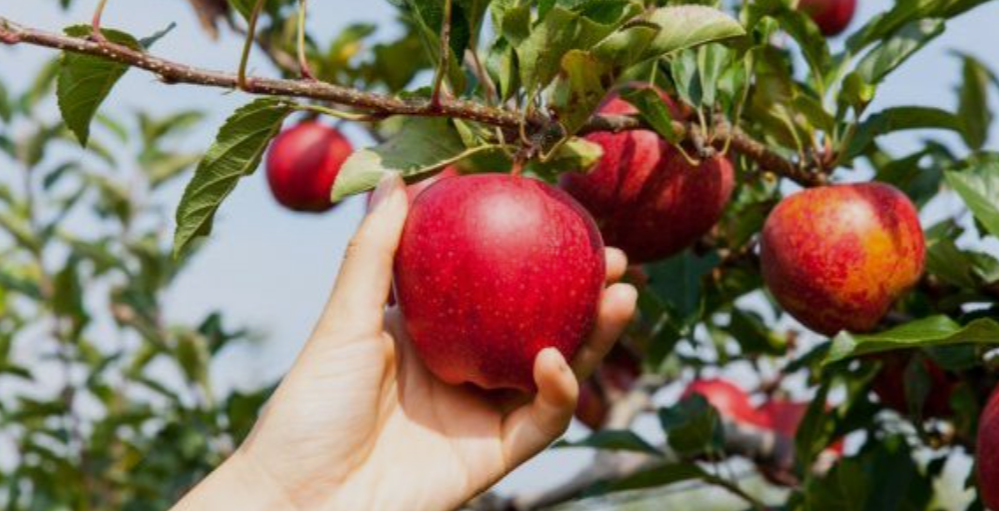
Apple season in Georgia runs mainly from mid-August through mid-October, when orchards in the northern mountains pick more than 20 varieties one after another. The full season is longer than that, since the earliest apples can be ready in July and stored fruit is sold into December. For most visitors, though, the weeks from Labor Day to Halloween are the time to go.
The state is better known for peaches, but its apple crop is substantial. Georgia has an estimated 360,000 apple-bearing trees, nearly all of them in the mountain counties north of Atlanta. The industry recorded a farm gate value of more than 12 million dollars in 2024.
When the Season Starts and Ends
The first apples of the year come off the trees around the beginning of August. These early varieties are picked in small quantities and sold mostly at the orchards’ own markets. Pick-your-own fields generally open in the last week of August.
September is the busiest month for harvest, and the state officially marks it as the start of Georgia Grown Apple Season. The widest choice of varieties is available from mid-September to mid-October. Late apples are picked through the end of October and into early November in some years.
Most apple houses around Ellijay stay open from August through December. After the picking ends, they sell late-keeping varieties from cold storage along with cider, fried pies and apple butter. That long tail is why the season is sometimes described as lasting half the year.
Which Apples Ripen When
Each variety has a picking window of only 2 or 3 weeks, so the selection changes steadily through the fall. August brings Ginger Gold and Gala, both sweet and mild, along with a few old Southern types such as Detroit Red. These early apples are best eaten fresh, as they do not keep for long.
Red Delicious and Golden Delicious arrive in late August and September, and they remain the backbone of many Georgia orchards. The University of Georgia lists Red Delicious as an early fall variety that ripens in late August to early September in the Athens area. Jonagold, Honeycrisp and Mutsu follow through the middle and end of September.
October belongs to the firm, tart and long-keeping apples. Rome Beauty, Stayman Winesap, Fuji and Granny Smith are picked during the month, and Arkansas Black comes in toward the end. Pink Lady is usually the last major variety, ripening in late October and early November.
The mountains run a little behind the lower parts of the state. Dates from Athens or Atlanta can be a week or more ahead of those in Gilmer and Fannin counties. Orchards post their picking schedules each year, and the dates shift with the weather.
Where Georgia Apples Grow
Ellijay, the seat of Gilmer County, is known as the apple capital of Georgia. The town lies about 75 miles north of Atlanta in the foothills of the Blue Ridge Mountains. The county’s valleys produce more than 600,000 bushels of apples a year, more than any other county in the state.
Most of the orchards and apple houses sit along Highway 52 east of town, a stretch often called Apple Alley. Ellijay is home to more than 9 family-owned orchards, several of them now in their third or fourth generation. The Digital Library of Georgia, run by the University System of Georgia, holds a short history of the industry and its concentration in these mountains.
Fannin County, just to the north, is the second center of production. University of Georgia Extension serves the two counties together and describes apple growing as a point of local pride. Blue Ridge, the Fannin County seat, has one of the largest orchards in the Southeast.
Smaller orchards are scattered across the rest of northeast Georgia, including Habersham, Rabun and Banks counties. The town of Cornelia in Habersham County has displayed a large red apple monument beside its railroad depot since the 1920s. These eastern orchards follow much the same calendar as Ellijay.
Why the Mountains Suit Apples
Apple trees need a long period of winter cold before they will bloom and fruit well. The North Georgia mountains provide that chill reliably, along with cool nights in late summer that help the fruit color and sweeten. Elevations in the growing districts range from about 1,300 to more than 2,000 feet.
The same varieties perform poorly farther south. University of Georgia Extension divides the state into apple zones and notes that the northern half is best suited to conventional varieties. Apples such as Red Delicious and Gala cannot be expected to crop well in southeast Georgia.
The main threat in the mountains is a late spring frost. Apple trees bloom in April, and a hard freeze at that stage can kill the flowers and wipe out much of the year’s crop. A frost in April 2021 destroyed the blooms on many trees and limited pick-your-own fields that fall.
The Georgia Apple Festival
The Georgia Apple Festival is held in Ellijay on the second and third weekends of October. In 2026 the dates are October 10 and 11 and October 17 and 18. The festival has run for more than 50 years and draws tens of thousands of visitors.
The event features several hundred craft and food vendors, a parade and an antique car show. An arts festival takes place in downtown Ellijay on the same weekends. Traffic on the mountain highways is heavy on festival days, so an early start is wise.
Individual orchards hold their own celebrations through September and October. These typically include wagon rides, corn mazes, pig races and petting farms alongside the picking. Visitors who prefer quiet should go on a weekday or on a weekend outside the festival.
Visiting an Orchard
Most Georgia orchards sell apples in two ways. Pick-your-own fields let visitors fill a bag or basket straight from the tree, usually for a set price per bag. The apple houses sell fruit that has already been picked, by the peck, half bushel and bushel.
Pick-your-own fields are open mainly on weekends from late August through October. Availability depends on the crop, and popular varieties can be picked clean by mid-afternoon. It is worth checking an orchard’s website or phone line before making the drive.
The apple houses carry far more than fresh fruit. Fried apple pies, cider, cider doughnuts, apple bread, jams and apple butter are standard offerings. Many also sell sorghum syrup, honey, boiled peanuts and fall pumpkins.
Choosing Apples for the Kitchen
The right variety depends on what the apples are for. Gala, Fuji, Honeycrisp and Golden Delicious are sweet and are best for eating fresh. Granny Smith, Rome Beauty and Stayman Winesap hold their shape and tartness when baked, which makes them the usual choice for pies.
Applesauce and apple butter turn out best when several varieties are blended. A mix of sweet and tart apples gives more depth than any single kind. Many apple houses sell mixed bags or boxes of second-grade fruit at a lower price for exactly this purpose.
Late-season apples keep the longest. Fuji, Granny Smith, Arkansas Black and Pink Lady will store for 2 to 3 months in a cold refrigerator. Early apples such as Gala and Ginger Gold should be used within a few weeks.
Growing Apples at Home in Georgia
Home gardeners across the northern half of the state can grow the same varieties as the commercial orchards. Most apple trees cannot pollinate themselves, so at least 2 varieties that bloom together must be planted. Stayman, Mutsu and Jonagold produce sterile pollen and need 2 other varieties nearby.
Gardeners in the southern half of the state need low-chill apples. University of Georgia Extension recommends Anna and Dorsett Golden for southeast Georgia, since both fruit with very little winter cold. These varieties ripen in early summer, well before the mountain harvest begins.
Further References
- University of Georgia: Home Garden Apples
- Digital Library of Georgia: Apples
- UGA Extension: Fannin and Gilmer Counties
- UGA Extension: Evans County fruit tree varieties
- New Georgia Encyclopedia: Ellijay
- FreshPlaza: Georgia apple season starts with 360,000 bearing trees
- Georgia Farm Bureau: apple facts
- Rough Draft Atlanta: Apple pickin’ time in Georgia
- Mommy Poppins: Atlanta apple picking, 2026 dates
- PickYourOwn: Ellijay apple varieties and harvest dates