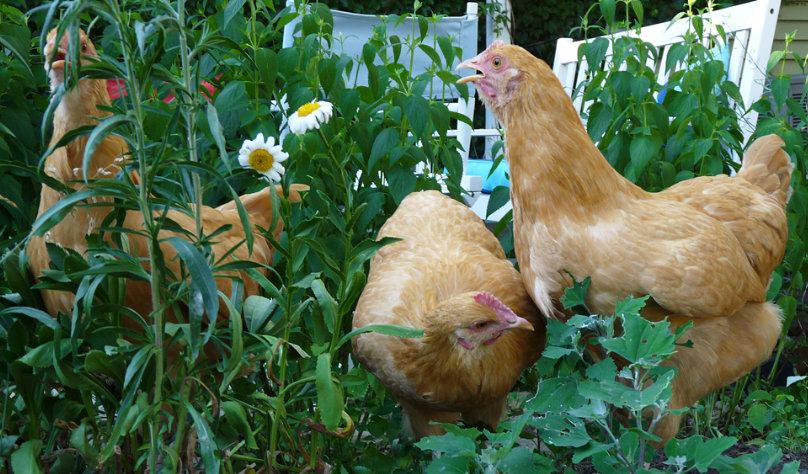
Safe weeds for chickens turn out to include most of the common lawn and garden plants that homeowners spend their weekends pulling, since backyard flocks are considerably better equipped than most mammals to self-regulate how much of any one plant they eat. According to Penn State Extension’s poultry education program, proper identification remains essential for anyone raising a backyard flock, since a handful of genuinely toxic plants, including poison hemlock, pokeweed, and members of the nightshade family, can grow in the very same yard as the safe weeds on this list.
With identification confirmed, most of the weeds here provide real nutritional value beyond simple entertainment, contributing protein, calcium, and vitamins that support strong eggshells and general flock health. A few require a small amount of preparation, particularly stinging nettle, which needs to be wilted, dried, or cooked before chickens can safely eat it without injury to their mouths.
These plants span common lawn weeds, garden opportunists, and pasture forage found across nearly every region of the United States. What follows covers 24 safe weeds for chickens, along with where each one grows and the data behind its value as flock forage.
Dandelion
Dandelion is native to Europe and Asia and grows across nearly every temperate region on Earth, typically found in lawns, meadows, and disturbed ground. Every part of the plant is safe for chickens to eat, from the leaves and flowers to the root, and the leaves are notably rich in calcium, vitamin A, and vitamin K, all of which support strong eggshell formation. A single flower head can produce between 150 and 200 seeds.
It grows throughout nearly all of North America, and most backyard flock keepers report their chickens will eat an entire pulled plant, roots included, with obvious enthusiasm.
Chickweed
Chickweed is native to Europe, typically found in lawns and shaded, moist disturbed ground during cooler months. It’s considered a favorite green treat for backyard flocks, providing vitamin B and acting as a natural, mild digestive aid. A mature plant typically stays under a foot tall, sprawling in a dense mat.
It grows throughout most of the United States and Canada, particularly available during the cooler months when other fresh greens are scarce for free-ranging birds.
White Clover
White clover is native to Europe and western Asia, and according to the North Carolina Extension Gardener Plant Toolbox, it’s a mat-forming perennial that spreads by stems rooting freely at the nodes, providing good forage value in addition to its role as a nitrogen-fixing cover crop. A mature plant typically stays 4 to 6 inches tall, spreading 12 inches or more.
It grows throughout North America, and chickens readily eat both the leaves and the round white flower heads.
Red Clover
Red clover closely resembles white clover in its safety and nutritional value for chickens, native to Europe and western Asia, providing protein, calcium, and a range of trace minerals. A mature plant typically reaches 1 to 2 feet tall, taller than white clover’s low, creeping habit.
It grows throughout most of the United States and Canada, commonly found in pastures, hayfields, and roadsides.
Broadleaf Plantain
Broadleaf plantain is native to Europe and Asia, and according to the North Carolina Extension Gardener Plant Toolbox, it’s a highly nutritious wild edible high in calcium and vitamins A, C, and K, tolerating compacted soil and repeated trampling better than almost any other lawn weed. A mature plant produces a flowering spike releasing up to 20,000 seeds per season.
It grows throughout nearly all of North America, and chickens will readily strip and eat the broad, ribbed leaves.
Purslane
Purslane is native to the Mediterranean, the Middle East, and parts of Asia, now naturalized worldwide, typically found in gardens and disturbed sandy soils. According to Mississippi State University Extension, it contains higher levels of omega-3 fatty acids than most other leafy green vegetables, a nutritional profile that carries over well to poultry diets. A single plant can produce up to 240,000 seeds over a growing season.
It grows throughout the United States, thriving especially in the heat of summer, and its succulent stems provide chickens with a useful moisture source during hot weather.
Lamb’s Quarters
Lamb’s quarters is native to Europe and Asia, typically found in gardens and nutrient-rich disturbed soils, sometimes historically called fat hen specifically for its long history as poultry feed. A mature plant can reach 3 feet tall, with young leaves offering a protein content comparable to many cultivated greens.
It grows throughout North America as one of the most common garden weeds, and chickens will readily strip the leaves from the stems.
Common Sowthistle
Common sowthistle is native to Europe and now naturalized worldwide, typically found in agricultural fields and gardens. Its mild-flavored, tender leaves are readily eaten by chickens, and the plant’s milky sap poses no toxicity concern despite its bitter taste. A mature plant can reach 4 feet tall.
It grows across most of the United States, thriving in the same nutrient-rich, disturbed soil found around most coops and runs.
Prickly Lettuce
Prickly lettuce, also called wild lettuce, is native to Europe and western Asia, typically found in disturbed fields and roadsides. Its young leaves are safe and palatable for chickens, similar in use to cultivated lettuce, though older leaves become tougher and more bitter. A mature plant can reach 3 to 5 feet tall.
It grows throughout most of North America, commonly found alongside other safe forage weeds in disturbed ground.
Henbit
Henbit is native to Europe and Asia, typically found in lawns and cultivated fields during cooler months. Its small purple flowers and tender young leaves are safe for chickens, providing a source of fresh greens during a period when little else is growing. A mature plant typically stays under a foot tall.
It grows throughout most of the United States, frequently appearing alongside purple deadnettle in early spring.
Purple Deadnettle
Purple deadnettle closely resembles henbit in both appearance and safety for backyard flocks, native to Europe and Asia, typically found in lawns and gardens during cooler months. A mature plant typically stays under a foot tall, with a mild, slightly earthy flavor.
It grows throughout much of the United States, often found growing in the same early-spring patches as henbit.
Common Mallow
Common mallow is native to Europe, North Africa, and parts of Asia, typically found in lawns and compacted disturbed ground. Its round, slightly fuzzy leaves are high in minerals and several vitamins, safe for chickens to eat, though flock preference for it varies considerably from one group of birds to another. A mature plant typically sprawls 1 to 2 feet across.
It grows throughout most of North America, often found in the same compacted ground favored by broadleaf plantain.
Wild Violet
Wild violet is native to North America, typically found in lawns, woodland edges, and moist, shaded garden beds. Its heart-shaped leaves and purple or white flowers are safe and nutritious for chickens, high in vitamin C and antioxidants. A mature plant stays low, generally under 8 inches tall.
It grows throughout most of the eastern and central United States and Canada, and confirming a common blue-flowered variety rather than an unfamiliar species is a sensible precaution before offering it to a flock.
Yarrow
Yarrow is native to Europe, Asia, and North America, typically found in meadows and disturbed grassland. Its feathery, aromatic leaves and flowers are safe for chickens in modest amounts, historically valued by poultry keepers for general flock health support. A mature plant typically reaches 1 to 3 feet tall.
It grows throughout nearly all of North America, and dried yarrow is sometimes hung inside a coop rather than fed directly.
Chicory
Chicory is native to Europe, western Asia, and North Africa, typically found along roadsides and disturbed ground. Its leaves are safe for chickens, offering a bitter, nutty flavor similar to its use in human foraging, and its distinctive sky-blue flowers make it easy to identify. A mature plant can reach 3 to 5 feet tall.
It grows throughout most of the United States and southern Canada, often found growing alongside dandelion.
Shepherd’s Purse
Shepherd’s purse is native to Europe and Asia, typically found in gardens and disturbed ground. Its leaves and distinctive heart-shaped seed pods are safe for chickens to eat, with a peppery flavor similar to arugula. A mature plant typically reaches 6 to 18 inches tall.
It grows throughout nearly all of North America, often among the first weeds to flower in early spring.
Wood Sorrel
Wood sorrel is native to a wide range across North America, Europe, and Asia, typically found in lawns, gardens, and shaded woodland edges. Its clover-like, sour-tasting leaves are safe for chickens in moderate amounts, though its oxalic acid content means it shouldn’t make up the bulk of a flock’s diet. A mature plant stays low, generally under 6 inches tall.
It grows throughout most of the United States and Canada, often mistaken for true clover.
Stinging Nettle
Stinging nettle is native to Europe, Asia, and North Africa, typically found in nutrient-rich, moist soil along stream banks. Once thoroughly wilted, dried, or cooked, its stinging hairs fully deactivate, and the resulting greens are notably high in iron and protein, valued by poultry keepers as a supplement linked to improved egg yolk color. A mature plant typically reaches 3 to 7 feet tall.
It grows throughout most of North America, and fresh, unwilted nettle should never be offered directly to a flock given the active stinging hairs.
Crabgrass
Crabgrass, native to Eurasia and naturalized throughout much of North America, provides safe, palatable grazing for backyard flocks despite its reputation as a lawn nuisance. A mature plant typically stays low and spreading, thriving in the same sunny, disturbed turf many chicken runs occupy.
It grows throughout most of the United States, and chickens will readily peck at and scratch through crabgrass-heavy turf.
Wild Strawberry
Wild strawberry is native to North America, typically found in open fields and forest edges. Both its leaves and its small, intensely flavored fruit are safe for chickens, offering a flavorful treat considerably smaller than cultivated strawberries. A mature plant stays low, generally under 6 inches tall.
It grows throughout most of the United States and Canada, and free-ranging flocks often locate and eat the ripe berries before a gardener notices they’re there.
Cleavers
Cleavers is native to North America, Europe, and Asia, typically found scrambling through hedgerows and moist woodland edges. Its young shoots are safe for chickens in moderate amounts, providing vitamin C and trace minerals, though older growth becomes fibrous and less appealing. A mature plant can sprawl several feet, clinging to surrounding vegetation.
It grows throughout much of North America, generally most palatable to a flock while still young and tender in spring.
Redroot Pigweed
Redroot pigweed, a common type of wild amaranth, is native to the Americas, typically found colonizing disturbed fields and gardens. Its leaves are safe for chickens in normal foraging quantities, with a protein content comparable to many cultivated greens. A mature plant can produce well over 100,000 seeds.
It grows throughout North America as one of the most common agricultural weeds, and its reddish taproot is a helpful identification feature once the plant is pulled.
Field Pennycress
Field pennycress is native to Europe and Asia, typically found in disturbed agricultural fields. Its young leaves are safe for chickens in moderate amounts, carrying a pungent, mustard-like flavor typical of the broader brassica family. A mature plant typically reaches 1 to 2 feet tall.
It grows throughout much of the northern and central United States, favoring the same disturbed, nutrient-rich soil common to many other safe forage weeds.
Prostrate Knotweed
Prostrate knotweed is native to Europe, typically found in the compacted, poor soil along sidewalks, driveways, and heavily trafficked chicken runs. It’s considered safe for chickens to peck at, tolerating the same soil compaction that leaves few other plants for a flock to forage in worn areas. A mature plant typically stays under a foot tall, spreading in a dense mat.
It grows throughout the United States, thriving specifically in the compacted conditions typical of a well-used run or path.
Further References
- Feeding Weedy Forages — University of Minnesota Extension — Explains that some weeds can provide nutritional value as forage, while emphasizing correct identification because some weeds are toxic or contain compounds that make them unsuitable as feed.
- Forages: Weed Management — Penn State Extension — Discusses weeds in forage systems and highlights the importance of identifying toxic and noxious weeds before livestock have access to them.
- Weed Identification and Control — Penn State Extension — Provides identification and management information for common weeds, including chickweed, pigweed, pokeweed, and other species that may occur around animal-forage areas.
- Control Options for Common Minnesota Lawn and Garden Weeds — University of Minnesota Extension — Useful as an identification reference for common plants such as dandelion, plantain, and wild violet.
- Palmer Amaranth in Feed Ingredients — University of Minnesota Extension — Provides useful information about poultry digestion of weed seeds and highlights why weed identification and feed safety remain important around poultry.