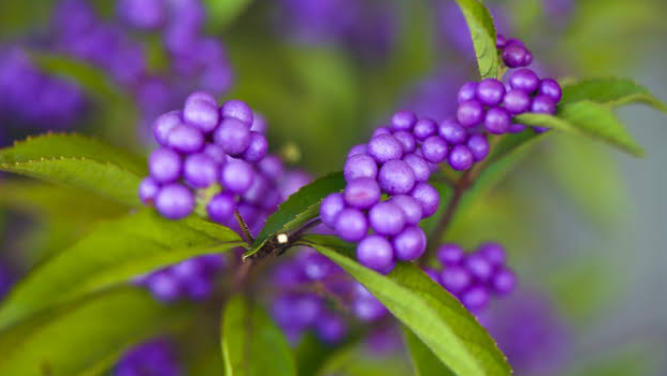
Poisonous plants with purple berries present a genuinely tricky identification challenge, since purple and blue-black fruit is exactly the color most people associate with safe, familiar options like blueberries, concord grapes, and elderberries. That overlap in color, rather than any single toxic look, is precisely why purple berries deserve more careful identification than almost any other fruit color before anyone considers eating what they find.
Toxicity across this list varies considerably, from mild digestive upset to genuinely life-threatening poisoning, and several entries are dangerous enough that even birds show more tolerance for the fruit than humans do. Positive identification, ideally confirmed by an experienced forager or extension office rather than a phone app alone, remains the only reliable way to avoid the plants on this list while still safely enjoying the many genuinely edible purple and blue fruits found in the same woods and hedgerows.
These plants span native North American woodlands, European hedgerows, and widely planted ornamental shrubs, several of which are commonly grown in home landscapes without most gardeners realizing the fruit is toxic. What follows covers 15 poisonous plants with purple berries, along with where each one grows and the data behind its toxicity.
Pokeweed
Pokeweed is native to eastern North America, typically found in disturbed fields, woodland edges, and fence rows. Its dark purple-black berries hang in long, drooping clusters from bright reddish-purple stems, and while birds eat them without apparent harm, the berries are toxic to humans if eaten raw. A mature plant typically reaches 4 to 10 feet tall.
Its root carries the highest concentration of toxic compounds, and even the berries can cause significant gastrointestinal distress in children who mistake them for a safe wild fruit. It grows throughout most of the eastern and central United States.
Deadly Nightshade
Deadly nightshade is native to Europe, North Africa, and western Asia, producing shiny black to deep purple berries that taste sweet, making them particularly attractive and dangerous to children. Ingesting as few as a small handful of the berries can be fatal to an adult due to the toxic alkaloid atropine concentrated within them. A mature plant typically reaches 2 to 5 feet tall, with dull purple, bell-shaped flowers preceding the berries.
It grows across Europe and has naturalized in scattered locations in North America, typically found in disturbed woodland and hedgerow habitats.
Virginia Creeper
Virginia creeper is native to eastern North America, typically found climbing trees, fences, and structures across a wide range of woodland habitats. Its small, dark blue-black berries, held on distinctive bright red stems in fall, are toxic to humans due to concentrated oxalate crystals, even though the same berries provide an important food source for migrating birds. A mature vine can climb 30 feet or more up a supporting structure.
It’s frequently confused with poison ivy despite having 5 leaflets rather than 3. It grows throughout the eastern and central United States and Canada.
Canada Moonseed
Canada moonseed is native to eastern North America, typically found in floodplain forests and along riverbanks, where its climbing vines twine through shrubs and small trees. Its blue-black berries closely resemble wild grapes in size and color, but each contains a single crescent-moon-shaped seed rather than the multiple round seeds found in true grapes, and the fruit is toxic if ingested. A mature vine can climb 12 to 20 feet.
Because of its close resemblance to edible wild grapes, checking the seed shape is considered an essential safety step before eating any similar-looking wild fruit. It grows throughout the eastern and central United States.
Chinese Privet
Chinese privet is native to China and has become a significant invasive shrub across the southeastern United States, producing abundant clusters of small, dark blue-black berries in fall that persist into winter. A mature shrub can reach 15 to 20 feet tall if left unpruned. Its berries are mildly toxic to humans, capable of causing digestive upset, though they’re readily eaten and dispersed by birds.
Its rapid growth and prolific seed production have made it one of the most widespread invasive shrubs in southern forests. It grows extensively throughout the southeastern United States.
Common Buckthorn
Common buckthorn is native to Europe and Asia, and according to University of Minnesota Extension, it produces clusters of black, quarter- to half-inch fruit on female plants only, ripening in August and September. Its berries have a mild laxative effect on the animals and people who eat them, which paradoxically helps spread its seeds more widely through the landscape. A mature shrub can reach up to 25 feet tall.
It leafs out earlier in spring and holds its leaves later in fall than most native trees, giving it a competitive edge. It grows extensively throughout the upper Midwest and northeastern United States.
Glossy Buckthorn
Glossy buckthorn closely resembles common buckthorn but prefers wetter habitats and lacks the thorns typically found at the branch tips of its close relative. Its berries ripen through a progression of red to purple to black on the same plant simultaneously, and like common buckthorn, they carry a mild toxicity along with a laxative effect. A mature shrub can reach 20 feet tall, forming dense thickets in wet woodlands.
It grows throughout the northeastern and upper midwestern United States, particularly in swamps and wet forest understories.
Black Nightshade
Black nightshade is native to Europe and Asia, typically found in gardens and disturbed fields. Only its fully ripe, black berries are considered edible in small quantities, since unripe green berries and every other part of the plant contain toxic solanine-related compounds, making careful ripeness assessment essential before eating any part of the plant. A mature plant typically reaches 1 to 3 feet tall.
Given how easily unripe fruit can be mistaken for ripe, and how many closely related toxic nightshade species exist, extreme caution is warranted with this species specifically. It grows across every mainland U.S. state.
Spurge Laurel
Spurge laurel is native to Europe and has become an invasive weed in parts of the Pacific Northwest, producing clusters of shiny black to purple-black berries in late summer. Every part of the plant is genuinely toxic, capable of causing severe illness if the berries are ingested, along with significant skin irritation from contact with the sap. A mature shrub typically reaches 3 to 5 feet tall.
It grows in the Pacific Northwest, particularly British Columbia and parts of Washington and Oregon, typically invading shaded forest understories.
English Ivy
English ivy is native to Europe and widely planted across the United States as an evergreen groundcover. Mature, flowering vines produce small, dark purple-black berries in late winter, a stage the plant only reaches once it has climbed high enough into full sun. Its berries are mildly toxic to humans and pets but are eaten by some bird species.
It grows throughout most of the United States as both a cultivated groundcover and an escaped woodland invasive.
Devil’s Walking Stick
Devil’s walking stick is native to the eastern and central United States, commonly found along woodland edges, fields, and stream banks. Its small, dark purple-black berries form in enormous, showy clusters at the top of the plant each fall, and while they’re an important food source for migrating songbirds, they’re considered mildly toxic if eaten by humans in quantity. It typically grows 10 to 15 feet tall.
It grows throughout the eastern and central United States, spreading readily by root suckers in moist, partially shaded woodland edges.
Oregon Grape
Oregon grape, botanically Mahonia, is native to western North America, and according to the North Carolina Extension Gardener Plant Toolbox, its dark blue-purple berries form in clusters resembling grapes and may cause minor illnesses such as vomiting or diarrhea if ingested in significant quantity. A mature shrub typically reaches 3 to 6 feet tall, and it’s the official state flower of Oregon.
Despite the mild toxicity, its berries have historically been used in small amounts for jelly and wine once properly processed. It grows throughout the Pacific Northwest and is widely planted across the temperate United States.
Porcelain Berry
Porcelain berry is native to northeast Asia, a climbing vine in the grape family whose berries pass through a striking sequence of colors, from white to yellow, lilac, green, and finally a deep turquoise-blue to purple. According to Penn State Extension, the vine can reach lengths of 25 feet in a single growing season. While not acutely toxic, its fruit is generally considered unpalatable and not intended for human consumption, and the plant is far more notable as a severe invasive threat than as a food source.
It grows throughout the eastern United States, particularly along streambanks and disturbed ground.
Black Bryony
Black bryony is native to Europe, typically found scrambling through hedgerows and woodland edges. Its glossy, deep red to purple-black berries ripen in clusters in autumn, and the entire plant, including the berries, is toxic if ingested, capable of causing severe gastrointestinal symptoms. A mature vine can climb 6 to 12 feet using surrounding vegetation for support.
It grows throughout much of Europe, commonly found scrambling through hedges and along woodland margins.
Solomon’s Seal
Solomon’s seal is native to eastern and central North America, and according to the North Carolina Extension Gardener Plant Toolbox, its blue-black berries, a quarter to half an inch wide, are inedible to humans despite being a favorite food of birds. The toxic principle responsible is a compound called anthraquinone, capable of causing vomiting and diarrhea if the berries are eaten. A mature plant typically reaches 3 to 6 feet tall, with an arching, unbranched stem.
It grows throughout most of eastern North America, favoring rich, shaded woodland soil.
Further References
- Common Pokeweed — UC Statewide IPM Program — Provides photographs and identification details for common pokeweed, including its glossy purple-black berries, reddish stems, leaves, flowers, and toxic properties.
- Pokeweed Identification — Oregon State University Extension — Provides photographs and identification information for pokeweed and notes that all parts of the plant are poisonous to humans, pets, and livestock.
- Nightshades — Cornell University — Covers several nightshade species and provides useful identification characteristics, including purple-black berries on some species.
- Poisonous Plants Commonly Found in Woodlands — Iowa State University Extension — Provides identification information and toxicity profiles for poisonous plants, including nightshade species.
- Poisonous Berries — Children’s Hospital of Philadelphia — Provides safety information and photographs for poisonous or potentially harmful berries, including pokeweed and blue-purple juniper berries.