Edible weeds in Australia grow in a genuinely unusual mix, since the continent’s naturalized weed flora is overwhelmingly made up of European, Mediterranean, and South African species introduced since colonial settlement, layered on top of a smaller number of native plants that Indigenous Australians have eaten for tens of thousands of years. That combination means a suburban nature strip in Sydney or Melbourne can host plants with a culinary history stretching from ancient Rome to pre-colonial Australia, often growing within a few feet of each other.
As with foraging anywhere, positive identification always comes first, since Australia’s weed flora includes toxic look-alikes and several genuinely poisonous species growing in the same disturbed ground as their edible neighbors. Harvesting location matters just as much: roadside verges, sprayed parks, and areas frequented by dogs all carry contamination risks that no amount of washing fully eliminates, so the safest patches are almost always in a person’s own garden or a spot they know hasn’t been treated with herbicide.
Many of the weeds on this list arrived in Australia within the first decades of European settlement, either as contaminated seed in imported grain, as deliberate garden or agricultural introductions, or as ballast and packing material on ships, and have since spread across every state and territory. A handful are native Australian plants that were exported overseas and only later reclassified as weeds once they escaped cultivation in other countries.
What follows covers 21 weeds documented as edible and found across Australia, along with where each one grows, its typical size, and the data that helps with identification.
Sow Thistle
Sow thistle, also called milk thistle in parts of Australia, is native to Europe and now naturalized across every Australian state and territory, typically found in gardens, disturbed paddocks, and roadsides. Its young leaves have a mild flavor similar to lettuce and can be eaten raw or cooked, and it has a long history as a bush tucker plant among both early settlers and Aboriginal communities across much of the continent. A mature plant can reach around 3 feet tall, releasing a milky sap when the stem is broken.
It grows in every state and territory, thriving especially in the nutrient-rich, disturbed soil of home gardens and agricultural land.
Fat Hen
Fat hen, closely related to lamb’s quarters, is native to Europe and now widely naturalized across Australia, most common in the wetter temperate and sub-tropical regions of the country. Its young leaves are dusted with a distinctive pale, mealy coating and can be eaten raw or cooked much like spinach, offering notably more calcium than many cultivated leafy greens. A mature plant typically reaches around 3 feet tall, occasionally growing taller under favorable conditions.
It grows across eastern Queensland, New South Wales, the ACT, Victoria, Tasmania, South Australia, and south-western Western Australia, favoring nutrient-rich, disturbed ground.
Purslane
Purslane is native to a range spanning the Mediterranean, the Middle East, and parts of Asia, and it grows as a naturalized weed throughout warmer parts of Australia, typically found in gardens and disturbed sandy or loamy soils. Its thick, succulent leaves and stems can be eaten raw or cooked with a mild, tangy flavor, and it’s notably rich in omega-3 fatty acids compared to most other leafy greens. A single plant can produce well over 100,000 seeds in a season.
It grows across most of mainland Australia, particularly thriving during the heat of summer when many cultivated garden greens have already bolted.
Chickweed
Chickweed is native to Europe and now naturalized across the cooler parts of Australia, typically found in lawns, gardens, and shaded, moist disturbed ground during autumn and winter. Its small, tender leaves have a mild, slightly grassy flavor and can be eaten raw in salads or lightly cooked, most palatable while the plant is still young and low-growing. A mature plant typically stays under a foot tall, sprawling across the ground in a dense mat.
It grows in the cooler regions of southeastern Australia, Tasmania, and the higher-elevation parts of the mainland, generally dying back once summer heat arrives.
Wild Radish
Wild radish is native to the Mediterranean region, and according to the Australian Herbicide Resistance Initiative at the University of Western Australia, it’s one of the most economically damaging cropping weeds in the country, with a 2010 survey across 14 million hectares of the Western Australian grain belt finding that 84% of populations carried resistance to at least one commonly used herbicide. Despite its status as an agricultural problem, its young leaves, flowers, and immature seed pods are all edible with a peppery, mustard-like flavor. A mature plant typically reaches 2 to 4 feet tall, with pale yellow to white flowers appearing from late winter through spring.
It grows across every mainland state, particularly dense in the grain-growing regions of Western Australia, South Australia, and New South Wales.
Warrigal Greens
Warrigal greens, also called New Zealand spinach, is native to Australia’s east coast and other southern hemisphere coastal regions, and according to Southern Cross University, it was collected by British botanist Joseph Banks in the late 1700s and later became a popular vegetable in Victorian England before returning to prominence as an Australian bush food. Its fleshy, diamond-shaped leaves have a mild flavor similar to spinach, but must be blanched briefly in hot water before eating to remove naturally occurring oxalates, and only small quantities should be eaten at a time. A mature plant sprawls along the ground, thriving in the sandy, salty conditions of coastal dunes.
It grows along Australia’s eastern coastline from Queensland down through New South Wales, Victoria, and Tasmania, as well as parts of South Australia.
Stinging Nettle
Stinging nettle is native to Europe and Asia and grows as a naturalized weed across the cooler, wetter parts of Australia, typically found in nutrient-rich soil along stream banks and disturbed ground. Its leaves and stems carry fine, irritating hairs that are fully neutralized by cooking, after which the leaves can be used much like spinach and are notably high in iron. A mature plant typically reaches 3 to 6 feet tall, spreading via underground rhizomes.
It grows across the cooler regions of southeastern Australia, Tasmania, and parts of the highlands in New South Wales and Victoria, and gloves are strongly recommended when harvesting fresh plant material.
Amaranth
Amaranth, commonly called pigweed in Australia, is native to the Americas and grows as a naturalized weed across the warmer parts of the country, typically found colonizing disturbed fields, gardens, and pastures. Its young leaves can be eaten raw or cooked much like spinach, and its tiny seeds can be cooked into a grain similar to cultivated amaranth. A mature plant typically reaches 3 to 6 feet tall, with a single plant capable of producing well over 100,000 seeds.
It grows across Queensland, New South Wales, and the Northern Territory in particular, thriving in the nutrient-rich soil of cultivated fields and gardens.
Common Mallow
Common mallow, sometimes called marshmallow weed in Australia, is native to Europe, North Africa, and parts of Asia, and grows as a naturalized weed across most of the country, typically found in lawns, gardens, and compacted disturbed ground. Its round, slightly fuzzy leaves and small immature seed pods are both edible, with a mild flavor and a texture similar to okra once cooked. A mature plant typically sprawls 1 to 2 feet across, favoring poor or compacted soil.
It grows across every Australian state and territory, often found in the same compacted, disturbed ground favored by plantain and dandelion.
Prickly Pear
Prickly pear is native to Central America and was introduced to Australia with the First Fleet in 1788, later spreading to cover an estimated 24 million hectares of Queensland and New South Wales at its peak in the 1920s before a biological control program brought it under control. Both the fruit and the young, de-spined pads are edible, with the fruit offering a sweet, melon-like flavor and the pads a mild, slightly tart taste once the spines are carefully removed. A mature clump can spread several feet wide, with individual pads reaching 6 to 12 inches long.
It grows across Queensland and New South Wales in particular, with smaller populations scattered through other mainland states, and extreme care is needed when harvesting due to both large spines and tiny, hard-to-see glochids.
Blackberry
Blackberry is native to Europe and has been declared a Weed of National Significance in Australia due to its impact on agriculture and native ecosystems, forming dense, thorny thickets up to 6 feet tall with canes extending over 20 feet. Its ripe black fruit is fully edible with a sweet, tart flavor, though the plant is frequently sprayed with herbicide along roadsides and in agricultural areas, making harvesting location especially important. A single mature stand can produce large quantities of fruit each summer.
It grows across the cooler, wetter regions of southeastern Australia, including Victoria, Tasmania, the ACT, and parts of New South Wales and South Australia.
Wild Fennel
Wild fennel is native to the Mediterranean region and grows as a naturalized weed across temperate parts of Australia, typically found along roadsides, in disturbed paddocks, and on waste ground. Its feathery leaves, flowers, and seeds all carry a distinctive anise flavor and are widely used in cooking, while the swollen base of cultivated relatives is sometimes confused with the thinner, more fibrous wild form. A mature plant can reach 6 feet tall, with clusters of small yellow flowers appearing in summer.
It grows across southeastern Australia, including Victoria, South Australia, and parts of New South Wales, often forming dense stands along disturbed roadside verges.
Nasturtium
Nasturtium is native to South and Central America and has escaped cultivation to become a naturalized garden weed in parts of temperate Australia, typically found spreading from gardens into adjacent disturbed ground. Its peppery leaves, flowers, and immature seed pods are all edible, with a flavor often compared to watercress, and the plant has long been grown deliberately as an edible ornamental. A mature plant sprawls several feet in a season, either trailing along the ground or climbing when given support.
It grows in temperate coastal and highland regions of southeastern Australia and parts of Western Australia, generally escaping garden beds into nearby disturbed soil.
Broadleaf Plantain
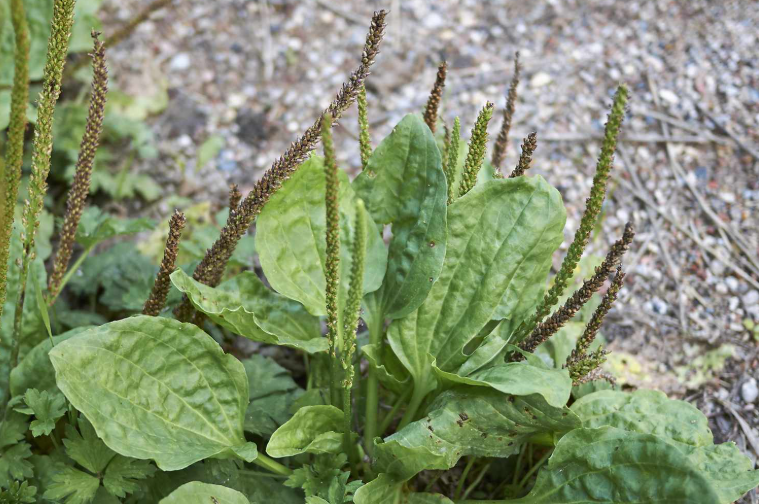
Broadleaf plantain is native to Europe and Asia and grows as a naturalized weed across most of Australia, typically found in lawns, compacted soil, and along paths and driveways. Its young leaves can be eaten raw in salads, while older, tougher leaves are more commonly cooked, and the plant has no relation to the banana-like plantain fruit despite the shared name. A mature plant produces a flowering spike capable of releasing several thousand seeds per season.
It grows across every Australian state and territory, thriving specifically in the compacted soil of heavily trafficked lawns and pathways.
Chicory
Chicory is native to Europe, western Asia, and North Africa, and grows as a naturalized weed across temperate parts of Australia, typically found along roadsides and in disturbed fields. Its young leaves have a bitter, slightly nutty flavor and can be eaten raw or cooked, while its root has a long history of being roasted as a coffee substitute or additive, including in well-known Australian coffee-and-chicory essence products. A mature plant can reach 3 to 5 feet tall, with distinctive sky-blue flowers.
It grows across southeastern Australia, including Victoria, New South Wales, and South Australia, often found growing alongside sow thistle in similar disturbed habitats.
Soursob
Soursob, a type of wood sorrel, is native to South Africa and was first recorded in Australia in 1841 at the Adelaide Botanic Gardens, having been grown initially as an ornamental before becoming a significant weed of gardens, orchards, and wheat fields by the late 1800s. Its lemony-sour leaves and flowers can be eaten sparingly, and its small underground bulbs have historically been eaten after cooking, though the plant contains oxalates and is only mildly toxic to humans if consumed in large amounts. A mature plant typically reaches around 16 inches tall, spreading rapidly through underground bulbs.
It grows across all Australian states and territories, forming dense, bright-yellow-flowered stands across southern Australia in particular during winter and spring.
Black Nightshade
Black nightshade is native to Europe and Asia and grows as a naturalized weed across most of Australia, and according to a University of New England weed management guide, it’s a significant weed of Australian vegetable production, occurring as an erect, branched summer annual herb. Only the fully ripe, black berries are considered edible, since unripe green berries and all other parts of the plant contain toxic compounds, making careful identification and ripeness assessment essential before eating any part of this species. A mature plant typically reaches 1 to 3 feet tall, flowering and fruiting throughout the warmer months.
It grows across every mainland Australian state, commonly found in vegetable gardens, disturbed fields, and waste ground, and first-time foragers are strongly advised to seek expert guidance given the risk of confusing it with more toxic nightshade relatives.
Wild Rocket
Wild rocket is native to the Mediterranean region and grows as a naturalized weed across temperate parts of Australia, typically found along roadsides, in disturbed fields, and occasionally escaping from cultivated gardens. Its peppery, deeply lobed leaves closely resemble cultivated rocket in flavor and can be used the same way in salads and cooking. A mature plant typically reaches 1 to 2 feet tall, with small yellow flowers appearing throughout the growing season.
It grows across southeastern Australia and parts of Western Australia, often found growing in similar disturbed habitats to wild radish and wild mustard.
Cape Gooseberry
Cape gooseberry is native to South America, though it takes its common name from an early cultivation history at the Cape of Good Hope, and it grows as a naturalized weed across warmer parts of Australia, typically found in disturbed bushland and gardens. Its small, orange, tomato-like fruit, enclosed in a papery husk, has a sweet-tart flavor and is fully edible once ripe, though the unripe green fruit and other plant parts are toxic. A mature plant typically reaches 2 to 4 feet tall, with a sprawling, semi-woody growth habit.
It grows across Queensland, New South Wales, and parts of Western Australia, often found growing in bushland and along the edges of cultivated areas.
Onion Weed
Onion weed, also called angled onion, is native to southwestern Europe and North Africa and has become a significant environmental weed across southern Australia, first introduced as a garden ornamental. Its leaves and small white flowers carry a strong onion or garlic flavor and can be used similarly to chives, though the plant’s dense bulb colonies can quickly overwhelm garden beds and native bushland if left unmanaged. A mature plant typically reaches 6 to 16 inches tall, spreading rapidly through underground bulb offsets.
It grows across Victoria, South Australia, and parts of Western Australia and New South Wales, particularly common in shaded, moist garden and bushland settings.
Turnip Weed
Turnip weed is native to the Mediterranean region and southwestern Asia, and research conducted at the University of Queensland’s Gatton campus has studied its seed persistence and emergence patterns as one of the more troublesome weeds of the eastern Australian grain belt, alongside species like sow thistle. Its young leaves and flowers carry a mustard-like flavor and can be eaten in small quantities raw or cooked, most palatable before the plant fully flowers. A mature plant typically reaches 2 to 3 feet tall, with small yellow flowers appearing in spring.
It grows across the grain-growing regions of Queensland, New South Wales, and parts of South Australia and Victoria, often found alongside other Brassica family weeds in cropping country.
Further References
- Weeds Australia — Weed Identification and Information
A national resource managed by the Centre for Invasive Species Solutions, with tools for identifying weeds and accessing information about weed species found across Australia. - Queensland Government — Identifying Weeds
Provides authoritative information on identifying weeds in Queensland, including links to plant identification tools and the Queensland Herbarium. - CSIRO Publishing / The Weed Forager’s Handbook
The Weed Forager’s Handbook: A Guide to Edible and Medicinal Weeds in Australia by Adam Grubb and Annie Raser-Rowland. The 2025 second edition covers edible and medicinal weeds commonly found in Australia. - ABC News — Edible Weeds That Are Safe to Eat and How You Can Use Them
Discusses common edible weeds in Australia, including dandelion and chickweed, while emphasizing the importance of positive plant identification and avoiding contaminated or chemically treated plants. - ABC Gardening Australia — Know Your Weeds
Provides practical information about Australian weeds and includes examples such as green amaranth (Amaranthus viridis), which is edible.