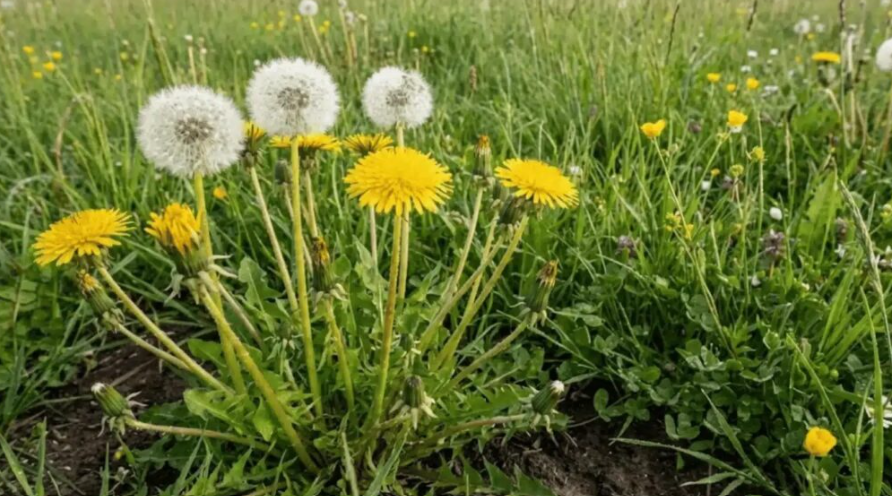
Types of dandelion go far beyond the single yellow lawn weed most people picture, since the genus Taraxacum is one of the most taxonomically complicated in the entire plant kingdom. According to the Flora of the Southeastern United States, maintained by the University of North Carolina’s Botanical Garden, the genus includes roughly 60 broadly recognized species, but that number balloons to as many as 2,000 if every apomictic microspecies is counted separately, since most dandelions reproduce clonally through seed without needing fertilization at all.
That reproductive quirk, called apomixis, means a single dandelion plant can produce an entire lineage of genetically identical offspring generation after generation, which has allowed countless slightly different local forms to persist as recognizably distinct populations across Europe and Asia in particular. Rather than attempt to catalog every regional microspecies, this list focuses on the dandelion types with genuinely distinct stories: economically important species, geographically isolated natives, and a couple of well-known plants that share the common name “dandelion” without actually belonging to the genus Taraxacum at all.
Dandelions as a group have an enormous combined range, native to nearly every temperate and Arctic region across the Northern Hemisphere, with the common lawn dandelion having since spread to virtually every temperate country on Earth through both deliberate introduction and accidental seed dispersal. Some of the more specialized types on this list survive in genuinely extreme conditions, from Arctic tundra to alpine rock faces to isolated desert mountain meadows.
What follows covers 21 types of dandelion, along with where each one grows, its typical size, and the data that sets it apart.
Common Dandelion
Common dandelion is native to Eurasia and has since spread to nearly every temperate country on Earth, typically found in lawns, meadows, and disturbed ground of every description. According to Cornell University’s Weed Identification database, its leaves typically measure 3 to 10 inches long and its taproot regrows readily from broken fragments left in the soil after an incomplete pulling attempt. Research cited by Cornell has also found that dandelions produce larger seeds and pappi under elevated atmospheric carbon dioxide levels, which improves germination rates.
It grows across virtually all of North America, Europe, and temperate Asia, thriving in almost any soil type as long as it receives adequate sunlight.
Red-Seeded Dandelion
Red-seeded dandelion is native to Europe and has naturalized across much of North America, typically found in drier, sandier soils than common dandelion prefers. Its leaves are more deeply and sharply lobed than common dandelion’s, and as its name suggests, its seeds carry a distinctive reddish-brown color rather than the pale tan of common dandelion seed. A mature plant typically stays somewhat smaller than common dandelion, generally under 8 inches tall.
It grows across the northern and central United States and southern Canada, favoring dry lawns, gravelly roadsides, and sandy waste ground.
Russian Dandelion
Russian dandelion, also called rubber dandelion, is native to Kazakhstan and neighboring parts of Central Asia, and according to Ohio State University’s rubber alternatives research program, its roots contain between 10% and 15% natural rubber by weight, a quality nearly identical to rubber harvested from tropical rubber trees. Ohio State researchers have bred a specific variety, nicknamed Buckeye Gold, specifically to boost root size and rubber yield for potential commercial production in temperate climates. A mature plant closely resembles common dandelion in appearance, typically reaching under a foot tall.
It grows natively in Kazakhstan and is now cultivated experimentally across temperate research farms in the United States and Europe as an alternative domestic rubber source.
Mongolian Dandelion
Mongolian dandelion is native to Mongolia, northern China, and parts of Siberia, typically found on steppe grassland and disturbed ground across a harsh continental climate. Its root has a long history of use in traditional Chinese medicine, where it’s typically dried and prepared as an herbal remedy. A mature plant closely resembles common dandelion, generally reaching under 10 inches tall.
It grows across Mongolia, Inner Mongolia, and neighboring provinces of northern China, tolerating both bitter winters and hot, dry summers.
Chinese Dandelion
Chinese dandelion is native to eastern and central China, typically found in fields, along roadsides, and in disturbed ground across a wide range of Chinese provinces. Like several related species, its leaves and root have a long history of culinary and medicinal use, often included in traditional soups and herbal preparations. A mature plant typically reaches 4 to 12 inches tall, closely resembling common dandelion in overall form.
It grows across most of eastern and central China, thriving in the same disturbed, nutrient-rich soils favored by dandelions worldwide.
Korean Dandelion
Korean dandelion is native to the Korean peninsula, typically found in fields, mountain meadows, and disturbed ground across a range of elevations. Its young leaves are a traditional Korean vegetable, often eaten as a seasoned side dish or brewed into an herbal tea, and the plant carries a long history of use in traditional Korean medicine. A mature plant typically reaches under a foot tall, similar in size to common dandelion.
It grows throughout the Korean peninsula, and in recent decades the introduced European common dandelion has increasingly displaced it in urban areas.
Japanese Dandelion
Japanese dandelion is native to Japan, typically found in grasslands, rice paddy margins, and undisturbed meadows across the country. Unlike common dandelion, its flower bracts remain pressed upward against the flower head rather than folding backward, a detail botanists use to distinguish it at a glance from the introduced European species. A mature plant typically reaches 4 to 10 inches tall.
It grows across Japan, though the introduced common dandelion has displaced much of its historical range in urbanized areas, leaving native populations concentrated in rural grasslands and less disturbed countryside.
Horned Dandelion
Horned dandelion is native to North America, typically found in alpine and subalpine meadows, tundra, and rocky slopes at high elevation across the western mountains and Arctic regions of the continent. Its name comes from small horn-like projections on its seed heads, a distinguishing feature not present on common dandelion. A mature plant typically stays compact, generally under 8 inches tall, an adaptation to the harsh, wind-exposed conditions of its high-elevation habitat.
It grows across the Rocky Mountains, the Sierra Nevada, and the Arctic tundra of Alaska and northern Canada, favoring cool, high-elevation meadows.
Alpine Dandelion
Alpine dandelion is native to the mountain ranges of central and southern Europe, typically found in rocky alpine meadows and scree slopes at elevations most other dandelion types can’t tolerate. It stays notably compact, generally under 4 inches tall, an adaptation that helps it withstand the strong winds and short growing season of its high-altitude habitat. Its flower heads are proportionally larger relative to its small overall size compared to lowland dandelion types.
It grows across the Alps, the Pyrenees, and other major European mountain ranges, typically found above 6,000 feet in elevation.
Marsh Dandelion
Marsh dandelion is native to Europe, typically found in wet meadows, fens, and marshy grassland rather than the dry disturbed ground favored by common dandelion. Its narrower, more finely divided leaves help distinguish it from common dandelion, along with its clear preference for consistently saturated soil. A mature plant typically reaches 4 to 10 inches tall.
It grows across northern and central Europe, particularly common in wetland nature reserves and traditionally managed wet hay meadows.
Arctic Dandelion
Arctic dandelion is native to the circumpolar Arctic tundra spanning northern Scandinavia, Russia, Canada, and Alaska, typically found on rocky tundra and gravelly Arctic riverbanks. It stays extremely compact, often under 3 inches tall, an extreme adaptation to a growing season that can last just a few short weeks each summer. Its flower heads are proportionally large relative to the rest of the plant, maximizing pollinator visibility during the brief Arctic bloom period.
It grows across the circumpolar Arctic, from northern Scandinavia and Russia through Arctic Canada and Alaska.
Lapland Dandelion
Lapland dandelion is native to the mountains and tundra of northern Scandinavia, typically found at high elevations and high latitudes where few other flowering plants can survive. Like other Arctic and alpine dandelion types, it stays extremely compact, generally under 4 inches tall, with a disproportionately large flower head relative to its size. It’s closely related to several other Arctic dandelion species, and distinguishing between them often requires close examination of leaf shape and seed structure.
It grows across the mountains of northern Norway, Sweden, and Finland, typically above the tree line in genuinely subarctic conditions.
California Dandelion
California dandelion is a federally endangered species endemic to the San Bernardino Mountains of California, found only in wet mountain meadows and seeps at elevations between roughly 5,500 and 8,500 feet. Fewer than 20 known populations remain, and several consist of just a handful of individual plants, making it one of the rarest dandelion types in the world. A significant threat to its survival is genetic swamping through hybridization with the introduced common dandelion, which grows in the same meadows.
It grows exclusively within the San Bernardino National Forest in Southern California, restricted to a small handful of isolated meadow sites.
Brandegee’s Dandelion
Brandegee’s dandelion is a rare species native to isolated mountain habitats in California, typically found in specific alpine or subalpine meadow sites at high elevation. Like several other narrowly endemic dandelion species in California’s mountain ranges, its populations are small and geographically restricted, making it vulnerable to habitat disturbance and competition from introduced common dandelion. A mature plant closely resembles other native alpine dandelion types in size and form, generally staying under 8 inches tall.
It grows in scattered, isolated mountain locations within California, with a total range far more limited than common dandelion’s near-global distribution.
Tibetan Dandelion
Tibetan dandelion is native to the high-elevation plateaus and mountain meadows of Tibet and neighboring parts of the Himalayan region, typically found at elevations exceeding 10,000 feet. Its compact growth habit and deep taproot are well suited to the thin soil, intense sunlight, and dramatic temperature swings typical of high-altitude Himalayan meadows. A mature plant generally reaches under 6 inches tall.
It grows across the Tibetan Plateau and adjacent high-elevation regions of the Himalayas, tolerating some of the highest, harshest growing conditions of any dandelion type.
Siberian Dandelion
Siberian dandelion is native to Siberia and parts of the Russian Far East, typically found on steppe grassland, riverbanks, and disturbed ground across an extreme continental climate. It tolerates winter temperatures considerably colder than most other dandelion types, an adaptation to the harsh Siberian climate where it grows. A mature plant typically reaches under 10 inches tall, closely resembling common dandelion in general form.
It grows across a huge swath of Siberia and the Russian Far East, extending into similar climates in northern Mongolia and China.
Rock Dandelion
Rock dandelion is native to mountainous regions of central Asia and parts of Siberia, typically found growing directly from rock crevices and scree slopes at high elevation. Its unusually deep, wiry root system allows it to anchor into narrow rock fissures where soil is minimal, an adaptation not shared by most lowland dandelion types. A mature plant stays extremely compact, generally under 4 inches tall.
It grows across rocky alpine habitats in central Asian mountain ranges, favoring exposed, well-drained rock faces over the meadow soil preferred by most other dandelion types.
Smooth Dandelion
Smooth dandelion is native to Europe and has naturalized in parts of North America, typically found in similar disturbed habitats to common and red-seeded dandelion. It’s distinguished by hairless, smoother leaf surfaces and slightly different seed coloration compared to its close relatives, though the distinction can be subtle enough that many field guides group it closely with red-seeded dandelion. A mature plant typically reaches under 8 inches tall.
It grows across much of Europe and scattered locations in the northern United States and Canada, generally favoring the same dry, disturbed sites as red-seeded dandelion.
French Dandelion
French dandelion is a cultivated form of common dandelion, selectively bred over generations specifically for larger, broader, more tender leaves suited to salad greens rather than for its flowers or root. It’s grown commercially in parts of France and Italy as a genuine vegetable crop, harvested young and often blanched by covering the plant to reduce bitterness, similar to how endive is grown. A mature plant produces noticeably larger leaves than a typical wild dandelion, sometimes reaching over a foot in length.
It’s cultivated primarily in France and Italy, though seed for home garden cultivation is available in North America for growers interested in dandelion as a deliberate salad crop.
Dwarf Dandelion
Dwarf dandelion is not a true member of the genus Taraxacum, despite its common name, but rather a distinct native North American genus that closely resembles a miniature dandelion. According to the University of North Carolina Botanical Garden’s Flora of the Southeastern United States, it’s an erect annual found in rocky woodlands, roadsides, and disturbed areas from Maine west to Minnesota and south to central Florida and Texas. A mature plant typically reaches under a foot tall, with a tuft of fibrous roots rather than the single long taproot characteristic of true dandelion.
It grows across most of the eastern United States, favoring dry, sandy, or rocky disturbed soil in full sun.
Desert Dandelion
Desert dandelion is not a true member of the genus Taraxacum either, but a distinct genus native to the deserts and dry grasslands of California and the southwestern United States. Its pale yellow flowers and dandelion-like seed heads have earned it the common name despite its more distant botanical relationship, and it completes its entire life cycle as a fast-growing spring annual before summer heat arrives. A mature plant typically reaches 4 to 16 inches tall, often carpeting desert washes and open ground in a mass bloom following winter rains.
It grows across the Mojave and Sonoran Deserts of California, Arizona, and Nevada, thriving specifically in the brief window of moisture following winter and early spring rainfall.
Further References
- Royal Horticultural Society — Dandelion (Taraxacum)
Useful for identifying dandelions by their basal rosettes, lobed leaves, yellow flower heads, milky sap, taproots, and characteristic seed heads. The RHS also notes that Taraxacum contains many closely related microspecies. - U.S. Forest Service — Taraxacum officinale, Common Dandelion
Provides detailed botanical information on common dandelion, including its classification, distribution, growth habit, taproot, leaves, hollow flower stalks, yellow flower heads, and seed dispersal. - Cornell University — Dandelion Weed Identification
A particularly useful identification reference covering dandelion seedlings, mature rosettes, leaf characteristics, taproots, and the milky sap produced when the plant is damaged. - Royal Horticultural Society — Taraxacum officinale Plant Profile
Provides botanical and horticultural information on Taraxacum officinale, including its perennial growth habit, basal foliage, yellow flowers, taproot, and distinctive silvery seed heads. - U.S. Forest Service — Dandelion (Taraxacum officinale)
Useful for descriptions of dandelion morphology and traditional uses. It describes the familiar yellow flowers, hollow stalks, deeply cleft leaves, and common edible uses of young leaves.