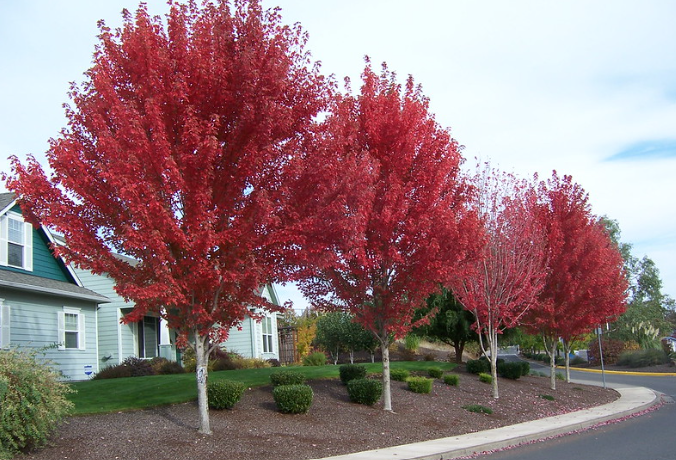
Alberta is a challenging but rewarding place to grow trees. The province stretches from prairie grasslands and dry foothills to mountain valleys and the boreal forest, creating enormous differences in temperature, rainfall, elevation, soil, and growing-season length. A tree that grows rapidly in a sheltered Edmonton yard may perform very differently on an exposed Calgary acreage or in northern Alberta.
That makes choosing a fast-growing tree in Alberta a little different from choosing one in a warmer part of Canada. Cold hardiness, drought tolerance, wind resistance, soil conditions, and the length of the growing season all matter. Alberta’s tree-improvement programs account for the province’s substantial climatic and geographic variation when selecting and transferring tree genetics.
The trees below range from exceptionally rapid-growing poplars and willows to moderately fast native conifers. The growth figures are practical estimates of annual height growth under good conditions, particularly after establishment. Newly planted trees may grow much more slowly during their first few years while developing roots.
Quick Comparison: Fast Growing Trees for Alberta
| Tree | Approx. growth rate | Typical mature height | Best use |
|---|---|---|---|
| Hybrid Poplar | 4–8 ft/year | 50–80+ ft | Fast shade and shelter |
| Northwest Poplar | 3–6 ft/year | 60–80 ft | Prairie landscapes |
| Trembling Aspen | 2–4 ft/year | 40–70 ft | Native shade |
| Balsam Poplar | 2–4 ft/year | 50–80 ft | Cold climates |
| Eastern Cottonwood | 3–6 ft/year | 60–100+ ft | Large properties |
| Willow hybrids | 3–6 ft/year | 30–70+ ft | Shelterbelts |
| Laurel-Leaf Willow | 2–4 ft/year | 20–60 ft | Windbreaks |
| Sharp-Leaf Willow | 2–4 ft/year | 16–25 ft | Prairie shelter |
| Manitoba Maple | 2–4 ft/year | 30–60 ft | Quick shade |
| Green Ash | 2–3 ft/year | 40–60 ft | Shelterbelts |
| Brandon Elm | 2–3 ft/year | 40–50 ft | Urban shade |
| American Elm | 2–4 ft/year | 60–80 ft | Large shade tree |
| Paper Birch | 1.5–3 ft/year | 40–60 ft | Cool landscapes |
| River Birch | 1.5–3 ft/year | 40–70 ft | Moist sites |
| Northern Catalpa | 2–3 ft/year | 40–60 ft | Warm Alberta sites |
| White Spruce | 1–2 ft/year | 50–80 ft | Evergreen shelter |
| Norway Spruce | 1.5–2.5 ft/year | 60–100 ft | Windbreaks |
| Colorado Spruce | 1–2 ft/year | 50–70 ft | Evergreen structure |
| Scots Pine | 1.5–2.5 ft/year | 40–70 ft | Dry sites |
| Lodgepole Pine | 1–2 ft/year | 40–70 ft | Foothills and mountains |
| Jack Pine | 1–2.5 ft/year | 30–60 ft | Sandy soils |
| Tamarack | 1.5–2.5 ft/year | 40–70 ft | Wet, cold sites |
| Black Spruce | 1–2 ft/year | 30–60 ft | Boreal landscapes |
| Siberian Larch | 1.5–2.5 ft/year | 50–70 ft | Hardy windbreak |
| Mayday Tree | 1.5–3 ft/year | 20–30 ft | Flowering landscape |
1. Hybrid Poplar
Approximate growth rate: 4–8 ft per year
Hybrid poplar is one of the strongest choices in Alberta when the objective is maximum height growth. Different clones can vary dramatically, but selected hybrids have been developed specifically for rapid growth and prairie conditions. University of Alberta research has also evaluated poplar genetics and growth as part of Alberta’s broader tree-improvement work.
These trees are particularly useful for large acreages, shelterbelts, wind protection, biomass plantings, and rapid shade. The major drawback is size: hybrid poplars can eventually become very large, with aggressive roots and relatively short useful lives compared with slower-growing hardwoods. Give them plenty of room.
2. Northwest Poplar
Approximate growth rate: 3–6 ft per year
Northwest poplar is a vigorous hybrid particularly suited to prairie climates. Calgary lists it as a fast-growing tree that can reach roughly 25 m in height and 20 m in spread, making it one of the more practical rapid-growth choices for large Alberta properties.
It can establish a substantial canopy surprisingly quickly when supplied with adequate moisture. However, its aggressive root system and relatively short expected lifespan make it unsuitable for tight urban planting sites or locations immediately beside sidewalks and underground utilities.
3. Trembling Aspen
Approximate growth rate: 2–4 ft per year
Trembling aspen is one of Alberta’s most important native pioneer trees. It naturally colonizes disturbed areas and can establish rapidly where sunlight and moisture are adequate. Calgary describes it as fast-growing and adaptable, reaching approximately 15 m in height under suitable conditions.
Aspen works especially well on large properties where a natural-looking woodland is desirable. It can spread through suckering, however, and may require management if you want a tightly controlled landscape. University of Alberta boreal research also identifies trembling aspen as one of the dominant species in Alberta mixedwood forests.
4. Balsam Poplar
Approximate growth rate: 2–4 ft per year
Balsam poplar is a hardy native tree with good potential for rapid growth in moist, fertile locations. It is particularly useful for rural properties, shelterbelts, streamside plantings, and northern Alberta landscapes where cold tolerance is important.
Calgary identifies balsam poplar as a fast-growing native tree and notes that it can reach approximately 25 m. Its roots can be shallow, though, so it is best planted well away from sidewalks, foundations, septic systems, and other infrastructure.
5. Eastern Cottonwood
Approximate growth rate: 3–6 ft per year
Eastern cottonwood is one of the fastest-growing large trees available for suitable Alberta locations. It has been widely used in prairie shelterbelts, where its rapid growth can provide wind protection and shade relatively quickly. University of Saskatchewan material notes the important role of cottonwood genetics in the development of hybrid poplars used in prairie shelterbelts.
Cottonwood is best reserved for large properties. Its mature dimensions, extensive roots, and large branches make it a poor choice for small residential yards. Where space is available, however, it can provide an impressive canopy in a relatively short time.
6. Fast-Growing Willow Hybrids
Approximate growth rate: 3–6 ft per year
Willows are famous for rapid growth, particularly where their roots have reliable access to moisture. Alberta has a long history of using willow species in shelterbelts and windbreaks. Some selected willows can produce several feet of new growth annually under favourable conditions.
University of Saskatchewan horticultural research describes willows as extremely fast-growing, adaptable, and generally hardy, while emphasizing that most perform best where moisture is available.
7. Laurel-Leaf Willow
Approximate growth rate: 2–4 ft per year
Laurel-leaf willow is one of the more widely used fast-growing willows on the Canadian Prairies. It can eventually reach roughly 20–60 ft and develop into a broad shade or shelterbelt tree. It is especially useful where a property needs rapid wind protection.
The tree’s major disadvantage is its thirst. It can consume substantial amounts of soil moisture and may drop branches and twigs during windy weather. University of Saskatchewan recommends it primarily where there is enough moisture and space.
8. Sharp-Leaf Willow
Approximate growth rate: 2–4 ft per year
Sharp-leaf willow is a cold-hardy shelterbelt tree that can establish quickly on the Prairies. It generally reaches about 16–25 ft and is more manageable in size than many large willow species.
It is particularly useful for windbreaks and exposed rural properties. Although more drought-tolerant than some willows, it still performs best when soil moisture is adequate during establishment.
9. Manitoba Maple
Approximate growth rate: 2–4 ft per year
Manitoba maple is one of Alberta’s classic quick-growing shade trees. Calgary lists it as fast-growing, adaptable to a wide range of soils, and useful for windbreaks and shelter.
Its main weakness is structural quality. Young trees can develop irregular branching, and mature trees may be vulnerable to wind damage. Regular structural pruning when young can help, but this is still better suited to larger properties than carefully designed small gardens.
10. Green Ash
Approximate growth rate: 2–3 ft per year
Green ash has historically been an important shelterbelt tree throughout Alberta because it combines relatively fast growth with cold hardiness and adaptability. Alberta agricultural guidance notes that green ash grows particularly well on moist, fertile soils but can be useful across a wide range of Alberta sites.
One important consideration is emerald ash borer. Where the pest is present or expected, planting a diverse mixture of species is safer than establishing a new landscape dominated by ash.
11. Brandon Elm
Approximate growth rate: 2–3 ft per year
Brandon elm is a selected American elm cultivar valued for relatively fast growth and a more compact form than traditional American elm. Calgary lists it as a fast-growing tree reaching about 15 m and notes its tolerance of urban pollution and salty soils.
It can be a useful choice for Alberta yards where you want a substantial shade canopy but have less space than would be appropriate for a giant cottonwood. Dutch elm disease remains an important consideration when selecting elms.
12. American Elm
Approximate growth rate: 2–4 ft per year
American elm can be a relatively fast-growing tree when young and supplied with adequate moisture. Its high, arching canopy can eventually produce excellent shade, making it valuable for large lawns and acreage properties.
Calgary classifies American elm as medium to fast-growing and lists a potential mature height of approximately 25 m. Disease-resistant cultivars are preferable where Dutch elm disease is a concern.
13. Paper Birch
Approximate growth rate: 1.5–3 ft per year
Paper birch provides a combination of respectable growth, cold hardiness, and ornamental bark. Its white trunk makes it particularly attractive during Alberta’s long winter, while its yellow autumn foliage adds seasonal colour.
Calgary rates paper birch as fast-growing and recommends full sun with well-drained soil. The city also notes that birches can be susceptible to bronze birch borer, especially when stressed.
14. River Birch
Approximate growth rate: 1.5–3 ft per year
River birch is most useful in Alberta where soil moisture is relatively dependable. It can produce attractive peeling bark and a multi-stemmed form while establishing reasonably quickly.
It is not an ideal choice for extremely dry prairie sites unless irrigation is available. For properties with moist soil, drainage swales, or suitable sheltered locations, however, it can be a distinctive landscape tree.
15. Northern Catalpa
Approximate growth rate: 2–3 ft per year
Northern catalpa can be a surprisingly fast-growing tree where Alberta’s climate and site allow it to thrive. It produces very large leaves, fragrant summer flowers, and a broad canopy.
Because it needs a reasonably warm, sheltered location, catalpa is better suited to favourable southern Alberta microclimates than exposed northern sites. Give it full sun, adequate moisture during establishment, and plenty of space.
16. White Spruce
Approximate growth rate: 1–2 ft per year
White spruce is not the fastest tree on this list, but it is one of Alberta’s most dependable evergreen choices. Alberta forestry models specifically include white spruce among the major species used to model growth in the province’s boreal forests.
Once established, white spruce can maintain steady growth and provide year-round wind protection. Alberta agricultural guidance gives an established growth rate of approximately 40 cm per year under suitable conditions and notes a potential lifespan of 80–100 years.
17. Norway Spruce
Approximate growth rate: 1.5–2.5 ft per year
Norway spruce can grow faster than many other large evergreen trees and is widely valued for windbreaks and shelterbelts. Calgary describes it as medium to rapid-growing and capable of eventually reaching approximately 39 m.
Its dense branches make it particularly useful for blocking winter winds. Despite its toughness, it needs reasonably well-drained soil; consistently waterlogged ground can cause problems.
18. Colorado Spruce
Approximate growth rate: 1–2 ft per year
Colorado spruce is a dependable evergreen for many Alberta landscapes, particularly where a blue-green or silvery appearance is desired. Calgary lists it as a medium-growing tree that can reach about 20 m and tolerate seasonal drought once established.
It is generally slower than poplar or willow, but its evergreen structure and relatively strong landscape performance make it valuable for privacy, wind protection, and year-round visual interest.
19. Scots Pine
Approximate growth rate: 1.5–2.5 ft per year
Scots pine is one of the faster-growing conifers suitable for dry Alberta conditions. Calgary describes it as a fast-growing conifer that adapts to a range of soils but prefers lighter, sandy, dry ground.
Its orange-brown mature bark adds ornamental interest, while its evergreen foliage provides winter screening. It is particularly useful on larger rural properties where a relatively drought-tolerant conifer is needed.
20. Lodgepole Pine
Approximate growth rate: 1–2 ft per year
Lodgepole pine is an important western Canadian conifer and a natural choice for foothill and mountain regions of Alberta. It is included in the University of Alberta’s Mixedwood Growth Model, which models its growth using Alberta-specific data.
It is not normally as fast as hybrid poplar, but it can perform well in suitable foothill environments. Its regional adaptation makes it particularly interesting for properties closer to Alberta’s mountain and foothill ecosystems.
21. Jack Pine
Approximate growth rate: 1–2.5 ft per year
Jack pine is a hardy conifer that can perform well on sandy, dry, and relatively nutrient-poor sites. Alberta forestry research has identified jack pine among the native species capable of strong performance under certain northern reclamation conditions.
Its relatively modest mature size compared with some spruce and pine species can make it useful where a large evergreen is not appropriate. It requires plenty of sunlight and is best suited to open sites.
22. Tamarack
Approximate growth rate: 1.5–2.5 ft per year
Tamarack, also called eastern larch, is a deciduous conifer that loses its needles every autumn. It is particularly well adapted to cold conditions and can grow on moist sites where other conifers may struggle.
Alberta’s provincial growth modelling includes tamarack/larch among its recognized species groups, reflecting its importance in the province’s forest ecosystems.
23. Black Spruce
Approximate growth rate: 1–2 ft per year
Black spruce is one of the important trees of Alberta’s northern boreal forest. It is especially suited to colder environments and wetter or less productive sites.
It is a better choice for northern Alberta and naturalized landscapes than for someone seeking maximum growth in a Calgary backyard. Its strength is reliability under difficult northern conditions rather than spectacular annual height gain.
24. Siberian Larch
Approximate growth rate: 1.5–2.5 ft per year
Siberian larch is a hardy deciduous conifer with excellent cold tolerance. It can be useful for shelterbelts, rural properties, and locations where a large conifer is desired but the landscape would benefit from autumn colour and winter openness.
Its deciduous nature also allows more winter sunlight into the landscape than an evergreen spruce. It performs best in full sun with reasonably well-drained soil.
25. Mayday Tree
Approximate growth rate: 1.5–3 ft per year
Mayday tree, also known as European bird cherry, can produce relatively quick growth while offering attractive white flower clusters in spring. Calgary classifies it as medium to fast-growing and notes its tolerance of urban pollution.
It is considerably smaller than cottonwood or poplar and can therefore be useful where a homeowner wants a flowering tree rather than a massive shade canopy. Black knot can be a concern, so good site selection and pruning are important.
Which Trees Grow Fastest in Alberta?
If raw height growth is your priority, the strongest candidates are generally hybrid poplar, Northwest poplar, eastern cottonwood, willow hybrids, trembling aspen, balsam poplar, silver/white willow types, and Manitoba maple.
Among them, hybrid poplar and selected poplar clones can be exceptionally vigorous. University of Saskatchewan research describes some hybrid poplar selections as capable of extremely rapid growth, with one selection reported to reach 20 ft of growth over 5 years when conditions are good.
However, rapid growth comes with trade-offs. Poplars and willows can develop aggressive root systems, large crowns, weaker branches, or shorter useful lifespans. Alberta’s urban forestry experience with poplars demonstrates both their value and their management challenges.
Best Fast Growing Trees for Calgary
Calgary presents a particularly demanding combination of cold winters, dry air, chinook cycles, wind, and limited moisture.
Some of the better choices include:
- Trembling aspen
- Manitoba maple
- Balsam poplar
- Brandon elm
- American elm
- White spruce
- Norway spruce
- Colorado spruce
- Scots pine
- Selected poplars
The City of Calgary’s current tree recommendations specifically identify trembling aspen, paper birch, Manitoba maple, balsam poplar, Northwest poplar, laurelleaf willow, Norway spruce, white spruce, and several other species as suitable examples for the city’s variable climate.
Best Fast Growing Trees for Edmonton and Central Alberta
Edmonton’s somewhat cooler and more humid climate opens the door to many hardy native species.
Good candidates include:
- Hybrid poplar
- Trembling aspen
- Balsam poplar
- Manitoba maple
- Green ash
- American elm
- Paper birch
- White spruce
- Norway spruce
- Tamarack
For suburban properties, consider mature size carefully. A fast-growing poplar that works beautifully on an acreage may become a major maintenance problem on a typical residential lot.
Best Trees for Northern Alberta
Northern Alberta requires an even stronger emphasis on cold hardiness and regional adaptation.
Some of the strongest choices include:
- Balsam poplar
- Trembling aspen
- White spruce
- Black spruce
- Tamarack
- Jack pine
- Lodgepole pine
- Paper birch
The University of Alberta’s EMEND research site in northern Alberta includes trembling aspen, balsam poplar, white spruce, black spruce, lodgepole pine, and paper birch among the important tree species found in the boreal mixedwood environment.
Best Trees for Alberta Shelterbelts and Windbreaks
For rural Alberta, rapid growth is often wanted for a very practical reason: reducing wind.
Strong candidates include:
- Hybrid poplar
- Northwest poplar
- Balsam poplar
- Laurel-leaf willow
- Sharp-leaf willow
- Green ash
- White spruce
- Norway spruce
- Scots pine
- Siberian larch
A mixed shelterbelt is usually preferable to planting a single species. Different species mature at different rates and respond differently to drought, disease, insects, and winter injury.
Best Fast Growing Trees for Dry Alberta Conditions
Dry prairie conditions eliminate some of the fastest-growing trees from consideration. Willows, river birch, and many poplars need considerably more moisture than dry sites naturally provide.
For drier locations, consider:
- Scots pine
- Jack pine
- Lodgepole pine
- Colorado spruce
- Manitoba maple
- Trembling aspen
- White spruce once established
Even drought-tolerant trees need regular watering during establishment. A tree that can survive drought after developing a deep root system may still fail if it is allowed to dry repeatedly during its first 2–3 growing seasons.
How to Make Fast Growing Trees Grow Faster
Species selection is only one part of the equation.
Water deeply during establishment
New trees need consistent moisture while roots spread into surrounding soil. Frequent shallow watering is generally less useful than thorough watering that encourages deeper rooting.
Control grass and weeds
Grass can compete strongly with young trees for water and nutrients. Keeping competing vegetation away from the root zone can make a noticeable difference during establishment.
Alberta shelterbelt guidance specifically emphasizes the importance of weed control during the early years of tree establishment.
Match the tree to the soil
Do not put a moisture-loving willow on a dry gravelly site simply because you want rapid growth. Likewise, a pine adapted to sandy soil may perform poorly on permanently wet ground.
Protect young trees from wildlife
Browsing by deer, rabbits, and other animals can eliminate much of a young tree’s annual height growth. Physical protection can be particularly important on rural Alberta properties.
Choose locally adapted stock
Genetic adaptation matters in Alberta. The province spans approximately 11 degrees of latitude and more than 3,500 m of elevation, so trees from one part of the province are not automatically ideal for another.
How Fast Will a Newly Planted Tree Grow in Alberta?
A newly planted tree may grow surprisingly slowly during its first year.
This is normal. Much of the tree’s energy is initially directed toward root establishment rather than visible height. A 6-ft tree that adds only a few inches during its first season is not necessarily failing.
Once its root system becomes established, a vigorous species such as hybrid poplar, willow, or selected aspen can begin adding several feet of height per year under excellent conditions.
The difference between establishment growth and mature-tree growth is important when comparing nursery trees or estimating how quickly a privacy screen will develop.
Fast Growth vs. Long-Term Value
The fastest-growing tree is not necessarily the best tree for Alberta.
Hybrid poplars, cottonwoods, willows, and Manitoba maples can provide shade and shelter quickly, but they can also become large, develop extensive root systems, suffer branch breakage, or require eventual replacement.
Slower-growing trees such as white spruce, lodgepole pine, jack pine, and oak can offer better long-term structure in the right locations. Alberta’s forestry growth models themselves account for species, site conditions, competition, and stand development rather than treating growth as a single fixed number.
For most homeowners, the ideal choice is therefore a tree that is fast enough to meet the objective but still appropriate for the mature landscape.
Things to Remember
Alberta has some excellent fast-growing trees, but the best choice depends heavily on where you live and what your property is like.
For maximum growth, start with hybrid poplar, Northwest poplar, cottonwood, and selected willows. For native shade, trembling aspen, balsam poplar, red maple where suitable, Manitoba maple, and American elm are worth considering. For evergreen growth, look at white spruce, Norway spruce, Colorado spruce, Scots pine, lodgepole pine, and tamarack.
Most importantly, remember that Alberta’s growing conditions are highly variable. A tree that adds 4 ft of growth on a well-watered, fertile site may add much less on an exposed, dry property. Choosing a species adapted to your particular part of Alberta—and giving it adequate moisture, space, and protection during establishment—will usually produce better results than simply choosing the tree with the biggest advertised growth rate.
Further References
- Government of Alberta — Growth and Yield Projection System (GYPSY).
Government of Alberta — Growth and Yield Projection System
This is one of the best sources for Alberta-specific tree growth information. The model forecasts forest growth and yield and includes groups such as trembling aspen, balsam poplar, lodgepole pine, jack pine, tamarack, black spruce, white spruce, Douglas-fir, and Engelmann spruce. - University of Alberta — Mixedwood Growth Model: Height Increment.
University of Alberta — Height Increment Model
Particularly useful when discussing annual height growth rates. The model calculates yearly height increment according to factors such as site productivity, tree size, and competition, making it a strong scientific reference for explaining why growth rates vary between trees and locations. - University of Alberta — Mixedwood Growth Model (MGM21).
University of Alberta — Mixedwood Growth Model
This comprehensive model is useful for understanding annual tree growth, diameter development, survival, competition, and stand-level growth. It also has regional variants for Alberta and incorporates Alberta-specific species and site information. - Government of Alberta — Permanent Sample Plots Program.
Government of Alberta — Permanent Sample Plots Program
A valuable source for explaining how tree growth is actually monitored in Alberta. The province maintains approximately 1,200 permanent sample plot locations, where trees are periodically re-measured for growth, mortality, damage, and forest development. - University of Alberta — Individual Tree Height Increment Model for Alberta.
University of Alberta — Individual Tree Height Increment Research
This peer-reviewed research examines height growth of white spruce and trembling aspen in Alberta’s boreal mixedwood forests. It is particularly useful for supporting statements about how tree height growth is influenced by tree size, stand density, competition, site productivity, and species composition.