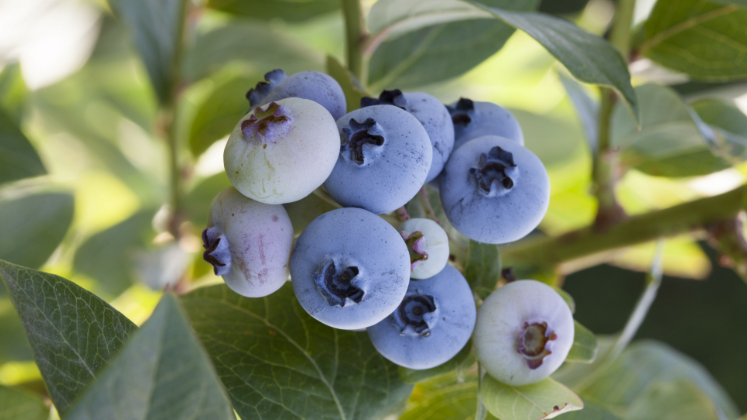
Growing huckleberries successfully starts below the surface. These distinctive berry plants are adapted to woodland environments where the soil is often acidic, rich in organic material, moist but not waterlogged, and naturally well aerated. Trying to grow them in ordinary garden soil without considering these conditions can result in weak growth and poor fruit production.
The exact soil requirements vary among huckleberry species. Western huckleberries are particularly associated with acidic forest soils, while some species can tolerate somewhat different conditions. The University of Idaho notes that huckleberries are generally difficult to domesticate and often prefer acidic soils and specific growing environments.
If you are preparing a backyard bed, raised bed, or container for huckleberries, the goal is not simply to find “rich soil.” The ideal growing medium should combine acidic pH, organic matter, good drainage, moisture retention, and excellent aeration. Here are seven soil types and soil mixes worth considering.
1. Acidic Loamy Soil
Acidic loam is one of the best general-purpose soil conditions for huckleberries because it provides a useful balance between drainage and moisture retention. Loam contains a mixture of sand, silt, and clay, allowing it to hold enough moisture for the roots without remaining saturated after rainfall.
For many huckleberry species, acidity is particularly important. Soil pH influences nutrient availability and overall plant performance. Huckleberries and blueberries are associated with acidic growing conditions, although the preferred range can vary by species. University of Idaho specifically notes that western huckleberries tend to prefer acidic soils.
Before planting, test your soil rather than guessing its pH. A soil test can tell you whether the existing soil is appropriate and whether amendments are necessary. Avoid making large pH changes without testing first because excessive amendments can create a different soil problem.
2. Sandy Loam With Organic Matter
Sandy loam can be a good choice when it is combined with sufficient organic matter. The relatively large spaces between sand particles allow excess water to drain readily, while organic material improves the soil’s ability to retain moisture and nutrients.
This combination can be particularly useful for huckleberries because their roots need oxygen as well as water. Soil that remains saturated for prolonged periods can deprive roots of oxygen and increase the risk of root problems. Extension guidance for berry crops emphasizes the importance of well-drained soil.
Improve sandy soil by incorporating suitable organic material before planting and applying an organic mulch afterward. Compost, aged bark, or other appropriate organic materials can improve moisture retention. Oregon State University Extension explains that organic matter can increase water- and nutrient-holding capacity in sandy soils.
Also Read: Best Companion Plants for Huckleberries
3. Forest-Style Soil Rich in Organic Matter
A forest-style soil mix is particularly appropriate when growing huckleberries that naturally occur in woodland environments. Instead of trying to create an ordinary vegetable-garden soil, you can recreate some of the characteristics of a forest floor.
This type of growing medium can contain acidic native soil combined with aged bark, leaf mold, or other well-decomposed organic material. Red huckleberry is naturally associated with forest environments, and Oregon State University recommends soil rich in organic matter, including composted fir bark, for this species.
The important distinction is between well-decomposed organic matter and fresh material. Fresh sawdust, wood chips, manure, or other undecomposed materials can temporarily affect nutrient availability as they decompose. Use mature, appropriate amendments and avoid materials that may contain herbicide residues or excessive salts.
4. Peat-Based Acidic Soil Mix
A peat-based acidic mix can be useful for huckleberries grown in containers or raised beds where you have greater control over the growing medium.
Peat moss is naturally acidic and has good water-holding properties. When combined with materials that improve aeration and drainage, it can create a lightweight medium suitable for acid-loving plants.
However, peat should not automatically be treated as the only ingredient. A container medium that holds too much water can create root problems. Combine moisture-retaining material with components that maintain air spaces, and monitor the pH rather than assuming it will remain at a particular level. The University of Idaho and extension resources emphasize that soil conditions are important to successful huckleberry cultivation.
5. Bark-Based Soil Mix
A bark-based mix is especially interesting for huckleberries because some species naturally grow in forest environments containing decomposing woody material.
Aged or composted bark can contribute organic matter while helping create a loose, well-aerated growing medium. Oregon State University specifically recommends soil rich in organic matter such as composted fir bark for red huckleberry.
Bark should be appropriately aged or composted rather than freshly incorporated in large quantities. Fresh woody materials can temporarily interfere with nutrient availability during decomposition. A well-prepared bark-based mix can instead provide the loose structure and organic character that suits woodland-adapted plants.
6. Acidic Raised-Bed Soil
A raised bed can be one of the easiest ways to create suitable soil when your native ground is heavy, compacted, poorly drained, or has an unsuitable pH.
Rather than attempting to completely transform difficult native soil, you can build a dedicated planting area using an appropriate acidic growing medium. Raised beds also improve drainage by elevating the root zone above poorly draining ground.
Drainage is especially important for berry crops. Oregon State University Extension notes that waterlogged soils can cause roots to suffocate and increase the likelihood of root diseases, while raised beds can improve drainage.
7. Acid-Loving Container Mix
For gardeners with limited space, a purpose-built container mix can provide excellent control over the huckleberry’s root environment.
A good container medium should be acidic, lightweight, well drained, and capable of holding enough moisture to prevent the root ball from drying rapidly. A mixture based around acidic organic material and an aerating component can work better than ordinary garden soil.
Container-grown huckleberries should be monitored more closely than plants in the ground. Containers can dry out quickly during warm weather, while excessive watering can also cause problems if the drainage holes are inadequate. Choose a container with proper drainage and periodically check the condition of the growing medium.
Also Read: How to Increase Huckleberry Fruit Production
What Is the Best Soil pH for Huckleberries?
There is no single pH number that applies perfectly to every huckleberry species. However, many huckleberries are associated with acidic soils, and western huckleberries generally perform best in acidic environments. University of Idaho describes huckleberries as plants that tend to prefer acidic soils, while OSU lists blueberries at approximately pH 4.5–5.5 as a useful comparison among closely related acid-loving berry plants.
The safest approach is to identify the huckleberry species you are growing and test the soil before making amendments. Do not automatically add sulfur, lime, or other pH-changing materials simply because a plant is described as acid-loving.
How to Improve Soil for Huckleberries
If your soil is too heavy, improve its structure with suitable organic matter and address drainage problems before planting. Organic matter can improve aeration in clay soils while helping sandy soils retain water and nutrients.
If the pH is unsuitable, use a soil test to determine the appropriate amendment and application rate. Changes in soil pH can take time, so it is better to prepare the planting area before putting huckleberries into the ground.
Avoid relying on large quantities of fresh manure or other unprocessed materials. Besides potentially having excessive salts, fresh organic materials may create nutrient imbalances as they decompose.
What Soil Should You Avoid?
The biggest problem is usually not a particular soil texture but a combination of poor drainage and unsuitable pH.
Heavy clay that stays saturated after rain can be difficult for huckleberries. On the other hand, extremely sandy soil with little organic matter may drain so rapidly that plants struggle to maintain adequate moisture.
Avoid planting huckleberries in compacted soil or areas where water routinely collects. If the native ground is unsuitable, a raised bed or carefully prepared planting area may be a better solution.
Final Thoughts
The best soil for growing huckleberries is generally acidic, rich in organic matter, loose, well drained, and capable of holding consistent moisture without becoming waterlogged. Acidic loam, sandy loam improved with organic matter, forest-style soil, bark-based mixes, and carefully prepared raised-bed or container mixes can all work when matched to the particular huckleberry species.
Rather than focusing on one “magic” soil recipe, think like a gardener trying to recreate the plant’s natural environment. Test your soil, improve drainage where necessary, maintain suitable acidity, and use mature organic materials. This approach gives huckleberries a much better foundation for establishing healthy roots and eventually producing their distinctive fruit.
References
- University of Idaho Extension — Growing Western Huckleberries. Information on huckleberry growing conditions, site selection, and acidic soils. University of Idaho Extension
- Oregon State University Extension — Gardening with Oregon Native Plants. Includes growing information for red and evergreen huckleberries, including soil and moisture requirements. Oregon State University Extension
- Oregon State University Extension — Growing Berries on the Oregon Coast. Covers soil pH, drainage, organic matter, and soil preparation for berry crops. OSU Extension — Growing Berries on the Oregon Coast
- Oregon State University Extension — Improving Garden Soils With Organic Matter. Explains how organic matter affects soil structure, drainage, moisture retention, and plant health. OSU Extension — Improving Garden Soils With Organic Matter
- Oregon State University Extension — Managing Soil pH. Provides background on soil acidity, pH testing, and how pH affects nutrient availability. OSU Extension — Managing Soil pH