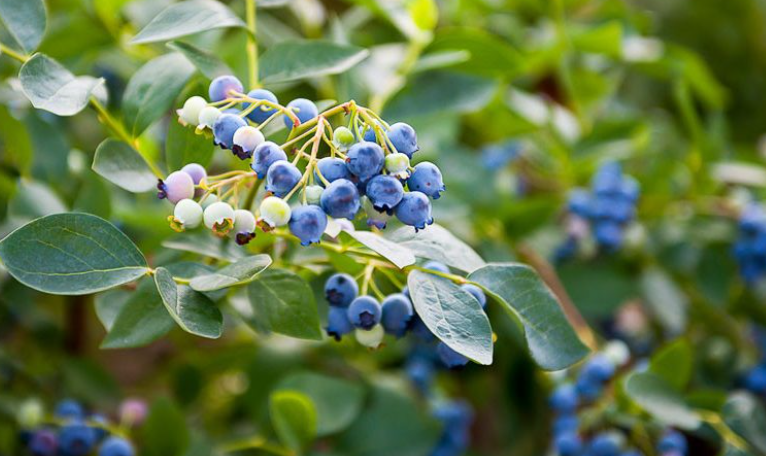
The Alaska huckleberry, scientifically known as Vaccinium alaskense, is a deciduous native shrub of the cool, moist forests of western North America. Despite its common name, its natural range extends well beyond Alaska, reaching through British Columbia and into the northwestern United States. It is especially characteristic of moist forest openings, mountain landscapes, and subalpine habitats.
This huckleberry is sometimes overlooked because several closely related Vaccinium species can look remarkably similar. In fact, some botanical treatments have historically combined V. alaskense with oval-leaf huckleberry (Vaccinium ovalifolium), although botanical sources distinguish them using differences in range, leaves, flowers, and fruit.
For gardeners, native-plant enthusiasts, and berry lovers, Alaska huckleberry is an interesting species because it combines attractive foliage and flowers with edible, flavorful berries. It is also an important component of the forest understory in the Pacific Northwest and northern mountain regions.
Botanical Classification
- Scientific name: Vaccinium alaskense
- Family: Ericaceae
- Genus: Vaccinium
- Growth form: Deciduous shrub
- Common name: Alaska huckleberry; Alaska blueberry
- Native range: Alaska, British Columbia, Washington, Oregon, and surrounding western regions
The plant belongs to Vaccinium, the same large genus that includes numerous blueberries and huckleberries. This relationship explains why the common names used for these plants can sometimes be confusing.
USDA Forest Service material lists Vaccinium alaskense as Alaska huckleberry and describes it as an alternate-leaved deciduous shrub.
Also Read: Other Different Types of Huckleberry
What Does Alaska Huckleberry Look Like?
Alaska huckleberry is an upright to spreading shrub that can reach approximately 2 meters (about 6.5 feet) under suitable conditions, although its size varies with habitat. Its young stems are yellow-green and somewhat angular, while older branches develop grayish bark.
The leaves are deciduous and generally oval to egg-shaped. They are typically about 2–7 centimeters long and have pointed or somewhat blunt bases and tips. One useful identification feature is the lighter-colored underside of the leaf, which can have a noticeable bloom.
The leaves may have inconspicuous teeth, particularly toward the lower portion of the margin. The midrib underneath can also have sparse, coarse, glandular hairs. These small characteristics become valuable when distinguishing Alaska huckleberry from similar Vaccinium species.
Alaska Huckleberry Flowers
The flowers appear in late spring as the foliage develops. USDA Forest Service descriptions characterize the flowers as bronzy-pink and borne singly on relatively straight flower stalks.
Like many members of the heath family, the flowers have a rounded, urn-like shape. Their relatively subtle coloring means they are not as visually dramatic as the flowers of many ornamental garden shrubs.
After pollination, the flowers develop into berries during the growing season. Flowering time can vary according to elevation, latitude, local climate, and seasonal weather.
Alaska Huckleberry Fruit
The berries are one of the most appealing features of this plant. They are approximately 7–12 millimeters across and can range from bluish-black to purplish-black when mature. Unlike some related berries, they generally lack a conspicuous powdery bloom.
The fruit can be globe-shaped to somewhat pear-shaped. E-Flora BC describes the berries as having good flavor, while USDA Forest Service material notes that the berries are tasty but can be noticeably more tart and acidic than those of big huckleberry (Vaccinium membranaceum).
This combination of sweetness and acidity makes Alaska huckleberry an interesting wild fruit. However, anyone gathering wild berries should positively identify the plant before eating anything collected in the wild.
Where Does Alaska Huckleberry Grow?
Alaska huckleberry is primarily associated with cool, moist forest environments. It can occur in lowland, montane, and subalpine zones and is particularly common in coastal British Columbia. Its range extends north into southern Alaska and south into northwestern Oregon.
The species is described as shade-tolerant and adapted to Pacific coastal climates. It can occur in fresh to very moist sites and is particularly associated with cool, relatively wet environments.
USDA ecological-site information also identifies V. alaskense as an understory shrub in Pacific silver fir forests of Washington. In those habitats, it can occur alongside western hemlock, western redcedar, red huckleberry, thimbleberry, and other native understory plants.
Alaska Huckleberry and Elevation
One interesting feature of this species is its broad elevation range. E-Flora BC records it from near sea level to approximately 2,500 meters, although the average recorded elevation is much lower.
Its preferred elevation therefore depends heavily on geographic location. A plant growing near the coast may occupy a very different elevation from one found in a mountain forest farther inland.
This flexibility is another reason that habitat is more useful than elevation alone when identifying the species.
Also Read: Best Native Berry Bushes for Wildlife Gardens
Soil and Growing Conditions
If you are interested in growing Alaska huckleberry, try to recreate its natural environment rather than treating it like an ordinary garden shrub.
It prefers moist, acidic, organic-rich forest-type conditions. The species is associated with nitrogen-poor soils and cool, moist climates, according to ecological information summarized by E-Flora BC.
Good drainage is still important. Moist soil does not mean permanently waterlogged soil. A site that stays saturated for long periods can create root problems even for plants adapted to wet forests.
Light Requirements
Alaska huckleberry is described as shade tolerant, which makes it particularly suitable for woodland-style landscapes.
In nature, it can grow beneath or around forest vegetation and in openings where more light reaches the understory. In a garden, bright filtered light or partial shade may therefore be more appropriate than an exposed, extremely hot location.
The exact amount of light a plant can tolerate depends on moisture. Plants receiving more sunlight generally need adequate soil moisture to prevent stress.
Is Alaska Huckleberry Edible?
Yes, the ripe berries are regarded as edible and have been documented as food. Scientific research has also included Vaccinium alaskense among indigenous wild berries used by the Nuxalk people of western British Columbia.
The fruit is useful fresh and can also be incorporated into various traditional and modern berry preparations. Its relatively tart character makes it particularly interesting for people who enjoy strongly flavored wild berries.
As with any wild fruit, however, proper identification is essential. Never rely on berry color alone when deciding whether an unfamiliar wild plant is safe to eat.
Alaska Huckleberry vs. Mountain Huckleberry
Alaska huckleberry and mountain huckleberry (Vaccinium membranaceum) can both occur in western mountain forests, but they are separate species.
Alaska huckleberry generally produces smaller, bluish-black to purplish-black fruit and has relatively subtle leaf margins. Mountain huckleberry is well known for its larger, often dark berries and is one of the most widely recognized western huckleberry species.
The USDA Forest Service specifically notes that Alaska huckleberry can be confused with V. membranaceum, but differences in leaf shape and serration can help separate them.
Alaska Huckleberry vs. Oval-Leaf Huckleberry
This is a particularly important comparison because the two species can be difficult to distinguish.
Some botanical authors have treated Vaccinium alaskense and Vaccinium ovalifolium together, but E-Flora BC recognizes them as distinct species with overlapping but different ranges and ecological tendencies.
When they grow together, identification may require careful examination of leaves, flowers, and fruits rather than relying on one characteristic. The distinction is especially important for anyone writing about or documenting wild Vaccinium species.
Wildlife Value
As a native berry-producing shrub, Alaska huckleberry contributes to forest ecosystems by providing seasonal fruit and understory vegetation.
Its berries are available to wildlife during the fruiting season, while the shrub itself forms part of the diverse plant community beneath forest canopies. USDA ecological-site descriptions show it occurring alongside numerous other native shrubs and herbaceous plants.
For native-plant gardeners within its natural range, this ecological role is an important reason to consider the species beyond its edible fruit.
Interesting Facts About Alaska Huckleberry
- Its scientific name is Vaccinium alaskense.
- It belongs to the Ericaceae, or heath, family.
- It is a deciduous shrub.
- It can reach roughly 2 meters in favorable conditions.
- Its flowers are typically bronzy-pink.
- The berries mature to bluish-black or purplish-black.
- The fruit is edible and known for its flavorful, tart character.
- It occurs from Alaska through British Columbia and into the northwestern United States.
- It can grow from lowland forests to subalpine environments.
- It is particularly associated with cool, moist forest habitats.
- It can be confused with closely related Vaccinium species.
- Some historical botanical treatments have combined it with V. ovalifolium.
Also Read: Best Berry Bushes for Backyard Planting
Is Alaska Huckleberry a Good Garden Plant?
Alaska huckleberry is best suited to gardeners who can provide acidic soil, reliable moisture, partial shade, and a cool growing environment. It is not an ideal choice for a hot, dry garden with alkaline soil.
Within its native range, however, it can be an attractive addition to a woodland or native-plant garden. Its seasonal flowers, deciduous foliage, and dark berries give it interest beyond the fruiting season.
For gardeners outside its natural range, researching local climate compatibility before planting is particularly important. The closer the garden conditions are to the species’ natural cool, moist forest habitat, the better the chances of successful establishment.
Final Thoughts
Alaska huckleberry is a fascinating western Vaccinium species that deserves more attention from native-plant gardeners and berry enthusiasts. Its dark, flavorful fruit is only one part of its appeal; the shrub also contributes to the structure and biodiversity of cool, moist forest ecosystems.
Its identification can be challenging because of its similarity to other huckleberries, but examining the leaves, flowers, fruit, habitat, and geographic range together makes identification much more reliable. For anyone interested in native berries, Vaccinium alaskense is an excellent species to learn.
References
- E-Flora BC — Vaccinium alaskense: Botanical description, identification characteristics, distribution, habitat, ecology, and fruit information. E-Flora BC — Alaska Huckleberry
- USDA Forest Service — Common Plants: Identification information for Alaska huckleberry, including leaves, flowers, berries, habitat, and distinguishing characteristics. USDA Forest Service — Common Plants
- USDA Natural Resources Conservation Service — Ecological Site Descriptions: Information showing Alaska huckleberry as an important understory shrub in cool, moist Pacific Northwest forests. USDA NRCS — Ecological Site Information
- Journal of Food Composition and Analysis — Indigenous Wild Berries: Research documenting nutritional data for Vaccinium alaskense among wild berries used by Indigenous communities in western British Columbia. Nutrient Values in Indigenous Wild Berries