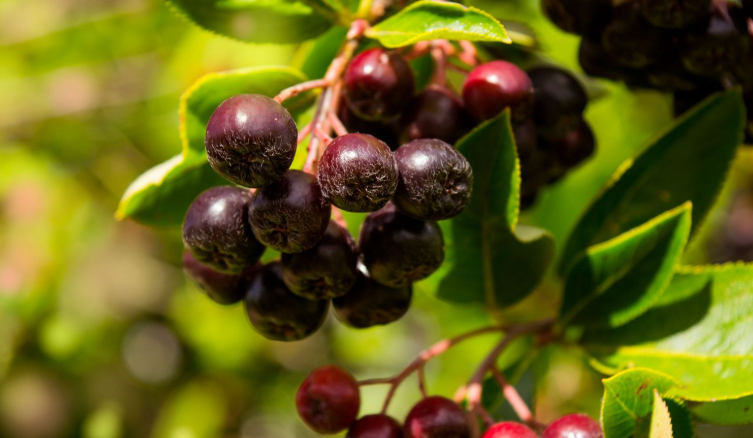
Mountain huckleberry is one of the most prized wild berry-producing shrubs of western North America. Known scientifically as Vaccinium membranaceum, it produces flavorful berries that range from deep red to purple and nearly black when ripe. The plant is especially important in mountain forests, where it provides food for wildlife and has long been valued as a traditional food plant.
Unlike cultivated blueberries that are commonly grown in organized rows, mountain huckleberries are strongly associated with natural forest ecosystems. They often appear in areas that have experienced disturbance, including burned forests and recently opened woodland sites. Their growth can be closely tied to elevation, soil conditions, moisture, and forest structure.
For gardeners, foragers, and anyone interested in native plants, mountain huckleberry is worth knowing because it combines ecological importance with edible fruit. Here is a closer look at how to identify this distinctive shrub, where it grows, what its berries taste like, and what makes it different from other huckleberries.
What Is Mountain Huckleberry?
Mountain huckleberry is a deciduous shrub in the heath family, Ericaceae. Its scientific name is Vaccinium membranaceum, and it is native to western North America.
The plant is commonly associated with mountain forests, particularly in the Pacific Northwest and Rocky Mountain regions. Depending on its location and growing conditions, it can form anything from a relatively small shrub to a larger, spreading thicket.
One of its most valuable characteristics is its fruit. Ripe berries can be eaten fresh or used in pies, jams, sauces, preserves, and other foods. The berries are also an important seasonal food source for wildlife.
Also Read: Other Types of Huckleberry
Mountain Huckleberry Identification
One of the easiest ways to recognize mountain huckleberry is by looking at the combination of leaves, flowers, stems, and berries rather than relying on the fruit alone.
The leaves are relatively thin and oval to elliptical, with pointed tips. They are green during the growing season and turn attractive shades of yellow, orange, red, or purple in autumn before falling.
The plant produces small, bell-shaped flowers in spring. The flowers are generally pale pink, pinkish-white, or whitish and hang individually or in small groups from the branches. After pollination, they develop into the familiar huckleberries.
What Do Mountain Huckleberries Look Like?
The berries are relatively small and round, but their color changes as they mature. Immature fruit may begin green before progressing through reddish shades and eventually becoming dark red, purple, or nearly black.
A useful identification feature is the appearance of the fruit. Like other Vaccinium species, mountain huckleberry fruit has a small depression or crown-like structure at the end opposite the stem.
When fully ripe, the berries can have a glossy appearance and are often easy to spot against the green foliage. However, color alone should never be used to identify a wild edible berry.
What Does Mountain Huckleberry Taste Like?
Mountain huckleberries are famous for their strong, sweet-tart flavor. Compared with many commercial berries, their taste can be surprisingly intense.
Depending on ripeness and growing conditions, the berries may combine sweetness with noticeable acidity and a slightly earthy or wild-fruit character. This complex flavor is one reason mountain huckleberries are highly regarded by foragers.
Fully ripe berries are generally more enjoyable than under-ripe fruit. The flavor can also vary considerably between individual plants and different locations.
Where Does Mountain Huckleberry Grow?
Mountain huckleberry is native to western North America. Its range includes parts of the Pacific Northwest, the northern Rocky Mountains, and other mountainous areas of the western United States and Canada.
It commonly occurs in coniferous forests, forest openings, mountain slopes, and disturbed woodland environments. It can become particularly abundant following forest disturbance in suitable habitats.
The plant is adapted to cool mountain environments, although its exact elevation varies substantially depending on latitude, climate, and local conditions.
Mountain Huckleberry and Forest Fires
One of the most fascinating characteristics of mountain huckleberry is its relationship with forest disturbance.
After certain wildfires or other disturbances, mountain huckleberry can become abundant in newly opened areas. Increased sunlight reaching the forest floor can encourage vigorous growth, while changes in vegetation and soil conditions may create opportunities for the shrub to expand.
This does not mean every burned forest will automatically produce a huckleberry crop. The response depends on factors such as fire severity, existing plants, climate, soil, moisture, and subsequent forest regeneration.
Also Read: Best Berry Bushes for Backyard Planting
Soil Requirements
Mountain huckleberry generally performs best in acidic, well-drained soils rich in organic matter.
In its natural habitat, it may grow in forest soils containing substantial amounts of leaf litter, decomposed plant material, and other organic debris. These conditions are quite different from heavy, compacted garden soil.
If you are attempting cultivation, avoid alkaline soils and sites where water remains permanently saturated. Maintaining appropriate soil acidity is particularly important for Vaccinium species.
Light Requirements
Mountain huckleberry can tolerate different light conditions, but its performance is strongly influenced by the surrounding forest environment.
Plants growing in more open locations can receive substantially more sunlight than those beneath a closed forest canopy. Adequate light can be especially important for flowering and fruit production.
For a garden setting, a site with good morning or filtered sunlight and appropriate soil moisture may be worth considering. However, recreating the exact conditions of a mountain forest can be difficult in an ordinary backyard.
Watering Mountain Huckleberry
Consistent moisture is important, particularly for young plants and during periods of drought.
The soil should remain reasonably moist without becoming permanently waterlogged. A thick layer of organic mulch can help conserve moisture and moderate soil temperature.
Established plants growing in suitable native habitats can be more resilient than newly transplanted specimens. During prolonged dry weather, supplemental watering may be necessary.
Can You Grow Mountain Huckleberry at Home?
Yes, but mountain huckleberry is not necessarily an easy substitute for a cultivated blueberry.
Its natural growth cycle is closely connected to forest ecology, and plants can be slow to establish. Availability of healthy nursery-grown plants can also be limited depending on your region.
If you want to grow Vaccinium membranaceum, start by obtaining a correctly identified plant from a reputable native-plant nursery. Growing from seed is possible but generally requires more patience.
Growing Mountain Huckleberry From Seed
Mountain huckleberry can be propagated from seed, although germination and early establishment can be challenging.
The seeds are tiny and may have dormancy requirements. Providing appropriate moisture and temperature conditions is important, and germination may be uneven.
Seed-grown plants also require several years of development before they become substantial shrubs. For gardeners interested in native-plant propagation, however, growing mountain huckleberry from seed can be an enjoyable long-term project.
Also Read: Best Native Berry Bushes for Wildlife Gardens
When Does Mountain Huckleberry Produce Fruit?
Flowering generally occurs during spring, followed by berry development through summer.
The exact timing depends on elevation, latitude, weather, and local growing conditions. In many areas, the berries ripen during the later part of summer.
A ripe crop can attract considerable attention from birds, mammals, and human foragers. If you are growing the plant in a garden, wildlife protection may become necessary when the fruit begins to mature.
Wildlife Value
Mountain huckleberry is an important native food plant.
Its berries can provide seasonal nutrition for numerous birds and mammals, while the plant itself contributes to the diversity of forest understory vegetation. Wildlife species that consume the fruit help move seeds through the landscape.
For this reason, mountain huckleberry has value beyond its usefulness as an edible berry. Planting native shrubs where they are appropriate can help create more diverse habitat.
Mountain Huckleberry vs. Blueberry
Mountain huckleberry and blueberry are closely related because both belong to the genus Vaccinium, but they are not interchangeable.
Mountain huckleberry is primarily a wild native shrub of western mountain and forest ecosystems. Commercial blueberries have been selected and bred extensively for traits such as fruit size, productivity, uniformity, and suitability for cultivation.
Mountain huckleberries tend to produce smaller fruits, but many people consider their flavor more intense and complex than that of common cultivated blueberries.
Mountain Huckleberry vs. Other Huckleberries
The word “huckleberry” refers to several different species, so identification can become confusing.
Mountain huckleberry is specifically Vaccinium membranaceum. Evergreen huckleberry is Vaccinium ovatum, while red huckleberry is Vaccinium parvifolium. Although these plants share the huckleberry name and belong to the same broad genus, they differ in growth habit, leaves, berries, habitat, and seasonal behavior.
This is why scientific names are especially useful when discussing wild berries.
Are Mountain Huckleberries Edible?
Yes, ripe mountain huckleberries are edible and have traditionally been collected for food. However, never eat a wild berry solely because it resembles a photograph or description online.
Correct identification is essential because some wild berries can be poisonous. When foraging, use several identifying characteristics and consult a reliable local field guide or knowledgeable expert familiar with the plants in your area.
Also check local regulations before collecting wild berries on public or protected land.
Interesting Facts About Mountain Huckleberry
- Its scientific name is Vaccinium membranaceum.
- It is a deciduous native shrub of western North America.
- The plant belongs to the heath family, Ericaceae.
- Its berries can mature to deep red, purple, or nearly black.
- It is strongly associated with mountain and forest habitats.
- Wildfires and other forest disturbances can influence its abundance.
- Its fruit is eaten by wildlife as well as people.
- The berries are valued for their strong sweet-tart flavor.
- It prefers acidic growing conditions.
- It is one of the best-known wild huckleberries of the Pacific Northwest and Rocky Mountain regions.
Is Mountain Huckleberry Worth Growing?
For the right gardener, absolutely—but it is best approached as a native woodland shrub rather than a high-production backyard berry crop.
Its ecological value, attractive seasonal changes, wildlife benefits, and flavorful berries make it an interesting plant for suitable landscapes. The challenge is providing the acidic soil, moisture, light, and environmental conditions it prefers.
If you live within its natural range and have suitable growing conditions, mountain huckleberry can be a fascinating addition to a native plant garden. For everyone else, learning to identify it in its natural habitat may be the more practical way to appreciate this remarkable western berry.
References
- USDA Forest Service — Fire Effects Information System: Vaccinium membranaceum — Detailed information on mountain huckleberry ecology, habitat, reproduction, and response to disturbance. USDA Forest Service — Fire Effects Information System
- USDA Natural Resources Conservation Service — Plants Database — Botanical and distribution information for Vaccinium membranaceum. USDA NRCS PLANTS Database
- University of Idaho Extension — Growing Western Huckleberries — Information about western huckleberries, growing conditions, propagation, and cultivation challenges. University of Idaho Extension
- Royal Botanic Gardens, Kew — Plants of the World Online — Botanical classification and taxonomic information for Vaccinium membranaceum. Plants of the World Online — Vaccinium membranaceum