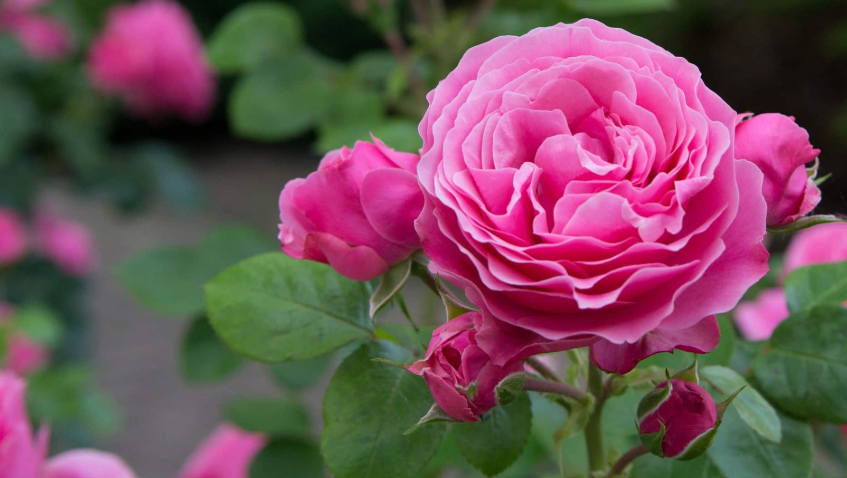
Grandiflora roses are among the most impressive modern roses for gardeners who want large, elegant flowers on tall, vigorous plants. They combine characteristics of hybrid tea and floribunda roses, producing relatively large, shapely blooms while retaining the ability to flower in clusters or trusses. This combination gives Grandifloras a distinctive role in the landscape, particularly where height and repeated flowering are desirable.
The Grandiflora class began with ‘Queen Elizabeth’, introduced in 1954. The American Rose Society explains that this famous rose resulted from crossing the hybrid tea ‘Charlotte Armstrong’ with the floribunda ‘Floradora’. Its combination of hybrid-tea flower characteristics, clustered blooms, and commanding height was sufficiently distinctive that a new class was created for it.
Today, Grandiflora roses are available in shades ranging from soft pink and white to deep red, yellow, mauve, orange, and striking blends. Some are particularly valued for fragrance, while others stand out because of their unusual colors or garden performance. Below are 21 Grandiflora roses to consider for a rose border, cottage garden, formal landscape, or specimen planting.
What Are Grandiflora Roses?
Grandiflora roses are modern roses that generally combine large, elegant flowers with a tall and vigorous growth habit. Their blooms may appear singly or in small clusters, giving them a useful middle ground between the classic individual flowers of hybrid teas and the abundant clusters associated with floribundas. Iowa State University Extension describes Grandifloras as hybrid tea–floribunda crosses that commonly grow about 3 to 6 feet tall.
The flowers are usually double and can have a high-centered or exhibition-style appearance. Flower colors vary widely depending on the cultivar, and fragrance also differs considerably. Some Grandifloras are prized primarily for their color and flower form rather than for a strong scent.
Their height makes them especially useful toward the back of flower beds and borders. They can also work as specimen roses where their upright growth allows the flowers to rise above lower-growing companion plants. Like other modern roses, their performance depends on cultivar, climate, soil, sunlight, watering, and disease-management practices.
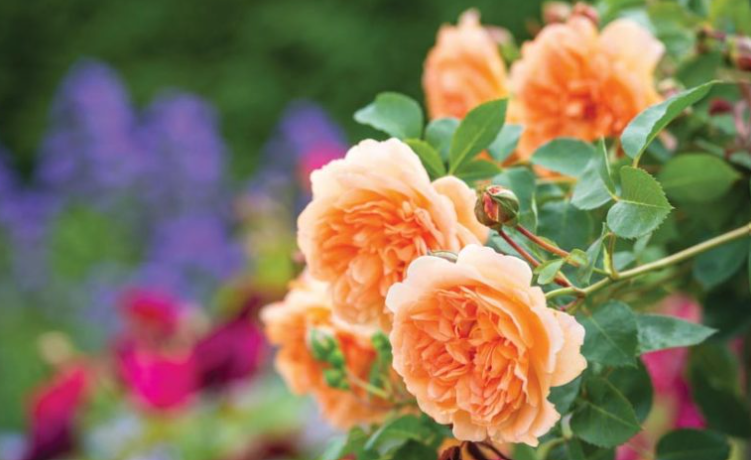
Types of Grandiflora Roses
1. Queen Elizabeth
‘Queen Elizabeth’ is the rose that essentially created the Grandiflora class. Introduced in 1954, it produces attractive medium-pink flowers and develops into a tall, upright plant. The American Rose Society identifies it as the first member of the Grandiflora class.
Its flowers have the elegant appearance gardeners often associate with hybrid tea roses, but the plant can also carry blooms in clusters. The combination of flower size and plant height gives ‘Queen Elizabeth’ considerable presence in a landscape.
This cultivar remains one of the best-known Grandifloras and is particularly suitable for traditional rose gardens. Illinois Extension describes it as a tall, upright rose with large pink flowers and a moderate tea fragrance.
2. Gold Medal
‘Gold Medal’ is one of the classic yellow Grandiflora roses. Its flowers are predominantly golden yellow, creating a bright display that contrasts beautifully with deep-green foliage.
The cultivar is known for vigorous growth and relatively tall plants. Illinois Extension notes its deep-yellow flowers and rich, fruity fragrance, while the American Rose Society lists it among notable Grandifloras.
‘Gold Medal’ is particularly attractive when planted where its warm flower color can become a focal point. It can also be combined with pink, white, blue, or purple flowering plants for strong color contrast.
3. Earth Song
‘Earth Song’ is a deep-pink Grandiflora introduced in the 1970s. Its rich pink flowers give the plant a traditional rose-garden appearance without relying on the pale pink associated with many older cultivars.
The flowers are generally full and attractive, with the American Rose Society listing approximately 25–30 petals for the cultivar.
Its strong color makes ‘Earth Song’ particularly useful in mixed borders. Planting it alongside white or pale-yellow roses can make its deeper pink flowers stand out even more.
4. Cherry Parfait
‘Cherry Parfait’ is a striking red-and-white blended Grandiflora. Rather than producing a single uniform color, its flowers combine contrasting tones that create a dramatic appearance.
The cultivar is recognized as a Grandiflora by rose organizations and is listed as a red blend. Iowa State University Extension also includes ‘Cherry Parfait’ among Grandiflora roses suitable for consideration.
Because of its distinctive coloration, ‘Cherry Parfait’ works particularly well as a focal plant. Its flowers can attract attention even when grown among simpler single-color roses.
Also Read: Different Types Of Roses
5. Dick Clark
‘Dick Clark’ is another colorful Grandiflora known for red-and-cream or red-and-white blended flowers. The contrasting colors give the blooms a changing appearance as they develop.
The Nashville Rose Society lists ‘Dick Clark’ as a Grandiflora with red-blend flowers.
This makes it a good choice for gardeners who want something more visually complex than a solid-red rose. It can be particularly effective in contemporary or mixed-color rose gardens.
6. Sweet Spirit
‘Sweet Spirit’ is a modern Grandiflora with red-blend flowers. It is one of the newer cultivars represented in American Rose Society rose information.
The flowers have a full, formal appearance and provide strong color when the plant is in bloom. The ARS lists ‘Sweet Spirit’ as a red-blend Grandiflora with approximately 35 petals.
Its relatively recent introduction makes it an interesting option for gardeners who want to look beyond the historic Grandifloras. It can be used as a colorful specimen or incorporated into a larger collection of modern roses.
7. Strike It Rich
‘Strike It Rich’ is a golden-yellow Grandiflora that brings particularly warm color to the garden. Colorado State University Extension lists it among Grandiflora varieties and describes its color as deep golden.
The flowers provide a rich alternative to the cooler yellows found in some other roses. This warm coloration can work especially well with red, orange, cream, and bronze-toned flowers.
Its taller growth makes it suitable for the rear portion of a border or as a specimen. Like other Grandifloras, it benefits from sufficient sunlight and adequate space for its mature size.
8. Sunshine Daydream
‘Sunshine Daydream’ is a pale, warm-colored Grandiflora included among Iowa State University Extension’s recommended Grandiflora cultivars. Its flowers combine cream and yellow tones.
The softer coloration gives it a gentler appearance than deep-yellow varieties such as ‘Gold Medal’. This makes it useful where a gardener wants warmth without an intensely bright flower color.
It can be combined with white, blush-pink, lavender, or pale-blue flowering plants. Its relatively soft palette also works well in romantic and cottage-style garden designs.
9. Wild Blue Yonder
‘Wild Blue Yonder’ is one of the more unusual Grandifloras because of its mauve-to-purple coloration. Iowa State University Extension lists it as a Grandiflora with mauve and purple flowers.
Purple and mauve roses can provide a very different appearance from the traditional red, pink, and yellow palette. This makes ‘Wild Blue Yonder’ particularly useful for gardeners looking for unusual colors.
It can be planted with silver foliage, white flowers, or other cool-toned plants. The result can be a softer and more sophisticated color scheme than one based entirely on traditional red roses.
10. Tournament of Roses
‘Tournament of Roses’ is a pink Grandiflora with a classic appearance. Its flowers fit naturally into traditional rose borders and formal planting schemes.
The cultivar is recognized as a Grandiflora by Iowa State University Extension, which lists it among Grandiflora roses suitable for growing in the landscape.
Its pink coloration is versatile and can be combined with almost any other rose color. It is especially effective when planted alongside white or deeper-pink cultivars.
Also Read: Different Types of Floribunda Roses
11. Mount Hood
‘Mount Hood’ is a white Grandiflora. White roses are particularly valuable in landscape design because they can brighten darker areas and provide visual separation between stronger colors.
Iowa State University Extension includes ‘Mount Hood’ among Grandiflora roses and identifies its flower color as white.
The cultivar can be used in formal beds, moon gardens, mixed borders, and color-themed plantings. Its white flowers also provide an excellent contrast when planted beside red or purple roses.
12. Crimson Bouquet
‘Crimson Bouquet’ is a dark-red Grandiflora listed by Colorado State University Extension. Its rich coloration gives the plant a strong traditional rose-garden character.
Deep-red flowers are particularly effective when the goal is to create a dramatic focal point. The darker color can also contrast strongly against green foliage.
‘Crimson Bouquet’ can be incorporated into formal rose beds or combined with white flowers to emphasize the depth of its red coloration.
13. Arizona
‘Arizona’ is a copper-colored Grandiflora included in Colorado State University’s list of Grandiflora varieties.
Its copper coloration distinguishes it from the much more common pink, red, and yellow roses. This unusual warm shade can introduce a distinctive autumn-like quality to the garden.
Gardeners can use copper-colored roses as accent plants among cream, yellow, orange, or burgundy flowers. Their unusual color is especially useful when creating a more contemporary rose collection.
14. Fame!
‘Fame!’ is a deep-pink Grandiflora listed by Colorado State University Extension.
Its strong pink coloration makes it particularly noticeable when the plant is flowering heavily. Deep-pink roses can provide much of the visual impact of red roses while producing a slightly softer overall effect.
It can be used in mixed rose beds or as part of a pink-themed garden. White and pale-pink companion flowers can help emphasize its stronger coloration.
15. Glowing Peace
‘Glowing Peace’ is a yellow-blend Grandiflora. Rather than relying on a single flat color, its flowers provide blended warm tones that can add depth to the display.
Blended roses are particularly interesting because individual flowers may appear slightly different depending on their stage of development and growing conditions.
This cultivar can be used where a gardener wants yellow flowers with additional visual complexity. It pairs well with other warm-colored roses and perennial flowers.
16. Lagerfield
‘Lagerfield’ is a mauve Grandiflora listed by Colorado State University Extension.
Its mauve coloration gives it a cooler and more unusual appearance than the traditional pink Grandiflora varieties. It can therefore add variety to a collection dominated by warm colors.
Mauve roses work particularly well with white, silver, lavender, and blue-toned companion plants. This makes ‘Lagerfield’ useful for creating a sophisticated cool-color planting scheme.
17. South Africa
‘South Africa’ is a Grandiflora recognized in American Rose Society information. It has appeared among regional rose selections, demonstrating that Grandifloras remain represented in modern rose collections.
The cultivar is particularly interesting for rose enthusiasts who want to explore Grandifloras beyond the handful of historic varieties most commonly encountered in garden centers.
As with any named rose, gardeners should verify the cultivar’s availability and current classification when purchasing, since commercial catalogs and regional collections can change over time.
Also Read: Different Types of Hybrid Tea Roses
18. Twilight Zone
‘Twilight Zone’ is a Grandiflora recognized in horticultural references, including Iowa State University’s rose information. Its flowers are associated with deep, dusky purple coloration.
The unusual color gives this cultivar a distinctive place among modern roses. Purple roses can create a completely different mood from the bright reds and yellows of traditional rose beds.
‘Twilight Zone’ is therefore an appealing choice for gardeners creating a collection based on unusual flower colors. It can be combined with pale flowers to make the darker blooms particularly prominent.
19. Cherry Parfait Climbing Form
A climbing form associated with ‘Cherry Parfait’ can provide a different way to use this distinctive cultivar. Instead of relying solely on a conventional bush form, climbing roses can introduce flowers at a greater vertical level.
The underlying ‘Cherry Parfait’ coloration is especially attractive because of its red-and-white blend. Iowa State University Extension identifies the cultivar as a Grandiflora.
Where a verified climbing form is available, it can be useful around suitable garden supports. However, gardeners should confirm the exact cultivar and growth habit with the nursery before planting because not every Grandiflora is naturally climbing.
20. Queen Elizabeth Climbing
Climbing ‘Queen Elizabeth’ is a climbing form related to the historic Grandiflora. The original ‘Queen Elizabeth’ is notable for its tall, upright growth, and climbing forms can provide additional vertical interest.
Its connection with one of the most historically important Grandifloras makes it particularly interesting to rose collectors. The familiar pink flowers can provide a traditional appearance.
It can be trained against appropriate supports where the particular plant is sold and identified as a climbing form. Always check the mature growth habit before selecting a rose for a trellis or wall.
21. Grandiflora Cultivars in Modern Rose Collections
The final category deserves some clarification. Grandiflora is a relatively specialized rose class, and not every nursery or rose database lists the same number of cultivars currently available. The American Rose Society notes that there are tens of thousands of named roses overall, with many no longer in commerce.
Consequently, gardeners researching “types of Grandiflora roses” may encounter older cultivars, regional selections, renamed plants, or roses that have been placed in another class by a particular authority. This is why checking the formal classification is more reliable than simply searching for roses described as “large-flowered.”
For the most accurate identification, compare the cultivar name with an established rose registry or authoritative horticultural reference. This is particularly important when buying a specific rose for a collection where botanical or horticultural classification matters.
How to Grow Grandiflora Roses
Grandiflora roses generally perform best in a sunny location with fertile, well-drained soil. Give plants enough room to develop their characteristic upright growth without excessive crowding. Good spacing also helps air circulate around the foliage.
Regular watering is important during active growth, particularly during hot or dry periods. Applying water around the base rather than repeatedly wetting the foliage can help maintain healthier plants. Mulching around the root zone can also help conserve soil moisture.
Pruning requirements vary somewhat by cultivar and climate, but removing dead, damaged, or weak growth helps maintain a productive plant. Removing spent flowers can encourage many repeat-blooming modern roses to produce additional flowers during the growing season. Iowa State University notes that Grandifloras can rebloom throughout the season, particularly when deadheaded.
Choosing the Best Grandiflora Rose
The best Grandiflora depends largely on the effect you want to create. ‘Queen Elizabeth’ is the obvious choice for historical significance and classic pink flowers, while ‘Gold Medal’ and ‘Strike It Rich’ are attractive options for golden and yellow tones.
For unusual colors, ‘Wild Blue Yonder,’ ‘Lagerfield,’ and ‘Twilight Zone’ can bring mauve and purple shades into the garden. Meanwhile, ‘Cherry Parfait’ and ‘Dick Clark’ provide more dramatic blended coloration.
Before purchasing, check the cultivar’s mature size, disease resistance, fragrance, climate suitability, and current classification. A beautiful flower is only one part of choosing a successful rose—the plant also needs to match the growing conditions and space available in your garden.
References
- American Rose Society — Rose Classifications: Background on the Grandiflora class and the history of ‘Queen Elizabeth.’
- Iowa State University Extension — Rose Types and Cultivars: Grandiflora characteristics and recommended cultivars.
- University of Illinois Extension — Rose Types: Information on Grandiflora characteristics, ‘Queen Elizabeth,’ and ‘Gold Medal.’
- Colorado State University Extension — Selecting and Planting Roses: Grandiflora varieties and flower colors.