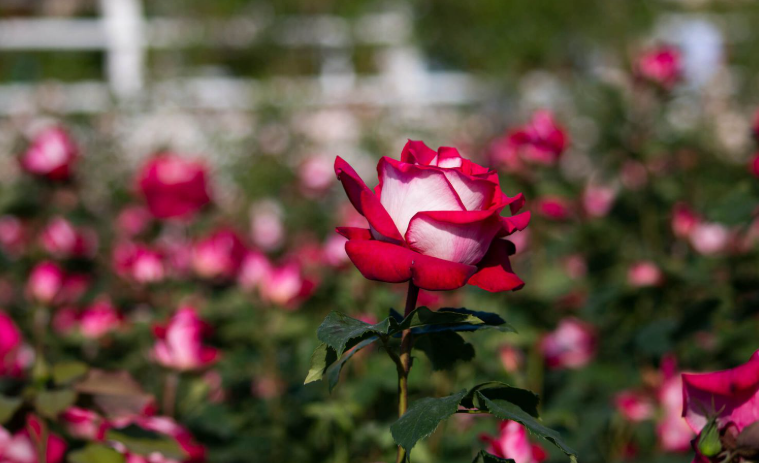
Hybrid tea roses are among the most recognizable roses in the world. They are famous for their large, elegant blooms, long stems, classic flower shape, and wide range of colors. Whether grown in a dedicated rose garden, mixed border, cottage garden, or cutting garden, hybrid tea roses can provide a particularly refined display. Many varieties also produce highly fragrant flowers, making them attractive both outdoors and as cut flowers.
The hybrid tea category has an interesting history. These roses developed from crosses between hybrid perpetual roses and tea roses, combining the repeat-flowering habit and flower form of their parents. The first widely recognized hybrid tea rose was ‘La France’, introduced in France in 1867 by breeder Jean-Baptiste André Guillot. Its introduction marked an important turning point in rose breeding and eventually gave rise to one of the most popular rose classes in horticulture.
Today, there are hundreds of well-known hybrid tea cultivars, ranging from deep red and brilliant yellow to white, pink, orange, lavender, and unusual blends. Some are prized primarily for fragrance, while others are famous for exceptionally large flowers, strong stems, disease resistance, or their historical importance. Although modern landscape roses have become increasingly popular, hybrid teas remain a favorite for gardeners who appreciate traditional rose flowers.
In this guide, we look at 21 types of hybrid tea roses, focusing on their flower color, appearance, fragrance, growth characteristics, and notable features. The list includes classic cultivars as well as widely grown modern varieties, giving you a useful starting point when choosing a hybrid tea rose for your garden.
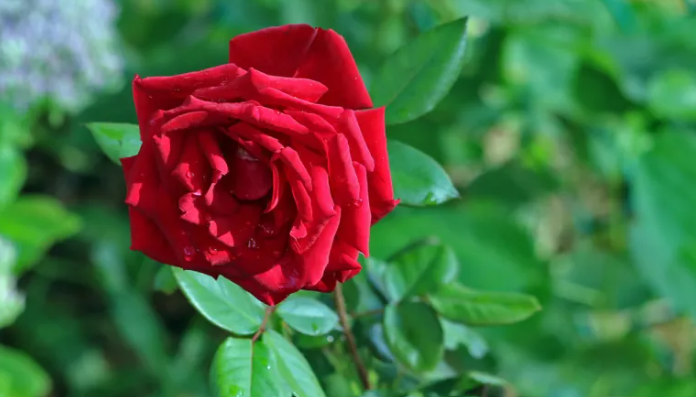
Hybrid Tea Roses
1. ‘Peace’ Hybrid Tea Rose
Flower color: Yellow, cream, and pink
Origin: France
Introduced: 1945
‘Peace’ is one of the most famous hybrid tea roses ever developed. It was bred by French rose breeder Francis Meilland and introduced commercially after World War II.
The flowers are exceptionally large and typically have a creamy yellow or golden center surrounded by pink or rose-colored edges. The coloration can change according to temperature, sunlight, and the stage of flower development.
‘Peace’ is also known for its fragrance, upright growth, glossy foliage, and long stems. It is an excellent choice for gardeners who want a historically significant rose with large, colorful flowers.
2. ‘Mr. Lincoln’ Hybrid Tea Rose
Flower color: Deep red
Origin: United States
Introduced: 1964
‘Mr. Lincoln’ is a classic dark-red hybrid tea rose and one of the most popular varieties for traditional rose gardens.
Its large, velvety red flowers are carried on long, strong stems, making the cultivar particularly suitable for cutting. The flowers are also famous for their strong fragrance.
The plant develops into an upright bush with dark green foliage. With adequate sunlight and regular care, ‘Mr. Lincoln’ can provide repeated flushes of flowers throughout the growing season.
Also Read: Different Types Of Roses
3. ‘Double Delight’ Hybrid Tea Rose
Flower color: Creamy white and red
Origin: United States
Introduced: 1977
‘Double Delight’ is easily recognized by its dramatic two-tone flowers. The blooms generally open with a light center and develop increasingly red or pink coloration around the edges.
The flowers are large and full, with a strong fragrance that makes this variety especially attractive to gardeners who want a scented rose.
The amount of red coloration can vary with sunlight and weather. In brighter conditions, the red edging may become particularly prominent.
4. ‘Chrysler Imperial’ Hybrid Tea Rose
Flower color: Deep crimson red
Origin: United States
Introduced: 1952
‘Chrysler Imperial’ is a classic red hybrid tea rose with large, high-centered flowers.
Its blooms are strongly fragrant and are carried on long stems, making the cultivar useful for both garden displays and cut flowers.
The plant has a traditional hybrid tea appearance, with upright growth and dark green foliage. It remains popular among gardeners who prefer richly colored, fragrant roses.
5. ‘Fragrant Cloud’ Hybrid Tea Rose
Flower color: Coral-orange to reddish orange
Origin: Germany
Introduced: 1963
As its name suggests, ‘Fragrant Cloud’ is particularly valued for its powerful fragrance.
The large flowers have warm coral, orange, and reddish tones that can vary as the blooms open. The combination of strong scent and intense color makes this cultivar particularly noticeable in a rose garden.
It is a good option for gardeners who consider fragrance one of the most important characteristics when selecting a rose.
6. ‘Tiffany’ Hybrid Tea Rose
Flower color: Pink
Origin: United States
Introduced: 1954
‘Tiffany’ is a classic pink hybrid tea rose with elegant, high-centered flowers.
The blooms generally have a warm pink coloration and a pleasant fragrance. Long stems make the variety useful as a cut flower.
The cultivar became historically important after receiving recognition from the All-America Rose Selections in the 1950s.
7. ‘Peacekeeper’ Hybrid Tea Rose
Flower color: Cream, pink, and yellow
Origin: United States
Introduced: Modern hybrid tea breeding
‘Peacekeeper’ produces large flowers with soft blended colors. The blooms can display creamy centers with pink or reddish outer petals.
Its traditional flower form makes it suitable for formal rose beds and cutting gardens.
Like many hybrid teas, it performs best when planted in a location with plenty of direct sunlight and good air circulation.
8. ‘Ingrid Bergman’ Hybrid Tea Rose
Flower color: Deep red
Origin: Denmark
Introduced: 1985
‘Ingrid Bergman’ is a richly colored red hybrid tea rose named after the famous Swedish actress.
Its flowers are large, full, and carried on relatively strong stems. The deep red coloration gives the plant a classic formal appearance.
The variety is particularly useful for gardeners who want a traditional red rose with substantial flowers.
9. ‘Veterans’ Honor’ Hybrid Tea Rose
Flower color: Deep red
Origin: United States
Introduced: 2000
‘Veterans’ Honor’ is a modern red hybrid tea rose developed as a tribute to military veterans.
The flowers are large, well formed, and strongly colored. The cultivar can produce long stems suitable for cutting.
Its upright growth makes it suitable for dedicated rose beds, borders, and formal garden designs.
10. ‘Mister Lincoln’ Hybrid Tea Rose
Flower color: Dark red
Origin: United States
Introduced: 1964
‘Mister Lincoln’ is the same cultivar commonly written as ‘Mr. Lincoln’ and is one of the most recognizable red hybrid tea roses.
Its deep red flowers have a velvety appearance and strong fragrance. The blooms are often produced individually on long stems.
This rose remains a classic choice for traditional gardens and is particularly appreciated by people who want a strongly scented red rose.
11. ‘Peace’ Clonal Selections and Related Forms
The famous ‘Peace’ rose has influenced generations of hybrid tea breeding. Several related selections and sports have been cultivated over the years.
These roses retain characteristics associated with the original cultivar, including large flowers, strong stems, and blended yellow and pink coloration.
Origin: France.
Because of its importance in rose history, ‘Peace’ is frequently considered one of the essential hybrid teas for collectors.
12. ‘Blue Moon’ Hybrid Tea Rose
Flower color: Lavender to lilac
Origin: Germany
Introduced: 1964
‘Blue Moon’ is famous for its unusual lavender-colored flowers.
Despite its name, it is not a naturally blue rose. The flowers generally range from lilac and lavender to bluish-purple depending on growing conditions.
The blooms are large and fragrant, giving gardeners an opportunity to add a cooler color to a traditional rose collection.
13. ‘Double Delight’ Rose
Flower color: Red and cream
Origin: United States
Introduced: 1977
‘Double Delight’ deserves particular attention because of its distinctive coloration and fragrance.
Its flowers begin with lighter petals and develop strong red coloration along the outer portions of the bloom. The result is a striking contrast between the pale interior and darker margins.
The cultivar is particularly appealing in a cutting garden because individual flowers can make attractive indoor arrangements.
14. ‘Just Joey’ Hybrid Tea Rose
Flower color: Apricot-orange
Origin: United Kingdom
Introduced: 1972
‘Just Joey’ is known for its large, ruffled flowers in warm apricot and orange shades.
The blooms have a soft, informal appearance compared with the highly symmetrical flowers of some traditional hybrid teas.
The cultivar is also valued for fragrance and was recognized by the World Federation of Rose Societies as a Rose Hall of Fame selection.
15. ‘Chicago Peace’ Hybrid Tea Rose
Flower color: Pink, cream, and yellow
Origin: United States
Introduced: 1962
‘Chicago Peace’ is a sport of the famous ‘Peace’ rose.
It generally produces large flowers with deeper pink coloration than the original ‘Peace’. The petals can display a mixture of pink, cream, and yellow.
The variety is a good example of how naturally occurring mutations, known as sports, can produce new rose cultivars with different flower characteristics.
Also Read: Different Types of Floribunda Roses
16. ‘Garden Party’ Hybrid Tea Rose
Flower color: White and pale pink
Origin: United States
Introduced: 1959
‘Garden Party’ produces large, elegant flowers with white or creamy petals and pink coloration toward the edges.
Its flowers have the classic high-centered shape associated with hybrid tea roses.
The cultivar is particularly attractive in formal gardens where pale-colored roses can provide contrast against darker foliage.
17. ‘Sterling Silver’ Hybrid Tea Rose
Flower color: Lavender
Origin: United States
Introduced: 1957
‘Sterling Silver’ is a historically important lavender hybrid tea.
Its unusual flower color helped establish lavender and purple shades as desirable colors in modern rose breeding.
The flowers are fragrant and have a classic hybrid tea form. It remains interesting to rose collectors because of its role in the development of later lavender roses.
18. ‘Peacekeeping’ and Modern Blended Hybrid Teas
Modern hybrid tea breeding has produced numerous roses with blended colors rather than a single uniform shade.
These cultivars can combine pink, cream, yellow, peach, orange, and red in the same flower. Their coloration may change as the bloom matures.
Origin: Various modern breeding programs.
For gardeners who want roses that look different at different stages of flowering, blended-color hybrid teas can be especially appealing.
19. ‘Pascali’ Hybrid Tea Rose
Flower color: White
Origin: Belgium
Introduced: 1963
‘Pascali’ is a classic white hybrid tea rose.
The flowers are large, elegant, and usually carried on long stems. Their clean white appearance makes them useful in formal gardens and cutting gardens.
The cultivar has also been recognized for its reliability and traditional flower form.
20. ‘Electron’ Hybrid Tea Rose
Flower color: Pink
Origin: France
Introduced: 1970s
‘Electron’ is a pink hybrid tea rose with large, attractive flowers.
Its blooms have the traditional hybrid tea structure, with petals arranged around a high-centered flower.
The variety represents the continuing development of pink hybrid teas during the 20th century.
21. ‘Peace’ and Its Legacy in Hybrid Tea Breeding
Although ‘Peace’ has already appeared on this list, its importance deserves separate recognition because its influence extends far beyond one cultivar.
Since its introduction, ‘Peace’ has been used extensively in rose breeding and has influenced many later roses with large flowers, strong stems, and blended pink, yellow, and cream coloration.
Origin: France.
For gardeners interested in the history of hybrid tea roses, ‘Peace’ is one of the cultivars that best illustrates how a single rose can influence generations of breeding.
What Makes a Rose a Hybrid Tea?
Hybrid tea roses are generally recognized by several characteristic features. The plants often have an upright growth habit, relatively long stems, and large flowers that are produced singly or in relatively small numbers.
Their flowers are often high-centered, with petals that spiral around the middle of the bloom. This flower form is particularly associated with the classic florist’s rose.
Another important characteristic is repeat flowering. Most modern hybrid teas can produce multiple flushes of flowers throughout the growing season when grown under suitable conditions.
Hybrid Tea Roses vs. Floribunda Roses
Hybrid teas and floribundas are sometimes confused because both are modern roses, but they have different flowering habits.
Hybrid tea roses generally produce large individual flowers on long stems, while floribunda roses tend to produce clusters of smaller flowers.
Hybrid teas are therefore often preferred for cutting, while floribundas are frequently used for mass planting and landscape color.
If your priority is a few spectacular blooms with long stems, hybrid teas may be the better choice. If you want a plant covered in clusters of flowers, a floribunda may be more suitable.
How to Grow Hybrid Tea Roses
Hybrid tea roses generally perform best in a location receiving at least six hours of direct sunlight each day.
Plant them in fertile, well-drained soil. Avoid areas where water remains around the roots because consistently wet soil can contribute to root problems.
Water deeply rather than providing frequent shallow watering. Applying water near the base of the plant helps keep the foliage dry and can reduce the conditions that favor some fungal diseases.
Mulching around the base can help conserve soil moisture and moderate soil temperature. Keep mulch slightly away from direct contact with the main stem.
Regular feeding during the growing season can encourage healthy growth and flowering. However, fertilizer requirements vary according to soil conditions and the particular rose cultivar.
Pruning Hybrid Tea Roses
Pruning helps maintain an attractive shape and encourages vigorous new growth.
In many climates, major pruning is performed toward the end of winter or early spring, when the plant begins emerging from dormancy. Remove dead, damaged, weak, or crossing branches first.
Hybrid teas are commonly pruned more firmly than many shrub roses. The goal is generally to maintain several strong, well-spaced canes rather than allowing the center of the plant to become overcrowded.
Removing faded flowers can also encourage some repeat-flowering cultivars to produce additional blooms.
Common Problems Affecting Hybrid Tea Roses
Hybrid tea roses can be affected by several pests and diseases.
Common problems include:
- Black spot
- Powdery mildew
- Rust
- Aphids
- Spider mites
- Thrips
- Rose beetles
- Japanese beetles in areas where they occur
Good air circulation, adequate sunlight, proper watering, sanitation, and choosing disease-resistant cultivars can help reduce problems.
Inspect plants regularly so that potential problems can be identified before they become severe.
Best Hybrid Tea Roses for Fragrance
If fragrance is a major consideration, several classic hybrid teas are worth exploring.
Some well-known fragrant selections include:
- ‘Mr. Lincoln’
- ‘Double Delight’
- ‘Chrysler Imperial’
- ‘Fragrant Cloud’
- ‘Tiffany’
- ‘Blue Moon’
- ‘Just Joey’
Fragrance can vary with weather, time of day, flower maturity, and growing conditions, so two plants of the same cultivar may not always smell exactly the same.
Best Hybrid Tea Roses for Cutting
Hybrid tea roses are among the best roses for cutting because their flowers are often carried on long, relatively straight stems.
Good choices include:
- ‘Mr. Lincoln’
- ‘Peace’
- ‘Double Delight’
- ‘Pascali’
- ‘Ingrid Bergman’
- ‘Veterans’ Honor’
- ‘Tiffany’
When selecting a cutting rose, consider both stem length and vase life rather than flower size alone.
Frequently Asked Questions About Hybrid Tea Roses
How many hybrid tea roses are there?
There are hundreds of named hybrid tea cultivars, and the number changes as new roses are introduced and older varieties become less widely cultivated.
What is the most famous hybrid tea rose?
‘Peace’ is arguably one of the most famous hybrid tea roses in history. Other extremely well-known cultivars include ‘Mr. Lincoln’, ‘Double Delight’, and ‘Chrysler Imperial’.
What was the first hybrid tea rose?
‘La France’, introduced in France in 1867, is generally recognized as the first hybrid tea rose.
Are hybrid tea roses good for beginners?
They can be grown successfully by beginners, but some traditional hybrid teas require more attention than many modern landscape or shrub roses. Beginners may want to start with cultivars known for good disease resistance and reliable flowering in their region.
How tall do hybrid tea roses grow?
Many hybrid tea roses grow roughly 2 to 6 feet tall, although mature size varies considerably among cultivars and growing conditions.
Do hybrid tea roses bloom all summer?
Many modern hybrid teas are repeat bloomers and can produce flowers throughout the growing season. Flowering frequency depends on the cultivar, climate, sunlight, watering, nutrition, and pruning.
Are hybrid tea roses fragrant?
Some are strongly fragrant, while others have little or no noticeable fragrance. If scent is important, check the characteristics of an individual cultivar before planting.
Can hybrid tea roses grow in containers?
Yes, some compact hybrid teas can grow in large containers. The container should provide adequate drainage and enough root space for the mature plant.
Choosing the Best Hybrid Tea Rose
The best hybrid tea rose depends on what you want from your garden. For a classic red rose, ‘Mr. Lincoln’ remains an excellent choice. For an unusual lavender color, ‘Blue Moon’ is worth considering. Gardeners who want strong fragrance may prefer ‘Double Delight’, ‘Fragrant Cloud’, or ‘Chrysler Imperial’.
If you want a rose with historical significance, ‘Peace’ is difficult to overlook. For a white rose, ‘Pascali’ offers the classic appearance associated with traditional hybrid teas, while ‘Just Joey’ provides warm apricot-orange flowers.
Before purchasing a plant, also check its recommended hardiness range, mature size, disease resistance, flowering habit, and performance in your local climate. A cultivar that performs beautifully in one region may require more attention in another.
Hybrid tea roses remain an important part of rose-growing history because they combine elegant flowers, repeat blooming, long stems, and an extraordinary range of colors. From the legendary ‘Peace’ to fragrant red cultivars such as ‘Mr. Lincoln’ and unusual lavender selections such as ‘Blue Moon’, these roses offer plenty of choices for gardeners who appreciate classic rose flowers.
Whether you are creating a formal rose garden, growing flowers for cutting, or simply looking for a spectacular flowering shrub, exploring different hybrid tea cultivars is a rewarding way to discover the diversity of modern roses.