Animals that walk slowly have evolved this pace for reasons ranging from energy conservation to camouflage to sheer body design, and the animal kingdom offers far more examples of unhurried movement than most people realize. While a cheetah can hit 70 miles per hour in short bursts, many creatures thrive by doing the exact opposite, moving at speeds measured in inches per minute rather than miles per hour. Some of these animals have such low metabolic rates that speed would actually work against their survival strategy, while others rely on thick armor, toxic defenses, or sheer size to protect themselves instead of quick feet.
Scientists have found that slow movement often correlates with specialized diets, since many of these animals eat foods that provide little energy, forcing them to move as little as possible to conserve calories. This list explores 21 animals whose deliberate, unhurried gait has become one of their most defining characteristics.
Three-Toed Sloth
The three-toed sloth is often cited as the slowest mammal on land, traveling at an average speed of just 0.15 miles per hour when it does venture down from the canopy. Its slow pace comes from an extremely low metabolic rate, roughly 40 to 45 percent lower than other mammals of similar size, which allows it to survive on a diet of leaves that offer very little caloric value. A sloth’s muscles make up only about 25 percent of its total body weight, compared to 40 percent in most mammals, leaving it with limited strength for rapid movement. This animal spends around 90 percent of its life hanging in trees, only descending to the ground about once a week to defecate, and even then it crawls at a pace that can take a full minute to cover just a few feet.
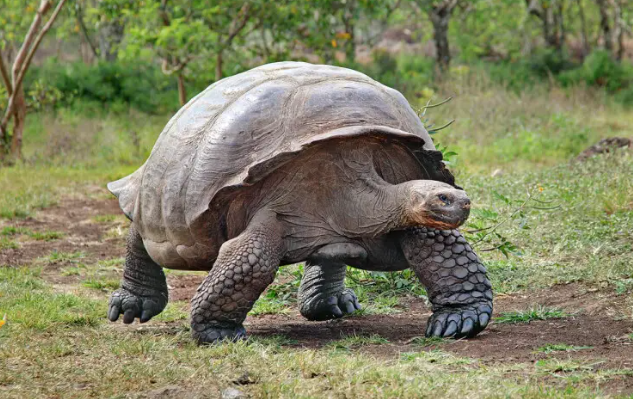
Galapagos Tortoise
The Galapagos tortoise can weigh up to 900 pounds, and carrying that kind of mass on short, sturdy legs naturally limits how fast it can move, with a typical walking speed of around 0.16 miles per hour. These tortoises can live for more than 150 years, and their slow, steady pace is thought to be one reason their bodies experience so little wear over such a long lifespan. Despite their size, they are capable of walking several miles in a single day when searching for food or water, simply doing so at a pace that would take a human less than an hour to match. Their massive shells, which can weigh over 100 pounds on their own, add to the physical load that keeps their movement so measured.
Koala
The koala moves at an average pace of about 0.15 to 0.3 miles per hour on the ground, a speed that reflects both its low-energy diet and its specialized life in the trees. Eucalyptus leaves, which make up nearly the entire koala diet, are toxic to most other animals and provide so little energy that koalas sleep between 18 and 22 hours a day just to conserve calories. When koalas do walk, they tend to do so awkwardly and slowly, since their bodies are far better adapted for climbing and gripping branches than for covering ground. Their digestive system takes days to break down the fibrous eucalyptus material, and this slow digestion is mirrored in nearly every other aspect of the koala’s unhurried lifestyle.
Gila Monster
The Gila monster, one of only two venomous lizards native to North America, moves at a leisurely pace of around 0.5 to 1 mile per hour, relying on venom rather than speed for both hunting and defense. This reptile spends as much as 95 percent of its life underground or sheltered in burrows, emerging only briefly to feed on eggs, small mammals, or birds. Its slow metabolism allows it to survive on just three to four large meals a year, storing fat reserves in its thick tail that can sustain it for months at a time. Because its venom delivery system works through prolonged chewing rather than a quick strike, the Gila monster has little evolutionary pressure to move fast, since its bite is dangerous enough to deter most predators regardless of pace.
Virginia Opossum
The Virginia opossum typically walks at speeds between 1.5 and 4 miles per hour, a modest pace that fits its role as a nocturnal scavenger rather than an active hunter. This marsupial has one of the lowest body temperatures of any mammal, around 94 to 97 degrees Fahrenheit, which contributes to a slower overall metabolism and less urgency in its movements. When threatened, the opossum famously relies on playing dead rather than fleeing, a behavior that can last anywhere from a few minutes to four hours. Its slow, deliberate gait combined with this defensive strategy allows it to conserve energy while still surviving encounters with faster predators.
Nine-Banded Armadillo
The nine-banded armadillo moves at an average walking speed of around 2 to 3 miles per hour, a pace shaped by its heavy, bony armor that can account for up to 16 percent of its total body weight. This armor provides excellent protection from predators, reducing the evolutionary need for speed since the armadillo can simply curl into a protective position when threatened. Armadillos also have surprisingly poor eyesight, relying instead on a strong sense of smell that can detect insects up to six inches underground, which further reduces any need to move quickly while foraging. Despite the slow pace, armadillos are capable of digging burrows rapidly, showing that their speed limitations are specific to walking rather than every physical activity.
Star-Nosed Mole
The star-nosed mole moves slowly and awkwardly above ground, with a walking pace well under 1 mile per hour, since its body is built almost entirely for life underground rather than surface travel. This animal is famous for the 22 fleshy appendages on its nose, which contain more than 25,000 sensory receptors and allow it to identify food in as little as 8 milliseconds, faster than the human eye can process an image. Because it relies on touch rather than sight for nearly all navigation, with eyes so small they are almost nonfunctional, the star-nosed mole has little need for speed on the surface where it rarely spends time. Its short, powerful limbs are optimized for digging tunnels at a rapid pace underground, even though the same limbs make above-ground walking slow and clumsy.
Common Wombat
The common wombat typically ambles along at 1.5 to 2.5 miles per hour, though it is capable of short bursts up to 25 miles per hour when genuinely alarmed. Most of the time, however, this marsupial takes its time, spending up to 16 hours a day resting in burrow systems that can stretch more than 100 feet long. Wombats have a notably slow digestive process, with food taking between 8 and 14 days to pass through their system, one of the slowest digestion rates of any mammal relative to body size. This unhurried digestion pairs with an equally unhurried walking pace, since the wombat’s diet of tough grasses and roots offers limited energy for sustained fast movement.
North American Porcupine
The North American porcupine moves at a slow, waddling pace of roughly 1 to 2 miles per hour, protected from most predators by around 30,000 quills covering its body. Because these quills provide such effective defense, with barbed tips that can be difficult and painful to remove once embedded, the porcupine has little evolutionary need to develop speed as a survival strategy. This animal spends much of its life in trees, where it feeds on bark, twigs, and leaves, foods that are abundant but low in nutritional value and require little urgency to gather. A porcupine’s rolling, unhurried gait on the ground reflects a body built for climbing and self-defense rather than rapid travel.
Striped Skunk
The striped skunk walks at an average pace of about 2.5 miles per hour, a speed that suits an animal whose primary defense is a chemical spray rather than flight. This spray, which can be accurately projected up to 10 feet, is potent enough that skunks rarely need to run from predators, allowing them to forage unhurriedly at night for insects, small rodents, and plant matter. Skunks are also largely nocturnal and have poor eyesight, seeing clearly only about 10 feet ahead, which naturally encourages a more cautious, slower pace of movement as they navigate by scent and hearing instead. Their confident, leisurely walk is often seen as a warning sign in itself, since most predators have learned to associate the skunk’s unbothered gait with the risk of its spray.
Veiled Chameleon
The veiled chameleon moves in slow, rocking steps, often covering less than 1 mile per hour, using a deliberate gait that mimics leaves swaying in the wind as a form of camouflage. Each foot is lifted and placed with careful precision, aided by zygodactylous toes that grip branches securely, and this careful placement naturally slows the chameleon’s overall pace. Rather than chasing prey, the chameleon relies on a tongue that can extend up to twice its body length in as little as 0.07 seconds, making speed in its limbs largely unnecessary for successful hunting. Its independently rotating eyes, capable of scanning nearly 360 degrees, allow it to monitor for threats and prey without needing to move its body at all.
Hippopotamus
The hippopotamus can weigh over 4,000 pounds, and while it can reach surprising bursts of speed on land, its typical walking pace is a slow, heavy 3 to 5 miles per hour. Hippos spend up to 16 hours a day submerged in water, where their massive bodies become far more buoyant and mobile than on land, which reduces the pressure to develop fast terrestrial movement. Their short, thick legs are built to support enormous body weight rather than speed, and most daytime hours are spent resting rather than walking at all. This slow, deliberate pace on land contrasts sharply with the hippo’s territorial aggression, showing that its power comes from mass and bite force rather than pursuit speed.
African Elephant
The African elephant typically walks at 4 to 6 miles per hour, an unhurried pace appropriate for an animal that can weigh over 13,000 pounds. Supporting this much mass requires thick, pillar-like legs that prioritize stability over speed, and elephants can spend up to 16 hours a day simply walking slowly while grazing on the roughly 300 pounds of vegetation they need daily. Their large, cushioned feet distribute weight evenly and allow for surprisingly quiet, controlled steps despite the animal’s size. Elephants are capable of moving faster when necessary, but their day-to-day pace remains slow and steady, reflecting a lifestyle built around near-constant, low-intensity foraging.
White Rhinoceros
The white rhinoceros generally walks at around 4 to 6 miles per hour, a pace that matches its role as a grazing herbivore rather than an active predator or frequent flight risk. Weighing up to 5,000 pounds, the white rhino’s body is optimized for carrying bulk and defending territory rather than sustained fast travel, and its thick skin, which can be up to 2 inches thick in places, offers protection that reduces the need to flee quickly from most threats. Rhinos spend a significant portion of the day grazing on grasses, an activity that naturally encourages slow, methodical movement rather than bursts of speed. Their poor eyesight, capable of clearly identifying objects only about 100 feet away, also contributes to a more cautious, unhurried walking style as they rely more on smell and hearing to navigate.
Giant Panda
The giant panda moves at a gentle pace of roughly 1.5 to 2 miles per hour, a speed well matched to a diet that consists of up to 99 percent bamboo. Because bamboo is so low in nutritional value, pandas must eat between 20 and 40 pounds of it daily, spending up to 14 hours a day feeding, which leaves little time or energy for fast movement. Their digestive system, inherited from carnivorous ancestors, is poorly suited to processing plant material efficiently, extracting only around 17 percent of the energy from the bamboo they consume. This combination of a demanding diet and inefficient digestion has shaped the panda into an animal that conserves energy through slow, deliberate movement whenever possible.
Sloth Bear
The sloth bear walks at a modest pace of around 2 to 3 miles per hour under normal conditions, though it is capable of short sprints when necessary. Despite its name, this bear is not closely related to sloths, but it earned the comparison due to its slow, shuffling gait and long claws, which can measure up to 4 inches and are used primarily for digging into termite mounds. Sloth bears can seal their nostrils shut and use powerful suction to vacuum up insects, a specialized feeding method that rewards patience and careful movement over speed. Much of their day is spent foraging slowly for termites, ants, and fruit, activities that favor a deliberate pace over rapid travel.
Malayan Tapir
The Malayan tapir moves at a leisurely 2 to 3 miles per hour, a pace suited to its role as a shy, solitary forager in dense forest habitat. This animal can weigh up to 800 pounds and relies on thick, tough skin along with a strong sense of smell and hearing, since its eyesight is relatively weak, to navigate its environment cautiously and slowly. Tapirs are excellent swimmers and often move through water to escape predators, reserving their energy on land for careful, quiet movement through vegetation rather than open pursuit or flight. Their diet of leaves, fruit, and aquatic plants requires extensive daily foraging, but the low nutritional density of these foods discourages fast, energy-intensive movement.
Short-Beaked Echidna
The short-beaked echidna moves at a slow, waddling pace typically under 1.5 miles per hour, aided by short, powerful legs built more for digging than for speed. When threatened, this spiny mammal usually curls into a ball or digs straight down into the earth within moments, using around 5,000 to 6,000 spines as its primary defense rather than fleeing. Echidnas have one of the lowest body temperatures of any mammal, around 89.6 degrees Fahrenheit, contributing to an unusually slow metabolism that supports a generally unhurried lifestyle. Their long, sticky tongue, which can extend up to 7 inches, allows them to feed on ants and termites without needing to chase prey, reinforcing a slow and steady approach to daily survival.
Eastern Box Turtle
The Eastern box turtle moves at an average pace of about 0.25 to 0.5 miles per hour, relying on its hinged shell rather than speed to avoid predators. When threatened, this turtle can close its shell completely within seconds, a defense so effective that it rarely needs to move quickly to stay safe. Box turtles are known for remarkably long lifespans, sometimes exceeding 50 years, and their slow, steady pace of life appears to extend even to their metabolism and growth rate, which is notably slower than many other reptiles. These turtles often stay within a home range of just a few acres for their entire lives, moving deliberately and rarely covering large distances even over many years.
Horseshoe Crab
The horseshoe crab moves across the ocean floor at a slow pace of roughly 0.25 miles per hour, using its multiple pairs of legs to crawl steadily through sand and shallow water. This ancient creature has remained largely unchanged for more than 445 million years, and its slow, methodical movement has proven to be an effective survival strategy across an extraordinary span of evolutionary time. Its hard, curved shell provides substantial protection from predators, reducing the need for fast escape movements, while its primary activity involves slowly foraging for worms and mollusks buried in sediment. During spawning season, horseshoe crabs gather on beaches in large numbers, moving at their characteristic unhurried pace as they lay eggs along the shoreline.
Garden Snail
The garden snail is widely regarded as one of the slowest animals on Earth, moving at an average speed of about 0.03 miles per hour, or roughly 1 inch every 2 to 3 seconds. This pace comes from its unique method of locomotion, gliding along on a single muscular foot that produces a lubricating layer of mucus to reduce friction against the ground. A snail’s slow movement is closely tied to its need to conserve moisture and energy, since it must protect its soft body from drying out while also carrying the added weight of its shell wherever it goes. Despite this famously slow pace, garden snails can travel surprisingly far over the course of a night, covering areas that would be unremarkable for a faster animal but represent a significant journey relative to their tiny size.