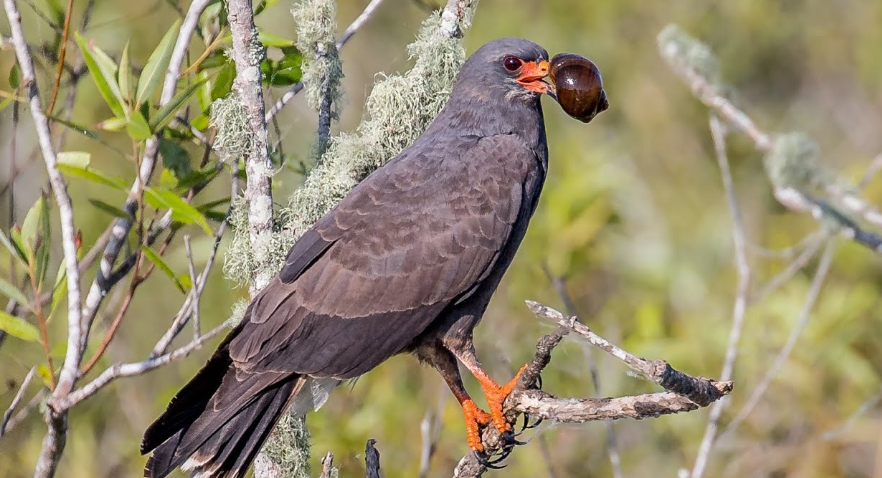
Birds that eat snails have developed some of the most specialized feeding techniques in the animal kingdom, ranging from precision beak strikes to the clever use of tools like rocks and hard surfaces. Snails offer a dense source of protein and calcium, the latter being especially valuable for birds during breeding season when eggshell formation places heavy demands on a female’s calcium reserves.
Some species, like the snail kite, have evolved almost entirely around this single food source, developing a hooked beak shaped specifically for extracting snail flesh from its shell. Others are opportunistic feeders that add snails to a broader diet whenever the opportunity arises, particularly after rain when snails become far more active and visible on the surface. This list examines 18 birds whose feeding habits revolve, in whole or in part, around hunting and consuming snails.
Song Thrush
The song thrush is one of the most well-known snail predators in Europe, famous for using a favorite stone, often called an anvil, to smash snail shells open by repeatedly striking them against it. A single thrush can consume dozens of snails in a day during the summer months, and researchers have observed the same individual birds returning to the same anvil stone for years. This feeding behavior becomes especially important during dry spells, when earthworms retreat deep underground and snails become one of the few reliable food sources still accessible near the surface. Young song thrushes are taught this technique gradually, and their accuracy with the anvil method tends to improve significantly within their first year of life.
Snail Kite
The snail kite is perhaps the most extreme example of snail specialization in the bird world, with more than 90 percent of its diet consisting almost exclusively of apple snails. Its uniquely curved, narrow beak has evolved specifically to extract snail flesh from the shell without needing to crush it, a process the bird can complete in under 20 seconds with practice. Snail kites are found primarily in wetlands across Florida and parts of Central and South America, and their population numbers are closely tied to apple snail availability, making them a useful indicator species for wetland health. Because their diet is so narrow, snail kites are particularly vulnerable to droughts or habitat changes that reduce snail populations in their hunting range.
Limpkin
The limpkin is another wetland specialist whose diet consists overwhelmingly of apple snails, supplemented occasionally by mussels and other small invertebrates. This bird has a slightly curved bill with a small gap near the tip, an adaptation that allows it to grip and extract snails from their shells with remarkable efficiency. Limpkins are known for a distinctive, piercing call often described as sounding like a scream, which is frequently heard at dawn and dusk when the birds are most active in their search for snails. A single limpkin can consume several hundred apple snails in a week during peak feeding periods, making them an important natural control on snail populations in the marshes and swamps they inhabit.
American Robin
The American robin includes snails as a regular part of its varied diet, particularly during spring and early summer when insects and earthworms may still be limited in supply. Robins typically locate snails visually while foraging across lawns and garden beds, then use their beaks to pry the snail loose or crack the shell against a hard surface. This bird’s diet shifts seasonally, with animal matter such as snails and insects making up a larger share in spring, while fruit becomes more dominant in the fall and winter months. Robins are considered valuable allies in gardens for this reason, since their snail consumption can help reduce damage to vegetable and flower beds.
European Starling
The European starling is an opportunistic forager that will readily eat snails, especially smaller species that are easier to swallow whole or break apart with its sharp, pointed beak. Starlings often forage in large flocks across open ground, probing the soil and leaf litter for a wide variety of invertebrates, and snails become a convenient target whenever rain brings them to the surface in higher numbers. This bird’s strong, muscular gizzard allows it to grind down smaller shells during digestion, reducing the need for extensive shell-breaking behavior before eating. Starlings are especially active snail predators in agricultural areas, where their large flock sizes can have a noticeable impact on local snail populations.
Common Blackbird
The common blackbird is a frequent garden visitor across Europe that actively hunts snails, often flipping through leaf litter and dense vegetation where snails tend to hide during the day. Like the song thrush, blackbirds have been observed using stones as anvils to break open shells, although this behavior is somewhat less consistent and widespread than in their thrush relatives. Male blackbirds in particular become more active snail hunters during the breeding season, when the added calcium from snail shells supports both egg production and the rapid growth of chicks. Blackbirds tend to favor smaller and medium-sized snails, since larger shells can be more difficult to manage without a reliable anvil nearby.
White Ibis
The white ibis uses its long, downward-curving bill to probe through mud, shallow water, and vegetation in search of snails, crayfish, and other small invertebrates. Apple snails make up a significant portion of the ibis diet in wetland habitats, and the bird’s slender bill is well suited to extracting the snail’s body without needing to break the shell apart entirely. White ibises often forage in large groups, sometimes numbering in the hundreds, moving steadily through marshland while sweeping their bills side to side to detect prey by touch. This tactile foraging method allows the ibis to hunt effectively even in murky water where visibility is poor.
Great Blue Heron
The great blue heron, while best known for hunting fish, also preys on snails found along shorelines, mudflats, and shallow wetland edges. This heron relies on patience and stillness, often standing motionless for several minutes before striking with its long, spear-like bill to catch prey it has spotted nearby. Snails become a more prominent part of the heron’s diet in areas where fish are less abundant or during periods when snail populations surge following heavy rainfall. Its excellent eyesight allows the great blue heron to spot even partially concealed snails among rocks and vegetation from a considerable distance.
American Crow
The American crow is a highly intelligent and adaptable feeder that will eat snails as part of an extremely broad and opportunistic diet. Crows have been observed dropping snails from height onto hard surfaces such as roads or rocks in order to crack the shell open, a foraging technique that reflects the same kind of tool-like problem solving crows are well known for. This bird’s strong beak also allows it to simply crush smaller snail shells directly, without the need for the drop technique used on larger or tougher shells. Crows often target snails after rainstorms, taking advantage of the increased snail activity to supplement a diet that otherwise includes insects, seeds, and carrion.
Common Grackle
The common grackle readily eats snails, using its long, sturdy bill to pry them from vegetation or crush smaller shells with a firm, repeated bite. Grackles are known for a distinctive keel-shaped ridge inside the upper part of their bill, which some researchers believe helps the bird saw through tougher shells or hold prey steady while feeding. These birds often forage in agricultural fields and wetland edges, where snails are plentiful, and they frequently work in small groups to cover more ground while searching. Grackles tend to favor young or smaller snails, since these are easier to manage without needing to break the shell into multiple pieces.
Wood Thrush
The wood thrush forages across the forest floor for snails, earthworms, and insects, relying on excellent hearing and eyesight to detect movement in the leaf litter. This bird favors shaded, moist woodland habitats where snail populations tend to be higher due to the damp conditions snails need to survive. Like other thrush species, the wood thrush will use available hard surfaces to break open snail shells when necessary, although it also targets smaller snails that can be consumed with minimal effort. Snails become an especially important food source for wood thrushes during the breeding season, when the added calcium supports egg development.
Mallard Duck
The mallard duck includes snails in its diet more often than many people realize, particularly aquatic snail species found in ponds, marshes, and slow-moving streams. Mallards use their broad, flattened bills to filter through mud and shallow water, straining out snails along with other small invertebrates and plant material. Snails offer valuable protein and calcium for mallards, especially for females during the breeding season when egg production places extra nutritional demands on the body. This dabbling duck typically forages just below the water’s surface, tipping forward to reach snails resting on submerged vegetation or the muddy bottom.
Helmeted Guineafowl
The helmeted guineafowl is a ground-foraging bird that actively hunts snails as part of a diet that also includes insects, seeds, and small reptiles. Guineafowl are often valued in gardens and farms specifically for their snail and pest control abilities, since a flock can cover significant ground each day while searching for food. This bird uses its strong feet to scratch through soil and leaf litter, exposing snails and other invertebrates hidden beneath the surface. Guineafowl tend to hunt in coordinated groups, which allows them to more efficiently locate and consume snails across a wide foraging area.
Domestic Chicken
The domestic chicken will happily eat snails when given the opportunity, using its beak to peck at and crush smaller shells before swallowing the contents. Chickens allowed to free-range in gardens or farmland often serve as a natural form of snail control, since their constant scratching and pecking behavior exposes snails hidden in soil, mulch, and dense plant growth. Larger snails may require chickens to peck repeatedly at the shell to break it apart, though many chickens learn to target the softer body first if it is partially exposed. This snail-eating behavior has made chickens a popular choice among gardeners looking for a natural, low-maintenance method of pest management.
Greater Roadrunner
The greater roadrunner is an opportunistic predator of the desert Southwest that will eat snails along with a wide variety of other prey, including lizards, insects, and small snakes. This fast-moving ground bird uses its long, strong beak to crush snail shells quickly, often shaking the prey vigorously against the ground to help break it apart. Snails are a less common food source for roadrunners compared to more agile prey, but they become more important during periods when snails are especially active, such as after seasonal rains in arid regions. The roadrunner’s speed and agility on the ground make it well equipped to locate snails across open, rocky terrain.
Eurasian Oystercatcher
The Eurasian oystercatcher, despite its name, will feed on land snails in addition to its more typical diet of mussels, cockles, and other shellfish found along coastlines. This bird’s long, strong, chisel-like bill is well adapted for prying open shells, a skill that transfers effectively to handling land snails when they are encountered near shorelines or grassy areas close to the coast. Oystercatchers are known for using different feeding techniques depending on the prey, either hammering directly through a shell or prying it open at a weak point along the seam. Snails make up a smaller portion of the oystercatcher’s overall diet, but they are readily eaten whenever they are found within the bird’s coastal foraging range.
Eurasian Curlew
The Eurasian curlew uses its notably long, downward-curved bill to probe deep into soil and mud in search of snails, worms, and other invertebrates. This bill shape allows the curlew to reach prey buried several inches below the surface, giving it access to snails that many other birds are physically unable to reach. Curlews often forage across wet grassland, mudflats, and estuaries, areas where snail populations tend to be dense due to the moist conditions. The size of the curlew’s bill also allows it to handle larger snail shells with relative ease compared to smaller wading birds sharing the same habitat.
Redwing
The redwing, a smaller member of the thrush family, feeds on snails especially during colder months when other food sources such as insects and berries become scarce. Like its thrush relatives, the redwing will use stones or other hard surfaces to break open snail shells, a behavior it shares with the song thrush and common blackbird. Redwings often forage in mixed flocks alongside other thrush species during winter, moving through fields and hedgerows in search of any available snails or fallen fruit. This bird’s smaller size means it typically favors smaller snail species that are easier to manage without requiring extensive effort to crack the shell.
Purple Gallinule
The purple gallinule is a brightly colored wetland bird that feeds heavily on apple snails, using its long toes to walk across floating vegetation while searching for prey below. This bird’s slender, pointed bill allows it to pierce snail shells or extract the body once the shell has been positioned correctly, a technique it often refines while balancing on lily pads and other floating plants. Purple gallinules are especially active snail hunters during the early morning hours, when snails are more likely to be found near the surface of shallow marsh water. Their unusually long toes, which distribute body weight evenly, allow them to access snail-rich areas of dense marsh vegetation that many other wetland birds cannot reach.
Common Moorhen
The common moorhen forages along the edges of ponds, marshes, and slow-moving rivers, where it feeds on snails alongside aquatic plants, insects, and small invertebrates. This bird typically picks snails directly from floating or submerged vegetation, using a short, sturdy bill to crush smaller shells before swallowing. Moorhens tend to increase their snail consumption during the breeding season, when chicks require a protein-rich diet to support rapid early growth. Because moorhens are strong swimmers as well as capable walkers, they are able to pursue snails across both water and the muddy banks that border their wetland habitat.
Herring Gull
The herring gull has developed a distinctive method for handling snails, often carrying them high into the air before dropping them onto rocks, roads, or other hard surfaces to shatter the shell. This drop-and-crack technique can require several attempts before a shell finally breaks, and gulls have been observed returning to the same reliable hard surfaces repeatedly once they learn a spot works well. Herring gulls are highly opportunistic feeders, and snails become a more frequent target along coastlines and mudflats where shellfish and other marine prey may be less consistently available. Younger gulls typically take longer to master the drop technique, often making more attempts than experienced adults before successfully accessing the snail inside.
Whimbrel
The whimbrel uses its long, downward-curving bill, which can measure up to 4 inches, to probe deep into mud and sand for snails, crabs, and other invertebrates along coastal habitats. This shorebird is a long-distance migrant, and its snail consumption often increases significantly during stopovers, when it needs to rebuild fat reserves quickly before continuing its journey. The curved shape of the whimbrel’s bill is particularly effective for reaching into narrow burrows and crevices where snails often hide from more direct predators. Whimbrels are typically seen foraging alone or in small, loosely spaced groups, moving steadily across mudflats and tidal zones as they search for prey.
Laughing Kookaburra
The laughing kookaburra, native to Australia, is a powerful hunter that includes snails in a varied diet that also features insects, small reptiles, and even small mammals. This bird uses its large, strong bill to grip a snail firmly before striking it repeatedly against a branch or rock, a method similar to the anvil technique used by thrushes but executed with considerably more force. Kookaburras are known for perching quietly and watching for movement before swooping down to seize prey, a hunting style that works effectively for snails moving slowly across open ground. Because of its size and strength, the kookaburra can handle notably large snail shells that would be difficult for many smaller bird species to manage.
Wild Turkey
The wild turkey forages across forest floors and open fields for snails, insects, seeds, and various plant matter, using its strong feet to scratch through leaf litter and expose hidden prey. Snails become a more prominent part of the turkey’s diet after rainfall, when increased snail activity makes them easier to spot while the bird moves through damp undergrowth. Turkeys typically peck smaller snails directly, crushing the shell with repeated strikes from their sturdy beak before consuming the contents. This foraging behavior is especially important for poults, or young turkeys, since the added protein and calcium from snails supports the rapid growth they undergo in their first few months of life.