Birds that eat safflower seed have become a favorite topic among backyard birdwatchers looking for a feeder option that attracts desirable songbirds while deterring less welcome visitors like squirrels and certain nuisance birds. Safflower seed has a notably bitter, thick outer shell that many squirrels and blackbirds find unappealing, yet a surprising number of songbird species have no trouble cracking it open and readily include it in their diet.
This seed is also higher in fat content than many alternatives, providing roughly 30 percent fat, which makes it a valuable energy source for birds during colder months when caloric needs increase significantly. Because safflower seed tends to remain in a feeder longer than sunflower seed, thanks to its selective appeal, many feeder owners find it a practical long-term option for attracting a loyal group of regular visitors. This list highlights 21 birds that regularly seek out and consume safflower seed at backyard feeders across North America.
Northern Cardinal
The northern cardinal is widely considered one of the most enthusiastic safflower seed eaters among backyard birds, and many birdwatchers specifically choose this seed type to attract cardinals while discouraging squirrels. This bird’s large, powerful, cone-shaped bill is well suited to cracking the thick outer shell of safflower seed with relative ease compared to smaller-billed species. Cardinals tend to visit feeders most actively during early morning and late afternoon hours, and safflower seed left in a feeder often shows a noticeably higher rate of cardinal visits compared to standard sunflower blends. Because cardinals are non-migratory across most of their range, they remain reliable safflower feeder visitors throughout the entire year rather than only during specific seasons.
Black-Capped Chickadee
The black-capped chickadee readily eats safflower seed, often taking a single seed at a time before flying to a nearby branch to crack it open and consume it in a more sheltered location. This small bird has a remarkably fast metabolism, and it may visit a feeder dozens of times in a single hour during cold weather to meet its high daily energy demands. Chickadees are known for caching food, and safflower seeds are sometimes stored in bark crevices or under leaves for retrieval days or even weeks later, aided by a notably strong spatial memory for cache locations. This bird’s willingness to eat safflower seed, combined with its year-round presence across much of North America, makes it one of the most consistent visitors to feeders stocked with this seed type.
Tufted Titmouse
The tufted titmouse is a frequent safflower seed consumer, typically grabbing a single seed and carrying it to a perch where it holds the seed with its feet while hammering it open with its bill. This bird shares the chickadee’s habit of caching food for later use, and safflower seeds are commonly among the items titmice store in tree bark or dense foliage near a feeder. Titmice tend to be somewhat bold at feeders, often approaching even when other birds or minor disturbances are nearby, which makes them a common and easily observed safflower visitor. Their strong preference for fat-rich foods during winter months lines up well with the higher fat content found in safflower seed compared to many other common feeder options.
White-Breasted Nuthatch
The white-breasted nuthatch eats safflower seed by wedging it into bark crevices and hammering it open with sharp, repeated strikes of its bill, a technique that gives the bird its name. This species is known for its distinctive habit of moving headfirst down tree trunks, a position that allows it to spot food sources from a different visual angle than birds that forage while climbing upward. Nuthatches will cache safflower seeds in bark for later retrieval, sometimes covering the hidden seed with a small piece of bark or lichen for added concealment. This bird tends to visit feeders briefly and efficiently, grabbing a seed and departing quickly rather than lingering at the feeding station.
Red-Breasted Nuthatch
The red-breasted nuthatch, smaller than its white-breasted relative, also eats safflower seed readily, particularly in regions where coniferous forest habitat overlaps with residential feeding areas. This bird shares the same headfirst downward foraging posture as the white-breasted nuthatch, and it applies a similar hammering technique to break open the tough safflower shell. Red-breasted nuthatches are somewhat more migratory than their white-breasted counterparts, and their feeder visits can fluctuate seasonally depending on the availability of conifer seeds in a given year. When conifer seed crops are poor, this nuthatch tends to rely more heavily on feeder foods like safflower seed to meet its energy needs.
House Finch
The house finch eats safflower seed with a moderate to strong preference, typically cracking the shell with a bill shape well adapted for handling seeds of various sizes and hardness levels. This finch is highly social and often visits feeders in small flocks, meaning safflower feeders can attract several house finches at once rather than single individual visits. House finches have adapted extremely well to urban and suburban environments across North America, and their feeder visitation rates are generally high throughout the year. Some birdwatchers report that house finches take slightly longer to accept safflower seed compared to sunflower seed, but most individuals adjust within a short period once the seed becomes a consistent feeder offering.
Purple Finch
The purple finch also consumes safflower seed, using a sturdy, conical bill to crack the shell before extracting the seed’s interior. This bird is somewhat less common at feeders than the house finch across much of its range, and its presence often fluctuates based on irregular winter movements tied to food availability farther north. Purple finches tend to prefer feeders positioned near trees or shrubs that offer quick cover, and safflower feeders placed in these locations often see higher visitation from this species. Male purple finches display a raspberry-red coloring across the head and chest, making them a visually distinct addition to any safflower feeder that attracts this bird.
Mourning Dove
The mourning dove eats safflower seed readily, typically foraging on the ground beneath a feeder rather than perching directly on smaller feeder ports. This bird lacks the strong, cracking bill of finches and cardinals, so it generally swallows safflower seeds whole, relying on a muscular gizzard to grind the seed during digestion. Mourning doves are known for their large daily food intake relative to body size, and safflower seed’s higher fat content makes it a useful, energy-dense option for this species, particularly in colder months. Because doves often feed in pairs or small groups, safflower seed scattered on the ground or a platform feeder tends to attract multiple mourning doves at once.
Carolina Wren
The Carolina wren occasionally eats safflower seed, although its primary diet consists mainly of insects and other invertebrates throughout most of the year. This bird becomes more likely to visit safflower feeders during winter, when insect availability drops significantly and birds must rely more heavily on seed and suet as alternative food sources. Carolina wrens have a notably loud, distinctive song for their small size, and their feeder visits are often first noticed by this vocalization before the bird itself is spotted. This species tends to feed quickly at safflower feeders, grabbing a seed and retreating to dense cover rather than remaining exposed for extended periods.
Downy Woodpecker
The downy woodpecker, the smallest woodpecker species in North America, eats safflower seed by holding it against a perch or bark surface and striking it with quick, precise pecks. This bird is a frequent and reliable visitor to feeders offering safflower seed, particularly when the seed is presented alongside suet, which downy woodpeckers also favor heavily. Downy woodpeckers have specially adapted skulls that absorb the shock of repeated pecking, an adaptation that serves them well both when excavating insects from wood and when cracking open tougher seeds. This species is generally non-migratory, making it a consistent year-round presence at safflower feeders across much of its range.
Hairy Woodpecker
The hairy woodpecker, closely resembling the downy woodpecker but notably larger, also eats safflower seed using a similar technique of wedging the seed into a stable surface before striking it open. This bird’s larger, more powerful bill allows it to handle safflower seed with slightly greater ease and speed compared to its smaller downy relative. Hairy woodpeckers tend to be somewhat more cautious around feeders than downy woodpeckers, often waiting nearby before approaching if other birds or movement are present. Despite this caution, safflower seed remains a reliable draw for hairy woodpeckers, especially in wooded suburban areas where natural food sources fluctuate seasonally.
Red-Bellied Woodpecker
The red-bellied woodpecker eats safflower seed enthusiastically, often visiting feeders multiple times per day and carrying seeds away to cache in bark crevices for later consumption. This bird’s long, slightly barbed tongue, typically used for extracting insects from tree bark, also assists in maneuvering safflower seeds once the shell has been cracked open. Red-bellied woodpeckers are known for their loud, rolling call, which often announces their arrival at a feeder before the bird becomes visible. This species has expanded its range significantly northward in recent decades, and safflower feeders have become an increasingly common way for birdwatchers in newly colonized areas to attract this woodpecker.
Song Sparrow
The song sparrow eats safflower seed, typically foraging on the ground beneath feeders where dropped seed accumulates from other birds feeding above. This bird has a strong preference for foraging in dense, low vegetation near feeding areas, using this cover to retreat quickly if a predator or disturbance appears. Song sparrows are widespread across North America and display considerable regional variation in song patterns, though their feeder-visiting behavior remains fairly consistent across their range. This species tends to be more active at safflower feeders during early morning hours, when overall feeder activity across most backyard bird species tends to peak.
White-Throated Sparrow
The white-throated sparrow also eats safflower seed, primarily foraging on the ground in a manner similar to the song sparrow, scratching through leaf litter and fallen seed to locate food. This bird is a winter visitor across much of its range, breeding farther north and moving south to areas with backyard feeders during the colder months. White-throated sparrows are known for a distinctive, whistled song often described as sounding like a clear, plaintive phrase, which can frequently be heard near feeding areas during early morning hours. Safflower seed spilled from elevated feeders provides a convenient and reliable food source for this ground-feeding sparrow throughout the winter season.
Dark-Eyed Junco
The dark-eyed junco eats safflower seed that falls to the ground beneath feeders, rarely perching directly on hanging or tube-style feeders designed for smaller-billed birds. This sparrow relative is often referred to informally as a snowbird, since its arrival at feeders across much of the United States coincides closely with the onset of colder winter weather. Juncos forage in small flocks, hopping across open ground while searching for seed, and safflower feeders with a platform or ground tray tend to attract noticeably higher junco activity. This bird’s dark gray plumage and contrasting white outer tail feathers make it an easily recognizable visitor at safflower feeding stations during winter months.
Pine Siskin
The pine siskin eats safflower seed, particularly during irruption years when this nomadic finch moves well beyond its typical range in search of reliable food sources. This bird has a notably slender, pointed bill compared to other finches, allowing it to extract seed contents efficiently once the outer shell has been cracked. Pine siskins are highly social and often arrive at feeders in large, active flocks, creating bursts of feeding activity that can significantly reduce safflower seed supply within a short period. Because siskin populations fluctuate dramatically from year to year based on natural seed crop availability, their presence at safflower feeders can vary considerably between seasons.
American Goldfinch
The American goldfinch eats safflower seed, though it generally shows a stronger overall preference for nyjer seed when both options are available at the same feeding station. This bird’s bright yellow breeding plumage, particularly prominent in males, makes it one of the more visually striking safflower feeder visitors during the spring and summer months. Goldfinches are known for a bouncing, undulating flight pattern, often visible as they move between feeders and nearby trees or shrubs. This species tends to breed later in the season than many other songbirds, and its feeder visitation, including at safflower stations, often increases noticeably in late summer as breeding activity winds down.
Evening Grosbeak
The evening grosbeak eats safflower seed using an exceptionally large, powerful bill capable of cracking even the toughest seed shells with relative ease. This bird’s irregular winter movements mean it does not visit feeders consistently every year, often appearing in large numbers during years when natural seed crops farther north are poor. Evening grosbeaks tend to feed in flocks, and their large size combined with a substantial appetite means a visiting group can consume a considerable quantity of safflower seed in a short time. This species has experienced notable population declines in recent decades, making a safflower feeder visit from evening grosbeaks a particularly notable event for many birdwatchers.
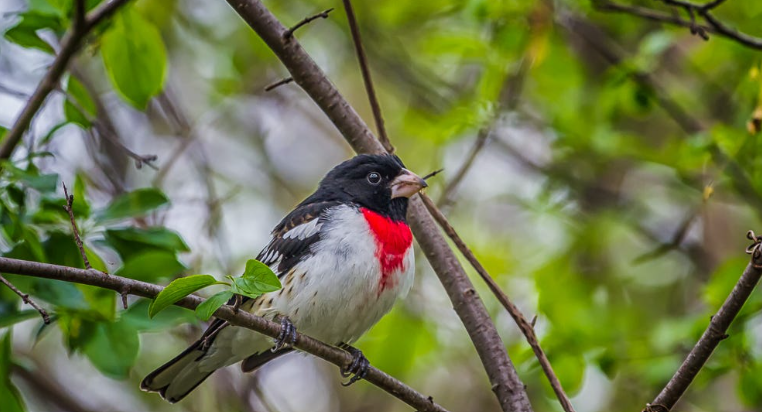
Rose-Breasted Grosbeak
The rose-breasted grosbeak eats safflower seed during migration and breeding season, using a thick, conical bill well suited to cracking a wide range of seed types. This bird is a long-distance migrant, traveling between breeding grounds in North America and wintering areas as far south as northern South America, and feeder visits tend to be concentrated around migration periods. Male rose-breasted grosbeaks display a striking rose-colored patch across the chest, making them a highly sought-after visitor among birdwatchers who stock safflower feeders specifically hoping to attract this species. Because this bird’s feeder visits are often seasonal rather than year-round, safflower seed availability during spring migration can be an especially effective way to draw rose-breasted grosbeaks to a yard.
Blue Jay
The blue jay eats safflower seed, though generally with less enthusiasm than sunflower seed, making it a bird that some feeder owners use safflower to partially discourage without eliminating entirely. This bird’s large size and strong bill allow it to crack safflower seed without difficulty, but many blue jays show a clear preference for alternative seed types when given a choice. Blue jays are highly intelligent and have been observed caching large quantities of food, including safflower seed, in scattered locations for later retrieval. Because blue jays can be dominant at feeders, their comparatively reduced interest in safflower seed is one reason this seed type remains popular among people hoping to give smaller songbirds better feeder access.
Chipping Sparrow
The chipping sparrow eats safflower seed, typically foraging on the ground beneath feeders alongside other small sparrow species during the spring and summer months. This bird is easily identified by a bright rufous cap during breeding season, a feature that fades to a more subdued brownish tone outside of the breeding period. Chipping sparrows tend to forage in small, loose groups, moving steadily across open ground in search of fallen seed rather than perching directly on elevated feeders. This species is a summer breeder across much of North America, and its safflower feeder visits are generally most frequent during the warmer months when the bird is present in a given region.