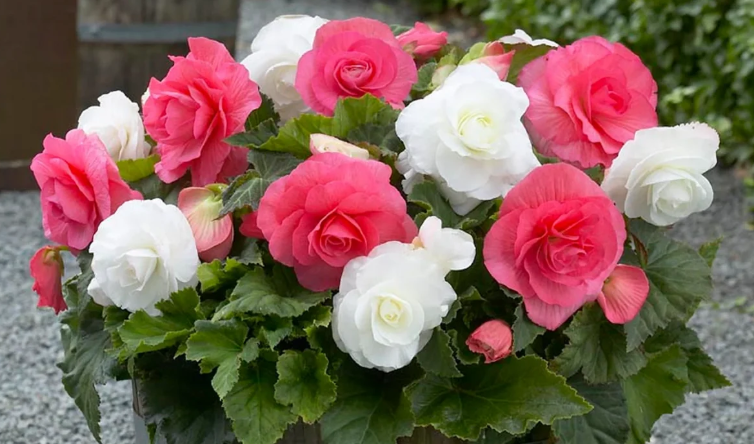
Cane begonias are among the most rewarding begonias to grow when you want a plant that provides both attractive foliage and height. Unlike compact wax begonias, cane begonias develop upright stems that resemble bamboo canes. Their leaves can be large, asymmetrical, spotted, striped, or distinctly wing-shaped, while mature plants can produce hanging clusters of flowers.
The term cane begonia describes a horticultural group rather than one particular species. Angel wing and dragon wing begonias are familiar examples, but the group includes many other cultivars and hybrids. This diversity means that individual plants can differ considerably in size, leaf pattern, and flowering behavior. Still, most cane begonias respond well to the same basic approach: bright filtered light, a well-drained growing medium, consistent but controlled moisture, warmth, humidity, and regular pruning.
The secret to growing a good cane begonia is not complicated care. It is understanding how the plant naturally grows and then using that growth pattern to your advantage.
Start With the Right Amount of Light
Light is one of the most important factors in growing a healthy cane begonia.
These plants generally prefer bright, filtered light rather than harsh direct sunlight. The RHS specifically recommends good light for cane-stemmed begonias because it helps produce sturdy stems and abundant flowers, while also advising protection from direct sun to prevent leaf scorching.
Indoors, a bright room near a window can work well. If the window receives intense afternoon sunshine, use a sheer curtain or position the plant slightly farther away.
Outdoors, morning sun followed by afternoon shade is often a useful arrangement.
Too little light can create a different problem. The plant may produce elongated stems with widely spaced leaves and fewer flowers. If your cane begonia is becoming tall and thin rather than full and leafy, inadequate light is one of the first things worth examining.
Give Cane Begonia Room to Grow Upward
Cane begonias have a natural tendency to grow vertically.
Instead of trying to force them into the compact shape of a bedding begonia, allow them to develop their characteristic upright form. Older plants can become quite tall, creating a small shrub-like appearance.
This is particularly useful when growing them indoors. Place the plant somewhere where its eventual height will not become a problem.
If the stems become too tall, don’t immediately assume the plant needs a larger pot. Often, the better solution is pruning.
Use a Well-Drained Growing Medium
Cane begonias like moisture, but their roots should not sit in permanently saturated soil.
A loose, well-draining potting mix is therefore preferable to heavy soil that remains wet for long periods. The RHS recommends a peat-free multipurpose compost or John Innes No. 2 for cane-stemmed begonias.
For container plants, drainage holes are essential.
The growing medium should absorb water readily but also allow excess moisture to escape. This balance is more important than choosing a particular brand or complicated mixture.
A useful way to judge your potting mix is to see how quickly it responds after watering. Water should penetrate the root zone rather than sit on the surface, and excess water should eventually leave through the drainage holes.
Also Read: Other Types of Begonia You Can Grow
Water When the Plant Needs It
Cane begonias prefer their growing medium to remain reasonably moist but well drained. The RHS recommends avoiding both complete drying and overwatering.
Rather than following a strict “water every X days” routine, check the plant and soil.
During warm, bright weather, the plant may use water quickly. During cool or darker periods, evaporation and growth slow down, so the same amount of water may remain in the pot for considerably longer.
When the upper portion of the growing medium has started to dry, water thoroughly. Allow excess water to drain away rather than leaving the container sitting in water.
During winter, watering should generally be reduced because the plant’s growth and water consumption may slow.
Avoid Both Extremes of Watering
There are two common watering mistakes with cane begonias.
The first is watering too frequently. Continuously wet soil can deprive roots of the air they need and increase the likelihood of root problems.
The second is allowing the plant to remain severely dry for extended periods. This can cause leaves and stems to wilt and may result in premature leaf or flower loss.
The goal is somewhere between these extremes: water thoroughly, allow excess water to escape, and give the growing medium enough time to begin drying before watering again.
Keep the Air Humid, But Not Stagnant
Cane begonias appreciate humidity, particularly when grown indoors.
If the air is very dry, the leaf margins can become brown or crispy. Increasing humidity around the plant can help, especially during periods when indoor heating or air conditioning makes the air unusually dry.
A humidifier, grouping plants together, or a suitable pebble tray can increase local humidity.
However, high humidity should not mean stagnant air.
Good air circulation is important because constantly damp foliage combined with poor airflow can create favorable conditions for fungal problems. Give the plant enough space for air to move naturally around its leaves and stems.
Keep Cane Begonia Warm
Cane begonias are tender plants that prefer warm growing conditions.
The RHS recommends approximately 15–22°C (59–72°F) for cane-stemmed begonias.
Protect outdoor plants from frost and prolonged cold. In colder climates, container-grown plants can be moved indoors or into another protected location before temperatures become damaging.
Indoors, avoid placing the plant directly beside a heater or in the path of a strong air-conditioning draft.
Stable temperatures are generally more useful than repeatedly moving the plant between hot and cold locations.
Feed During Active Growth
Cane begonias can be moderate feeders, particularly when they are actively producing leaves, stems, and flowers.
The RHS recommends feeding established cane-stemmed begonias from May through September with a high-potassium plant food, following the product’s instructions.
For gardeners outside that seasonal schedule, the principle is more useful than the exact months: feed during the plant’s active growing period and reduce feeding when growth slows.
Do not assume that increasing fertilizer will automatically produce more flowers. Excess fertilizer can create its own problems, while insufficient light or unsuitable watering may be the real reason a plant is underperforming.
Prune Cane Begonia to Control Its Shape
Pruning is one of the most valuable parts of cane begonia care.
Without occasional pruning, a plant can become tall, top-heavy, and sparse toward the lower stems. Rather than seeing this as a reason to discard the plant, use pruning to encourage fresh branching.
Long stems can be cut back to a healthy node. New shoots may then develop below the cut.
You can also remove:
- Dead stems
- Weak growth
- Damaged leaves
- Very old canes
- Overcrowded branches
The objective is not to make every cane the same length. A slightly varied structure often gives mature cane begonias a more natural and attractive appearance.
Pinch Young Plants for Bushier Growth
If you want a fuller plant, begin shaping it while the stems are young.
Pinching the growing tips encourages the plant to produce side branches. This is particularly useful for cane begonias that are being grown indoors or in containers where a bushier shape is desirable.
Do not pinch every growing point repeatedly, however. If you remove too much new growth, you may delay flowering.
A good strategy is to allow some stems to grow naturally while pinching others to encourage branching.
Support Tall Plants When Necessary
Cane begonias can eventually become tall enough that their stems need support.
If a mature plant begins leaning under the weight of its leaves and flowers, a discreet stake can help keep the stems upright.
Do not wait until the stem has already bent sharply. Providing support early is easier on the plant and usually looks more natural.
At the same time, excessive staking can hide the plant’s attractive cane structure. Use support only where it is genuinely needed.
Encourage Better Flowering
Cane begonias are appreciated for their foliage, but their flowers can be equally impressive.
If flowering is your priority, concentrate first on light. A plant kept in very dim conditions may produce attractive leaves but fail to flower heavily.
Good nutrition and consistent moisture also matter.
The RHS notes that cane begonias require good light for sturdy stems and abundant flowers.
Avoid continually pruning away mature stems if you want flowers. Give the plant an opportunity to develop mature growth rather than constantly resetting it to a juvenile state.
Remove Spent Flowers
As flower clusters fade, you can remove them to keep the plant looking tidy.
This is particularly useful for indoor specimens where appearance is important.
Cut or pinch off faded flower clusters carefully without damaging nearby developing buds or leaves.
Cane begonias can continue flowering when conditions are favorable, so removing unattractive old clusters can help maintain a cleaner display.
Repot Cane Begonia Carefully
Cane begonias do not need to be repotted simply because a certain amount of time has passed.
Consider repotting when the plant has become genuinely crowded, the growing medium has deteriorated, roots are filling the container, or the plant is drying out unusually quickly.
Move it into a container only moderately larger than the previous one.
An unnecessarily large pot can retain excess moisture around the roots, making watering more difficult to manage.
After repotting, give the plant time to settle rather than immediately compensating with heavy fertilizer or excessive watering.
Also Read: How To Grow And Care For Begonia
Propagate Cane Begonia From Stem Cuttings
One of the most enjoyable things about cane begonias is how easily many can be propagated from stem cuttings.
Choose a healthy stem and make a clean cutting containing suitable nodes. Remove unnecessary lower foliage and place the cutting into an appropriate propagation medium.
Under favorable conditions, roots can develop from the stem.
The resulting plant is a genetic continuation of the parent, which makes stem propagation especially useful when you have a cane begonia with attractive leaves or flowers that you want to reproduce.
The RHS confirms that stem cuttings can be used to propagate cane begonias.
Use Pruning as an Opportunity to Propagate
Pruning and propagation can work together.
Instead of throwing away every healthy stem removed during pruning, suitable sections can potentially become new plants.
This creates a simple cycle:
Grow → prune → propagate → establish new plants → grow again.
It is one of the reasons cane begonias are particularly satisfying for plant collectors.
Common Problems With Cane Begonia
Yellow Leaves
An occasional old leaf turning yellow is not necessarily a serious problem.
If many leaves begin yellowing at once, however, examine the growing conditions. Excessive moisture, poor drainage, inadequate light, temperature stress, and other environmental factors can contribute to yellowing.
Check the soil before automatically adding fertilizer.
Brown Leaf Edges
Brown edges can be associated with dry air, inconsistent moisture, excessive sunlight, or other environmental stress.
Check humidity, watering, and light together rather than treating brown edges as evidence of one specific problem.
Long, Bare Stems
Long stems with large gaps between leaves often indicate insufficient light or inadequate pruning.
Move the plant to a brighter filtered-light location and consider pruning overly elongated stems.
Drooping
A drooping cane begonia may need water, but don’t water automatically.
First check the growing medium. If the soil is already very wet, additional water could make the underlying problem worse.
Root Problems
Poor drainage and excessive watering are common causes of root stress.
If the growing medium remains wet for unusually long periods, reconsider the pot size, drainage holes, growing medium, and watering frequency.
Pests
Cane begonias can occasionally experience common houseplant pests such as aphids, mealybugs, and spider mites.
Inspect the undersides of leaves and areas around new growth regularly. Early detection makes pest problems much easier to manage.
Growing Cane Begonia Indoors
Cane begonias can become excellent indoor specimens when their basic requirements are met.
Give them a bright position with filtered light, adequate humidity, and enough room for vertical growth.
Rotate the pot occasionally if the plant is growing strongly toward one direction of light. This can help produce a more balanced appearance.
Indoor cane begonias also benefit from occasional pruning because there is usually less room for them to spread naturally.
Growing Cane Begonia Outdoors
In warm, frost-free climates, cane begonias can become substantial landscape plants.
They work particularly well in protected locations where they receive filtered sunlight or morning sun followed by shade.
They can be grown in containers or planted directly into well-drained garden soil.
Where winters are cold, containers offer an advantage because the plant can be moved to a protected environment before damaging temperatures arrive.
A Simple Seasonal Care Routine
Spring
As growth increases, check the plant for weak or old stems. This is a good time to shape the plant and begin regular feeding as active growth resumes.
Summer
Maintain consistent moisture, provide appropriate light, and watch for excessive heat. Flowering can be particularly attractive during favorable growing conditions.
Autumn
As temperatures begin to fall, inspect the plant for pests and prepare outdoor specimens for protection if cold weather is approaching.
Winter
Reduce watering as growth slows and keep the plant away from cold drafts. Indoor plants should remain in a bright, protected location.
What You’ll Eventually Learn From Growing Cane Begonia
Growing cane begonia teaches you that pruning is not simply maintenance—it is part of the way you design the plant.
You will eventually discover that the same cane begonia can look completely different depending on how it is shaped. Left alone, it may develop into a tall specimen with long stems. Pruned strategically, it can become much fuller and more balanced.
You will also learn to read the plant’s stems and leaves as signals. Stretching stems may tell you that the plant needs more light. Brown edges may encourage you to examine humidity and watering. Yellow leaves can prompt you to investigate the roots and growing medium rather than immediately reaching for fertilizer.
Another lesson is the importance of moderation. Cane begonias appreciate moisture, but not waterlogged soil. They appreciate light, but not harsh exposure. They like humidity, but not stagnant air. They benefit from fertilizer, but not excessive feeding.
Once you understand these balances, caring for the plant becomes much less complicated.
Perhaps the most rewarding lesson comes from propagation. A mature cane begonia can provide healthy stems for new plants, meaning pruning can actually become a way of expanding your collection rather than simply reducing the size of the original plant.
Eventually, you begin to see the cane begonia differently. Its tall stems are no longer something to control, its leaves are no longer simply decoration, and its flowers are no longer the only measure of success. You start observing how the entire plant responds to its environment.
That is what makes growing cane begonia so interesting: the better you understand its natural growth pattern, the less you need to force it—and the more attractive the plant becomes.